Whiteflies can go from egg to adult in about two weeks when the weather stays warm, so a tomato bed can flip from “fine” to “why are my leaves sticky?” pretty fast. That’s why companion planting works best when you treat it like garden design, not a last-minute rescue. You’re not just choosing “nice neighbors” for tomatoes—you’re shaping airflow, bloom timing, and even how easy it is for pests to settle in.
- Quick Answer
- How Companion Planting Works
- Criteria For Choosing A Tomato Companion
- Top 10 Proven Companion Plants
- Basil (Ocimum basilicum) — The Classic Tomato Partner
- French Marigold (Tagetes patula) — Marigold Nematode Control + Whitefly “Push”
- Sweet Alyssum (Lobularia maritima) — The Beneficial Insect Magnet
- Nasturtium (Tropaeolum majus) — A Practical Trap Crop
- Borage (Borago officinalis) — Pollinator Pull With A “Wild” Look
- Chives Or Green Onions — Small Alliums With Big Upside
- Parsley — A Quiet Workhorse For “Good Bugs”
- Dill Or Cilantro — Umbel Flowers That Feed Predators
- Lettuce Or Spinach — Cool-Season Understory
- Bush Beans — Early Support, Then Out
- Plants To Avoid Near Tomatoes
- Climate & Zone Considerations (USDA Zones + Real-World Heat)
- Sample Garden Layouts (Tomato Polyculture Layout Ideas)
- 4×8 ft Raised Bed Layout (Easy, Not Crowded)
- Balcony Container Trio (One Tomato, Three Helpers)
- Step-By-Step Planting Guide
- Step 1: Set Tomato Spacing First
- Step 2: Add “Border” Companions Early
- Step 3: Fill The Middle With Compact Helpers
- Step 4: Stagger Fast Bolters
- Step 5: Monitor And Adjust (A Tiny Routine)
- Common Mistakes And How To Fix Them
- Mistake: Overcrowding “Because Companions”
- Mistake: Treating Companion Planting Like Emergency Pest Control
- Mistake: Choosing The Wrong Marigold Type For Nematodes
- Mistake: Mixing Water Needs In One Tight Zone
- Tomato Companion Planting Chart (Benefits Recap)
- Printable Cheat Sheet (Copy This Into Your Notes)
- FAQ
- Do tomatoes really grow better with basil?
- How close should I plant marigolds to my tomatoes?
- Which flowers are best for organic tomato pest management?
- Can I pair cucumbers and tomatoes in the same bed?
- Do companion plants help prevent tomato blight?
- How many companion plants can fit in a 5-gallon tomato bucket?
This article focuses on the best companion plants for tomatoes in home gardens, with spacing you can actually use and simple layouts you can copy into a raised bed or containers. Some pairings help by feeding beneficial insects. Some create a living mulch. A few even affect pest behavior through plant scents (yeah, plants do that).
Quick Answer
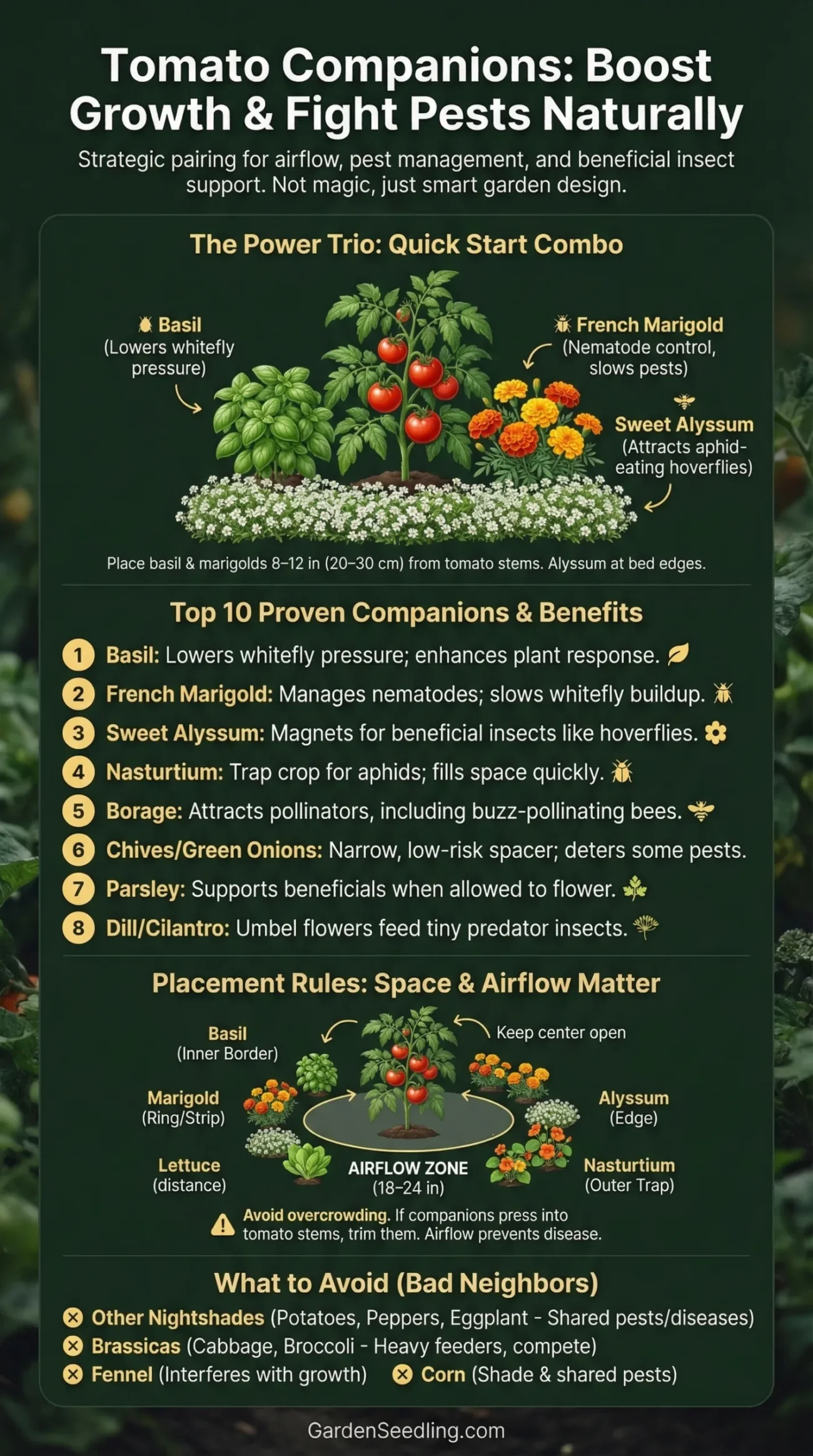
If you want one reliable combo, start here: plant basil and French marigolds with tomatoes, then edge the bed with sweet alyssum or another long-blooming flower. Keep companions low and not-too-thirsty, give tomatoes their airflow, and don’t wait until pests explode. One simple row can help more than a “random mix” ever will.
How Companion Planting Works
Companion planting is basically stacking small advantages. None of these plants turns tomatoes into superheroes. But together, they can make your tomato patch a harder place for pests to build momentum, and a better place for the “good bugs” to hang out.
- Scent and airborne signals: Aromatic plants release volatile compounds. In controlled studies, basil volatiles can “prime” tomato leaves to respond faster after damage (think: a quicker alarm system).
- Trap and distract: Some companions pull pests toward themselves or just make the tomato row harder to “read” from the air. It’s not magic—more like visual clutter.
- Beneficial insect support: Flowers and tiny blossoms provide nectar and pollen, which keep predators and parasitoids nearby. Those insects don’t live on aphids alone.
- Microclimate tweaks: Low growers shade soil, cut splash from rain or watering, and reduce evaporation. Less splashing can mean fewer leaf spots spreading around.
A quick reality check: if you crowd the bed, you can trade pest pressure for disease pressure. Tomatoes still need space. Always.
Criteria For Choosing A Tomato Companion
Before picking plants, run a fast filter. It saves headaches later (and yes, it matters more than people think).
| Check | What You Want | What To Avoid |
|---|---|---|
| Water Match | Similar moisture needs, or easy to water separately | Plants that sulk if soil dries (they’ll force you to overwater tomatoes) |
| Height + Shade | Low or narrow plants that won’t block airflow | Big, bushy plants that make a humid wall around tomato stems |
| Root Behavior | Shallow “ground cover” roots or modest feeders | Heavy feeders right at the tomato’s base |
| Bloom Timing | Flowers that keep going for weeks | Short bloom window (pretty, but the helpers leave) |
| Pest/Disease Overlap | Plants that don’t share tomato’s main diseases | Close planting with other nightshades (higher risk of shared issues) |
Here’s the simple rule: companions should support tomatoes, not compete with them. If a plant needs the same “prime spot” as a tomato, it’s probably not the right neighbor.
Top 10 Proven Companion Plants
These choices balance research, Extension guidance, and what works in real home beds. Each one includes how to place it so you don’t accidentally create a crowded jungle.
Basil (Ocimum basilicum) — The Classic Tomato Partner
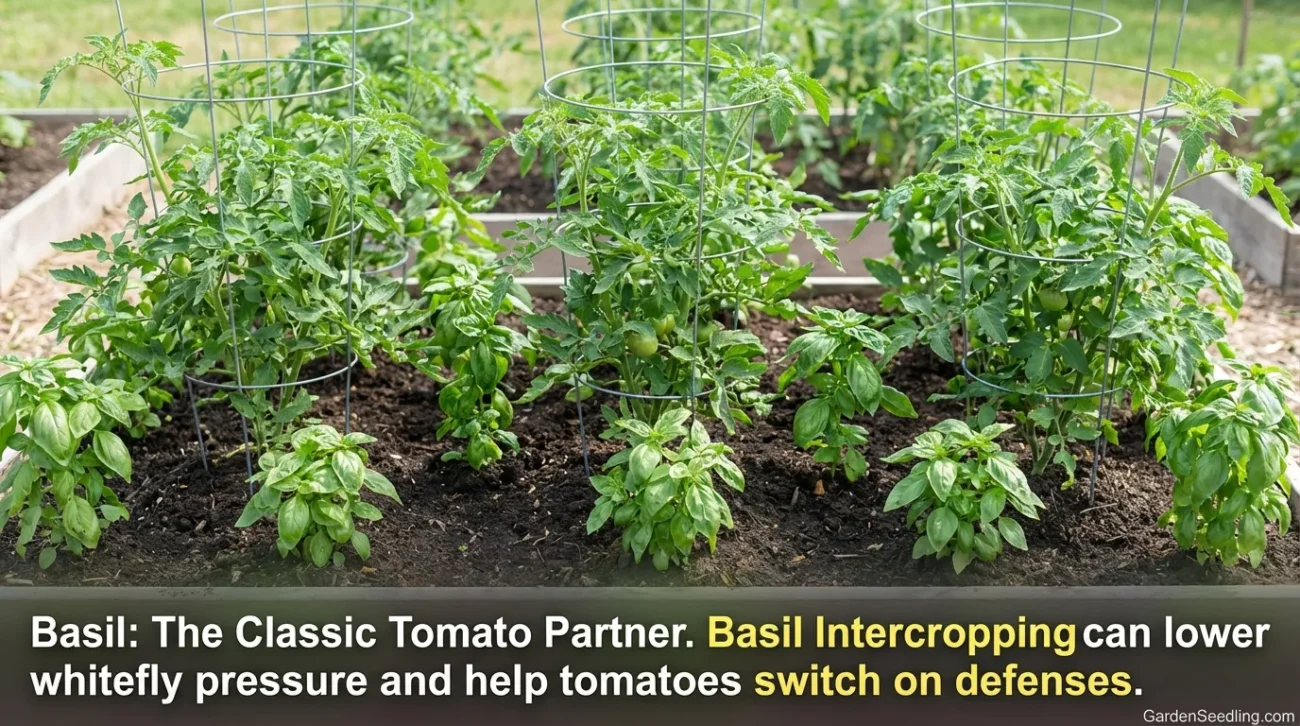
Basil and tomato synergy isn’t just a kitchen thing. In field research, basil intercropping has been linked to lower whitefly pressure compared with tomato grown alone, and lab-style work suggests basil scent can help tomatoes “switch on” defenses faster after damage.
- Best use: Plant basil as an inner border or in small groups between tomato cages.
- Spacing: 10–12 in (25–30 cm) from the tomato stem, not right on it.
- Tip: Pinch basil early so it stays compact. A tall, flowering basil can still work, but it eats space fast.
French Marigold (Tagetes patula) — Marigold Nematode Control + Whitefly “Push”
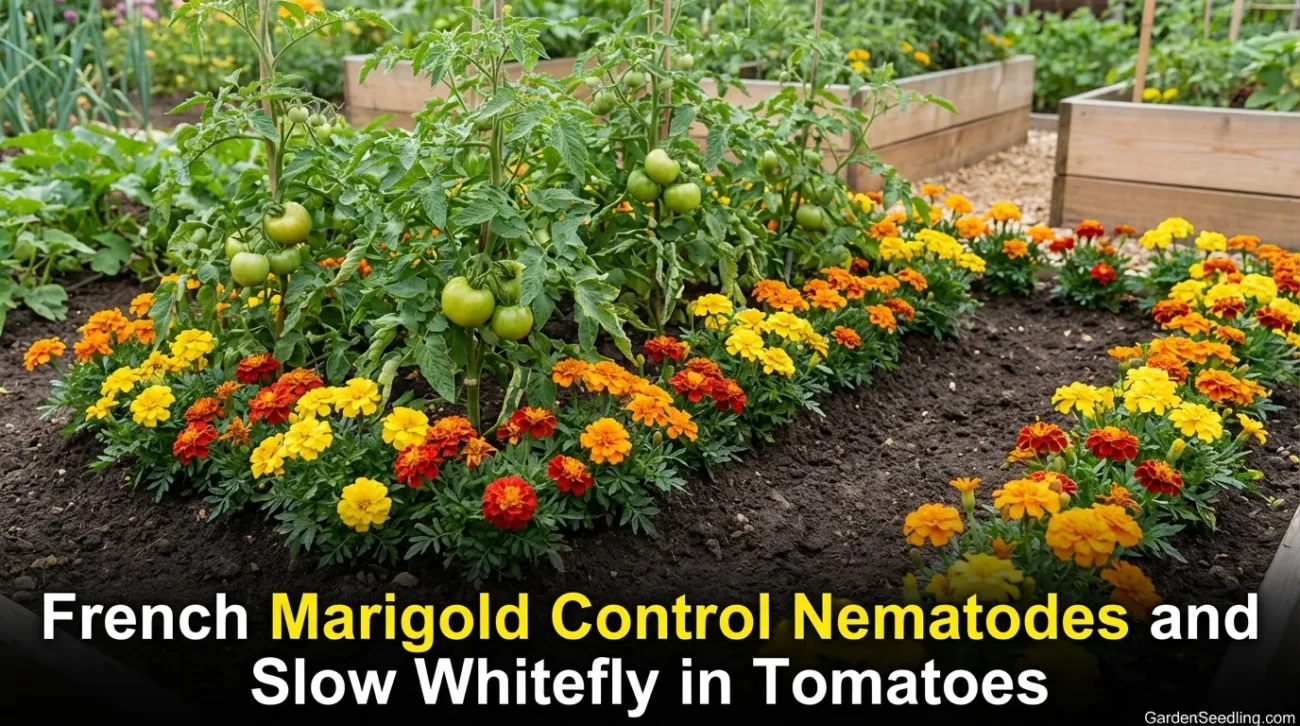
French marigolds have two big roles: they’re used in nematode management, and controlled trials in protected growing spaces show marigolds can slow whitefly population build-up when planted alongside tomatoes from the start. Timing matters. Late planting helps less.
- Best use: A ring around each tomato or a strip along the bed edge.
- Spacing: 7–10 in (18–25 cm) between marigolds; keep them 8–12 in (20–30 cm) from tomato stems.
- Small warning: Not every “marigold” sold controls nematodes. Some types simply don’t.
Sweet Alyssum (Lobularia maritima) — The Beneficial Insect Magnet
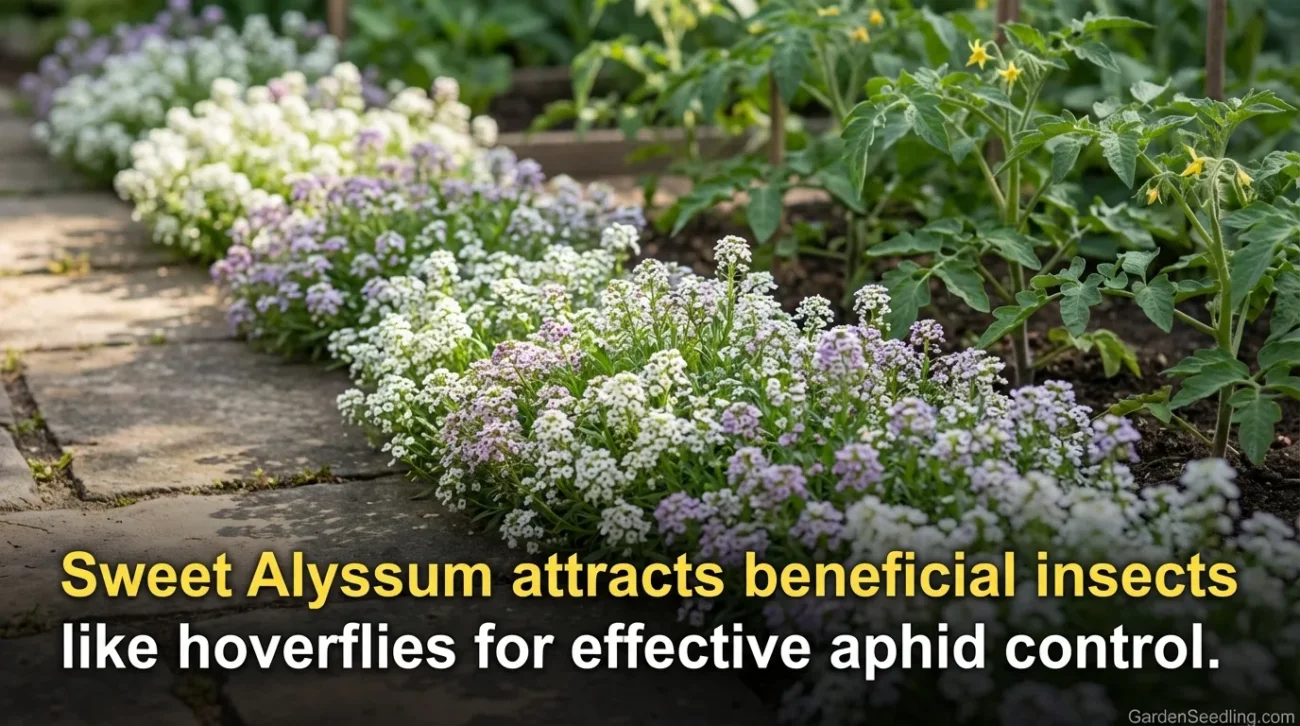
Sweet alyssum is a favorite in insectary plant research because it can bloom for a long stretch and attracts hoverflies—whose larvae eat aphids. It’s low, tidy, and easy to tuck into the edge of a tomato companion planting chart.
- Best use: Bed borders, path edges, and gaps at the ends of tomato rows.
- Spacing: 8–10 in (20–25 cm) apart; it spreads.
- Container bonus: Works well in pots because it stays short.
Nasturtium (Tropaeolum majus) — A Practical Trap Crop
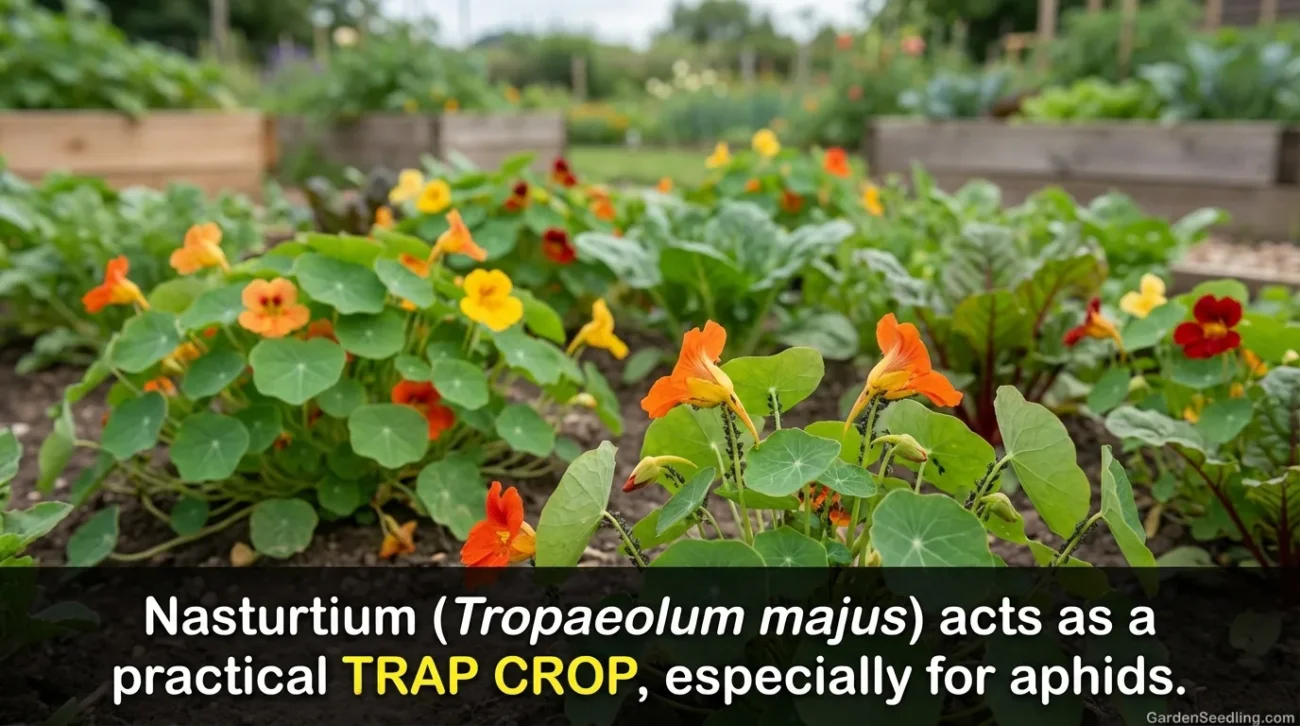
Nasturtium gets used as a “trap” plant, especially for aphids. It also fills space fast (sometimes too fast), so treat it like a controlled spill, not a free-for-all.
- Best use: Place it a little away from the tomato base, closer to the bed edge.
- Spacing: 12–18 in (30–45 cm) from tomatoes, especially for trailing varieties.
- Tip: If aphids pile on, don’t ignore it. Trim and remove the worst stems.
Borage (Borago officinalis) — Pollinator Pull With A “Wild” Look
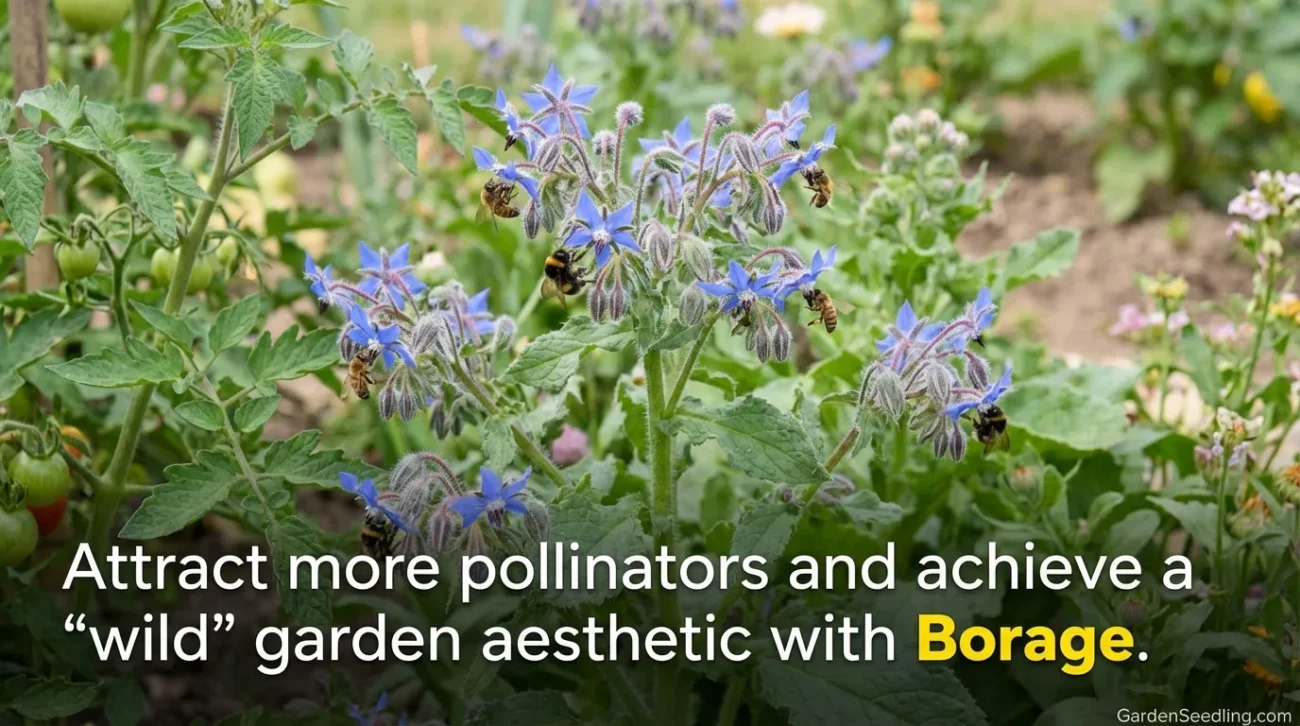
Borage flowers draw a lot of insect traffic, and it can help bring more pollinators into the garden overall (including bees that buzz-pollinate tomatoes). It can also get big and floppy, so give it a lane.
- Best use: One plant at the end of a bed, or outside the tomato row.
- Spacing: 18–24 in (45–60 cm) from tomatoes.
- Note: It self-seeds. Great if you want that. Annoying if you don’t.
Chives Or Green Onions — Small Alliums With Big Upside
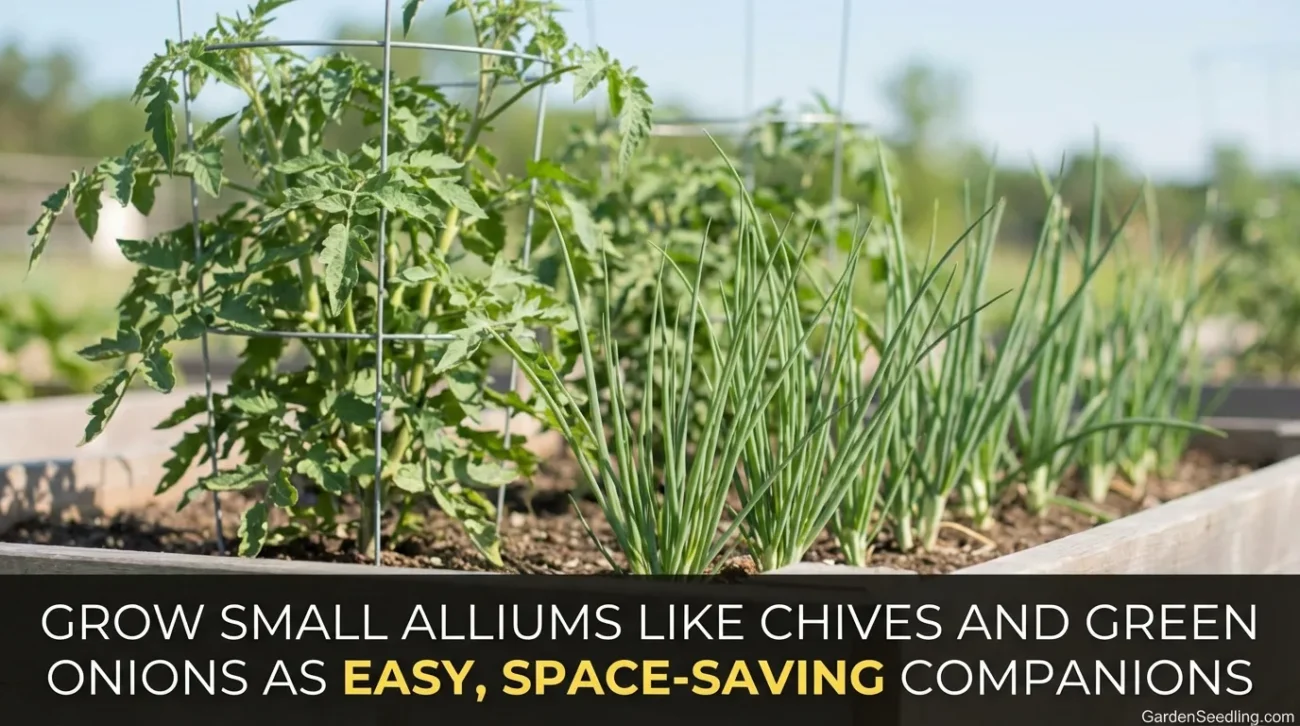
Alliums (chives, scallions, bunching onions) stay narrow and don’t steal light. They’re easy companions when you want something low-risk that still adds diversity.
- Best use: A thin line on the sunny side of tomatoes, or between cages.
- Spacing: 4–6 in (10–15 cm) between plants; keep 6–10 in (15–25 cm) from tomato stems.
- Good fit for: Raised beds where every inch matters.
Parsley — A Quiet Workhorse For “Good Bugs”
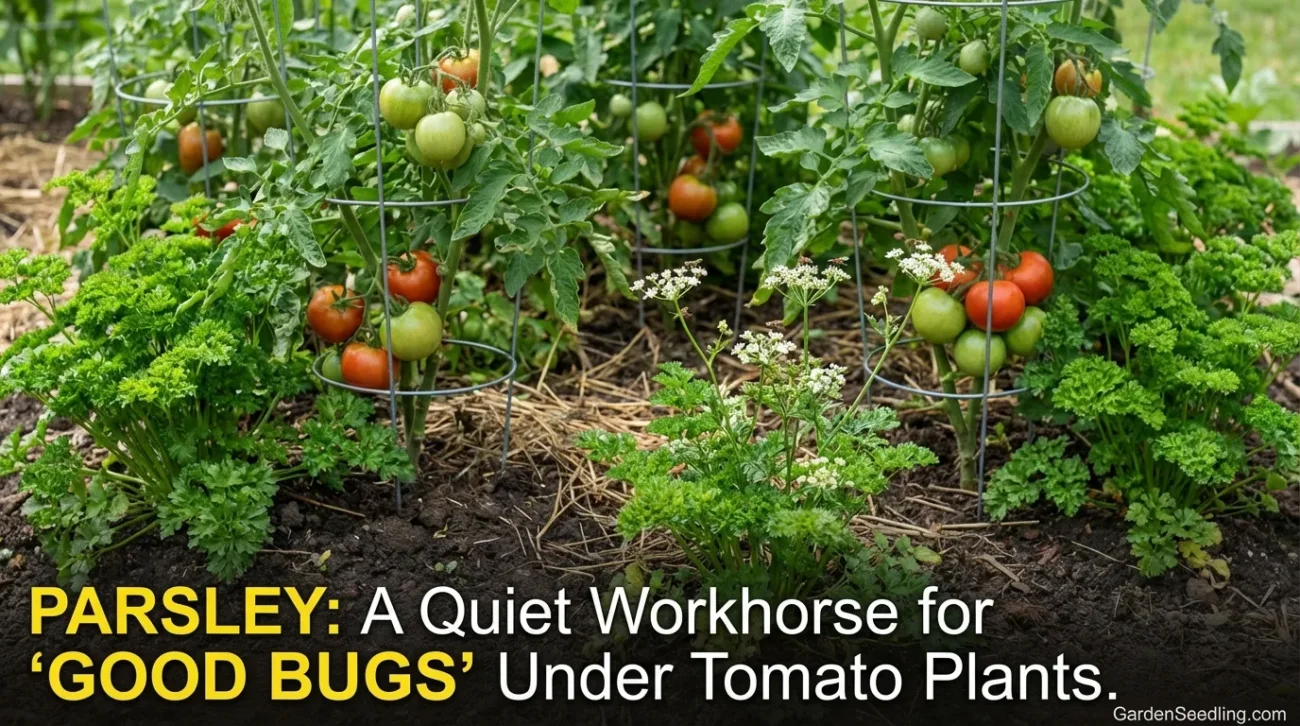
Parsley stays compact early, then flowers later if you let it. Those blooms can support beneficial insects. It’s also a nice living mulch under taller tomatoes—if you keep airflow in mind.
- Best use: Under the outer edge of caged tomatoes (not packed into the center).
- Spacing: 8–10 in (20–25 cm).
- Tip: If parsley bolts, leave one plant to flower and harvest the rest.
Dill Or Cilantro — Umbel Flowers That Feed Predators
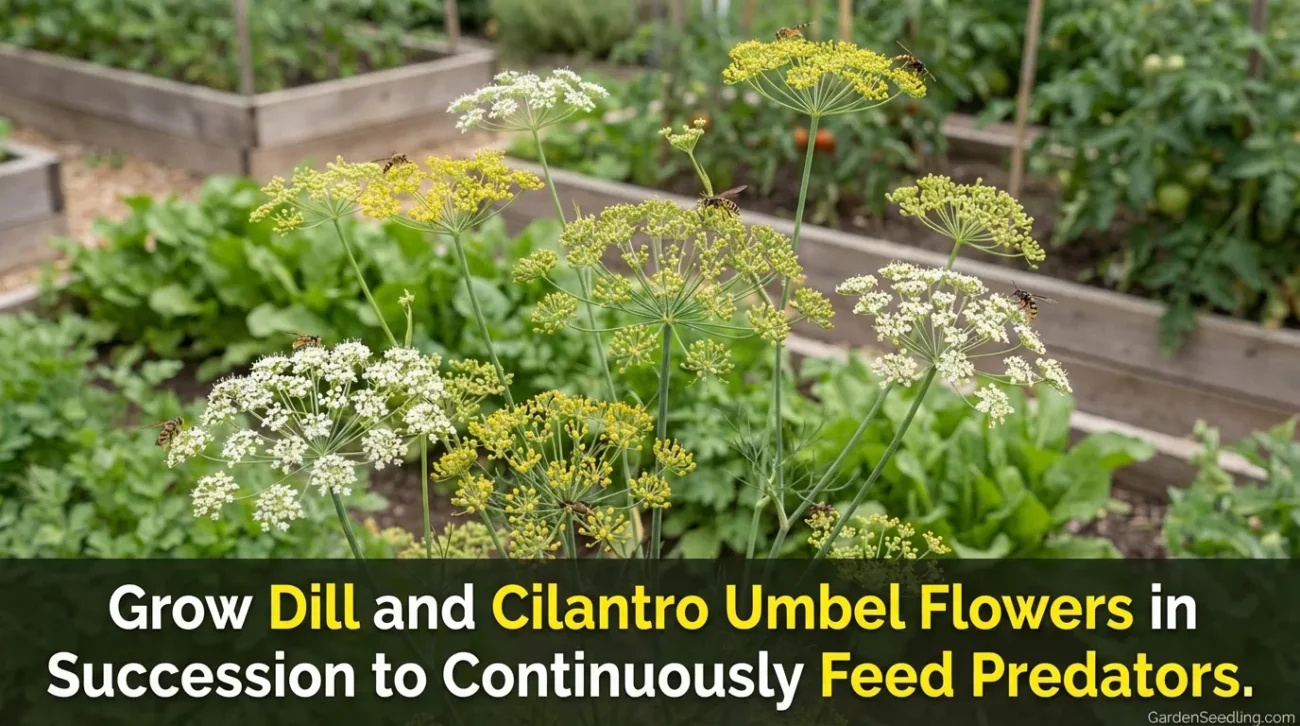
Dill and cilantro bloom in clusters of tiny flowers that many beneficial insects like. They do bolt, though. Fast. So plan for it (or it’ll surprise you).
- Best use: Plant a small group at the bed ends, then succession sow every 2–3 weeks.
- Spacing: 10–12 in (25–30 cm); keep taller dill from shading young tomatoes.
- Easy move: Let one plant flower, then cut it back once it finishes.
Lettuce Or Spinach — Cool-Season Understory
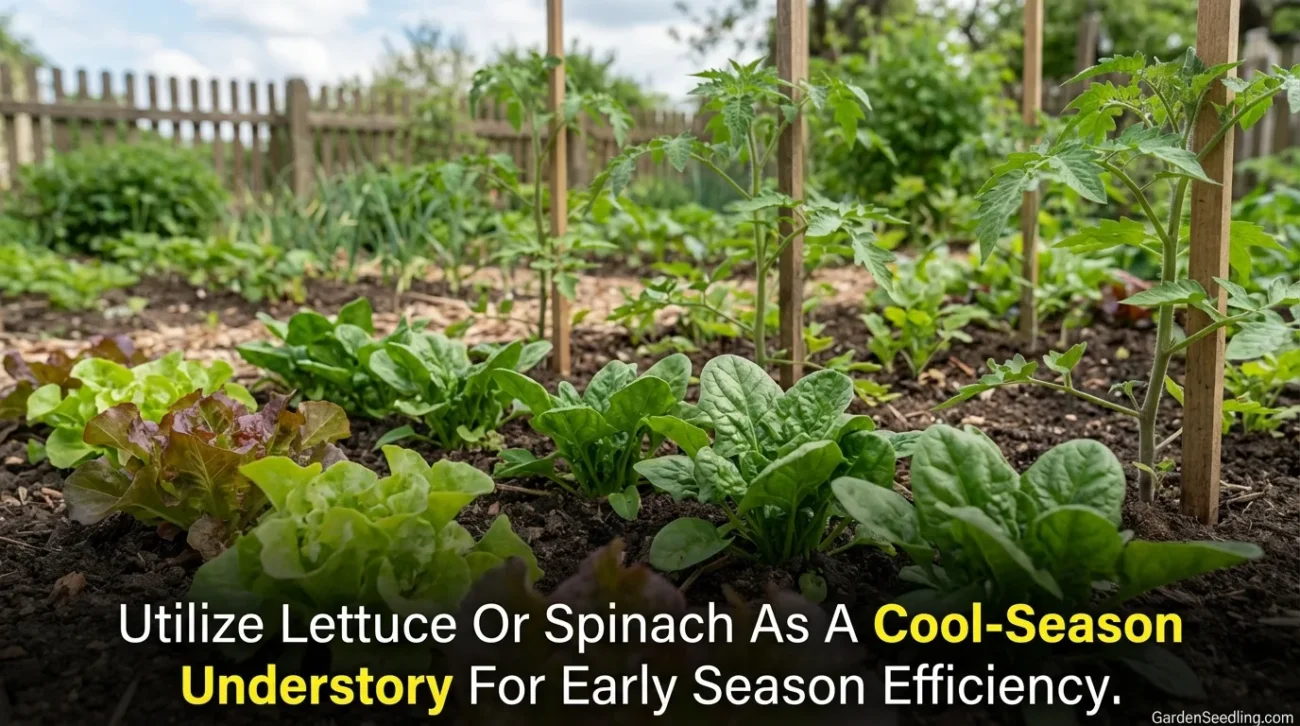
This pairing is about timing. In spring, lettuce and spinach can fill space before tomatoes explode. Then, as tomatoes grow, the greens finish up. Neat and efficient.
- Best use: Early season filler between tomato spots before transplanting, or on the north side where light is softer.
- Spacing: Standard for the green; just don’t block airflow at tomato soil level.
- Tip: Harvest early and often. Don’t let big lettuce heads press into tomato stems.
Bush Beans — Early Support, Then Out
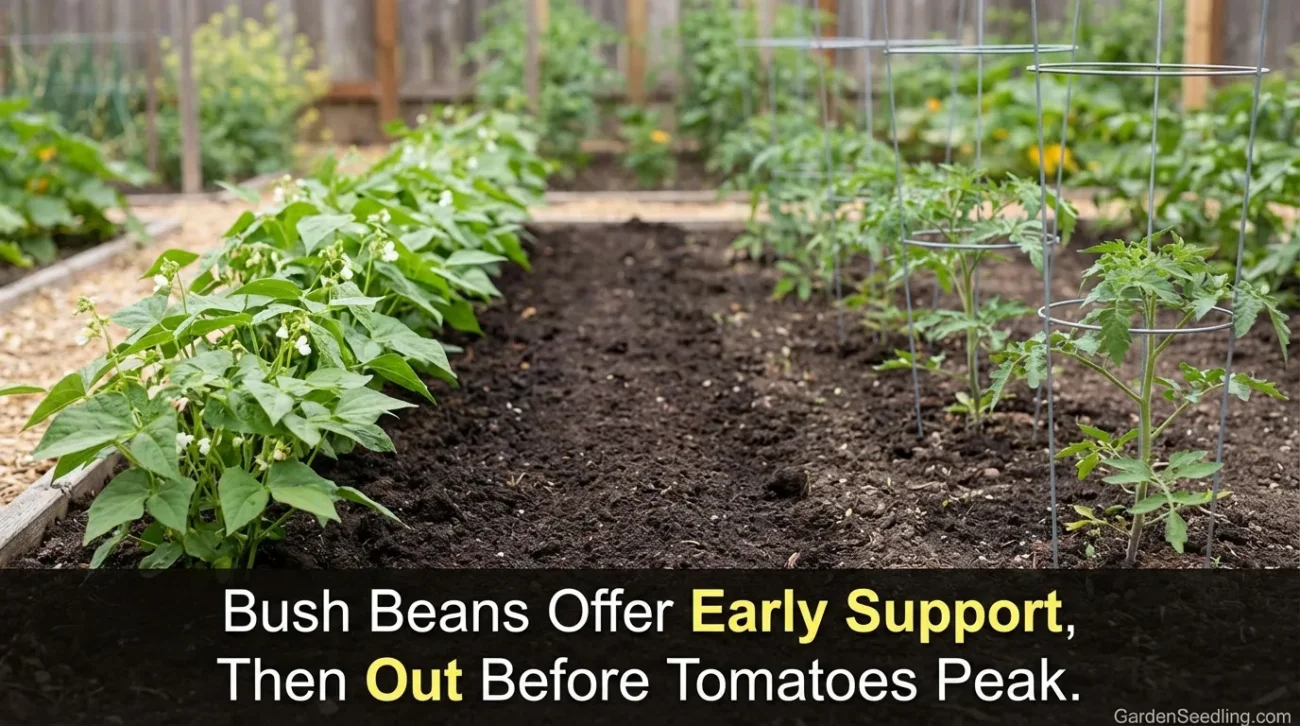
Bush beans can work if you treat them as a short-term neighbor. They finish earlier than tomatoes, and they don’t create a tall shade wall. Keep them from crowding the tomato root zone and you’re usually fine.
- Best use: A short row on the bed edge, harvested and pulled before tomato plants hit peak size.
- Spacing: 12–18 in (30–45 cm) away from tomato stems.
- Don’t do this: Pole beans climbing into tomato cages. It gets messy, quickly.
Plants To Avoid Near Tomatoes
This is the part many tomato companion planting charts gloss over. Avoiding the wrong neighbors often helps more than chasing the “perfect” ones.
- Other nightshades (potatoes, eggplant, peppers): They can share pests and diseases. You can still grow them, but don’t cram them together.
- Brassicas (cabbage, broccoli, cauliflower): Heavy feeders, and they can compete hard in a small bed.
- Fennel: A known bad neighbor in many gardens (it tends to interfere with nearby plants).
- Corn: Tall shade + shared pest issues in some regions. Tomatoes want sun and airflow.
- Black walnut (Juglans nigra) zone: Tomatoes are sensitive to juglone. If you’re anywhere near the root zone, use a raised bed with fresh soil (or move the tomatoes).
Also: avoid packing thick groundcovers right against tomato stems. It feels “lush,” but it can trap humidity. And then you’ll be dealing with leaf spots. Not fun.
Climate & Zone Considerations (USDA Zones + Real-World Heat)
USDA Hardiness Zones describe winter minimum temperatures, which helps mostly with perennials. Tomatoes are annuals, so you still need to watch frost dates. But zones do hint at how long your warm season lasts and how hard summer heat hits.
| Zone Tendency | What Usually Happens | Companion Strategy That Fits |
|---|---|---|
| Zones 3–5 | Short season, cool nights linger | Use early companions: lettuce/spinach first, then basil once nights warm. Keep marigolds compact. |
| Zones 6–7 | Classic tomato season, steady summer | Go for a mixed border: basil + marigolds + alyssum. Add dill/cilantro in waves. |
| Zones 8–10 | Long season, heat and pest pressure can build | Prioritize insectary flowers (alyssum) and airflow. Shade soil with understory greens early, then pull them. |
| Zones 11–13 | Tomatoes behave like a cool-season crop | Grow tomatoes in the coolest months; keep companions low and water-smart. Basil may struggle in peak heat. |
One practical timing cue for most areas: transplant tomatoes when nighttime temps stay above 55°F. Too early and plants stall. They just sit there, annoyed.
Sample Garden Layouts (Tomato Polyculture Layout Ideas)
4×8 ft Raised Bed Layout (Easy, Not Crowded)
This layout keeps airflow and still gives you companions doing different jobs.
4×8 Bed (Top View) — 1 ft squares
Legend: T=Tomato (caged)  B=Basil  M=French Marigold  A=Sweet Alyssum

[A][A][A][A][A][A][A][A]
[M][B][T][B][M][B][T][B]
[M][B][B][B][M][B][B][B]
[A][A][A][A][A][A][A][A]

Notes:
- Two caged tomatoes, spaced about 3–3.5 ft apart center-to-center.
- Alyssum borders act as the “beneficial insect runway.”
- Marigolds sit close enough to matter, not so close they block airflow.
Balcony Container Trio (One Tomato, Three Helpers)
- 1× 5–10 gallon pot: 1 tomato + 1 basil planted 10–12 in away within the pot (only if the pot is big enough).
- 1× small pot: sweet alyssum (or calendula) placed right next to the tomato pot.
- 1× small pot: chives/green onions.
Keeping companions in their own pots is a sneaky win—much easier watering control, less crowding, still plenty of benefit.
Step-By-Step Planting Guide
Step 1: Set Tomato Spacing First
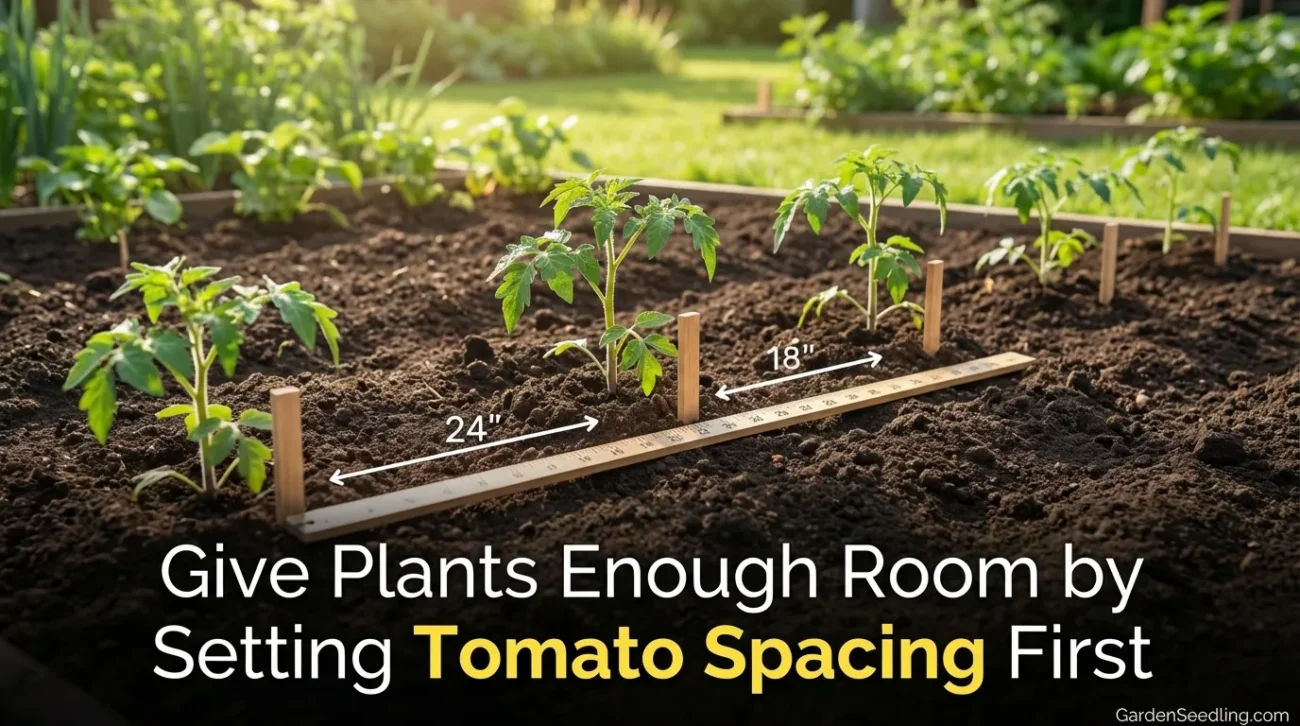
Give tomatoes the space they need: 18–24 inches between plants (more if you can), and about 36 inches between rows if you have rows. Supports go in at planting time so you don’t stab roots later. Simple, but people skip it.
Step 2: Add “Border” Companions Early
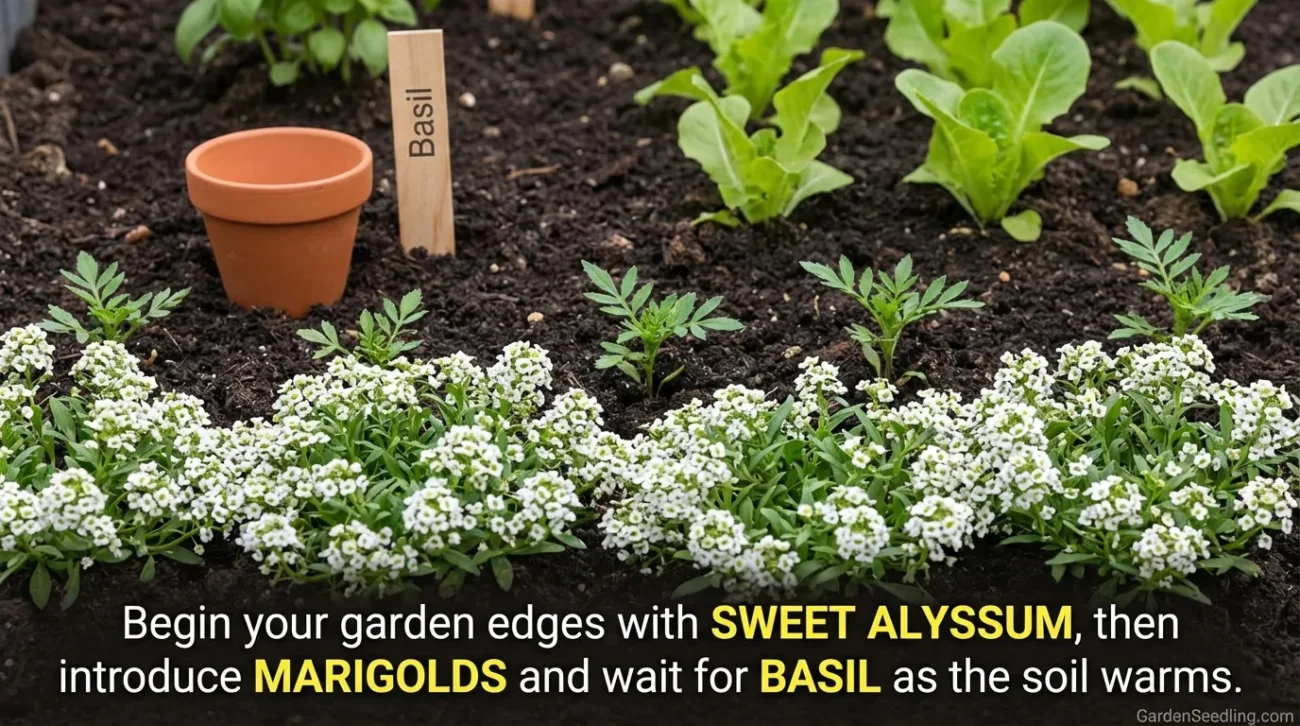
Start with sweet alyssum (or another long bloomer) on the edges. Add marigolds once the soil warms. In cooler areas, wait on basil until nights settle down.
Step 3: Fill The Middle With Compact Helpers
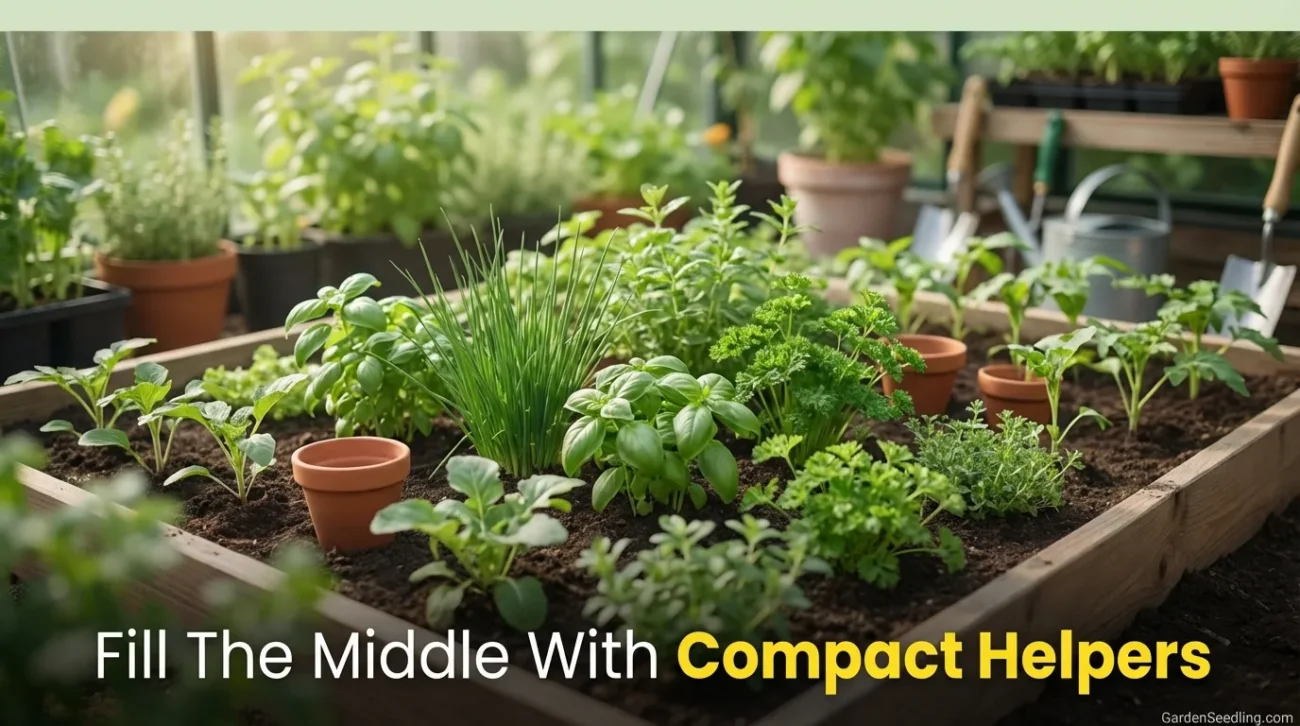
Basil between cages, chives near the front, parsley tucked where it won’t choke the stems—done. Keep the center of the bed open.
Step 4: Stagger Fast Bolters
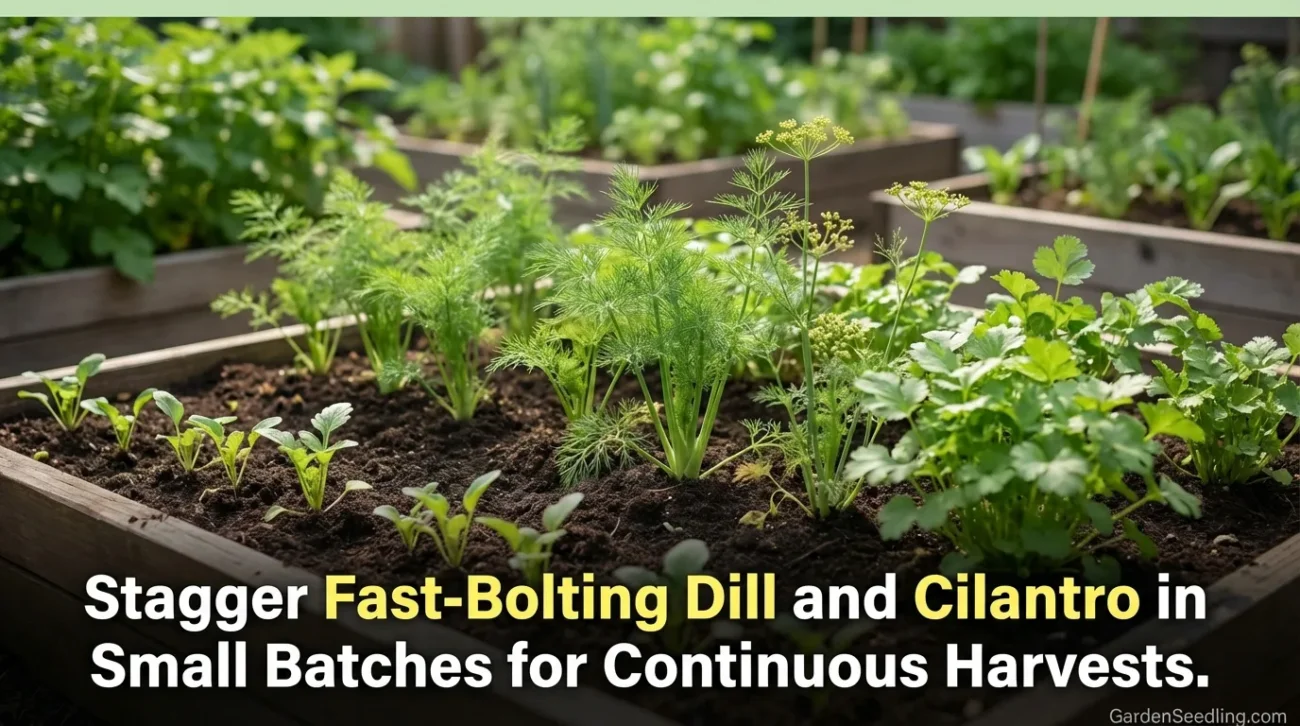
Dill and cilantro can bolt quickly. Plant small batches every couple of weeks, or you’ll get one big bloom moment and then… nothing.
Step 5: Monitor And Adjust (A Tiny Routine)
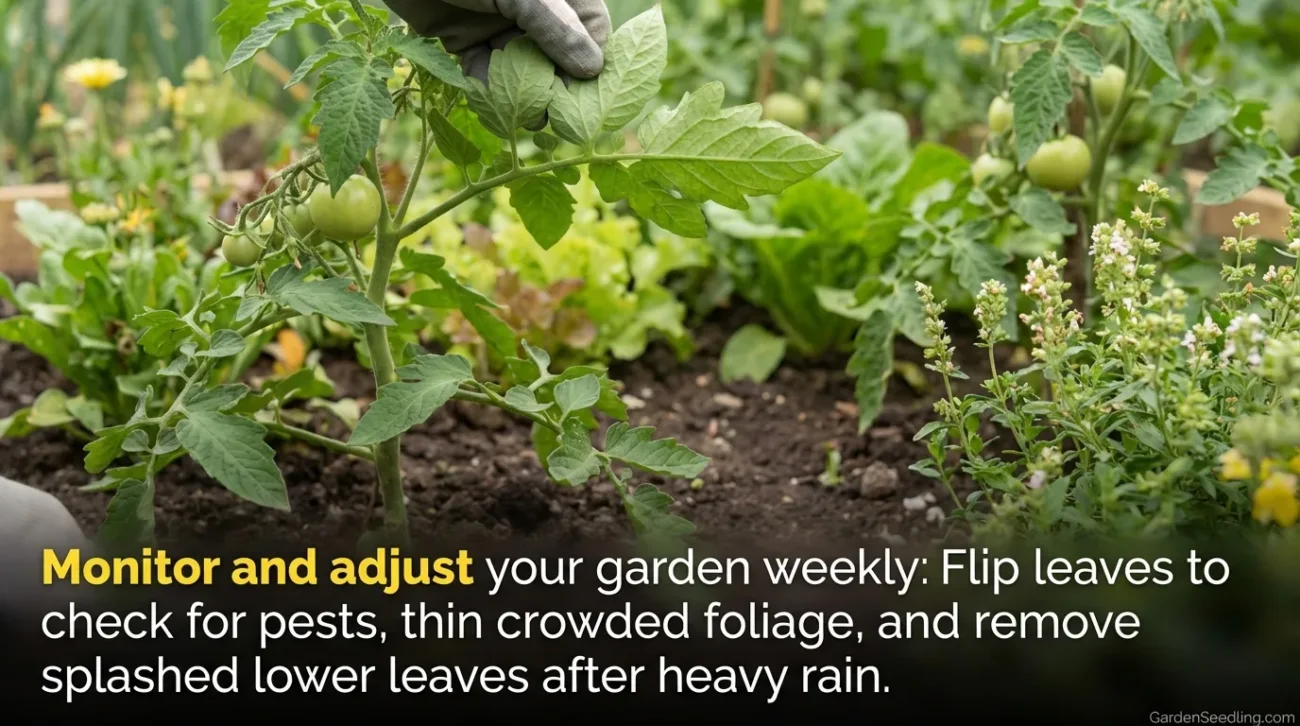
- Twice a week: Flip a few leaves and look for sticky residue, speckling, or clusters of pests.
- Once a week: Thin anything that’s pressing into tomato foliage.
- After heavy rain: Remove lower tomato leaves if they’re splashed and spotty.
Common Mistakes And How To Fix Them
Mistake: Overcrowding “Because Companions”
Fix: pull or trim companions so you can see soil around the tomato stem. Yes, bare soil can be okay (mulch helps). Airflow helps more.
Mistake: Treating Companion Planting Like Emergency Pest Control
Fix: plant companions early. Once whiteflies or aphids build to high levels, neighbors help less. It’s like putting a screen door on after the mosquitoes moved in.
Mistake: Choosing The Wrong Marigold Type For Nematodes
Fix: use varieties known for nematode suppression (often French marigold and certain African marigolds). If you’re planting marigolds only for looks, that’s fine—just don’t expect the same soil effect.
Mistake: Mixing Water Needs In One Tight Zone
Fix: keep thirstier companions (or sprawling ones) in their own pot. Containers are your friend here.
Tomato Companion Planting Chart (Benefits Recap)
| Companion Plant | Main Benefit | Best Placement |
|---|---|---|
| Basil | Helps lower some pest pressure; may support stronger plant responses after damage | Between cages, 10–12 in from stem |
| French Marigold | Used in nematode management; can slow whitefly build-up when planted early | Ring or strip near tomatoes, not touching |
| Sweet Alyssum | Feeds and holds beneficial insects (hoverflies, ladybugs nearby) | Bed edges and row ends |
| Nasturtium | Trap-style planting for aphids; adds edible flowers | Edge of bed, a bit away from stems |
| Borage | Strong pollinator draw; adds diversity | Bed end or outside tomato row |
| Chives/Green Onions | Low-competition companion; easy fit | Front edge, between cages |
| Parsley | Supports beneficial insects when allowed to flower | Outer edge under cages |
| Dill/Cilantro | Umbel flowers feed predators/parasitoids | Ends of rows; succession sow |
| Lettuce/Spinach | Early-season space filler; light soil shading | Between tomato spots early, then harvested |
| Bush Beans | Short-season neighbor if spaced well | Outer strip, pulled mid-season |
Printable Cheat Sheet (Copy This Into Your Notes)
Tomato bed plan in one sentence: tomatoes first, then basil and marigolds inside the row, then alyssum on the border, with one “wild card” flower (nasturtium or borage) at the end. Keep the middle open. Always.
- Best starter combo: Tomato + basil + French marigold + sweet alyssum
- Fast swap if it’s hot: Replace basil with chives (basil can struggle in brutal heat)
- If aphids show up: Add nasturtium on the edge and trim it when it gets loaded
FAQ
Do tomatoes really grow better with basil?
Sometimes, yes. Basil can help in mixed plantings and may slightly reduce certain pest pressure, but the biggest win is that it’s easy to place without creating crowding.
How close should I plant marigolds to my tomatoes?
Aim for 8–12 inches from the tomato stem, with marigolds spaced about 7–10 inches apart. Close enough to matter, far enough for airflow.
Which flowers are best for organic tomato pest management?
Start with sweet alyssum for beneficial insects, then add marigolds. Nasturtium also helps as a trap-style plant in many gardens.
Can I pair cucumbers and tomatoes in the same bed?
Yes, if you keep airflow and trellising under control. Give them space and avoid letting cucumber vines sprawl into tomato cages.
Do companion plants help prevent tomato blight?
They can help indirectly by improving airflow and reducing soil splash if you use low ground covers and mulch. They won’t “cure” blight on their own.
How many companion plants can fit in a 5-gallon tomato bucket?
Usually one small companion, like one basil or a few green onions. For flowers like alyssum, it’s often better to use a separate small pot next to the bucket.
{
“@context”: “https://schema.org”,
“@type”: “FAQPage”,
“mainEntity”: [
{
“@type”: “Question”,
“name”: “Do tomatoes really grow better with basil?”,
“acceptedAnswer”: {
“@type”: “Answer”,
“text”: “Sometimes, yes. Basil can help in mixed plantings and may slightly reduce certain pest pressure, but the biggest win is that it’s easy to place without creating crowding.”
}
},
{
“@type”: “Question”,
“name”: “How close should I plant marigolds to my tomatoes?”,
“acceptedAnswer”: {
“@type”: “Answer”,
“text”: “Aim for 8–12 inches from the tomato stem, with marigolds spaced about 7–10 inches apart. Close enough to matter, far enough for airflow.”
}
},
{
“@type”: “Question”,
“name”: “Which flowers are best for organic tomato pest management?”,
“acceptedAnswer”: {
“@type”: “Answer”,
“text”: “Start with sweet alyssum for beneficial insects, then add marigolds. Nasturtium also helps as a trap-style plant in many gardens.”
}
},
{
“@type”: “Question”,
“name”: “Can I pair cucumbers and tomatoes in the same bed?”,
“acceptedAnswer”: {
“@type”: “Answer”,
“text”: “Yes, if you keep airflow and trellising under control. Give them space and avoid letting cucumber vines sprawl into tomato cages.”
}
},
{
“@type”: “Question”,
“name”: “Do companion plants help prevent tomato blight?”,
“acceptedAnswer”: {
“@type”: “Answer”,
“text”: “They can help indirectly by improving airflow and reducing soil splash if you use low ground covers and mulch. They won’t cure blight on their own.”
}
},
{
“@type”: “Question”,
“name”: “How many companion plants can fit in a 5-gallon tomato bucket?”,
“acceptedAnswer”: {
“@type”: “Answer”,
“text”: “Usually one small companion, like one basil or a few green onions. For flowers like alyssum, it’s often better to use a separate small pot next to the bucket.”
}
}
]
}
Keep it simple for the first season. Pick three companions, place them on purpose, and watch what happens. Your garden will tell you what it likes—sometimes loudly.