If you want color that lasts without turning gardening into a daily chore, low maintenance perennial flowers that bloom all summer are a smart place to start. The trick is choosing plants that naturally flower for a long stretch (or repeat bloom after a quick trim), then giving them simple support like sun, spacing, and occasional deadheading. Who wouldn’t want a border that looks lively from June through September with only light upkeep?
- Quick Answer
- How These Picks Stay Low Maintenance
- Best Low Maintenance Perennial Flowers That Bloom All Summer
- Catmint (Nepeta)
- ‘Rozanne’ Hardy Geranium (Geranium)
- Blanket Flower (Gaillardia)
- Threadleaf Coreopsis (Coreopsis)
- Meadow Sage (Salvia nemorosa)
- Yarrow (Achillea)
- Black-Eyed Susan (Rudbeckia)
- Russian Sage (Salvia yangii)
- Reblooming Daylily (Hemerocallis)
- Simple Care Routine For Months Of Bloom
- Step-By-Step: The “Low Maintenance” Schedule
- Deadheading Vs. Shearing
- Common Mistakes That Reduce Summer Bloom
- Quick Comparison Table
- FAQ
- Do Perennials Really Bloom All Summer?
- What Is A Good “Set It And Forget It” Perennial For Full Sun?
- How Do You Keep Perennials Blooming Longer With Minimal Work?
- Which Perennials Here Work In Part Shade?
- Can These Perennials Grow In Containers?
This guide focuses on reliable perennials for many U.S. gardens, especially beginner-friendly picks that handle heat, bounce back after storms, and keep blooming when you do a few small things at the right time.
Quick Answer
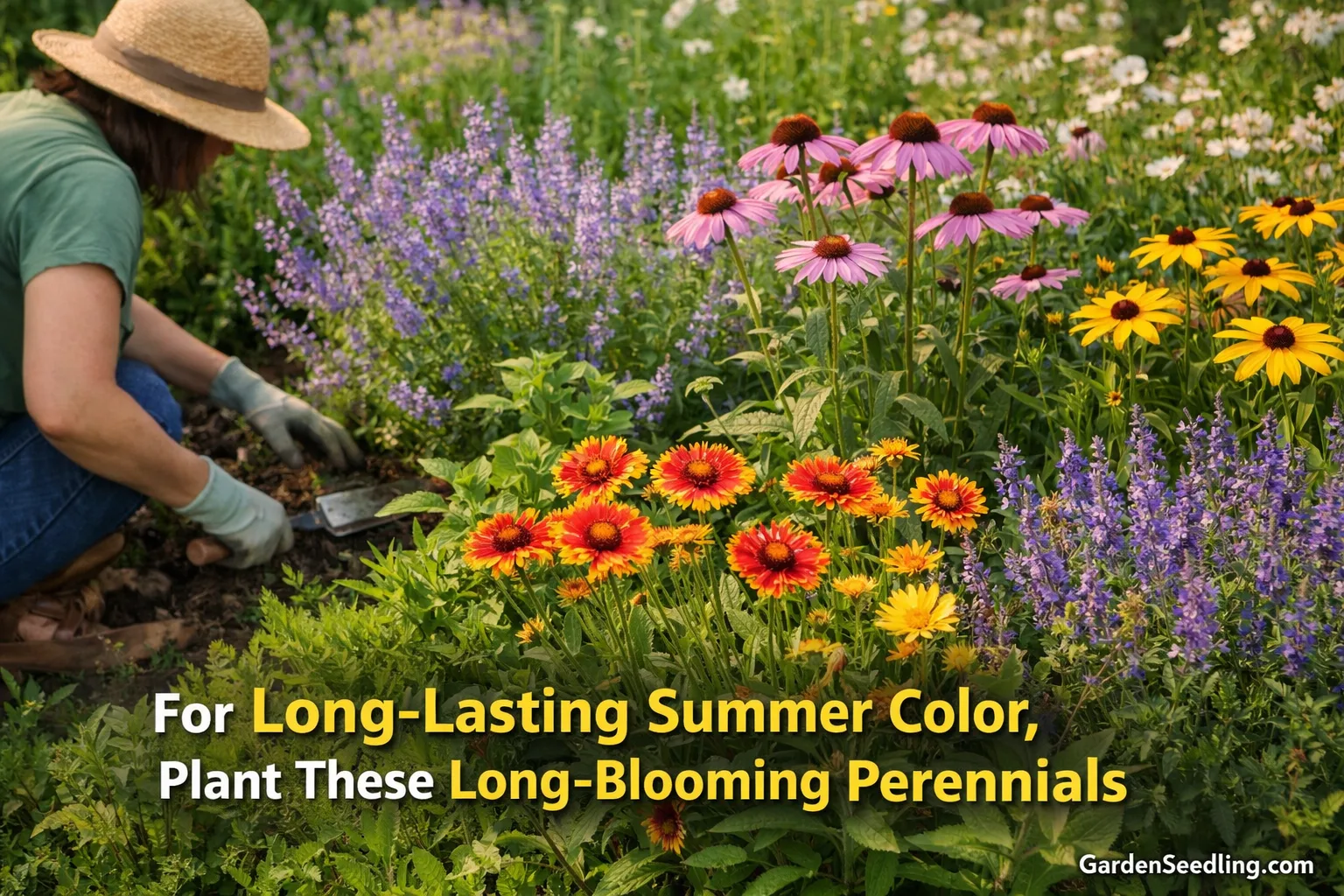
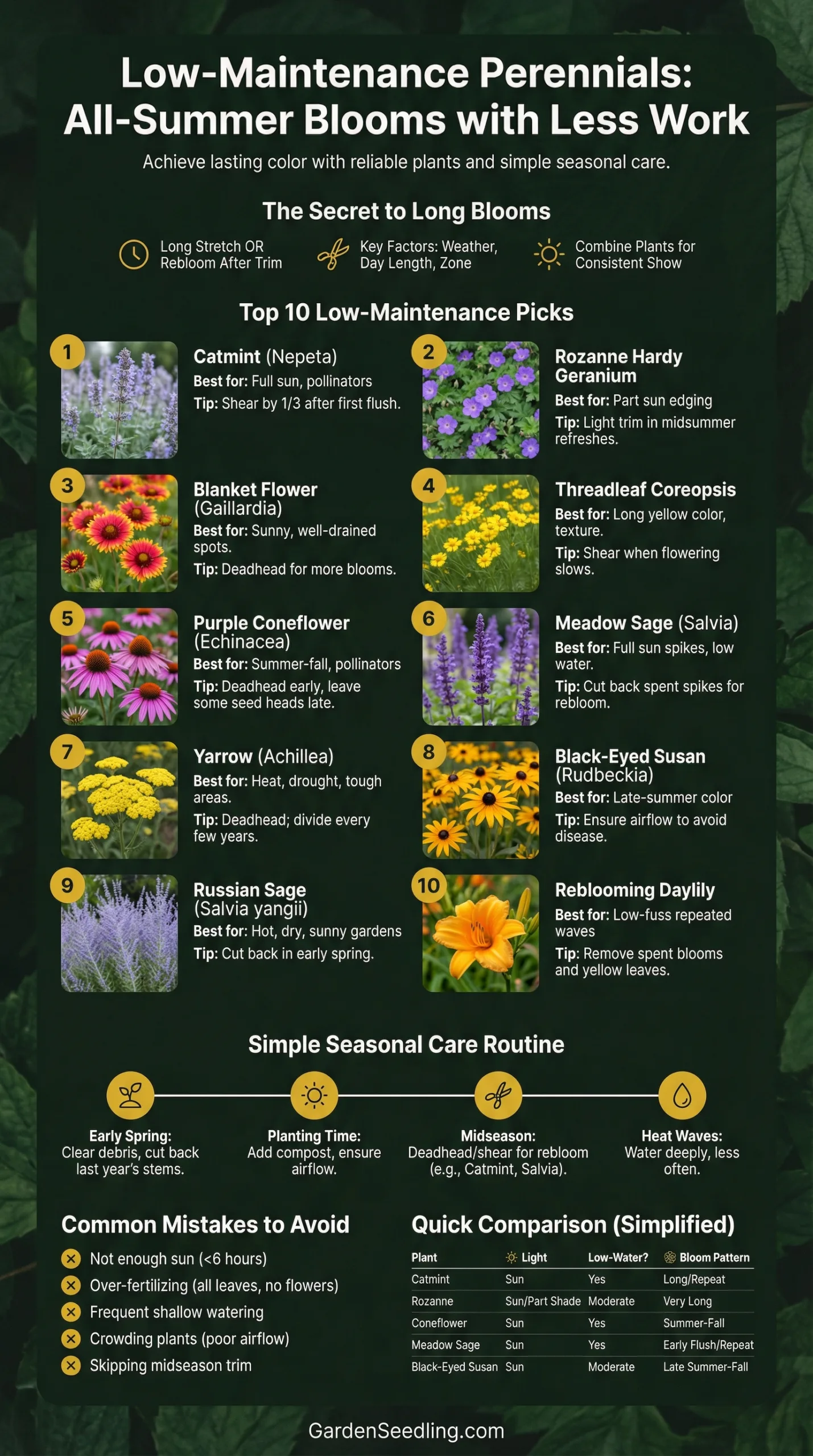
For long-lasting summer color with minimal work, start with these long-blooming perennials (choose what fits your sun and climate):
- Catmint (Nepeta) – flowers for months, handles drought once established.
- ‘Rozanne’ Hardy Geranium (Geranium) – one of the longest bloomers for part sun to sun.
- Blanket Flower (Gaillardia) – blooms through summer in sunny, well-drained spots.
- Threadleaf Coreopsis (Coreopsis) – airy foliage with steady blooms; shearing helps rebloom.
- Purple Coneflower (Echinacea) – summer into early fall, tough and pollinator-friendly.
- Meadow Sage (Salvia nemorosa) – strong early summer flush, repeat blooms after trimming.
- Yarrow (Achillea) – heat-tolerant and long flowering with deadheading.
- Black-Eyed Susan (Rudbeckia) – dependable late-summer color with a long season.
- Russian Sage (Salvia yangii) – airy purple bloom clouds in hot, dry gardens.
- Reblooming Daylily (Hemerocallis) – repeated waves of flowers with basic care.
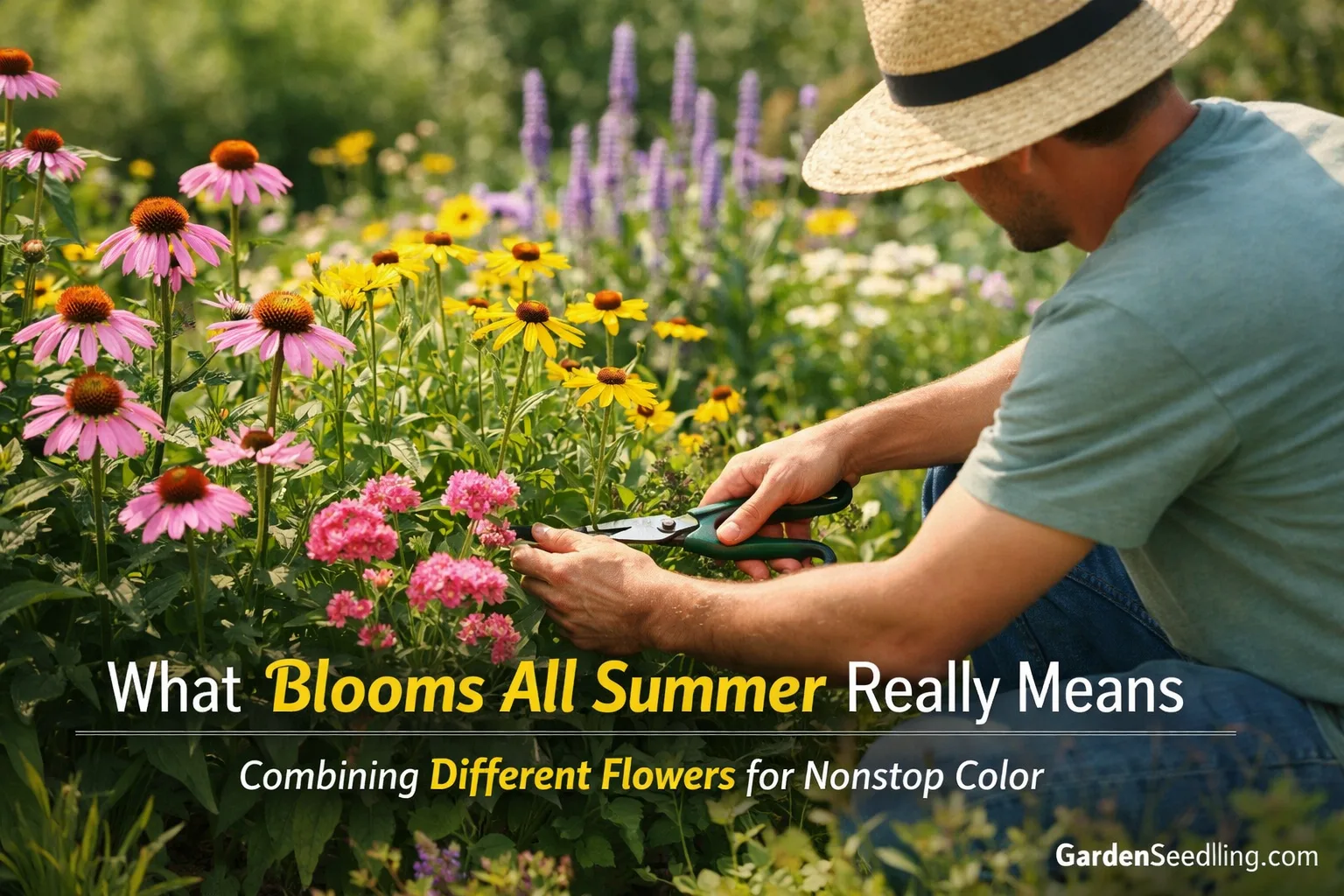
In gardening, “blooms all summer” usually means a plant flowers for a long stretch (often 8–12+ weeks) or it repeat-blooms after a simple midseason haircut. Weather, day length, and your USDA hardiness zone matter. A perennial that blooms from May to October in a mild area might start later or finish earlier where summers are shorter.
To get the most consistent color, it helps to combine a few plants with different peak times. That way, even if one slows down for a week, others are still carrying the show.
How These Picks Stay Low Maintenance
Low maintenance does not mean “never touch it.” It means the plant stays healthy and blooms well with basic routines instead of constant pampering. The best long-blooming perennials tend to share these traits:
- Strong stems and clumping growth (less flopping and less spreading trouble).
- Drought tolerance once established (fewer emergency waterings).
- Easy rebloom triggers like deadheading or shearing.
- Adaptable soil needs (no perfect mix required).
Best Low Maintenance Perennial Flowers That Bloom All Summer
Catmint (Nepeta)
Best for: full sun borders, pollinator gardens, dry spots once established.
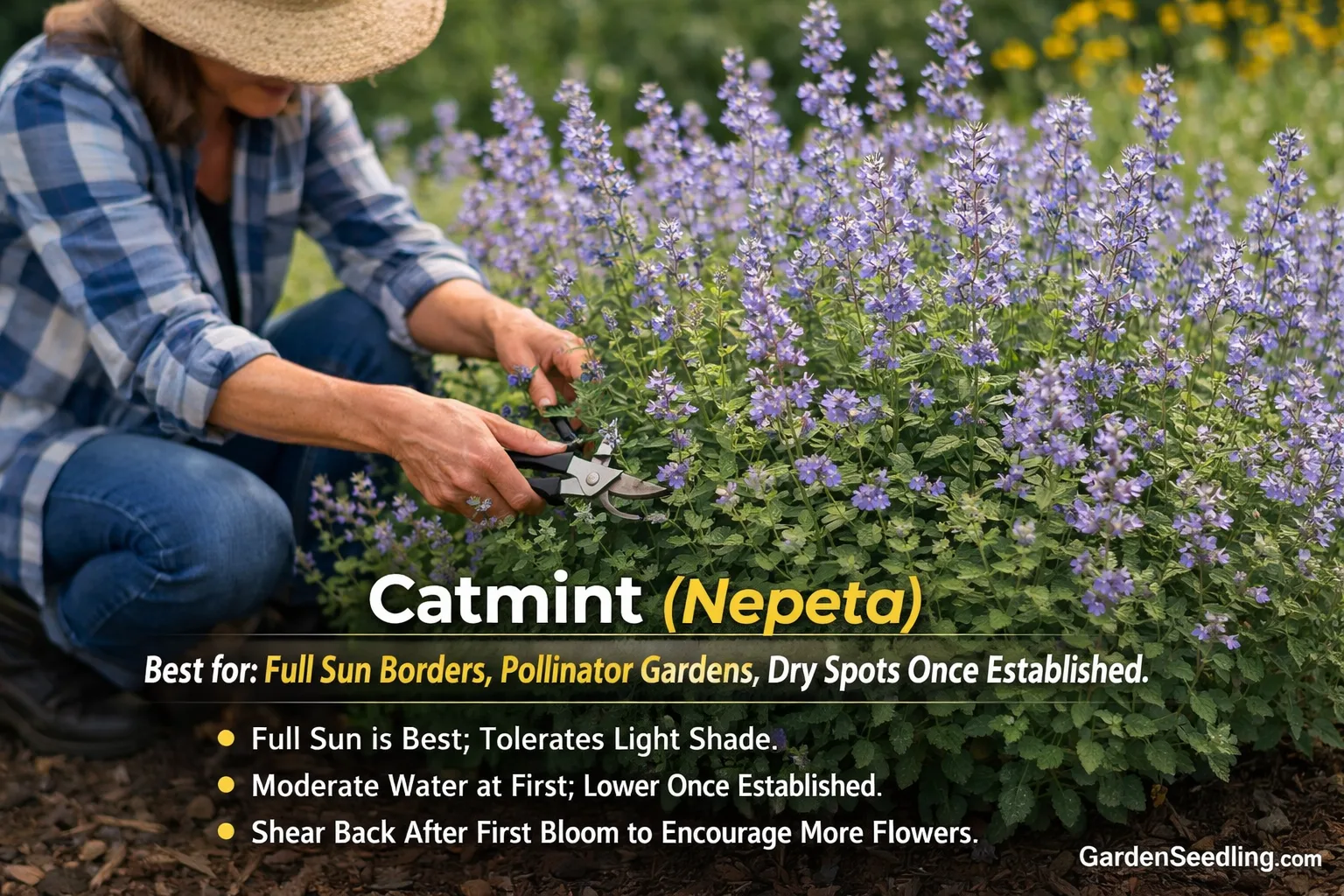
Catmint forms soft mounds of fragrant foliage and pushes out lavender-blue flowers for a long season. For the easiest repeat bloom, shear the plant back after the first big flush. Nepeta is also a strong choice if deer pressure is common, though no plant is deer-proof.
- Light: Full sun is best; tolerates light shade.
- Water: Moderate at first; lower once established.
- Tip: Shear by about one-third after the first flush to refresh blooms and shape.
‘Rozanne’ Hardy Geranium (Geranium)
Best for: edging, part sun gardens, and places where you want color without fuss.
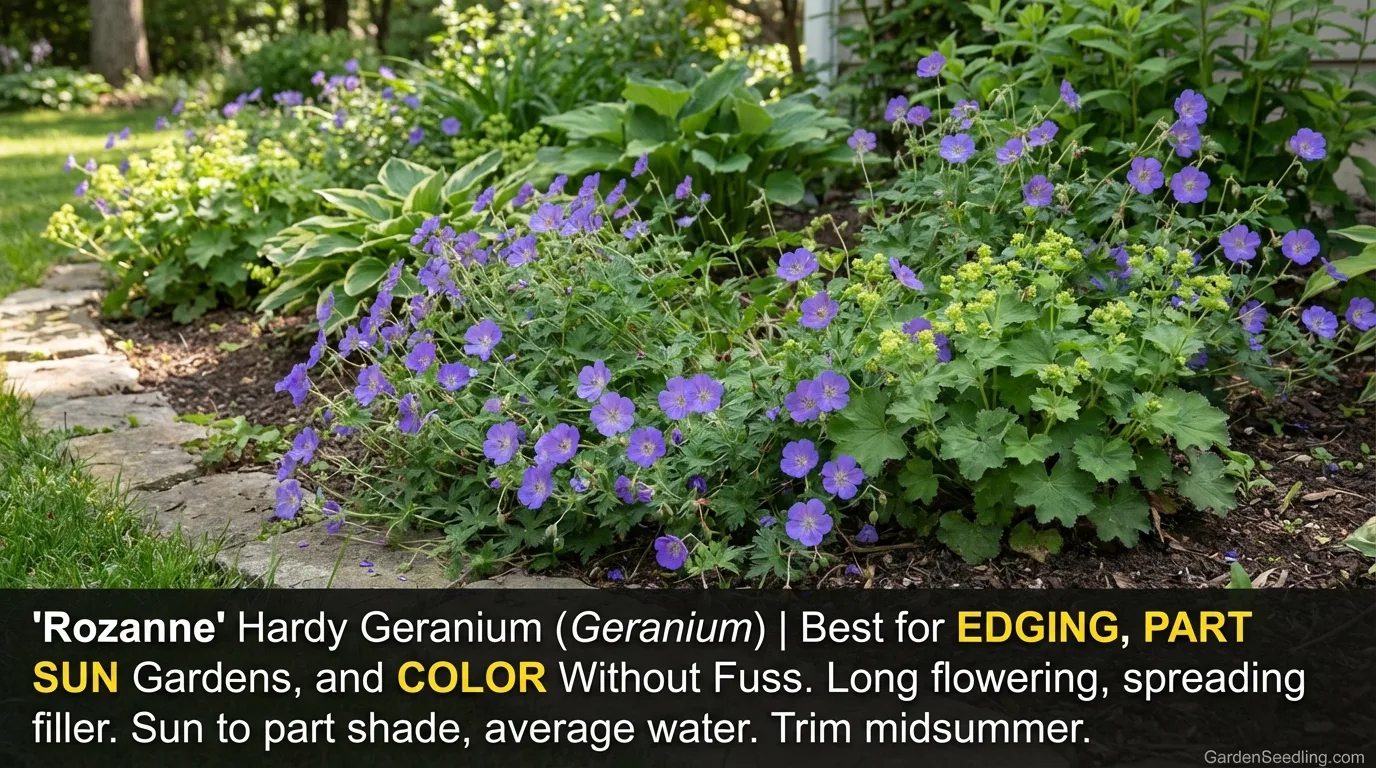
‘Rozanne’ is famous for its long flowering season and spreading (but generally polite) habit. It works as a flowering “filler” that weaves through other plants. Give it room, keep it from being smothered, and it tends to keep going with little attention.
- Light: Sun to part shade.
- Water: Average; more consistent moisture helps in hot weeks.
- Tip: A light trim in midsummer can freshen the plant if it looks tired.
Blanket Flower (Gaillardia)
Best for: sunny beds with well-drained soil and hot summers.
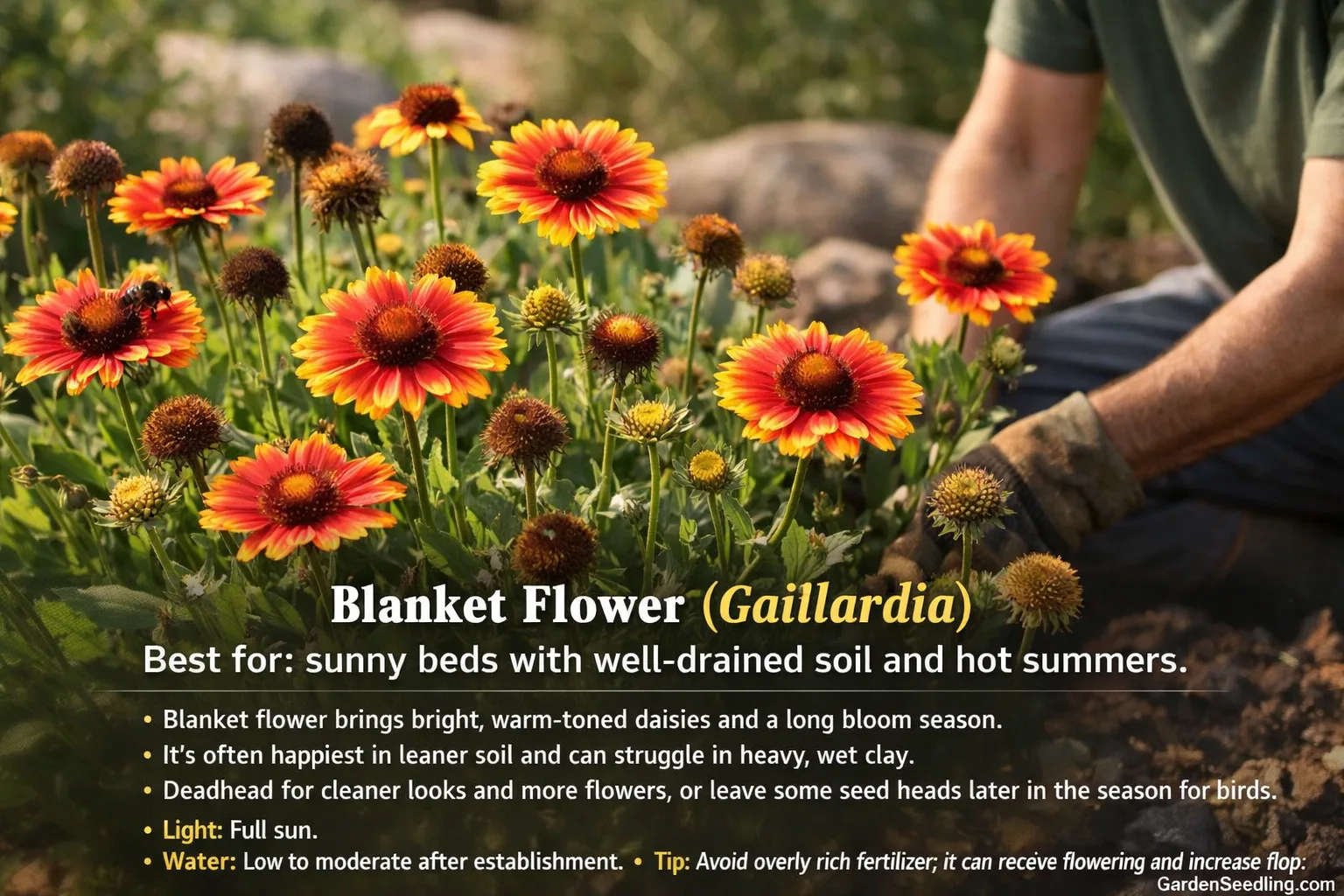
Blanket flower brings bright, warm-toned daisies and a long bloom season. It’s often happiest in leaner soil and can struggle in heavy, wet clay. Deadhead for cleaner looks and more flowers, or leave some seed heads later in the season for birds.
- Light: Full sun.
- Water: Low to moderate after establishment.
- Tip: Avoid overly rich fertilizer; it can reduce flowering and increase flop.
Threadleaf Coreopsis (Coreopsis)
Best for: long-blooming yellow color with airy texture.
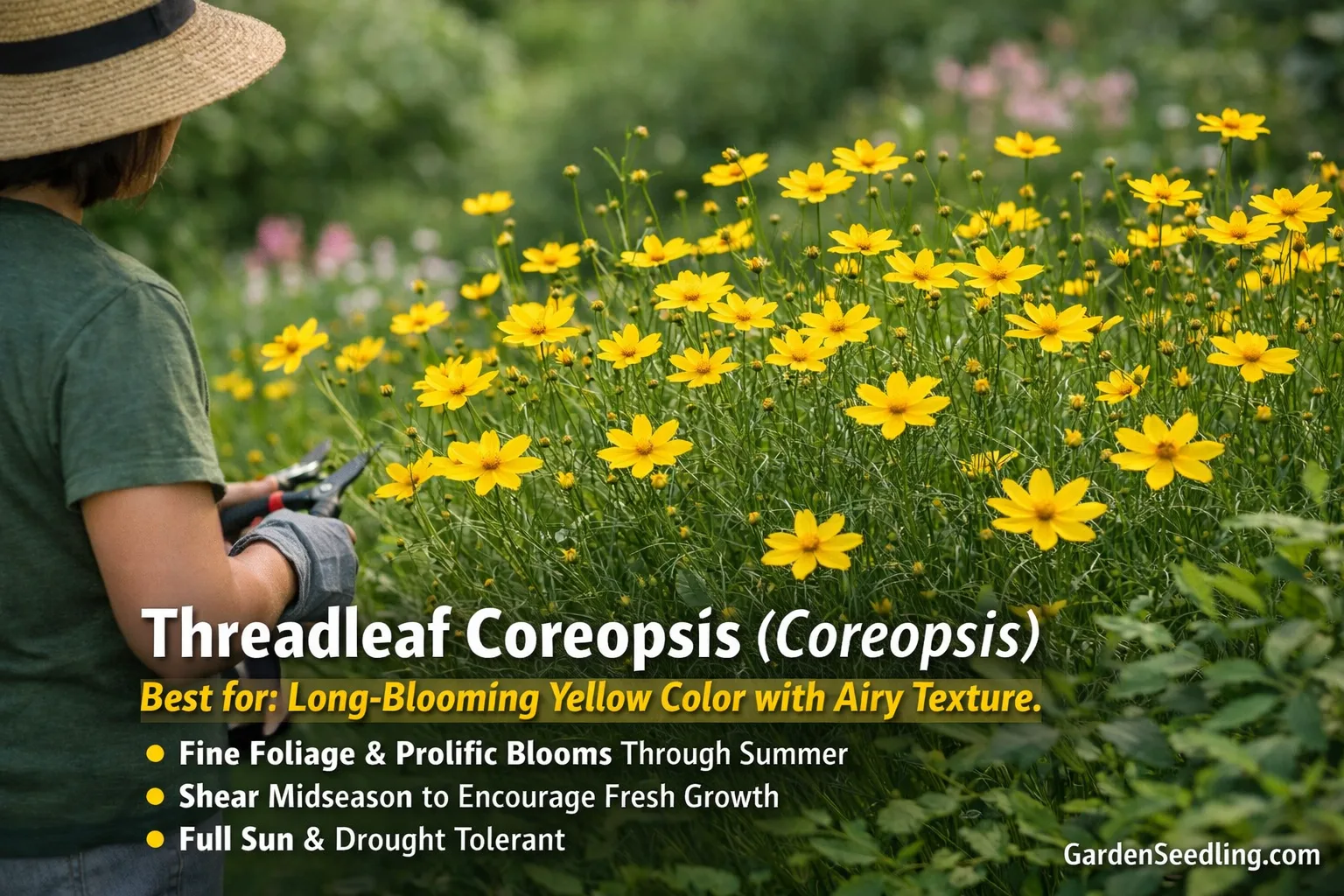
Threadleaf coreopsis has fine foliage and steady blooms that can last deep into summer. Many varieties respond well to a midsummer shear (a quick haircut) to encourage a fresh flush and neater shape.
- Light: Full sun for best bloom.
- Water: Average; tolerates some drought once established.
- Tip: Shear lightly when flowering slows to promote rebloom and reduce legginess.
Best for: beginner gardens, pollinators, and summer-to-fall color.
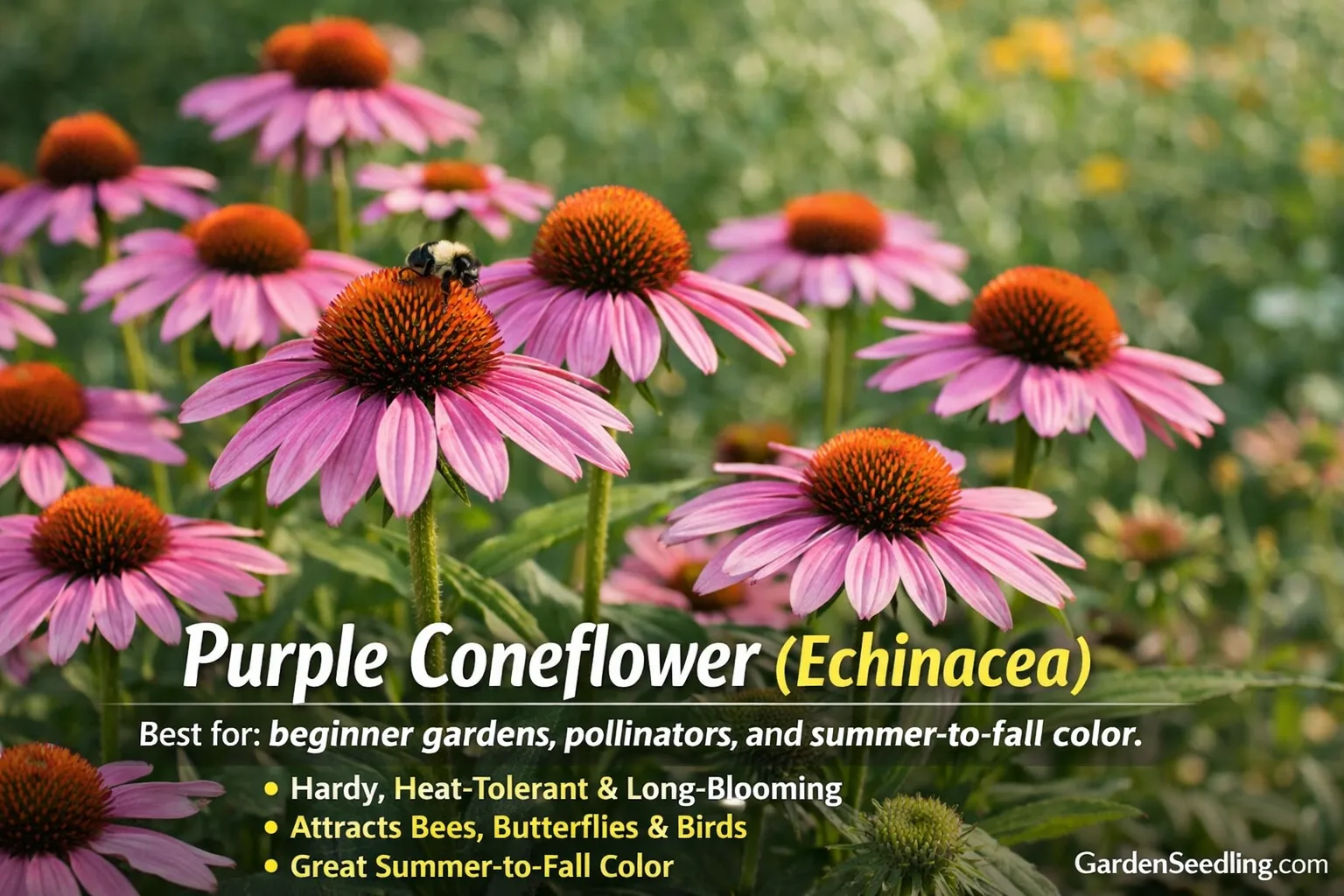
Coneflowers are hardy, heat-tolerant, and dependable once established. They can bloom for months, especially if you deadhead some spent flowers. Leaving a portion of seed heads later in the season can add winter interest and support birds.
- Light: Full sun; tolerates partial sun.
- Water: Average; drought-tolerant once established.
- Tip: Deadhead early in the season for more blooms, then stop later if you want seed heads.
Meadow Sage (Salvia nemorosa)
Best for: full sun color spikes, low water use, and a tidy look.
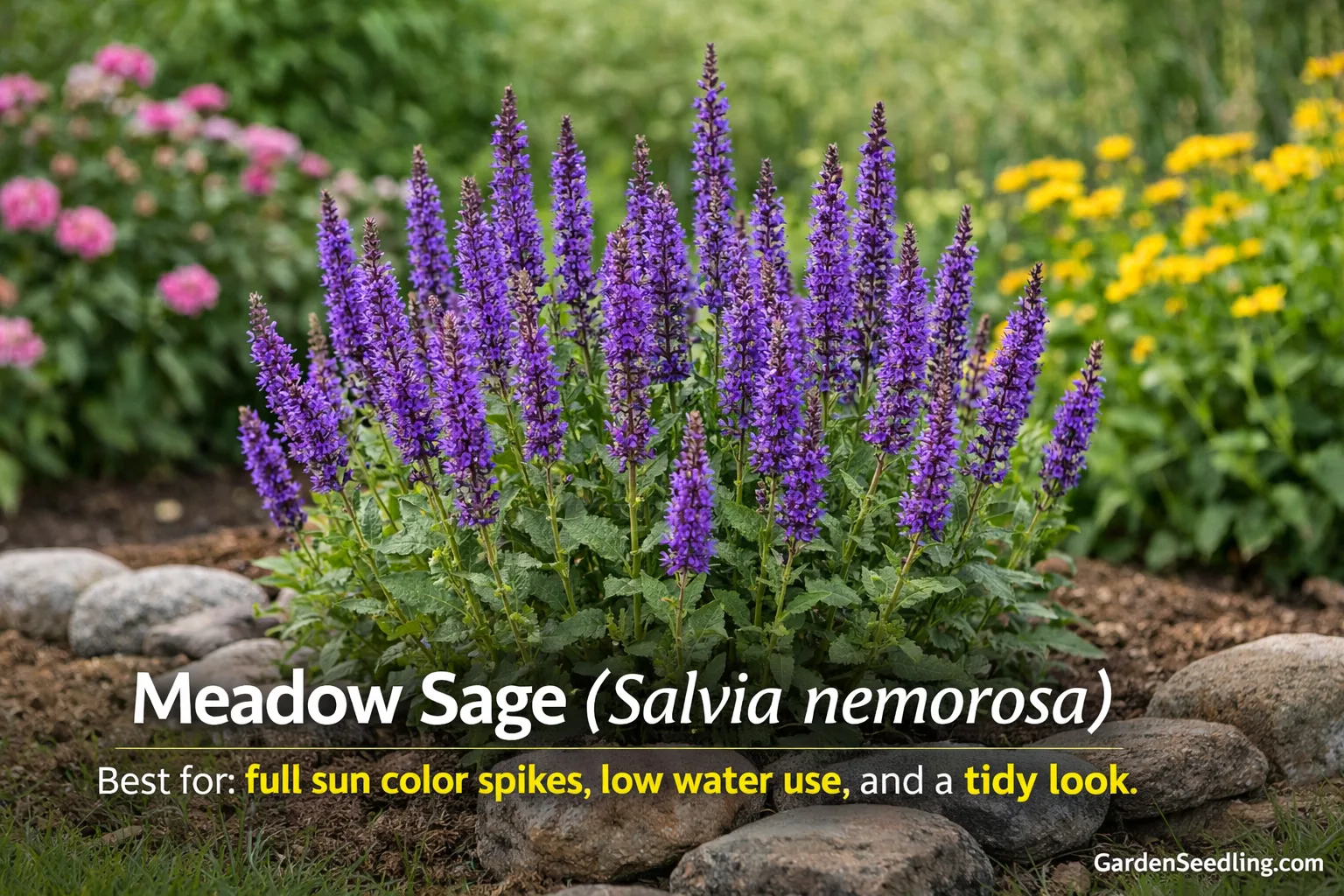
Meadow sage produces strong early-summer spikes, and many varieties will repeat bloom if you cut back spent flower stalks. It’s a clean, structured perennial that works well in beginner gardens because the care is straightforward.
- Light: Full sun.
- Water: Moderate; more consistent moisture improves bloom, but avoid soggy soil.
- Tip: Trim flower spikes after the first flush; a light feed and water can help the second round.
Yarrow (Achillea)
Best for: heat, drought, and tough planting areas where other flowers fade.
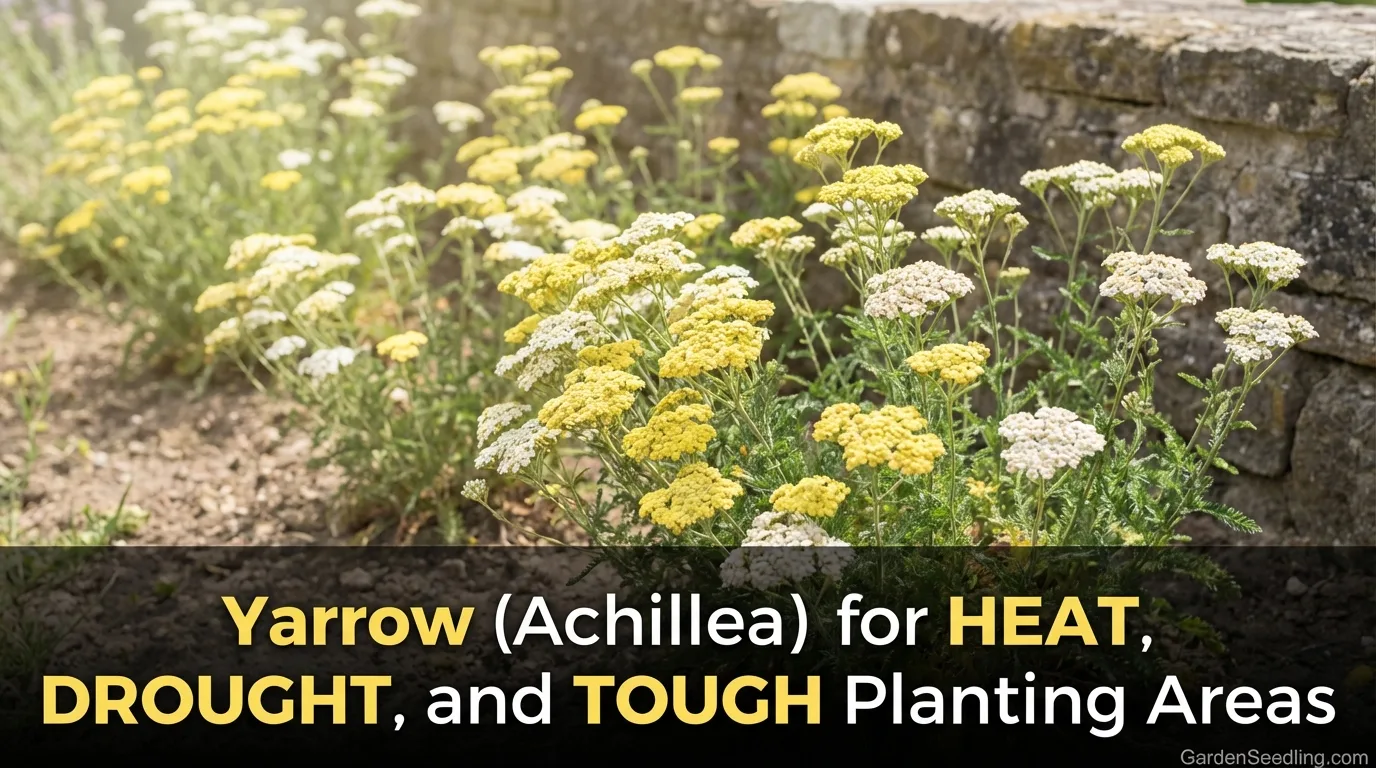
Yarrow blooms in broad clusters and can flower over a long stretch through summer. Deadheading encourages additional blooms and keeps the plant from putting energy into seed too early. It also works well in cut-flower gardens because the blooms hold shape nicely.
- Light: Full sun.
- Water: Low once established; dislikes soggy soil.
- Tip: Divide clumps every few years if the center thins or bloom decreases.
Black-Eyed Susan (Rudbeckia)
Best for: late-summer color and reliable performance in many climates.
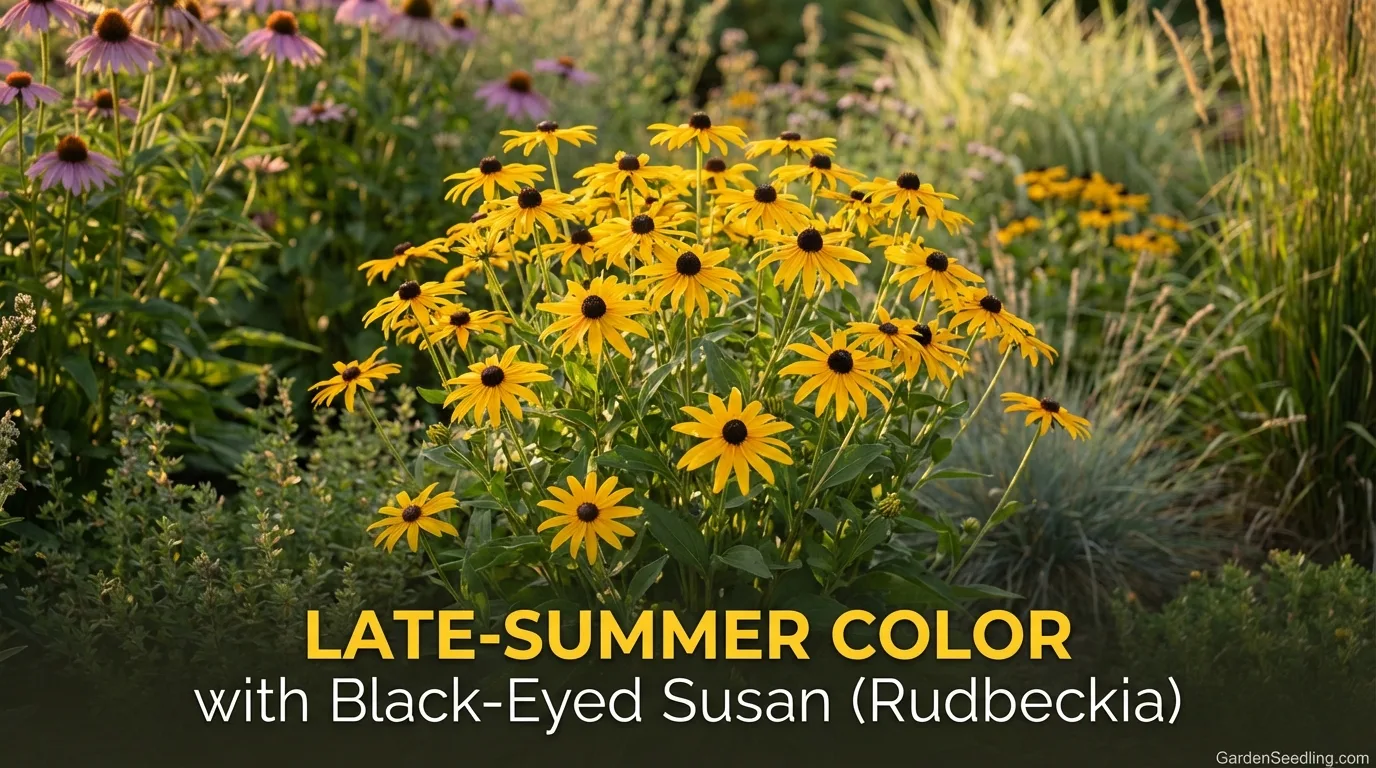
Black-eyed Susans are a classic for a reason: they handle heat, bloom heavily, and add strong color later in summer when some early bloomers slow down. Choose clumping types for easier control and better long-term shape.
- Light: Full sun is best.
- Water: Average; tolerates some drought once established.
- Tip: Give plants airflow and avoid overhead watering to reduce leaf disease issues in humid areas.
Russian Sage (Salvia yangii)
Best for: hot, sunny, low-water gardens and a soft “haze” of color.
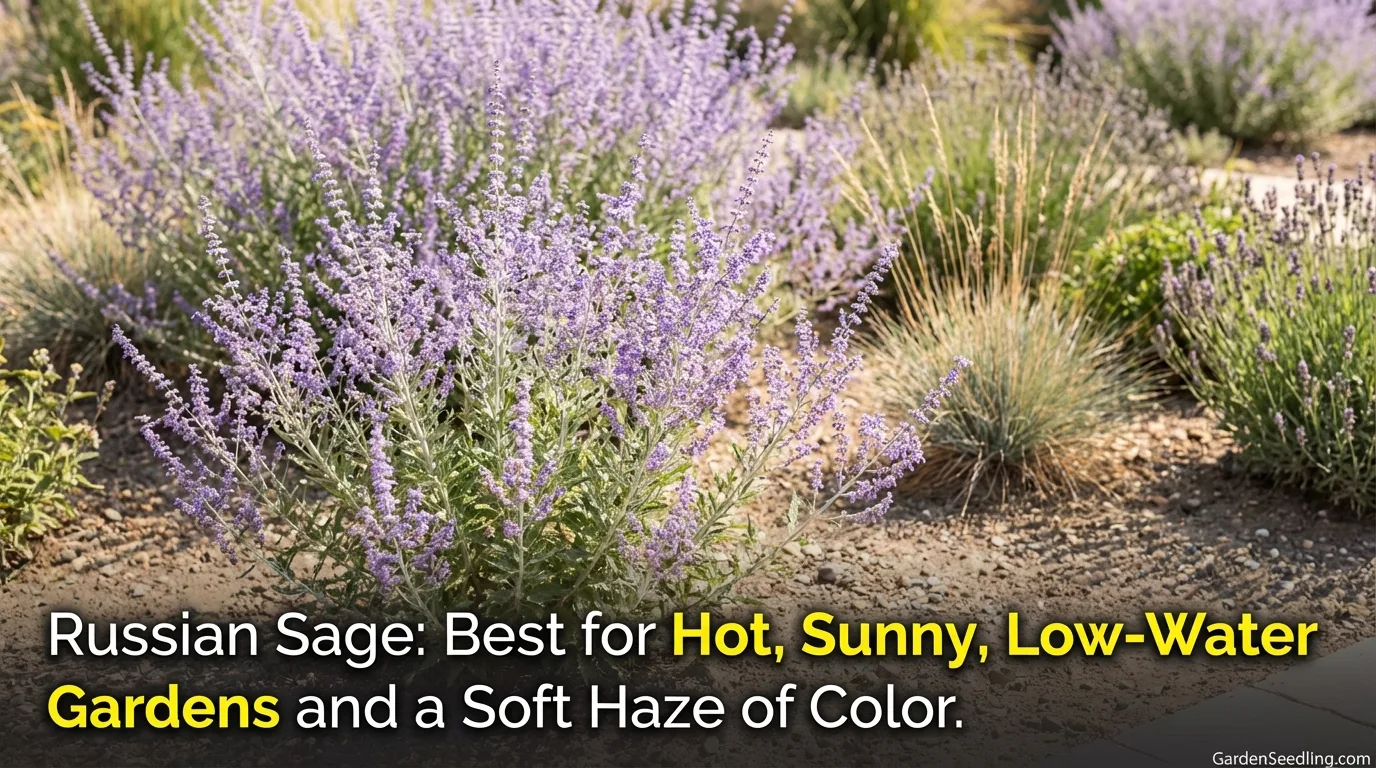
Russian sage brings silvery foliage and airy purple flowers from mid to late summer, often lasting into early fall. Once established, it is usually very low maintenance. In colder areas, it may die back hard in winter and regrow in spring.
- Light: Full sun.
- Water: Low once established; needs drainage.
- Tip: Cut back in early spring (not fall) in colder climates to protect the crown.
Reblooming Daylily (Hemerocallis)
Best for: low-fuss flowers and repeated bloom waves.
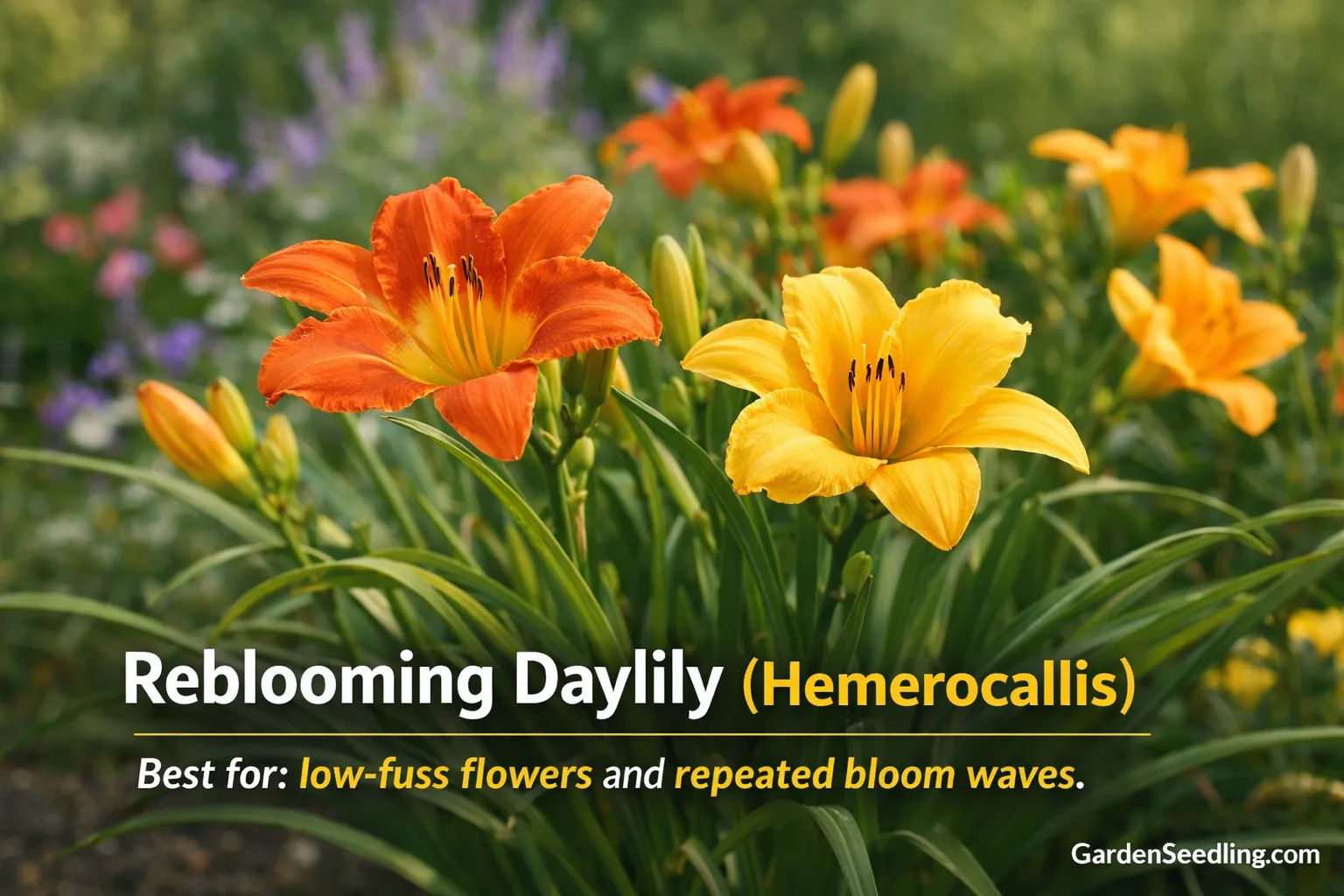
Many daylilies bloom for a limited period, but reblooming types can send up new scapes and repeat through summer. They handle a wide range of conditions, but look best with consistent moisture during bud and bloom.
- Light: Full sun to part sun.
- Water: Average; water during dry stretches for better bloom.
- Tip: Remove spent blooms and yellowing leaves to keep clumps looking neat.
Simple Care Routine For Months Of Bloom
This is a realistic routine that keeps long-blooming perennials productive without making you babysit them. Consistency matters more than complexity.
Step-By-Step: The “Low Maintenance” Schedule
- Early spring: Cut back last year’s stems, clear debris, and check for crowded clumps.
- Planting time: Add compost if your soil is poor, then plant at the right spacing for airflow.
- After planting: Water regularly for a few weeks so roots establish.
- Late spring to early summer: Mulch 2–3 inches to reduce weeds and steady soil moisture (keep mulch off the crown).
- Midseason: Deadhead or shear the plants that respond well to it (catmint, coreopsis, salvia, yarrow, coneflower).
- Heat waves: Water deeply, less often. Shallow daily watering can weaken roots.
Deadheading Vs. Shearing
Deadheading means removing individual spent flowers. It’s best when blooms are large and easy to snip (coneflower, blanket flower). Shearing means trimming many stems at once (catmint, coreopsis) to reset the plant and trigger a new flush.
Common Mistakes That Reduce Summer Bloom
- Not enough sun: Most summer bloomers need 6+ hours of sun for strong flowering.
- Over-fertilizing: Too much nitrogen grows leaves instead of flowers, especially on drought-tolerant plants.
- Watering the wrong way: Frequent shallow watering can lead to weak roots and heat stress.
- Crowding plants: Tight spacing reduces airflow and increases disease pressure in humid climates.
- Skipping the midseason trim: Some repeat bloomers need that “reset” to keep going.
Quick Comparison Table
| Plant | Best Light | Low-Water Friendly? | Typical Summer Bloom Pattern | Minimal Upkeep That Helps Most |
|---|---|---|---|---|
| Catmint (Nepeta) | Full Sun | Yes | Long season; strong repeat bloom | Shear after first flush |
| ‘Rozanne’ Geranium | Sun/Part Shade | Moderate | Very long season in many areas | Light trim if tired |
| Blanket Flower (Gaillardia) | Full Sun | Yes | Steady summer bloom | Deadhead; keep soil well-drained |
| Threadleaf Coreopsis | Full Sun | Yes | Early-to-late summer; rebloom possible | Shear when bloom slows |
| Purple Coneflower (Echinacea) | Full Sun | Yes | Summer into early fall | Deadhead early; leave some seed heads late |
| Meadow Sage (Salvia) | Full Sun | Yes | Early summer flush; repeat bloom | Cut back spent spikes |
| Yarrow (Achillea) | Full Sun | Yes | Long summer bloom; extra flush possible | Deadhead; divide when crowded |
| Black-Eyed Susan (Rudbeckia) | Full Sun | Moderate | Mid-to-late summer into fall | Airflow; remove diseased leaves |
| Russian Sage (Salvia yangii) | Full Sun | Yes | Mid/late summer into fall | Spring cutback; avoid wet soil |
| Reblooming Daylily (Hemerocallis) | Sun/Part Sun | Moderate | Repeat waves through summer | Water in dry spells; tidy spent blooms |
FAQ
Do Perennials Really Bloom All Summer?
Many do not bloom nonstop every single day, but the best long-blooming varieties can flower for months or repeat bloom after deadheading or shearing.
What Is A Good “Set It And Forget It” Perennial For Full Sun?
Catmint, yarrow, and Russian sage are strong choices for full sun if your soil drains well and you don’t over-fertilize.
How Do You Keep Perennials Blooming Longer With Minimal Work?
Give them enough sun, water deeply during dry spells, and remove spent blooms or shear once midseason on plants that respond to trimming.
Which Perennials Here Work In Part Shade?
‘Rozanne’ hardy geranium and many daylilies handle part shade well, though flowering is usually strongest with more sun.
Can These Perennials Grow In Containers?
Yes—especially catmint, coreopsis, salvia, and ‘Rozanne’ geranium. Use a large pot with drainage holes and water more often than in-ground plantings.
If you pick a small mix from the list above—pairing early-summer repeat bloomers with late-summer workhorses—you can keep your beds colorful for most of the season with simple, low-stress care. Focus on sun, drainage, and one midseason tidy-up, and the plants will do the rest.