Starting a garden for the first time at home can feel like a lot—sun, soil, seeds, watering, pests. The good news is you don’t need a perfect yard or a big budget to grow something healthy. With a small plan and a few beginner-friendly choices, you can build a simple home garden that fits your space and your schedule.
- Quick Answer
- Start With A Simple Plan
- Choose The Best Spot
- Quick Spot Checklist
- Pick A Garden Style That Fits Your Space
- Decide What To Grow First
- Beginner-Friendly Vegetables And Herbs
- Easy Flowers That Help Your Garden
- Get Your Soil Ready
- If You’re Gardening In The Ground
- If You’re Using A Raised Bed
- If You’re Using Containers
- Tools And Supplies You Actually Need
- Step-By-Step: Start A Garden For The First Time
- 1) Start Small And Measure Your Space
- 2) Prepare The Area
- 3) Choose Seeds Or Seedlings
- 4) Plant At The Right Time
- 5) Follow Spacing And Depth Basics
- 6) Water Gently And Consistently
- 7) Mulch After Plants Are Up
- 8) Support Tall Or Vining Plants Early
- 9) Feed Lightly, Not Constantly
- 10) Harvest Often
- Seed Starting Vs. Direct Sowing
- When To Start Seeds Indoors
- Direct Sowing Outdoors
- Watering Basics For Beginners
- Beginner-Friendly Plant Care That Makes A Big Difference
- Keep Weeds Small
- Scout For Problems Early
- Use Simple Spacing And Airflow
- Succession Plant For Continuous Harvest
- Common Mistakes And How To Avoid Them
- Practical Tips To Keep It Easy
- FAQ
- How much sun do I need to start a garden at home?
- Is it better to start with seeds or seedlings?
- What size garden is best for a beginner?
- How often should I water my first garden?
- What are the easiest vegetables to grow for the first time?
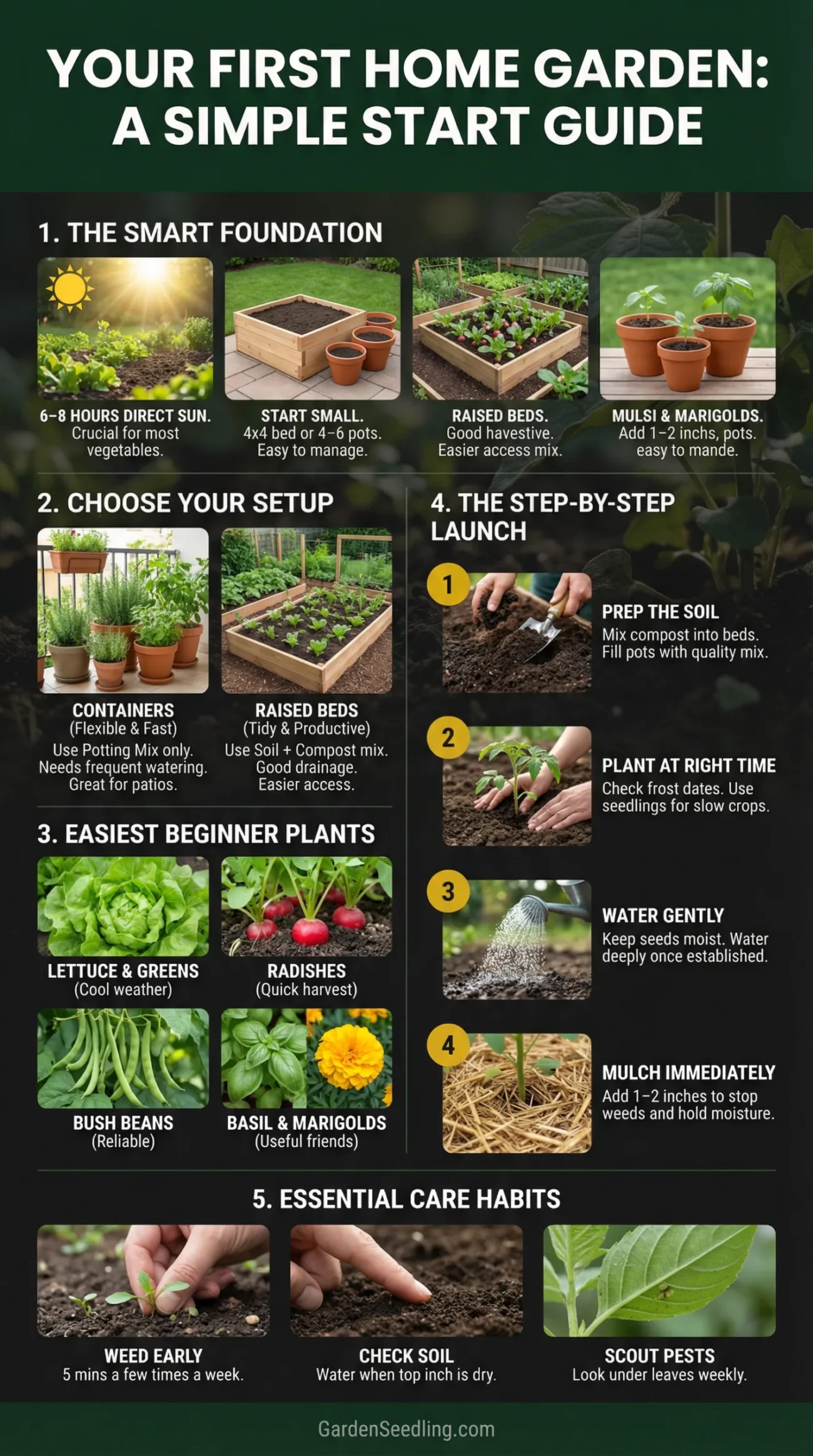
This guide shows you how to start a garden for the first time in a practical way: choose the right spot, pick an easy setup, prep the soil, plant at the right time, and keep plants growing with basic care.
Quick Answer
If you want the simplest path to a first garden, follow this checklist:
- Pick a spot with 6–8 hours of sun (or use containers if your light is limited).
- Start small: one raised bed (4×4), a few containers, or a short row in the ground.
- Choose easy plants: lettuce, radishes, bush beans, zucchini, basil, marigolds.
- Use the right “soil” for the setup: potting mix for containers, compost + garden soil for beds.
- Plant based on your last frost date; water consistently, mulch, and check plants twice a week.
Start With A Simple Plan
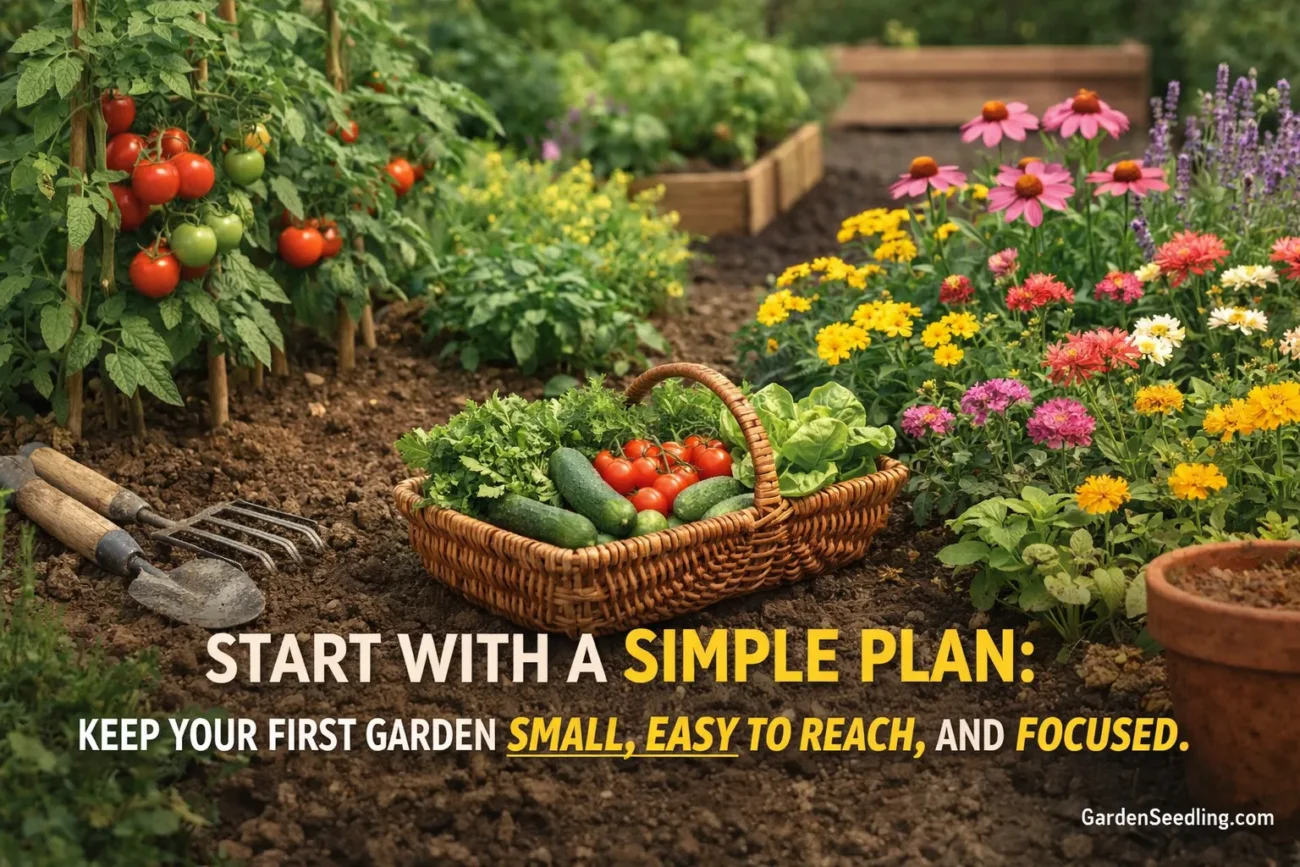
A first-time garden works best when it’s small and focused. Pick one main goal: fresh salads, a few summer veggies, herbs for cooking, or flowers for pollinators. When you try to grow everything at once, watering and weeding become harder to manage.
Before you buy anything, decide:
- How much time you can give weekly (even 20–30 minutes a few times a week helps).
- Where you’ll grow (yard, patio, balcony, driveway edge, sunny window).
- What success looks like for you (a handful of tomatoes, weekly greens, or a colorful flower patch).
One helpful rule: your first garden should be easy to reach, easy to water, and easy to see. A garden you walk past daily gets better care without extra effort.
Choose The Best Spot
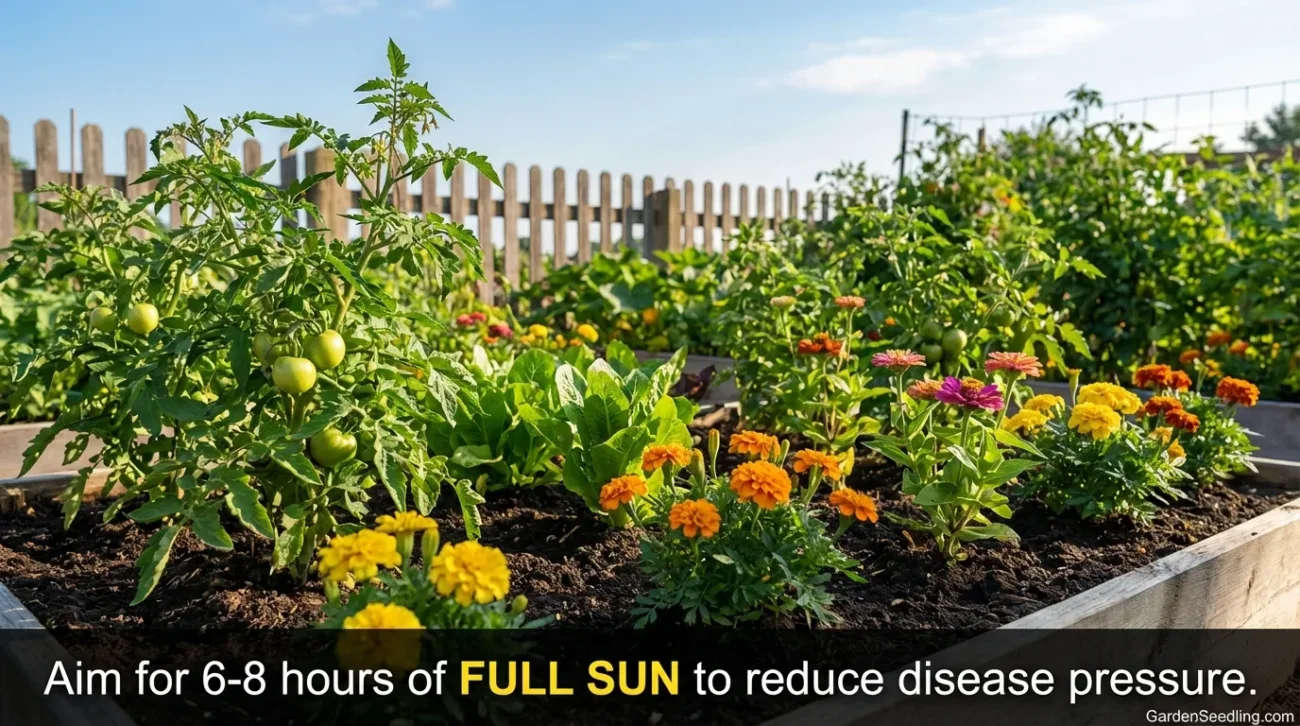
Most beginner problems come from the location, not the plant. For vegetables and many flowers, aim for full sun—about 6 to 8 hours of direct light. Morning sun is especially helpful because it dries leaves faster and can reduce disease pressure.
Quick Spot Checklist
- Sun: Watch the area for a day. Bright shade is not the same as direct sun.
- Water access: If you have to drag a hose across the yard, you’ll water less often than you should.
- Drainage: Avoid low spots that stay soggy after rain.
- Wind: Strong wind dries soil fast and can snap tender stems. Use a fence line or add support stakes.
- Convenience: Close to the house usually means better follow-through.
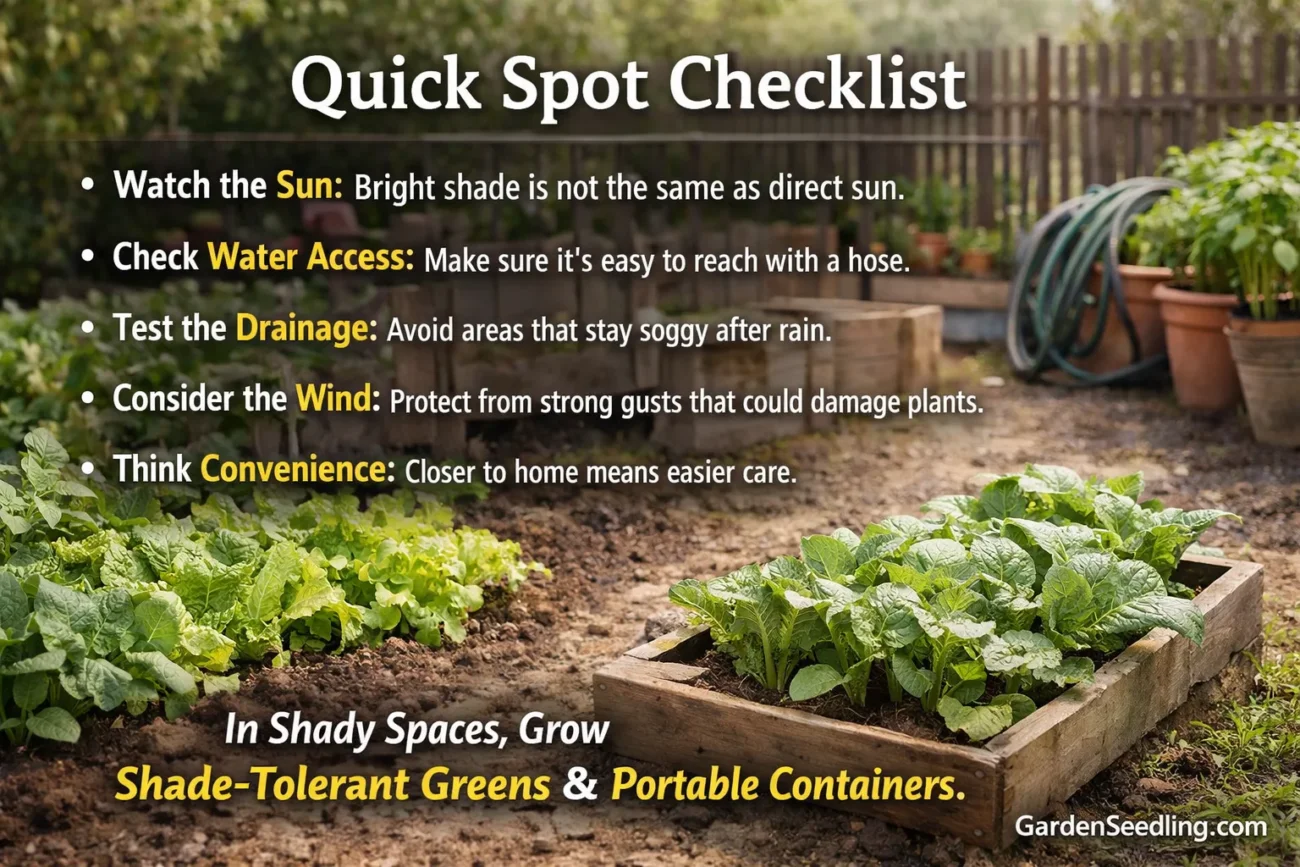
If your only space is shady, don’t force sun-loving crops. Lean into shade-tolerant greens (lettuce, arugula, spinach) and containers that you can move into better light.
Pick A Garden Style That Fits Your Space
You can start a home garden in several ways, and the “best” one depends on your soil, your space, and how permanent you want it to be. Containers are fast and flexible. Raised beds are tidy and productive. In-ground gardening can be affordable if your soil is already decent.
| Garden Type | Best For | Pros | Watch Outs |
|---|---|---|---|
| Containers | Patios, balconies, renters | Easy setup, portable, fewer weeds | Needs frequent watering; must use potting mix |
| Raised Beds | Backyards, long-term gardens | Great drainage, neat look, easier on your back | Soil fill costs upfront; can dry out faster than in-ground |
| In-Ground Rows | Large yards, budget setups | Cheapest long-term, holds moisture well | Harder if soil is clay/rocky; more weeds at first |
| Grow Bags | Small spaces, potatoes, tomatoes | Lightweight, good aeration, easy storage | Dries quickly; needs consistent watering |
If you’re unsure, containers are the easiest entry point. You can learn the basics fast without committing to digging a whole bed.
Decide What To Grow First
When you start a garden for the first time, choose plants that match your season and your attention level. Fast crops (like radishes) build confidence. Reliable crops (like bush beans) help you learn watering and harvesting without constant troubleshooting.
So what should you plant first?
Beginner-Friendly Vegetables And Herbs
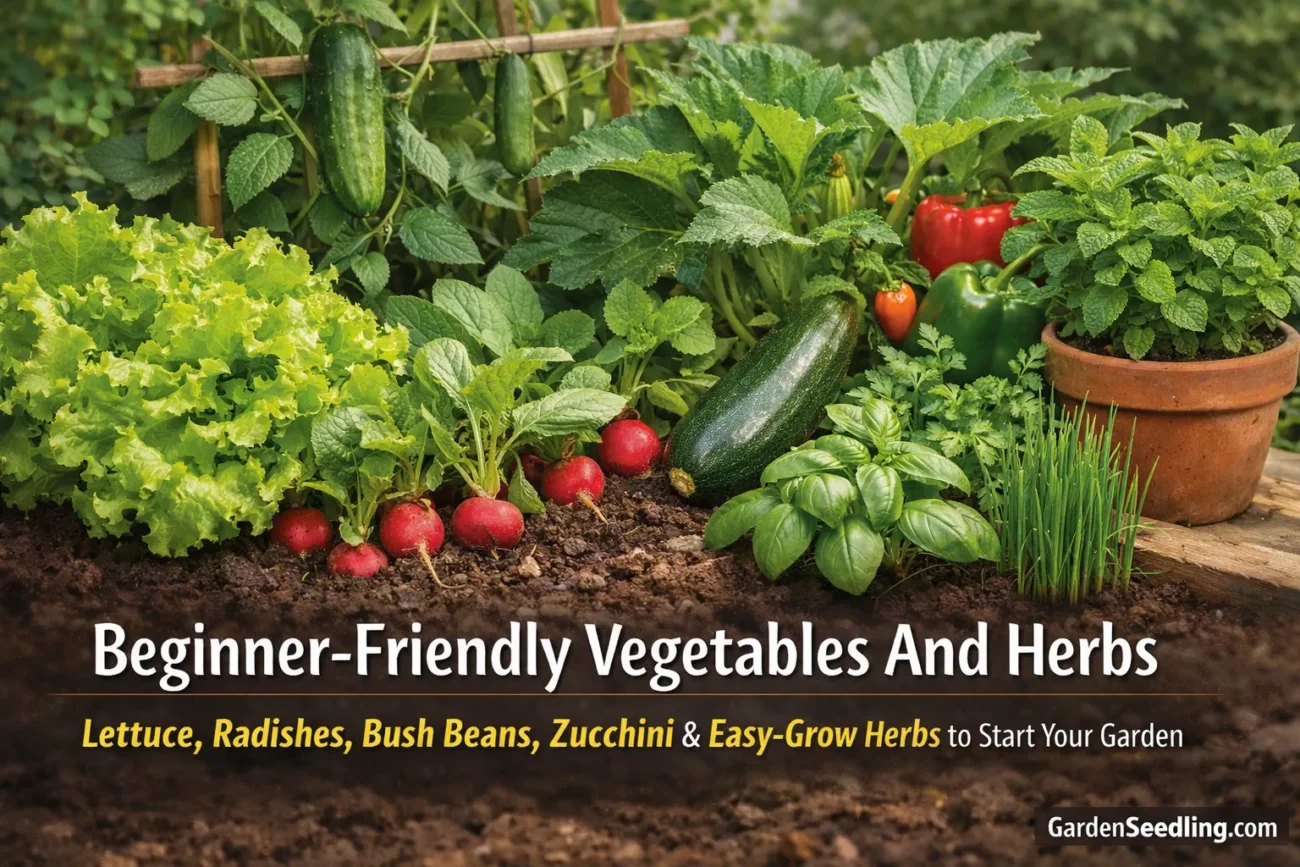
- Greens: lettuce, arugula, spinach (great for cooler weather)
- Fast wins: radishes, baby greens, green onions
- Easy warm-season: bush beans, zucchini, cucumbers (with a trellis), peppers
- Herbs: basil, parsley, chives, mint (keep mint in its own pot)
Easy Flowers That Help Your Garden
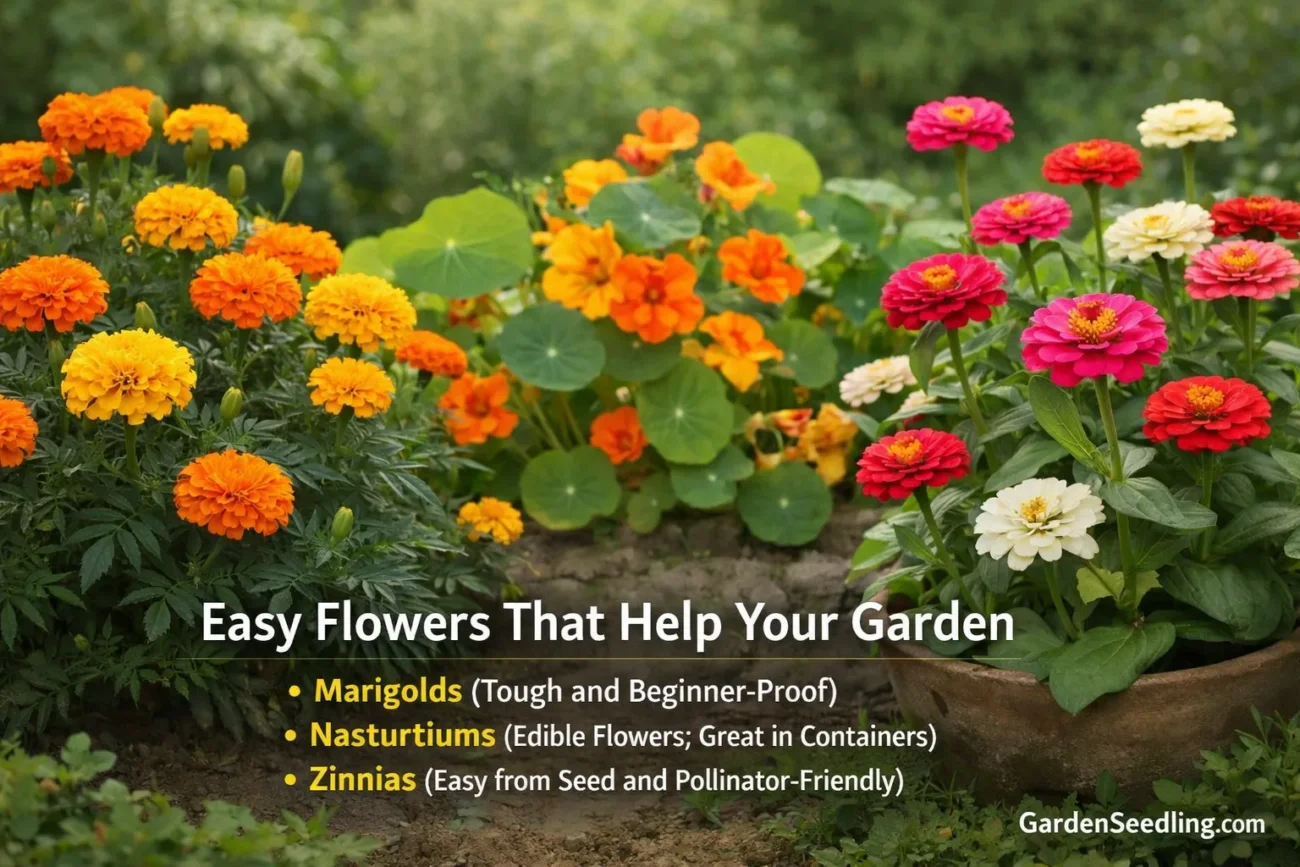
- Marigolds (tough and beginner-proof)
- Nasturtiums (edible flowers; great in containers)
- Zinnias (easy from seed and pollinator-friendly)
Match planting time to your area by checking your average last frost date. Cool-season plants can handle chilly nights, but tomatoes, peppers, and basil need warm soil to grow well.
Get Your Soil Ready
Healthy soil is the foundation of a productive garden. If you do one “extra” thing, make it adding organic matter. Compost helps soil hold moisture, improves drainage, and feeds soil life that supports strong roots.
If You’re Gardening In The Ground
- Pull weeds and remove rocks or debris.
- Loosen the top 6–10 inches with a shovel or garden fork.
- Mix in 1–2 inches of compost and level the surface.
- If your soil stays wet or feels like sticky clay, avoid over-tilling and focus on compost + mulch to improve structure over time.
If You’re Using A Raised Bed
Fill beds with a blend that drains well but doesn’t dry out instantly. A practical approach is a soil + compost mix made for raised beds (often sold in bulk or bags). Avoid filling a raised bed with straight potting mix—it can settle too much and dry quickly outdoors.
If You’re Using Containers
Use a quality potting mix, not garden soil. Garden soil compacts in pots and can suffocate roots. For most vegetables, choose containers with drainage holes and use saucers only if you can empty them after watering.
Tools And Supplies You Actually Need
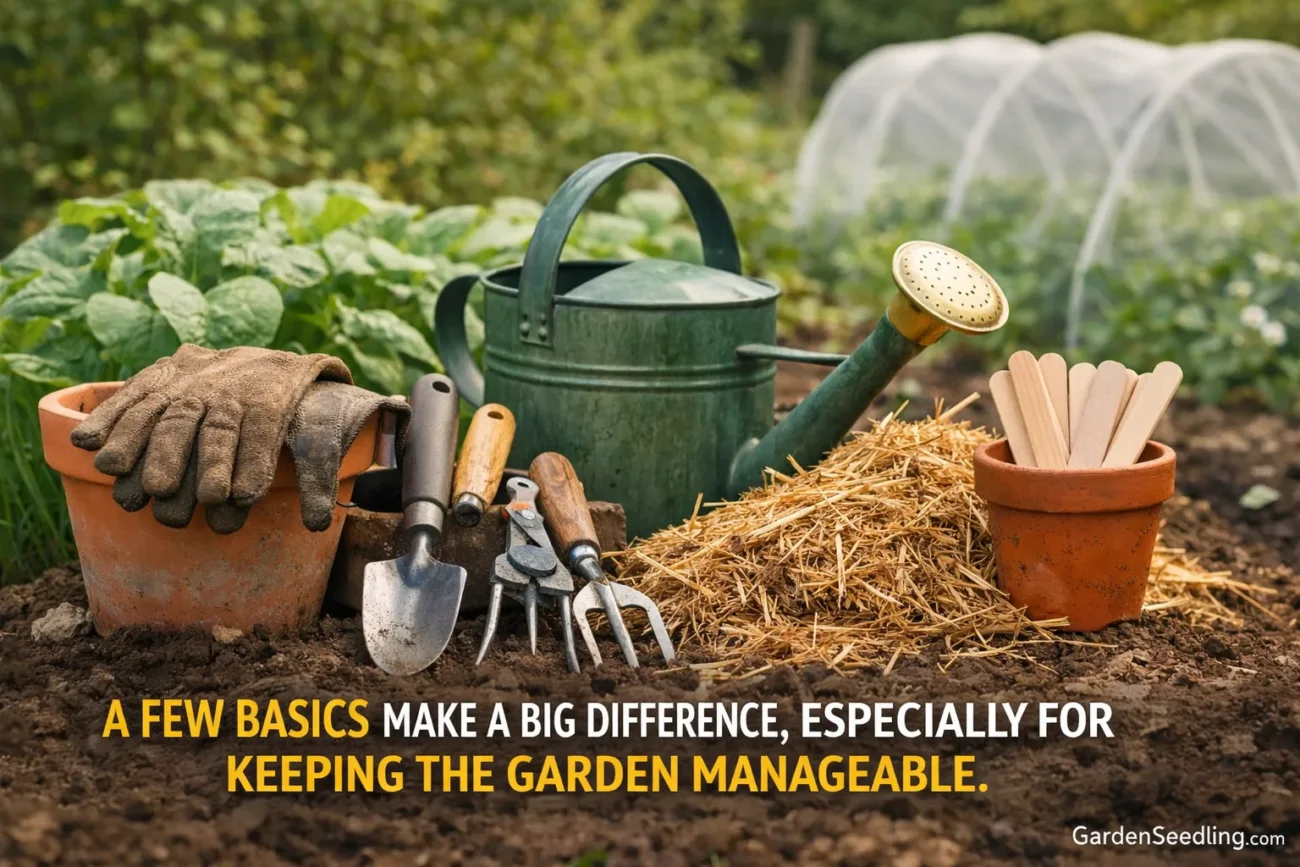
You don’t need a shed full of gear to begin. A few basics make a big difference, especially for keeping the garden manageable.
- Gloves and a hand trowel
- Pruners (for harvesting herbs and trimming dead growth)
- A small hand fork or cultivator (great for loosening soil and pulling weeds)
- Watering can or hose with a gentle spray nozzle
- Mulch (straw, shredded leaves, or untreated wood chips for paths)
- Plant labels (even simple popsicle sticks help)
If pests are common where you live, add lightweight row cover or insect netting. It’s a simple way to prevent damage without complicated products.
Step-By-Step: Start A Garden For The First Time
Use this step-by-step process for containers, raised beds, or in-ground plots. The details change a bit, but the flow stays the same.
1) Start Small And Measure Your Space
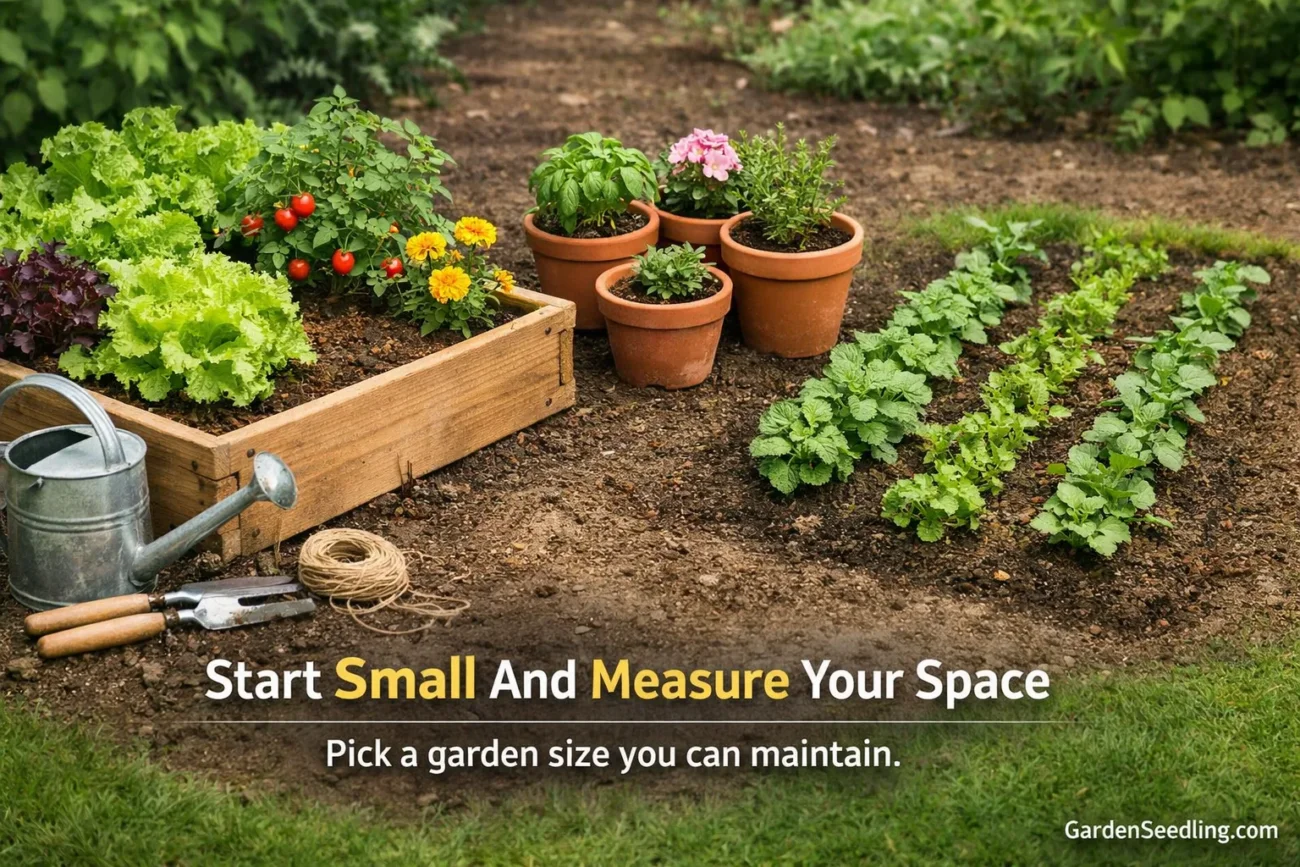
Pick a garden size you can maintain. A 4×4 raised bed, 4–6 medium pots, or a 3-foot-wide in-ground strip is enough to learn a lot without getting overwhelmed. Keeping it compact makes watering and weeding realistic.
2) Prepare The Area
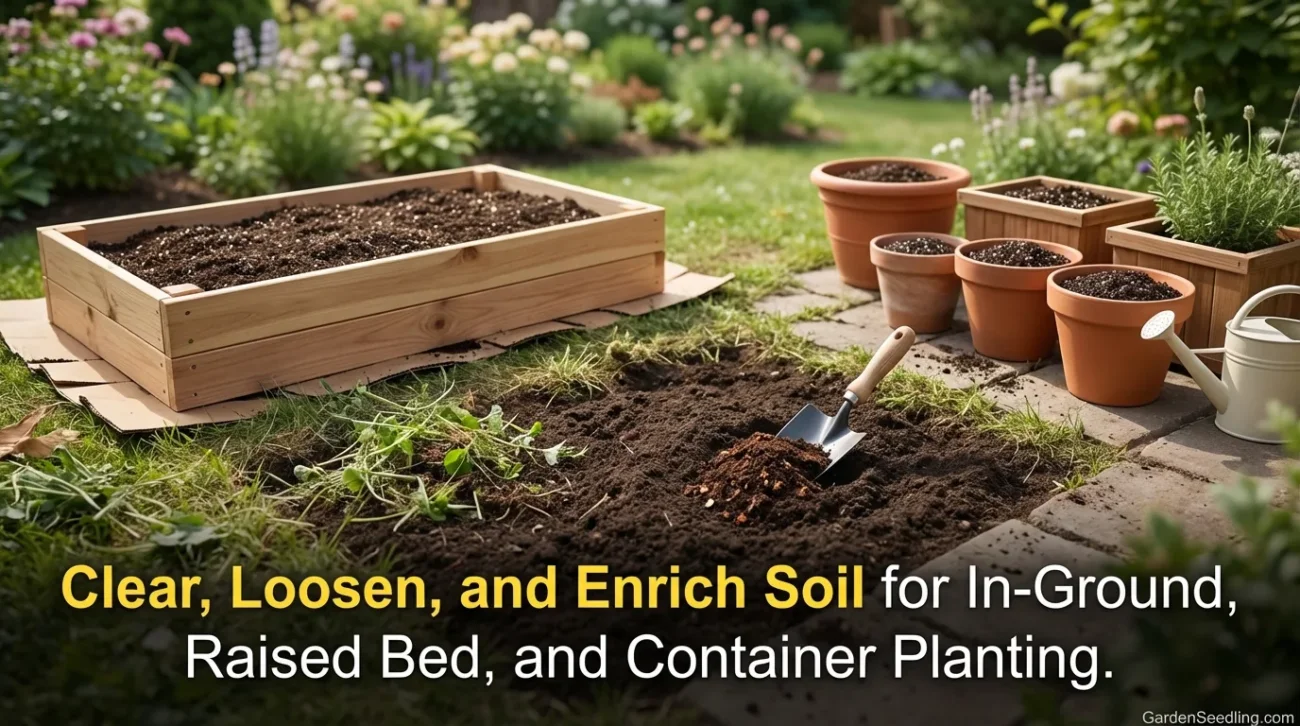
- In-ground: remove grass/weeds, loosen soil, add compost.
- Raised bed: set the bed, block weeds underneath with cardboard, fill with soil mix.
- Containers: add potting mix, water it lightly so it settles before planting.
3) Choose Seeds Or Seedlings
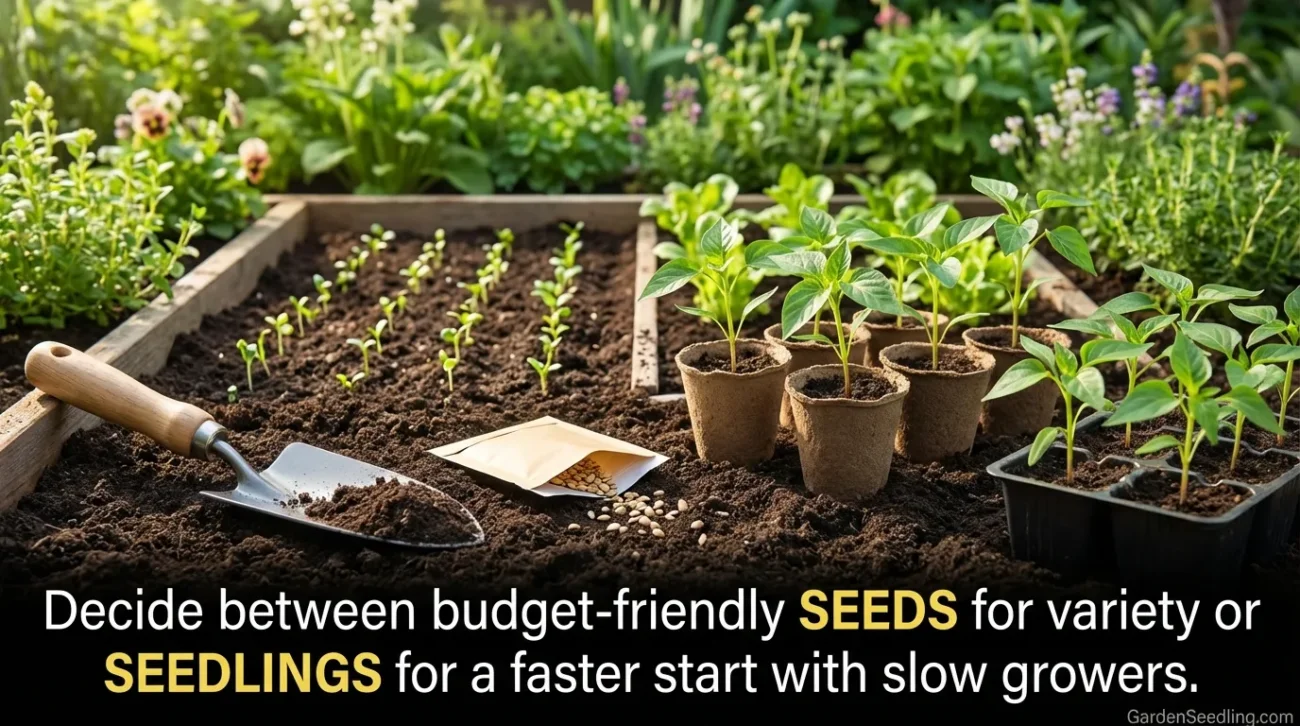
Seeds are budget-friendly and offer variety. Seedlings (young plants) give you a faster start for slow growers like tomatoes and peppers. A simple plan: use seedlings for warm-season crops, and use seeds for quick crops like greens, beans, and flowers.
4) Plant At The Right Time
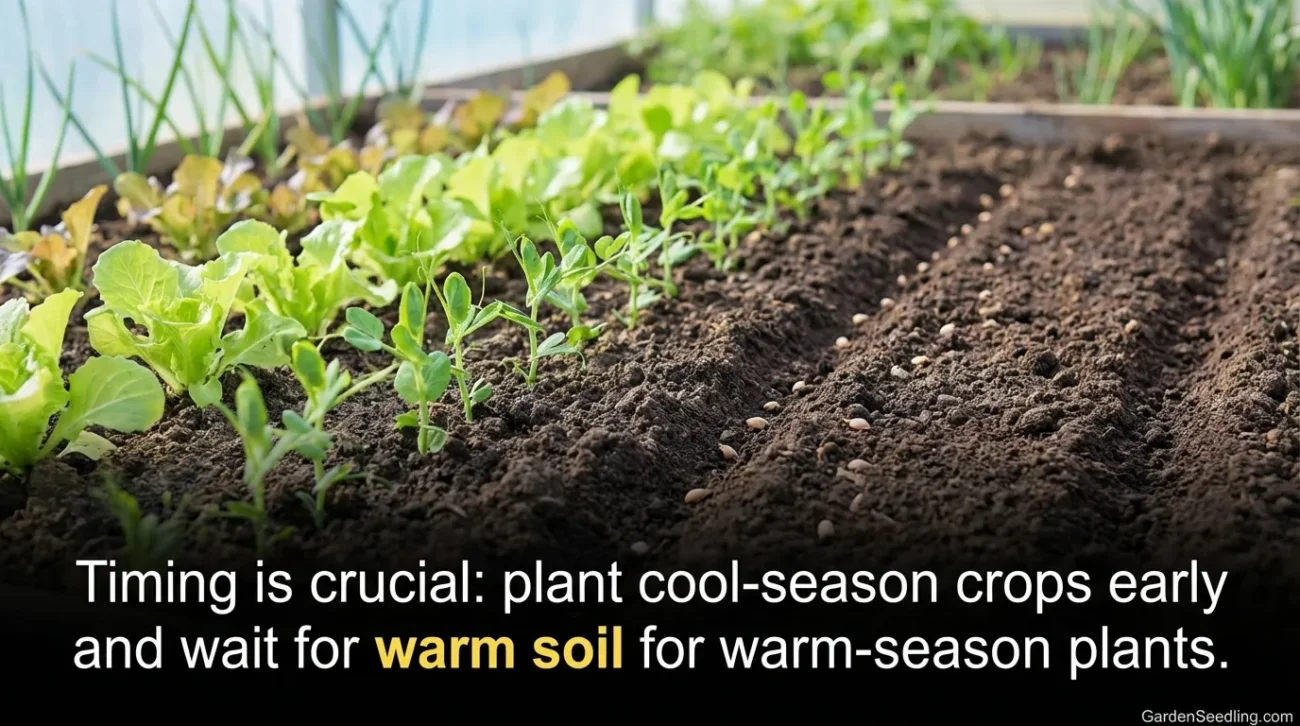
Planting time matters more than many beginners expect. Cool-season crops can go in earlier. Warm-season crops need consistently warm nights and warm soil. If you plant tomatoes too early, they often stall and become more prone to disease.
5) Follow Spacing And Depth Basics
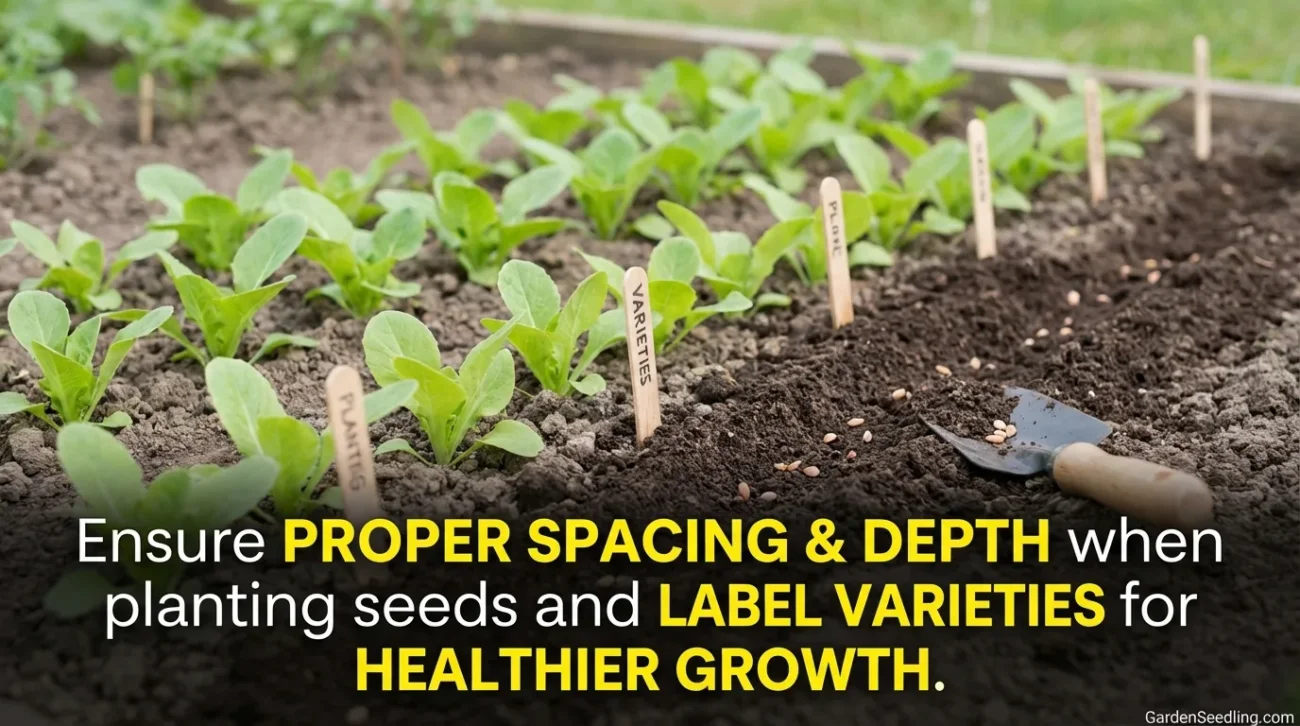
- Plant seeds about 2–3 times as deep as the seed is wide (unless the packet says otherwise).
- Give plants room. Crowding reduces airflow and can increase disease.
- Label what you plant, especially if you start multiple varieties.
6) Water Gently And Consistently
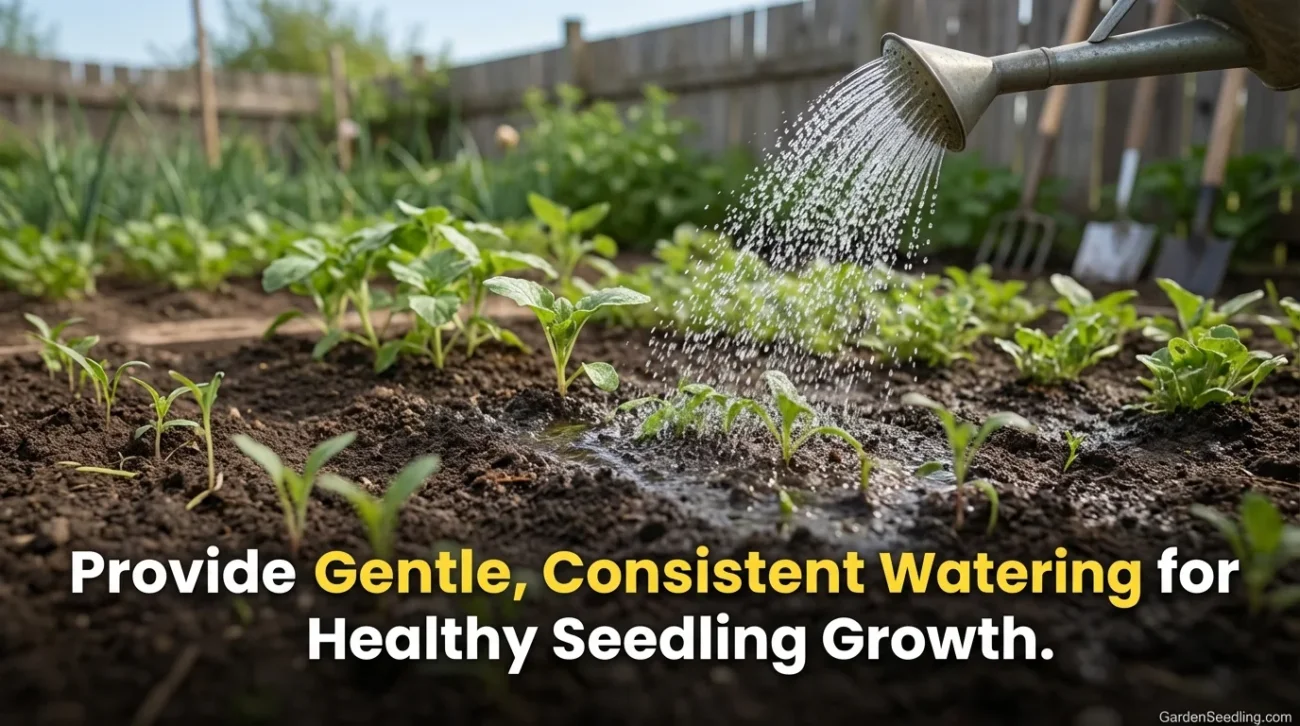
Right after planting, water thoroughly but gently so you don’t wash seeds away. Keep the top layer of soil evenly moist until seeds sprout. Once plants are established, shift to deeper watering that encourages roots to grow down.
7) Mulch After Plants Are Up
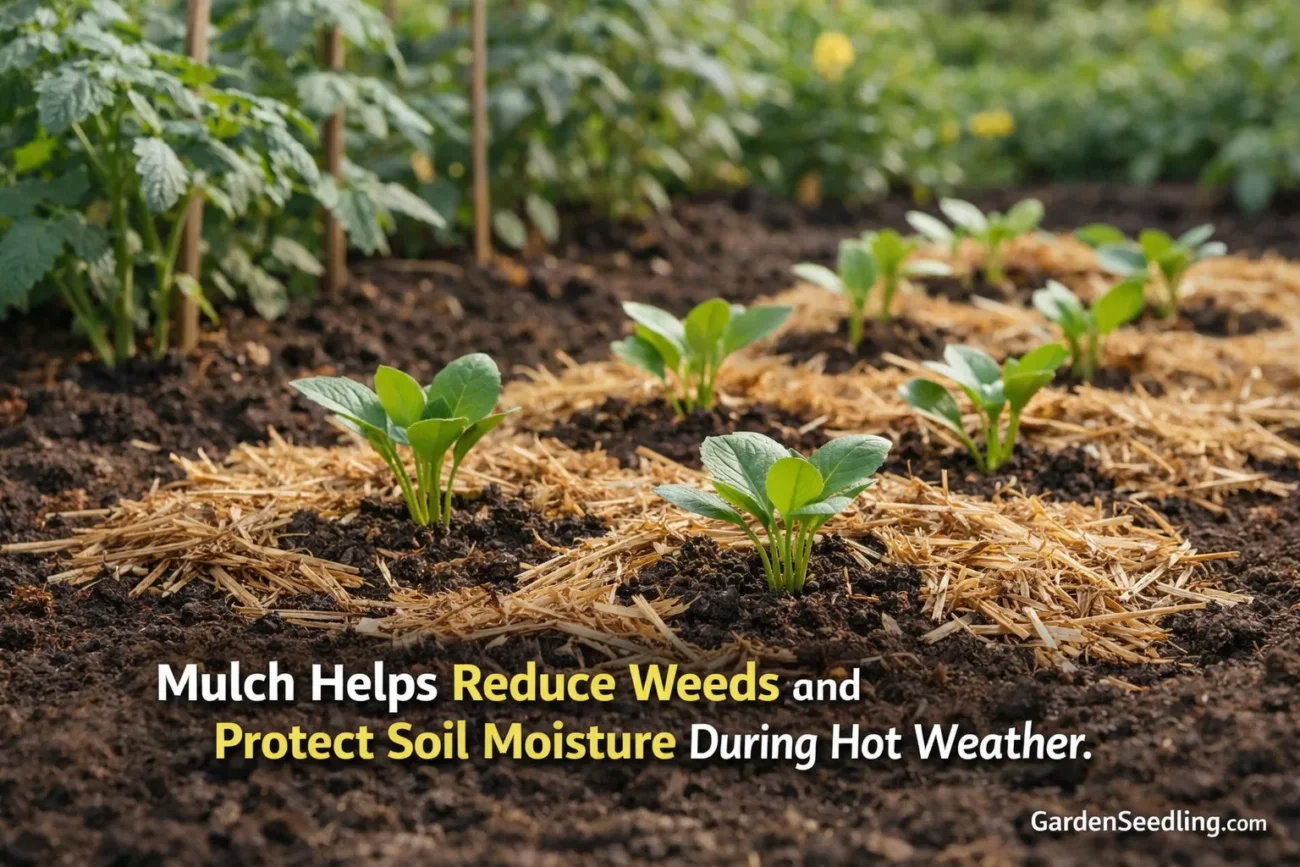
Mulch is one of the easiest ways to reduce weeds and protect soil moisture. After seedlings are a few inches tall, add a 1–2 inch layer of mulch, keeping it slightly away from stems. Mulch helps prevent stress during hot weather.
8) Support Tall Or Vining Plants Early
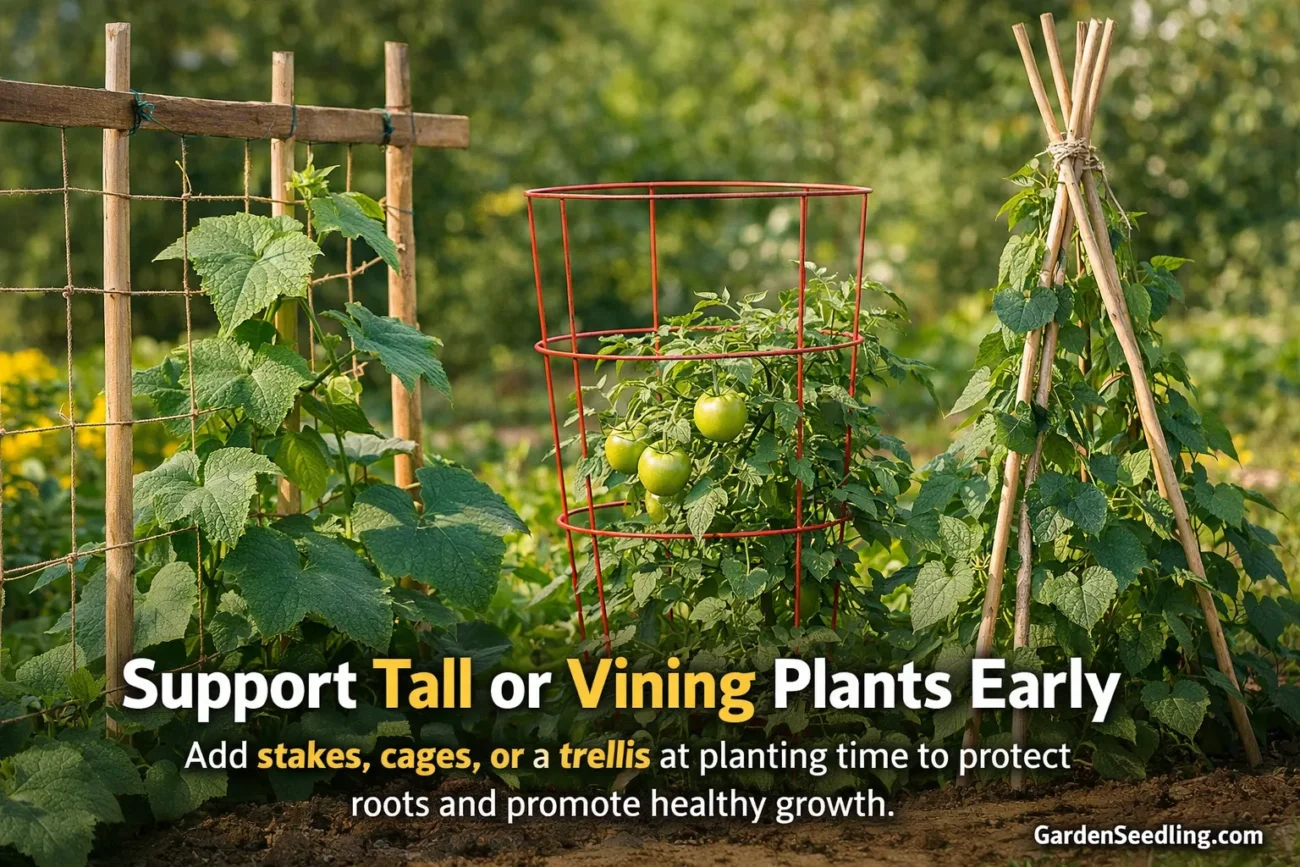
Add stakes, cages, or a trellis at planting time (or soon after). Waiting until plants are large can damage roots when you push supports into the ground. Cucumbers, pole beans, and indeterminate tomatoes grow cleaner and healthier with vertical support.
9) Feed Lightly, Not Constantly
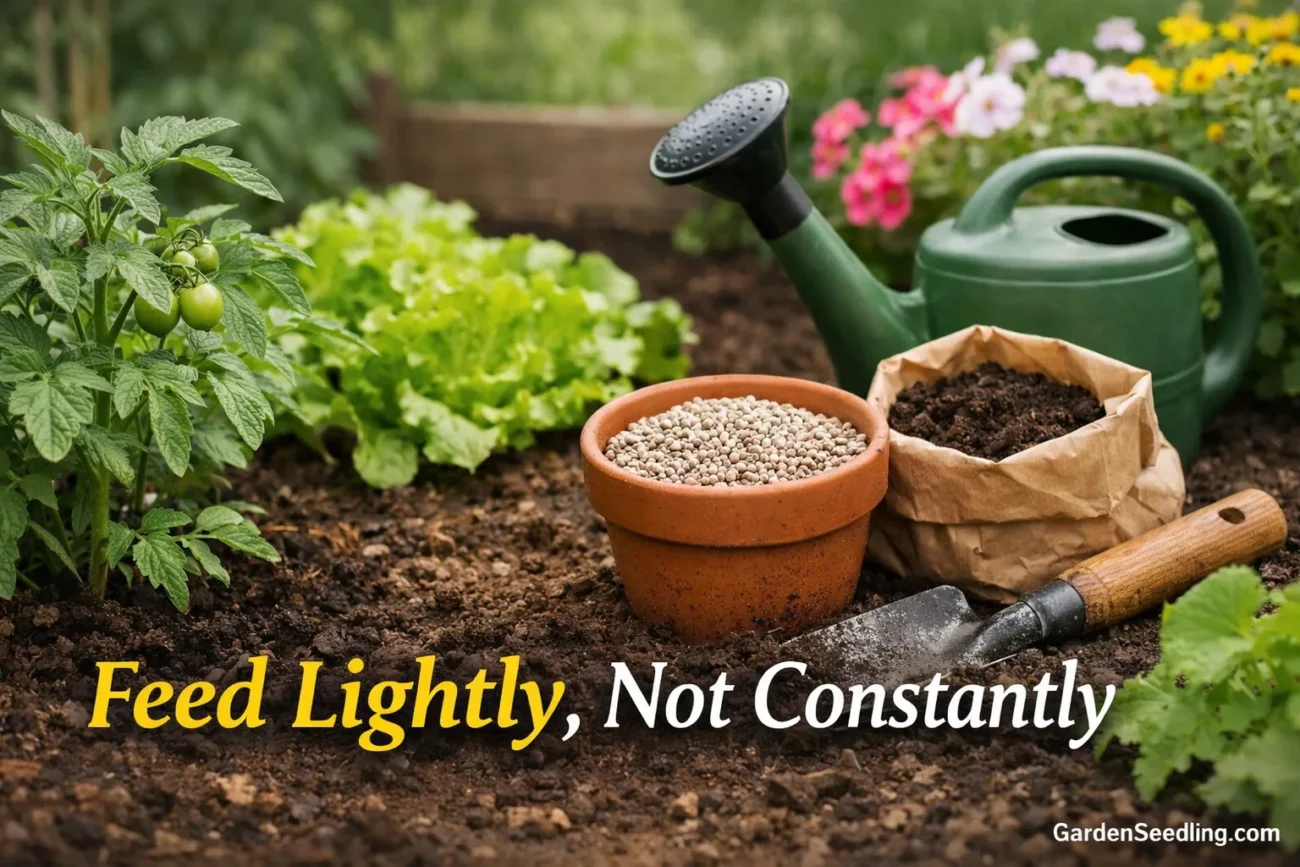
If your soil has compost, many plants won’t need much extra feeding early on. Over-fertilizing can cause fast leafy growth with fewer flowers and fruits. If plants look pale or growth is slow, use a gentle fertilizer and follow the label.
10) Harvest Often
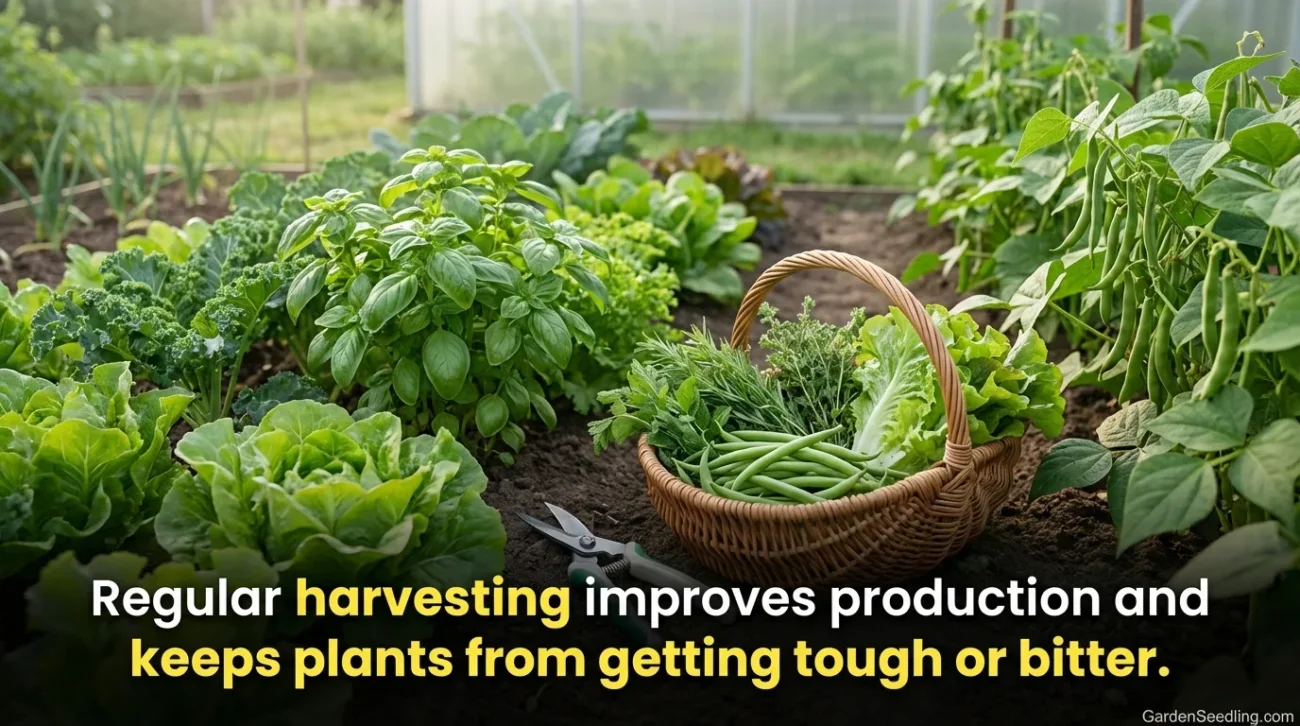
Harvesting is part of plant care. Picking beans, herbs, and greens regularly can improve production and keep plants from getting tough or bitter.
Seed Starting Vs. Direct Sowing
Seed starting is useful, but it’s not required for every first-time gardener. You can get excellent results by direct sowing easy crops and buying a few key seedlings.
When To Start Seeds Indoors
- Choose indoor starts for slow, warm-season crops like tomatoes and peppers.
- Use a bright window or grow light; weak light leads to leggy seedlings.
- Keep seed-starting mix lightly moist, not soggy.
- Harden off seedlings by slowly increasing outdoor time over 7–10 days before planting outside.
Direct Sowing Outdoors
- Great for beans, peas, radishes, carrots, and many flowers.
- Water the seed row gently until germination.
- Thin seedlings so the strongest plants have space to grow.
If you want the easiest beginner route, buy seedlings for tomatoes and peppers and direct-sow quick crops like lettuce and beans. This blend keeps things simple and reliable.
Watering Basics For Beginners
Watering is where new gardens succeed or fail. The goal is steady moisture without constantly soaking the soil. Most gardens do better with deep watering a few times a week than a light sprinkle every day.
- Water in the morning when possible.
- Check soil with your finger: if the top 1–2 inches are dry, it’s time to water.
- Water at the base of plants to keep leaves drier and reduce disease risk.
- Containers dry faster. In summer, pots may need water daily.
Signs you might be under-watering: drooping in the morning, dry crumbly soil, slow growth. Signs you might be over-watering: constantly wet soil, yellowing leaves, fungus gnats in containers.
Beginner-Friendly Plant Care That Makes A Big Difference
A few simple habits can keep your first garden healthy without turning it into a full-time job.
Keep Weeds Small
Weeding is easiest when weeds are tiny. A quick 5-minute check a couple times a week can prevent big cleanup sessions. Mulch helps a lot here.
Scout For Problems Early
Look under leaves and around stems when you water. Catching pests early is easier than fixing a major outbreak. If you see a few insects, remove them by hand or spray with water. For many beginners, early prevention is more effective than strong treatments.
Use Simple Spacing And Airflow
Crowded plants stay damp longer and can develop more fungal issues. Follow spacing suggestions and prune only what’s necessary. More airflow can improve plant health with no extra cost.
Succession Plant For Continuous Harvest
Instead of planting all your lettuce at once, sow a small amount every 2–3 weeks during cool weather. This keeps harvests steady and avoids a huge “all at once” glut. It’s a small step that makes a home garden feel productive.
Common Mistakes And How To Avoid Them
- Starting too big: Begin with one bed or a few containers so care stays realistic.
- Planting warm-season crops too early: Wait for warm nights and warm soil.
- Using garden soil in pots: Use potting mix to avoid compaction and root stress.
- Inconsistent watering: Set a simple routine and check soil before watering.
- Skipping labels: Label varieties so you can track what works.
- Over-fertilizing: Too much fertilizer can cause weak growth and fewer fruits.
- Ignoring sunlight needs: Most vegetables need strong light to perform well.
Practical Tips To Keep It Easy
- Choose 3–5 crops for your first season instead of 15.
- Group plants with similar watering needs together.
- Use a simple trellis to save space and keep plants cleaner.
- Mulch beds and container tops to slow evaporation.
- Keep a small container of compost nearby for quick top-dressing.
- Plant a few flowers with your vegetables to attract pollinators.
- Check plants twice a week; quick checks prevent surprises.
- Take notes on what you plant and when—next season gets easier.
- Harvest herbs often so they stay tender and keep producing.
- If something fails, replace it with a fast crop (like greens) and keep going.
FAQ
How much sun do I need to start a garden at home?
For most vegetables, aim for 6–8 hours of direct sun. If you have less, focus on greens and herbs that tolerate partial shade.
Is it better to start with seeds or seedlings?
Use seedlings for tomatoes and peppers for a faster start, and use seeds for easy crops like lettuce, radishes, beans, and flowers.
What size garden is best for a beginner?
Start small: a 4×4 raised bed, a short in-ground strip, or 4–6 containers is usually enough to learn without stress.
How often should I water my first garden?
Water when the top 1–2 inches of soil are dry. Beds often need deep watering a few times a week, while containers may need daily watering in hot weather.
What are the easiest vegetables to grow for the first time?
Lettuce, radishes, bush beans, zucchini, and basil are beginner-friendly and grow well with basic care.
If you keep your first season small, choose forgiving plants, and stay consistent with watering, you’ll build skills quickly—and your next garden setup will feel much easier to expand.