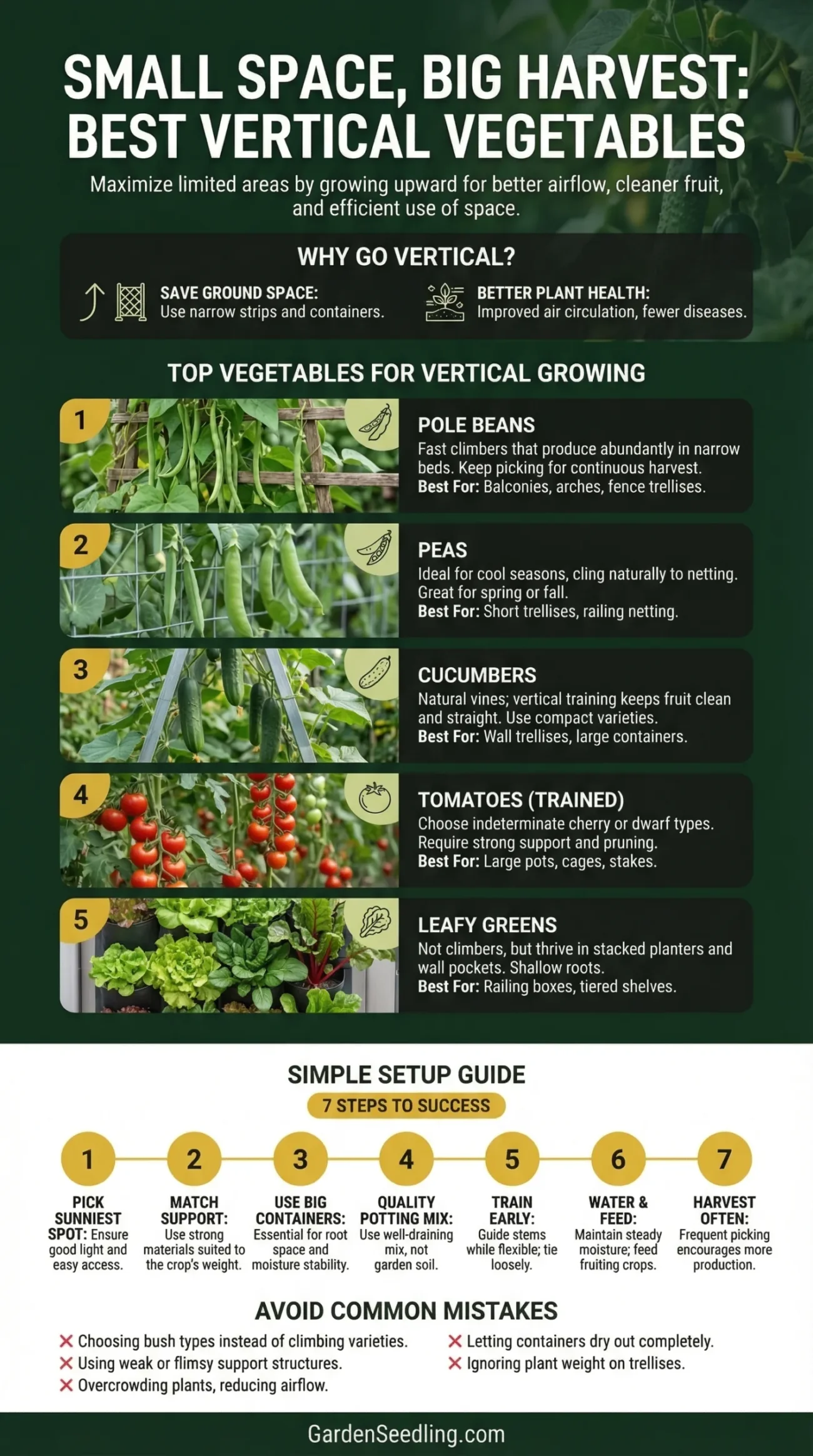
A slim fence panel can grow a lot more food than it looks like it should. That is the whole appeal of vertical gardening. Instead of letting vines crawl across a bed, you send them up, keep fruit cleaner, open airflow around the leaves, and free the soil below for more planting. In small yards, patios, balconies, and side yards, that shift changes everything a bit more than people expect.
- Why Some Vegetables Do Better Vertically
- Best Vegetables for Vertical Gardening in Small Spaces
- Pole Beans
- Peas
- Cucumbers
- Tomatoes
- Leaf Lettuce, Spinach, and Swiss Chard
- Small Fruited Squash or Mini Pumpkins (Advanced Option)
- Best Choices by Garden Type
- How To Choose the Right Vegetable for Your Space
- Step-By-Step Setup for a Productive Vertical Vegetable Garden
- 1. Pick the Sunniest Useful Spot
- 2. Match the Support to the Crop
- 3. Use Bigger Containers Than You Think You Need
- 4. Fill With Good Potting Mix, Not Garden Soil
- 5. Train Early
- 6. Water Evenly and Feed on Time
- 7. Harvest Often
- Common Mistakes To Avoid
- Practical Tips for Getting More Food From Less Space
- FAQ
- What Is the Best Vegetable for Vertical Gardening in a Small Space?
- Can Tomatoes Really Grow Well in a Vertical Garden?
- Are Cucumbers Good for Vertical Gardening?
- Which Vegetables Are Not Good for Vertical Gardening?
- Do Vertical Vegetable Gardens Need More Water?
- Can You Grow Leafy Greens in a Vertical Garden?
If you are looking for the best vegetables for vertical gardening in small spaces, focus on crops that either climb naturally or stay productive when trained upward. Some vegetables were basically made for it. Others can work, but only if you give them stronger support and a little more watching.
Quick Answer: The easiest and most rewarding vegetables for vertical gardening in small spaces are pole beans, peas, cucumbers, and support-trained tomatoes. For wall planters, railing boxes, and stacked containers, leaf lettuce, spinach, and Swiss chard also make sense. They do not climb, but they use vertical systems well and earn their spot.
Why Some Vegetables Do Better Vertically
Not every crop belongs on a trellis. The best vertical vegetables usually share a few traits: they climb, twine, or vine; they produce well from a small root zone; and they are easier to harvest when lifted off the ground. Pole beans and peas grab onto netting or strings with barely any help. Cucumbers love being trained upward. Tomatoes are a little fussier, yes, but still worth it when space is tight.
Root crops, on the other hand, usually do not gain much from a vertical setup. Carrots, onions, potatoes, and most large cabbages need floor space, soil depth, or both. You can still grow them in containers, just not as true vertical stars.
One more thing: yield per square foot matters more in a small garden than total plant size. A climbing bean that uses one narrow strip of soil can out-earn a bushy, sprawling plant pretty fast. That is the trade.
Best Vegetables for Vertical Gardening in Small Spaces
Pole Beans
Pole beans are near the top of the list for a reason. They climb fast, they keep producing when picked often, and they use very little ground area compared with bush beans. In a narrow bed or a large container with a teepee, pole beans make a lot of sense.
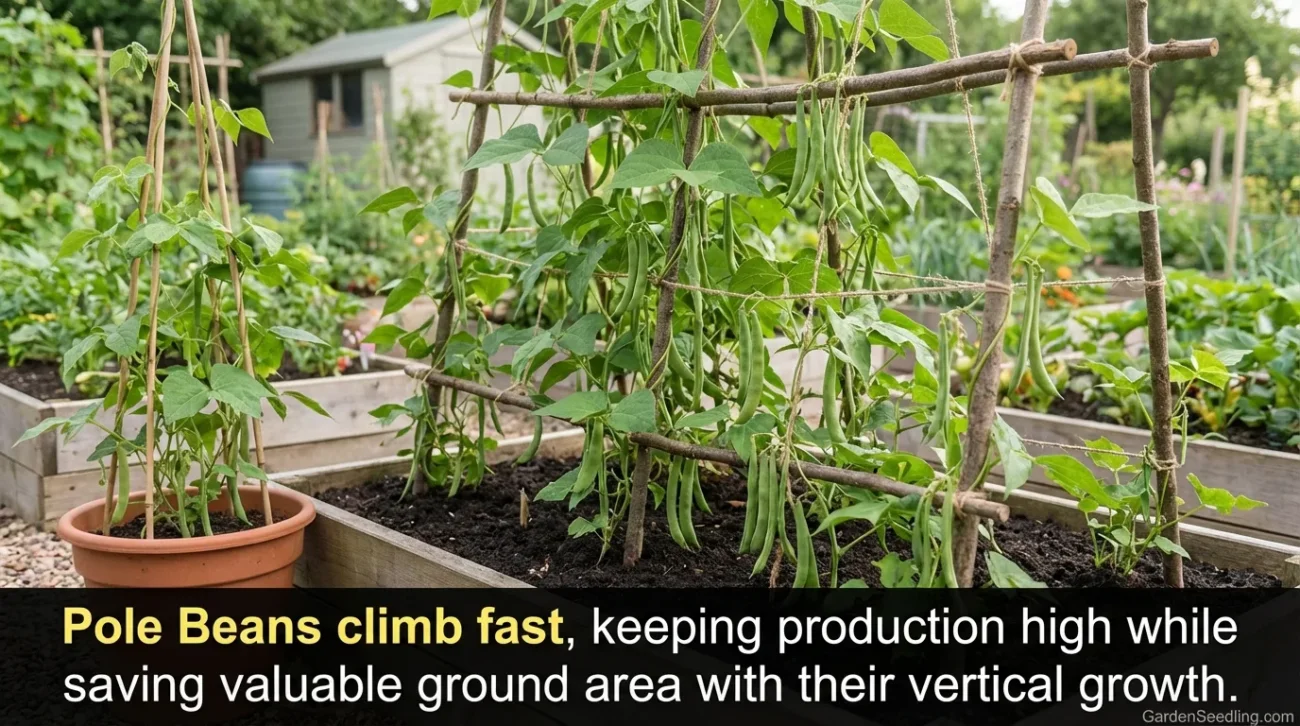
Choose pole types, not bush types by accident. It happens. Bush beans stay compact and useful, but they do not give you that upward growth that saves space. Pole beans need a trellis, netting, fence, or tall string setup from the start.
- Best For: Narrow beds, balcony pots, cattle panel arches, fence trellises
- Why They Work: Fast climbing habit, long picking window, strong use of vertical room
- Watch For: Dry soil during flowering and pod fill
For beginners, pole beans may be the most forgiving vertical crop on this list. They grow fast. They tell you what they want. And when they are happy, they really go.
Peas
Peas are one of the easiest cool-season vegetables for vertical growing. They climb willingly, do not need a giant container, and fit well on short to medium supports. If your space gets gentle spring sun or mild fall weather, peas deserve a place.
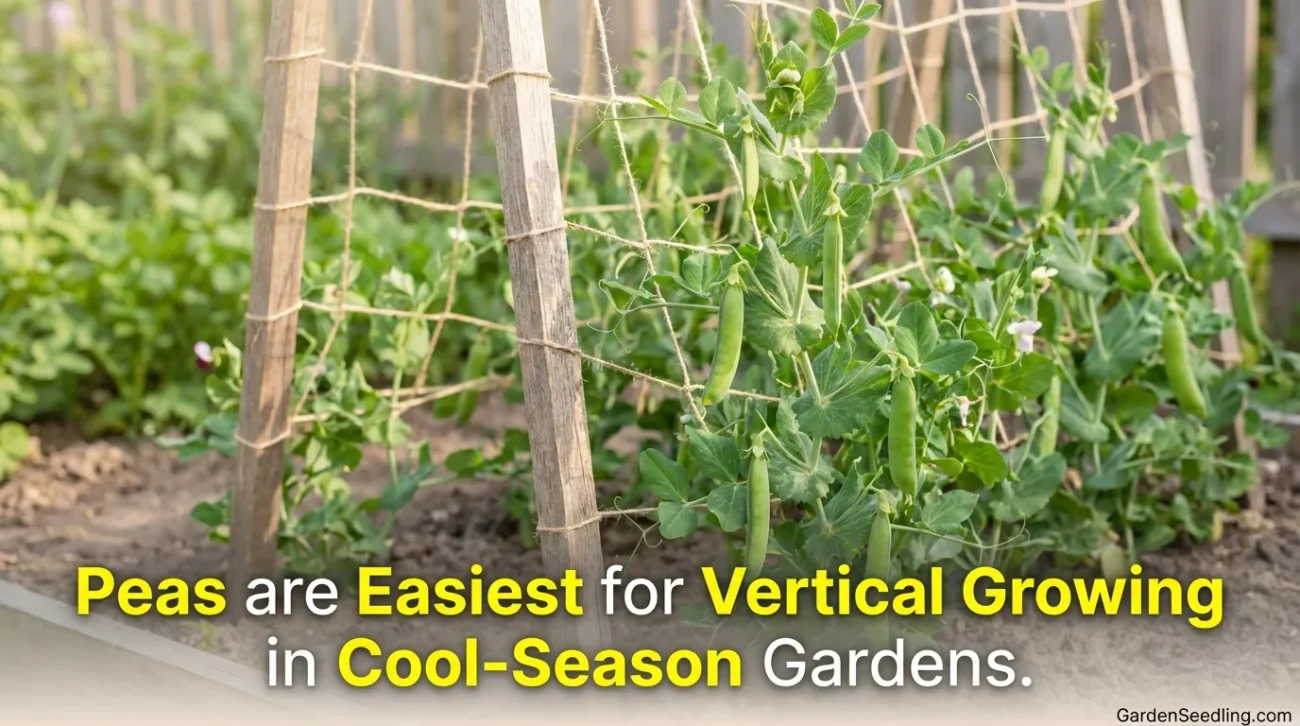
This is where timing matters. Peas like cool weather. Once heat settles in, they fade fast, sometimes almost overnight. Still, they are a smart first crop because they can use the vertical space early, then come out and make room for warm-season climbers later.
- Best For: Spring and fall gardens, short trellises, balcony rail netting
- Why They Work: Cling naturally, mature fairly quickly, easy to pick
- Watch For: Heat, powdery mildew in crowded plantings, weak support
Snap peas are usually the best fit for home gardens because they taste good fresh and do not ask for much. Snow peas work well too. Tall varieties need support; short dwarf types may stand on their own, but they still look cleaner and harvest easier with a little help.
Cucumbers
If you want a lot of food from a very small footprint, cucumbers are a strong pick. They are vines by nature, and when you train them onto a trellis, the fruit stays cleaner, straighter, and easier to spot before it gets too large. That alone saves space and frustration.
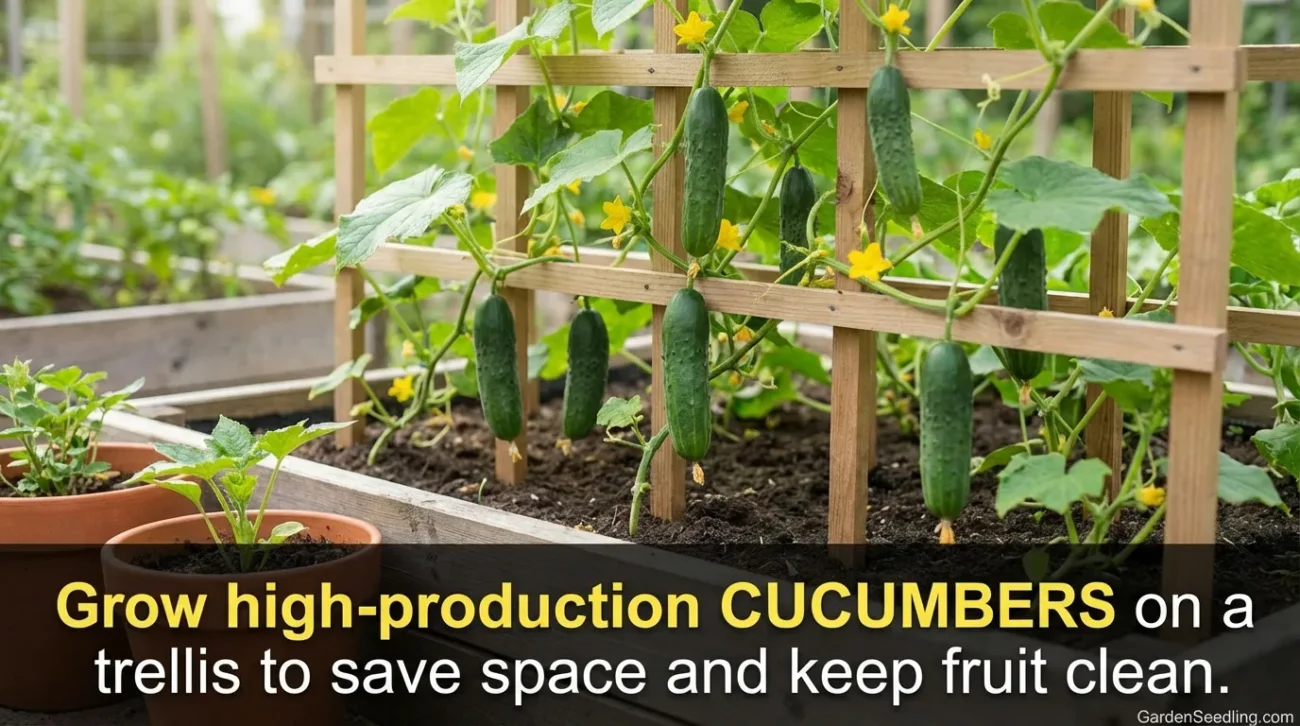
Compact or smaller-fruited varieties are usually the better move for small spaces. Pickling cucumbers, patio types, and dwarf slicers behave better than huge sprawling slicers that want to take over the whole setup. You can grow larger varieties vertically, sure, but it gets messy faster.
- Best For: Trellises against walls, cattle panels, strong A-frames, large containers
- Why They Work: High production, natural vining habit, fruit stays off the soil
- Watch For: Uneven watering, overcrowding, letting vines tangle too early
Give cucumbers a sturdy support from day one. Once vines start running, trying to sort them out later turns into a small wrestling match. Not impossible. Just annoying.
Tomatoes
Tomatoes belong on this list, but with a note attached. The best tomatoes for vertical gardening in small spaces are usually cherry tomatoes, patio tomatoes, dwarf types, or carefully trained indeterminate plants. Big slicing tomatoes can work, though they need more root room, stronger support, and more regular pruning.
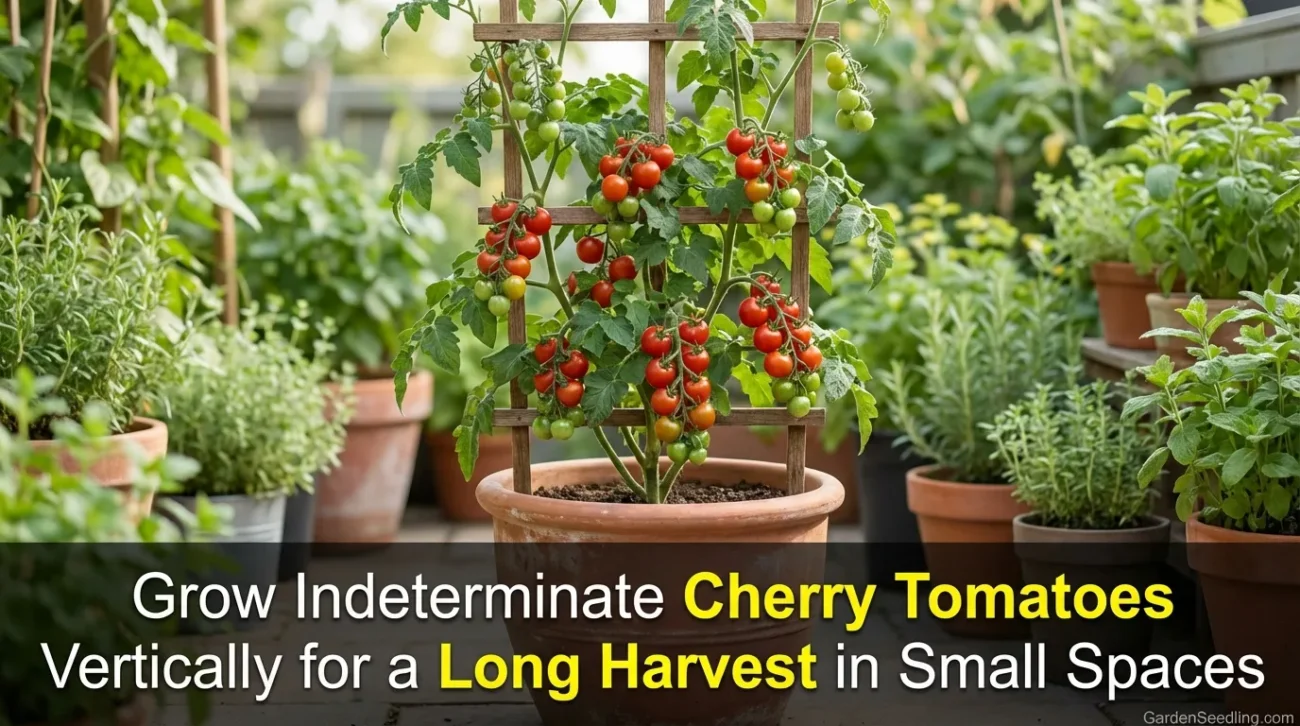
There are two common directions here. If you want the easiest small-space tomato, use a compact or determinate type in a large container. If you want the most vertical use of height, choose an indeterminate cherry tomato and train it to a stake, cage, or hanging string. That plant will keep climbing and fruiting for a longer stretch.
- Best For: Large pots, grow bags, cages, stakes, single-string systems
- Why They Work: Strong vertical growth when trained, high value crop, long harvest
- Watch For: Small containers, skipped pruning, support that is too short
Tomatoes are less forgiving than beans or peas. They need even moisture, steady feeding, and enough root space. Give them a tiny pot and a flimsy cage, and they will complain in every possible way.
Leaf Lettuce, Spinach, and Swiss Chard
These are not climbing vegetables, but they are still excellent for vertical systems in small spaces. Use them in wall pockets, stacked planters, tiered shelves, railing boxes, or shallow troughs. When people say “vertical gardening,” they often picture vines only. That is too narrow, really. Vertical growing also means using upright structures to create more planting room.
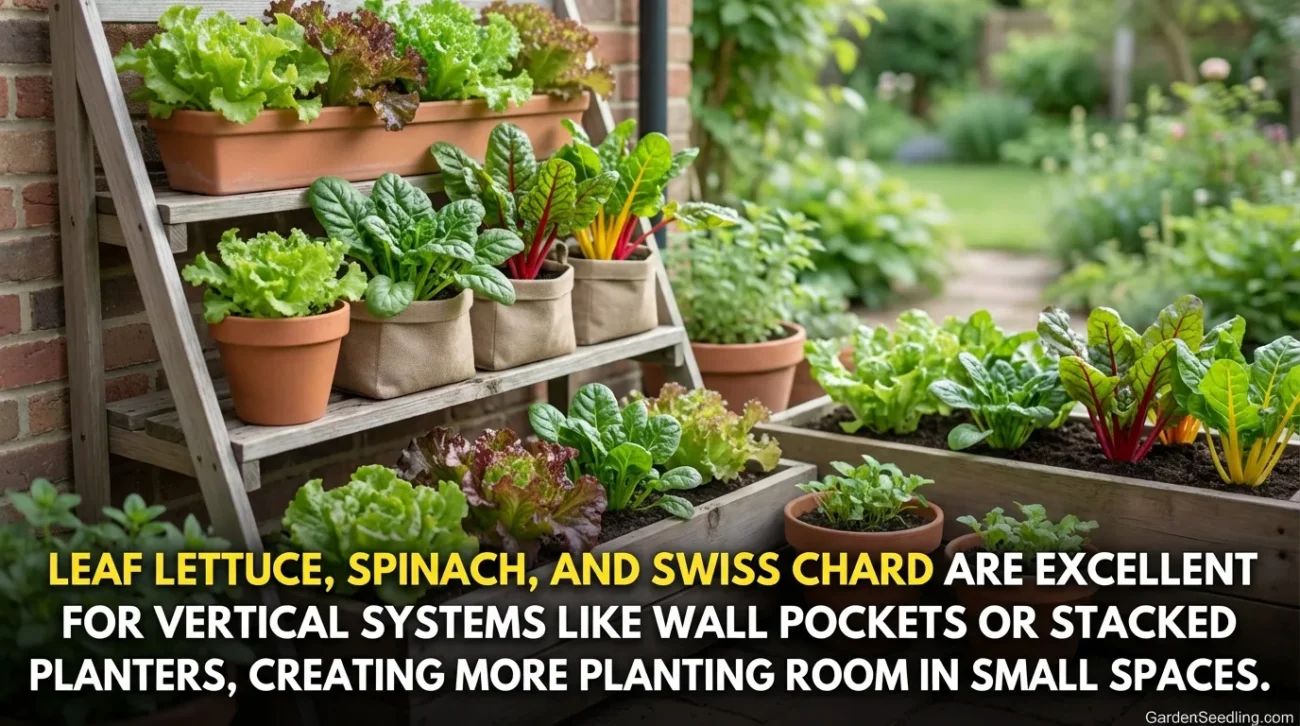
Leaf lettuce works especially well because you can harvest outer leaves and keep the plant going. Spinach is great in cool weather but fades in heat. Swiss chard lasts longer and gives a bigger visual punch, which is nice if your edible setup sits right next to a patio or entry.
- Best For: Pocket planters, stacked containers, railing boxes, shelf gardens
- Why They Work: Shallow roots, quick harvests, useful in partial small-space setups
- Watch For: Fast drying, summer heat, crowding leaves too tightly
These crops will need more frequent watering in wall systems than the same plants would need in the ground. Small pockets dry out fast. Sometimes very fast.
Small Fruited Squash or Mini Pumpkins (Advanced Option)
Yes, these can be grown vertically. No, they are not always the best first choice. Small-fruited squash, delicata types, or miniature pumpkins can climb strong arches and trellises, but they need a serious support setup. For heavier fruit, soft slings help prevent stems from tearing.
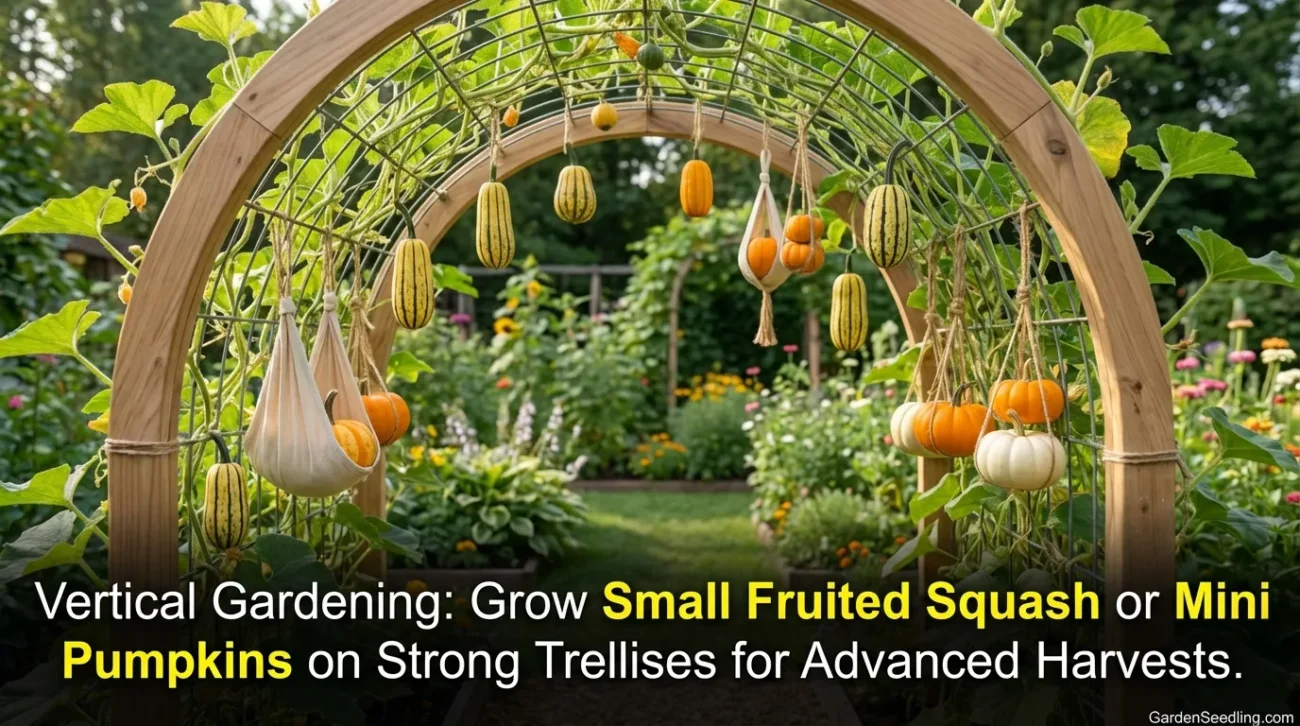
Try this only after you have had a clean season with beans, cucumbers, or tomatoes. The payoff can be fun, but the plant weight builds quickly, and a weak trellis will not forgive you.
Best Choices by Garden Type
| Garden Setup | Best Vegetables | Why They Fit |
|---|---|---|
| Balcony With Pots | Pole beans, cucumbers, cherry tomatoes, lettuce | They produce well in containers and use height instead of floor area |
| Fence or Wall Trellis | Peas, pole beans, cucumbers, indeterminate cherry tomatoes | The support is already there, so the planting strip can stay narrow |
| Railing Boxes or Pocket Planters | Leaf lettuce, spinach, Swiss chard | Shallow-rooted crops handle these compact spaces better |
| Arch or Tunnel | Pole beans, cucumbers, small squash | Vines can climb overhead and leave the ground below open |
| Small Raised Bed | Peas in spring, cucumbers or pole beans in summer, greens at the edge | You can stack seasons and use both height and bed edges |
How To Choose the Right Vegetable for Your Space
Start with sunlight. Fruiting crops like tomatoes, cucumbers, and beans want full sun for the best yield. If your space gets less light, leafy greens will usually handle it better. Not perfectly, maybe, but better.
Then look at support strength. Light vines like peas need less muscle. Tomatoes and cucumbers ask for more. Small squash can get heavy in a hurry, especially after rain or a deep watering when everything feels twice as dense.
Finally, be honest about watering. Vertical gardens, especially containers and wall planters, dry out faster than in-ground beds. If you know you miss a day here and there, choose crops that bounce back more easily, such as beans, chard, and certain cherry tomatoes in larger pots.
Step-By-Step Setup for a Productive Vertical Vegetable Garden
1. Pick the Sunniest Useful Spot
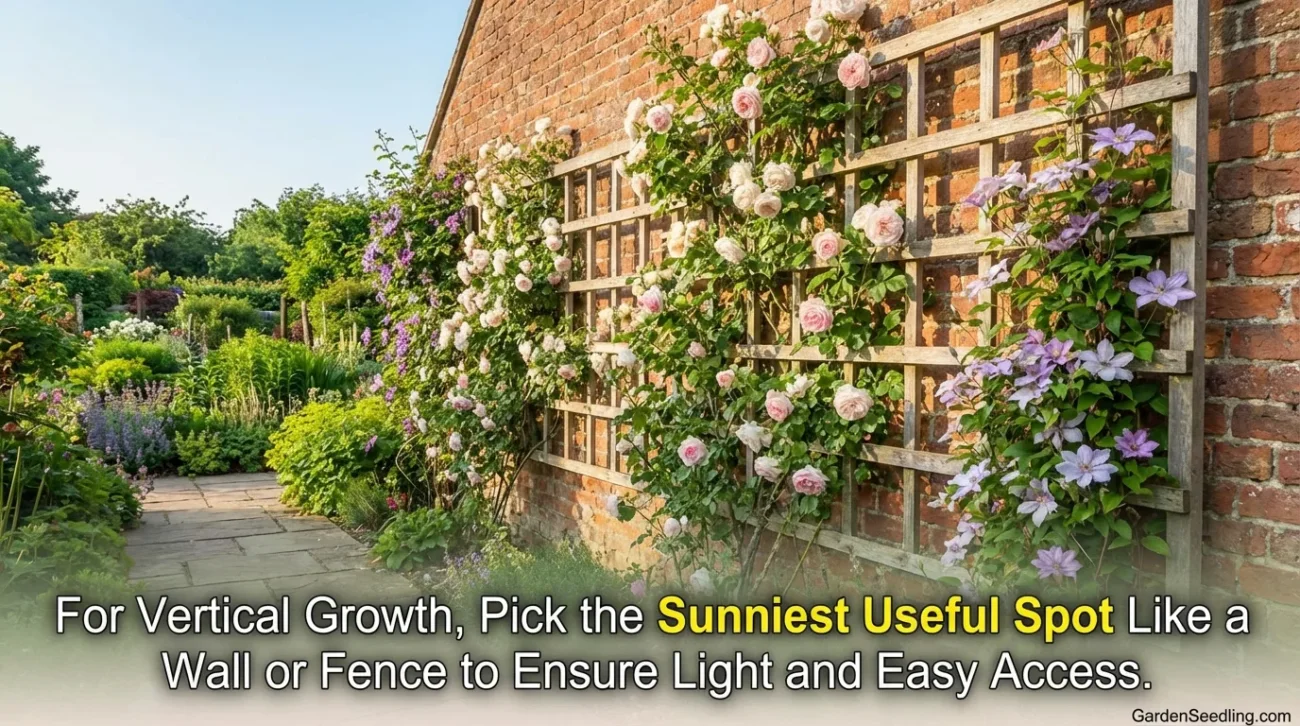
A wall, fence, balcony edge, or narrow strip can all work. What matters is light and access. If you cannot reach the back of the trellis easily, harvest gets annoying fast, and pruning gets skipped. Then things go sideways a little.
2. Match the Support to the Crop
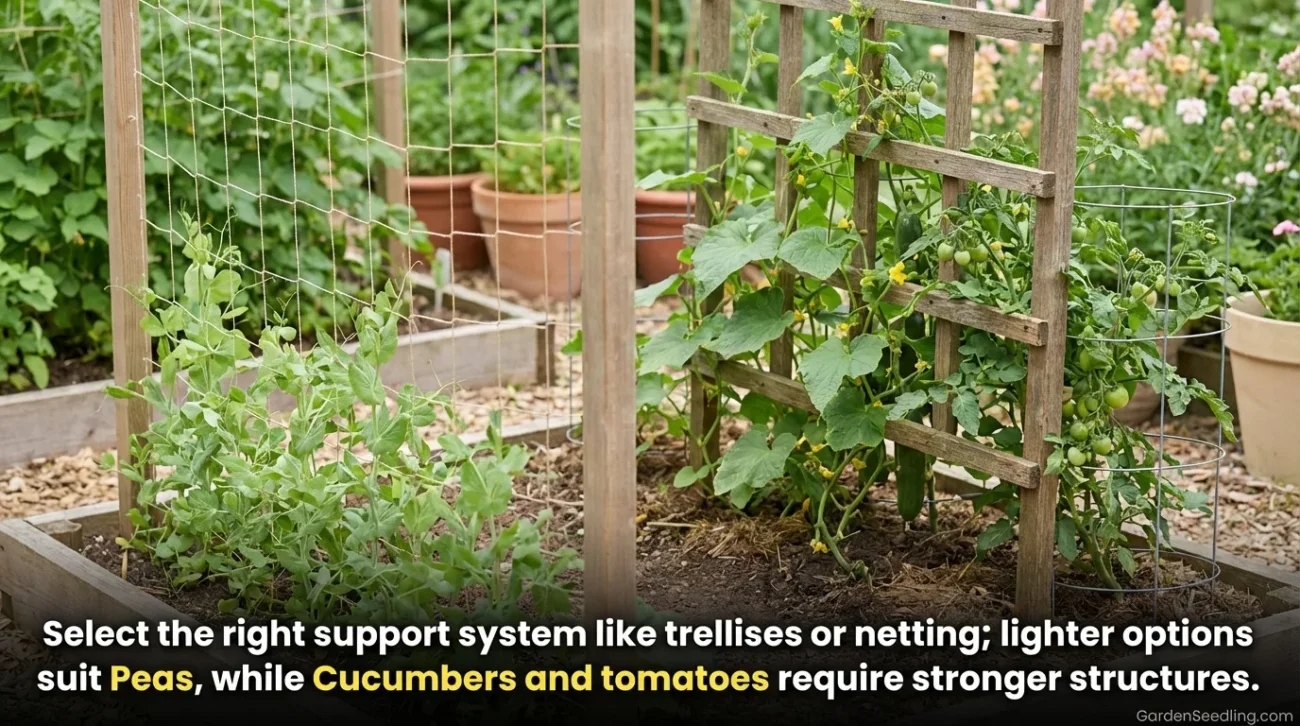
Use netting, wire panels, wood trellises, cages, teepees, or strong twine. Peas can use lighter netting. Cucumbers and tomatoes need stronger support. Pole beans climb nearly anything that is narrow enough to wrap around.
3. Use Bigger Containers Than You Think You Need
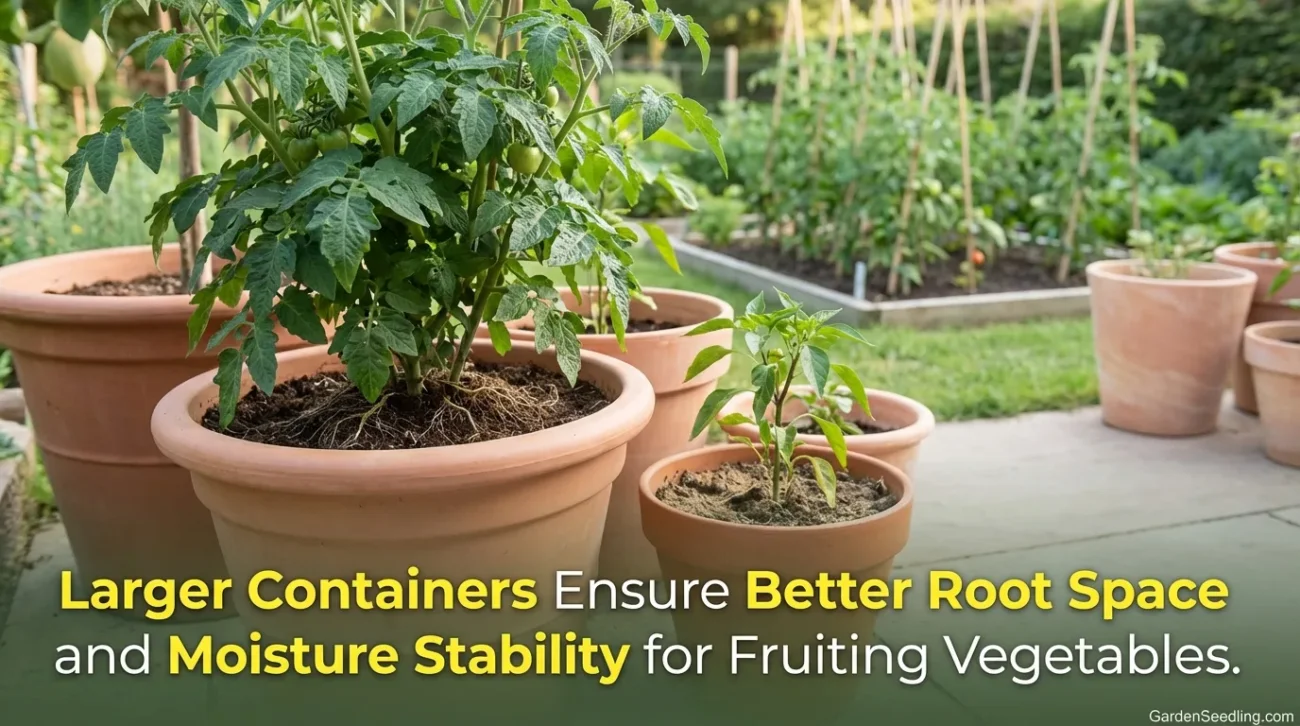
Small pots are one of the main reasons vertical vegetables stall out. Fruiting crops need room for roots and more stable moisture. A too-small container dries quickly, heats up fast, and limits production. Greens can live smaller. Tomatoes usually cannot, at least not happily.
4. Fill With Good Potting Mix, Not Garden Soil
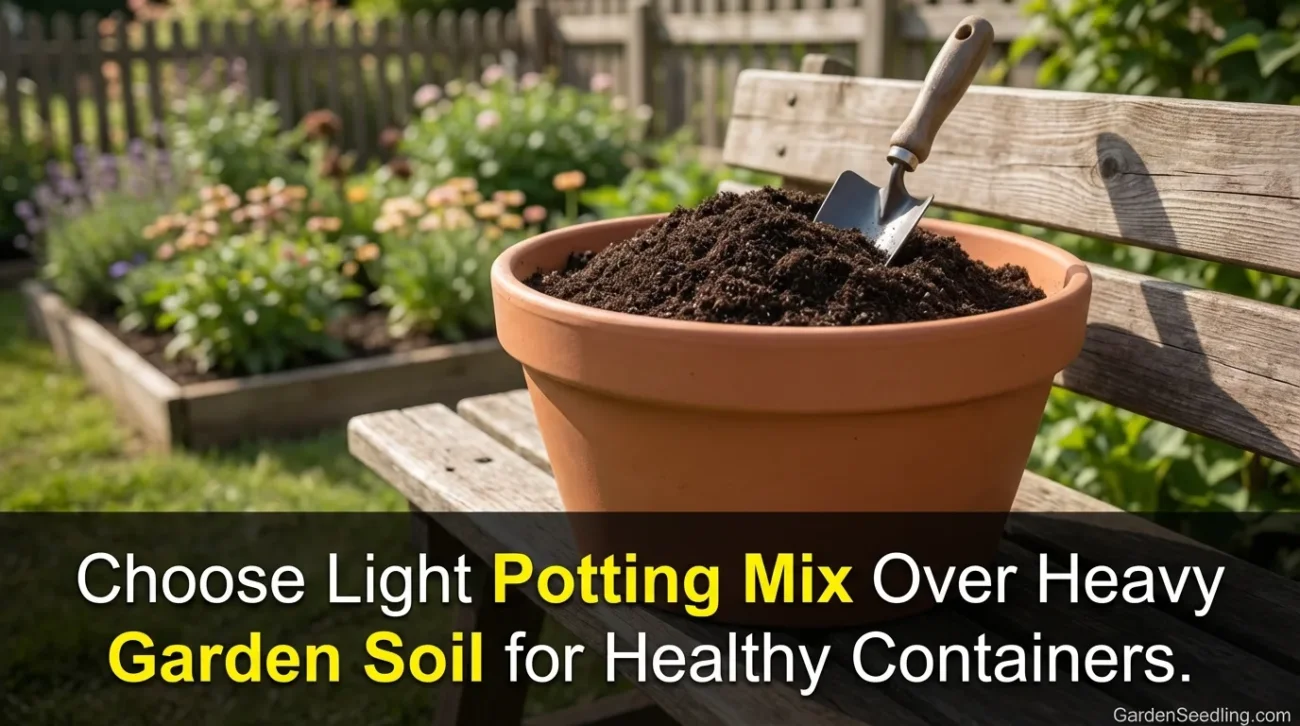
Containers need a light mix that drains well but still holds moisture. Plain backyard soil compacts too much in pots. Add compost if you like, but keep the mix open enough that roots can breathe.
5. Train Early
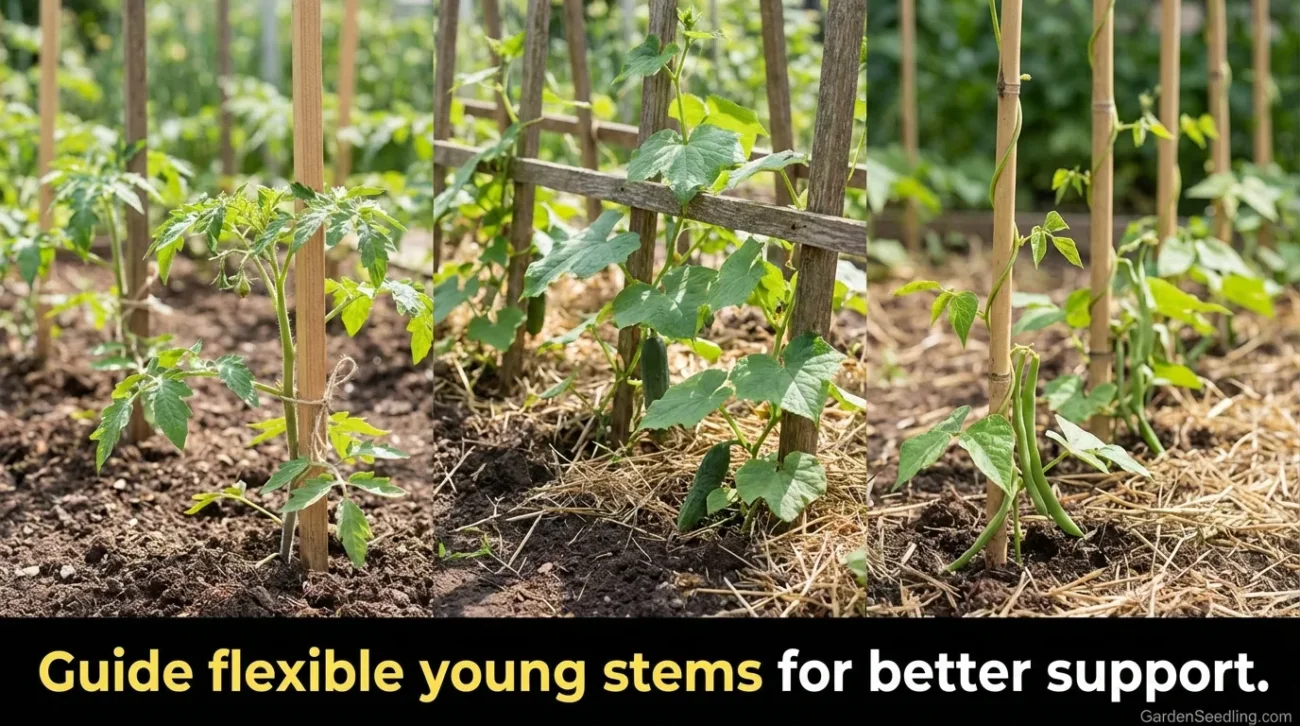
Guide stems when they are still flexible. Tie tomatoes loosely. Tuck cucumber vines through the support. Help wandering bean stems find the pole once or twice, and they usually take over from there.
6. Water Evenly and Feed on Time
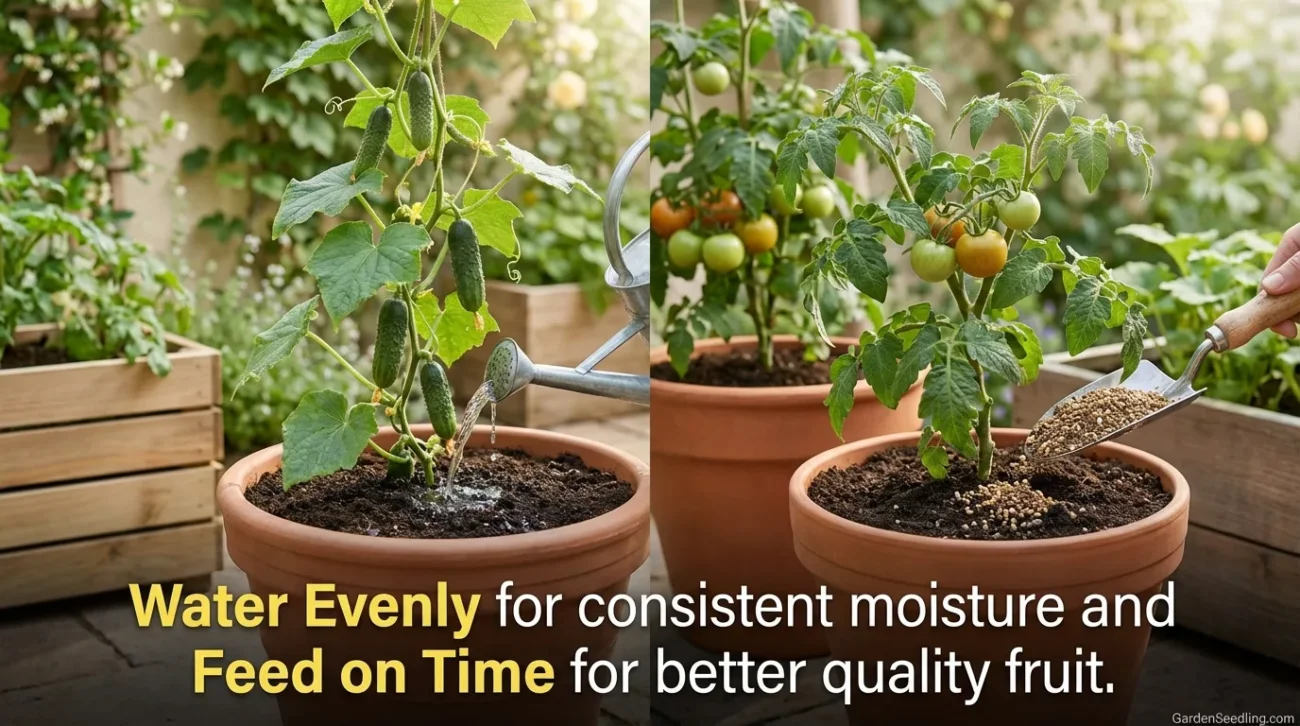
Small-space gardens can swing from wet to dry pretty fast. That leads to bitter cucumbers, stressed tomatoes, and a general drop in quality. Keep moisture steady. Fruiting vegetables in containers also benefit from regular feeding once they start growing hard.
7. Harvest Often
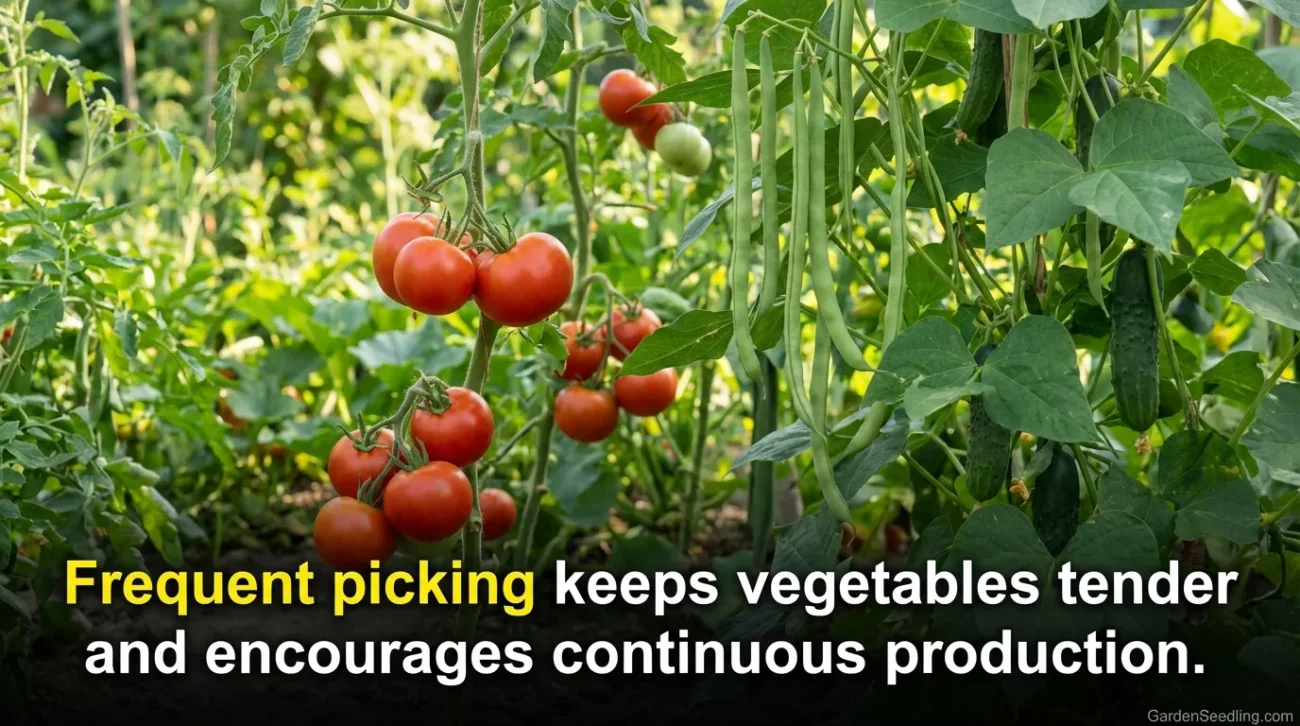
Frequent picking keeps pole beans tender, cucumbers usable, and many tomatoes coming. Letting fruit sit too long slows the plant down. It also makes small spaces look overgrown sooner than they really are.
Common Mistakes To Avoid
- Choosing the wrong variety: Bush beans instead of pole beans, sprawling cucumbers instead of compact types, giant tomatoes in tiny pots
- Using weak supports: A bargain trellis may look fine in April and collapse in July
- Crowding plants: Tight spacing reduces airflow and makes picking harder
- Waiting too long to train vines: Early guidance saves a lot of trouble later
- Letting containers dry out: Wall planters and hanging setups need closer attention
- Ignoring plant weight: Heavier fruiting crops need stronger anchors, sometimes slings too
Practical Tips for Getting More Food From Less Space
Use succession planting. Grow peas in spring, then replace them with cucumbers or pole beans when warm weather arrives. That single trellis can earn its keep twice.
Mix climbers with low growers. Put lettuce or chard at the base of a trellis while beans or cucumbers climb above. You use the same footprint twice, which is the whole small-space game.
Pick smaller-fruited varieties on purpose. Cherry tomatoes, mini cucumbers, and slim beans are often the better choice for tight setups because they mature faster and put less strain on supports.
Think in layers. A fence can hold peas, the soil below can grow greens, and a nearby railing box can carry another round of lettuce. It looks simple when it is done well. Not crowded, just efficient.
FAQ
What Is the Best Vegetable for Vertical Gardening in a Small Space?
Pole beans are often the easiest all-around choice because they climb fast, use little ground space, and keep producing when harvested often.
Can Tomatoes Really Grow Well in a Vertical Garden?
Yes. Cherry tomatoes, patio types, dwarf types, and trained indeterminate tomatoes do well when they have strong support, a large container, and steady watering.
Are Cucumbers Good for Vertical Gardening?
Yes. Cucumbers are one of the best vertical crops because they vine naturally and their fruit stays cleaner and easier to harvest on a trellis.
Which Vegetables Are Not Good for Vertical Gardening?
Most root crops and bulky vegetables, such as potatoes, onions, large cabbages, and full-size pumpkins, are usually poor fits for a simple vertical setup.
Do Vertical Vegetable Gardens Need More Water?
Usually, yes. Containers, wall pockets, and hanging systems dry faster than in-ground beds, so they often need more frequent watering.
Can You Grow Leafy Greens in a Vertical Garden?
Yes. Leaf lettuce, spinach, and Swiss chard grow well in pocket planters, stacked containers, and railing boxes, even though they do not climb.
When space is limited, the smartest move is not trying to grow everything. Grow the crops that actually like the setup. A few well-chosen vertical vegetables can outproduce a crowded little bed, and they are a lot easier to live with all season long.
{
“@context”: “https://schema.org”,
“@type”: “FAQPage”,
“mainEntity”: [
{
“@type”: “Question”,
“name”: “What Is the Best Vegetable for Vertical Gardening in a Small Space?”,
“acceptedAnswer”: {
“@type”: “Answer”,
“text”: “Pole beans are often the easiest all-around choice because they climb fast, use little ground space, and keep producing when harvested often.”
}
},
{
“@type”: “Question”,
“name”: “Can Tomatoes Really Grow Well in a Vertical Garden?”,
“acceptedAnswer”: {
“@type”: “Answer”,
“text”: “Yes. Cherry tomatoes, patio types, dwarf types, and trained indeterminate tomatoes do well when they have strong support, a large container, and steady watering.”
}
},
{
“@type”: “Question”,
“name”: “Are Cucumbers Good for Vertical Gardening?”,
“acceptedAnswer”: {
“@type”: “Answer”,
“text”: “Yes. Cucumbers are one of the best vertical crops because they vine naturally and their fruit stays cleaner and easier to harvest on a trellis.”
}
},
{
“@type”: “Question”,
“name”: “Which Vegetables Are Not Good for Vertical Gardening?”,
“acceptedAnswer”: {
“@type”: “Answer”,
“text”: “Most root crops and bulky vegetables, such as potatoes, onions, large cabbages, and full-size pumpkins, are usually poor fits for a simple vertical setup.”
}
},
{
“@type”: “Question”,
“name”: “Do Vertical Vegetable Gardens Need More Water?”,
“acceptedAnswer”: {
“@type”: “Answer”,
“text”: “Usually, yes. Containers, wall pockets, and hanging systems dry faster than in-ground beds, so they often need more frequent watering.”
}
},
{
“@type”: “Question”,
“name”: “Can You Grow Leafy Greens in a Vertical Garden?”,
“acceptedAnswer”: {
“@type”: “Answer”,
“text”: “Yes. Leaf lettuce, spinach, and Swiss chard grow well in pocket planters, stacked containers, and railing boxes, even though they do not climb.”
}
}
]
}