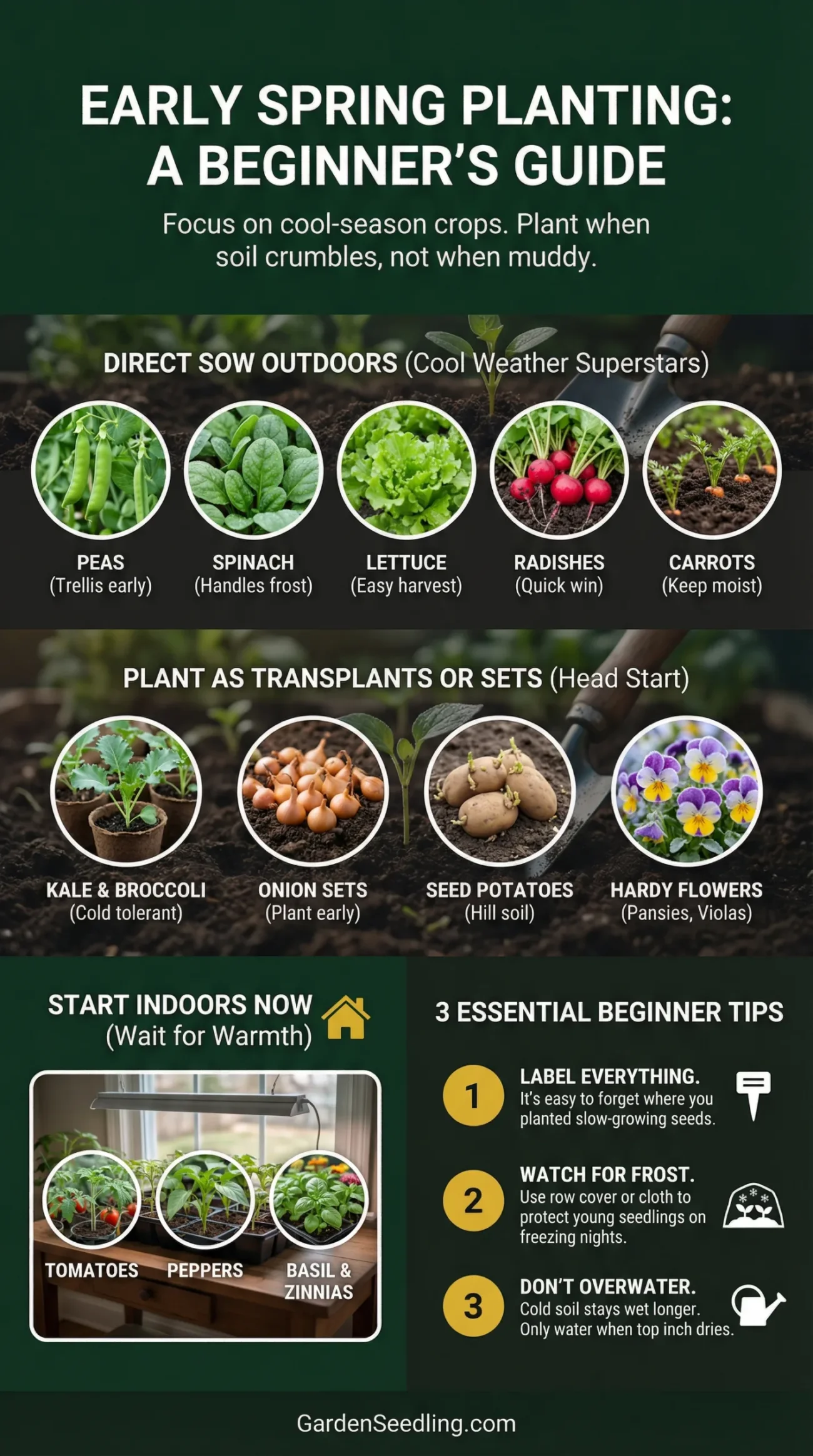
Early spring is one of the best times to begin an organic garden, especially if you want quick wins and fewer pest problems. If you’re wondering what to plant in early spring as a beginner, focus on cool-season crops and hardy flowers that can handle chilly nights and light frosts. Many of these plants grow fast, don’t need perfect soil, and help you learn the basics of watering, spacing, and harvest timing without a lot of complicated steps.
- Understand Early Spring Timing And Frost
- Best Vegetables To Plant In Early Spring
- Direct-Sow Superstars For Cool Weather
- Easy Cool-Season Transplants
- Roots, Tubers, And Sets That Love Spring
- Early Spring Vegetable Comparison Table
- Easy Flowers To Plant In Early Spring
- Hardy Annual Flowers
- Perennials And Bulbs To Plant Or Enjoy
- What To Start Indoors In Early Spring
- Step-By-Step Early Spring Planting Plan
- Common Mistakes Beginner Gardeners Can Avoid
- Practical Tips For A Strong Early Spring Garden
- FAQ
- What Are The Easiest Vegetables To Plant In Early Spring?
- Can I Plant Tomatoes In Early Spring?
- How Do I Know If My Soil Is Ready To Plant?
- What Flowers Can Handle Early Spring Cold?
- Should I Cover Plants If Frost Is Forecast?
Early spring gardening is mostly about timing and soil conditions, not warm weather. You’ll get the best results when you plant while the soil is workable (not muddy) and when your choices match the season. Not sure where to start?
Quick Answer: In early spring, beginners should plant cool-season vegetables like peas, spinach, lettuce, radishes, carrots, kale, and onions, plus hardy flowers like pansies and snapdragons. You can also start warm-season favorites (tomatoes, peppers, basil, zinnias) indoors while you wait for the last frost.
- Direct sow now: peas, spinach, lettuce, arugula, radishes, carrots, beets, turnips
- Plant transplants now: kale, broccoli, cabbage, cauliflower (depending on your local frost pattern)
- Plant sets/tubers: onion sets, seed potatoes
- Flowers for early color: pansies, violas, snapdragons, calendula, sweet peas
- Start indoors: tomatoes, peppers, eggplant, basil, marigolds, zinnias
Understand Early Spring Timing And Frost
Early spring looks different across the U.S., so use your local last frost date as a guide. Garden calendars often talk in “weeks before last frost,” which works in any region. A warm afternoon doesn’t mean the season has fully changed, so plan for cold nights and the occasional surprise freeze.
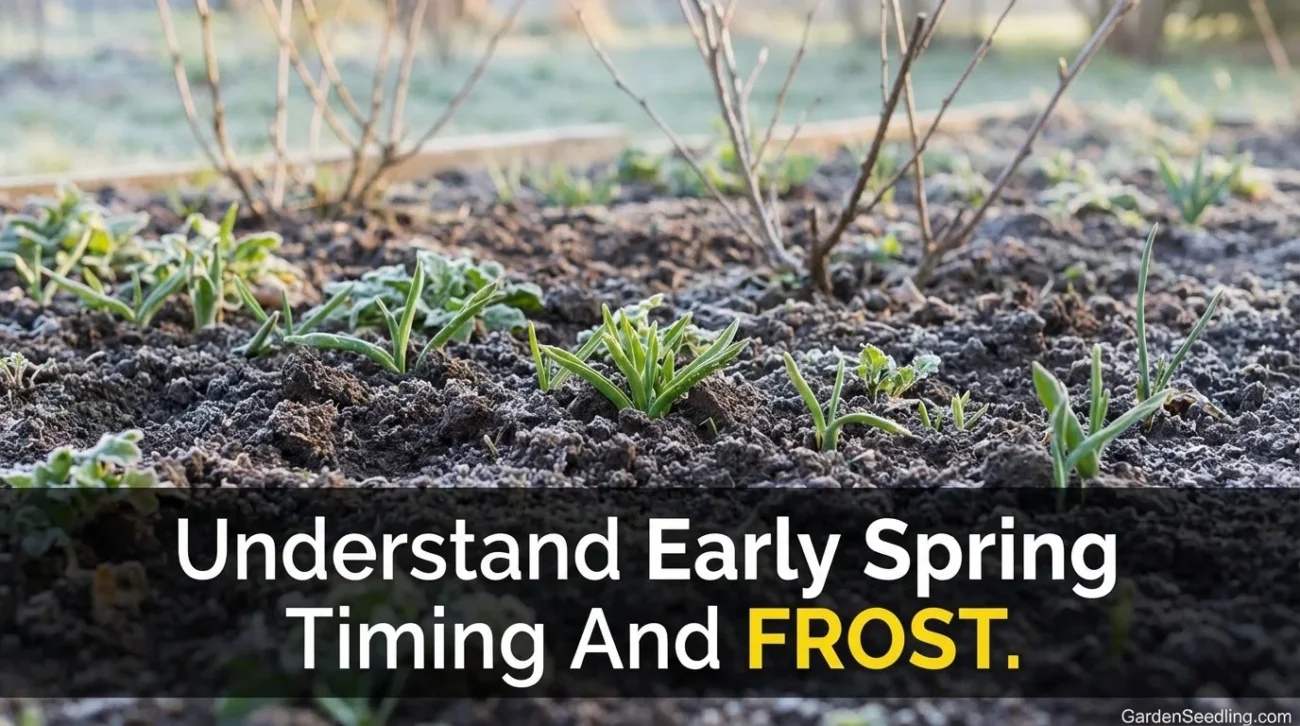
Also pay attention to soil condition. Many early spring crops fail because the soil is too wet and cold, not because the air is chilly. If you squeeze a handful of soil and it stays in a sticky clump, wait a bit. When soil crumbles in your hand and you can work it without compacting it, you’re in a good place to plant hardy seeds.
Two simple rules help beginners make better early spring decisions:
- Cool-season crops can handle light frosts and prefer cooler days.
- Warm-season crops hate cold soil and should wait (or start indoors).
Best Vegetables To Plant In Early Spring
For beginner gardeners, the easiest early spring vegetables are the ones that germinate in cool soil or tolerate cold once they sprout. Choose a few reliable crops, plant them well, and you’ll learn faster than trying to grow everything at once.
Direct-Sow Superstars For Cool Weather
Direct sowing means planting seeds straight into the garden bed. These crops are great for beginners because they don’t need indoor lights or complicated transplanting. Many also mature quickly, which keeps motivation high.
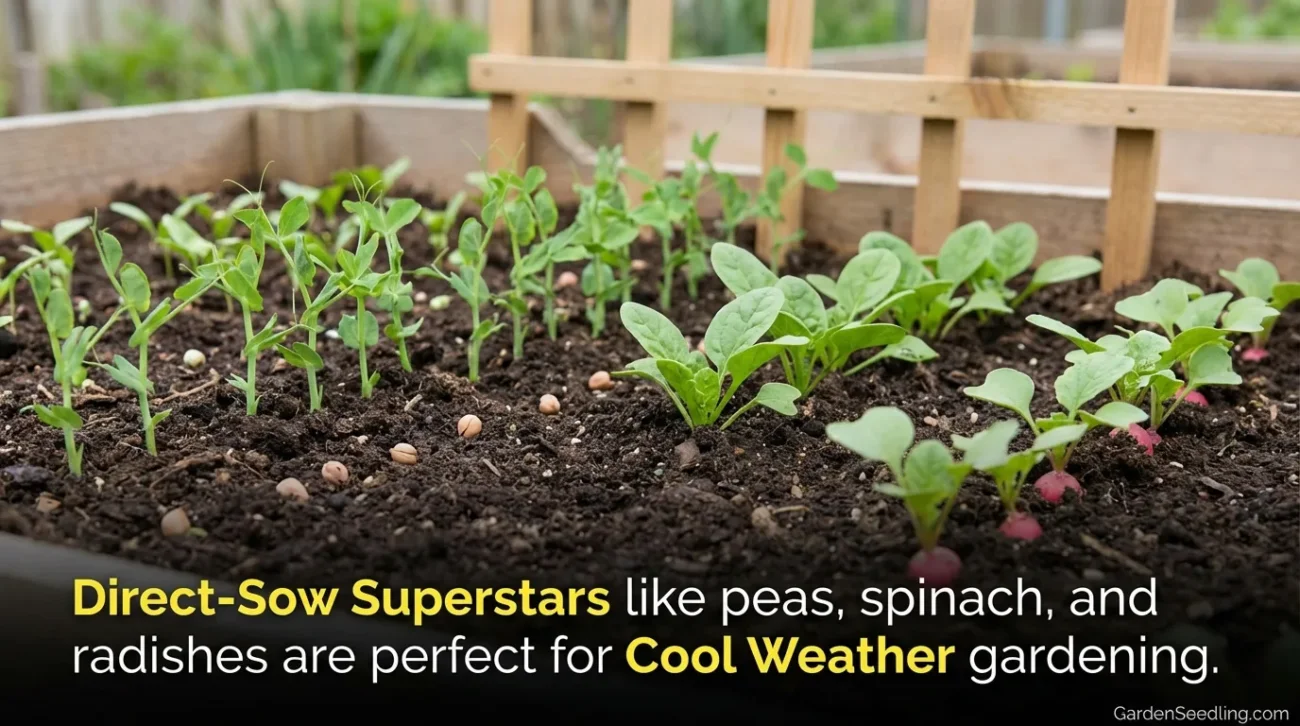
- Peas: Plant as soon as soil is workable. Provide a simple trellis so vines can climb and stay clean.
- Spinach: Loves cool weather and can handle frost. Sow a little every 1–2 weeks for steady harvests.
- Lettuce: Loose-leaf types are very forgiving. Harvest outer leaves and let the plant keep growing.
- Radishes: One of the fastest crops you can grow. Great for learning spacing and harvest timing.
- Carrots: Slow to germinate but worth it. Keep the top layer of soil evenly moist until sprouts appear.
- Beets: Reliable in cool weather, and you can eat both roots and greens.
- Arugula: Quick, flavorful, and tends to do better in cool weather than summer heat.
Easy Cool-Season Transplants
Some crops are easier when you buy young plants (transplants) instead of starting from seed outdoors. If your garden center has healthy seedlings, these are strong early spring choices because they handle cool weather and reward you with substantial harvests.
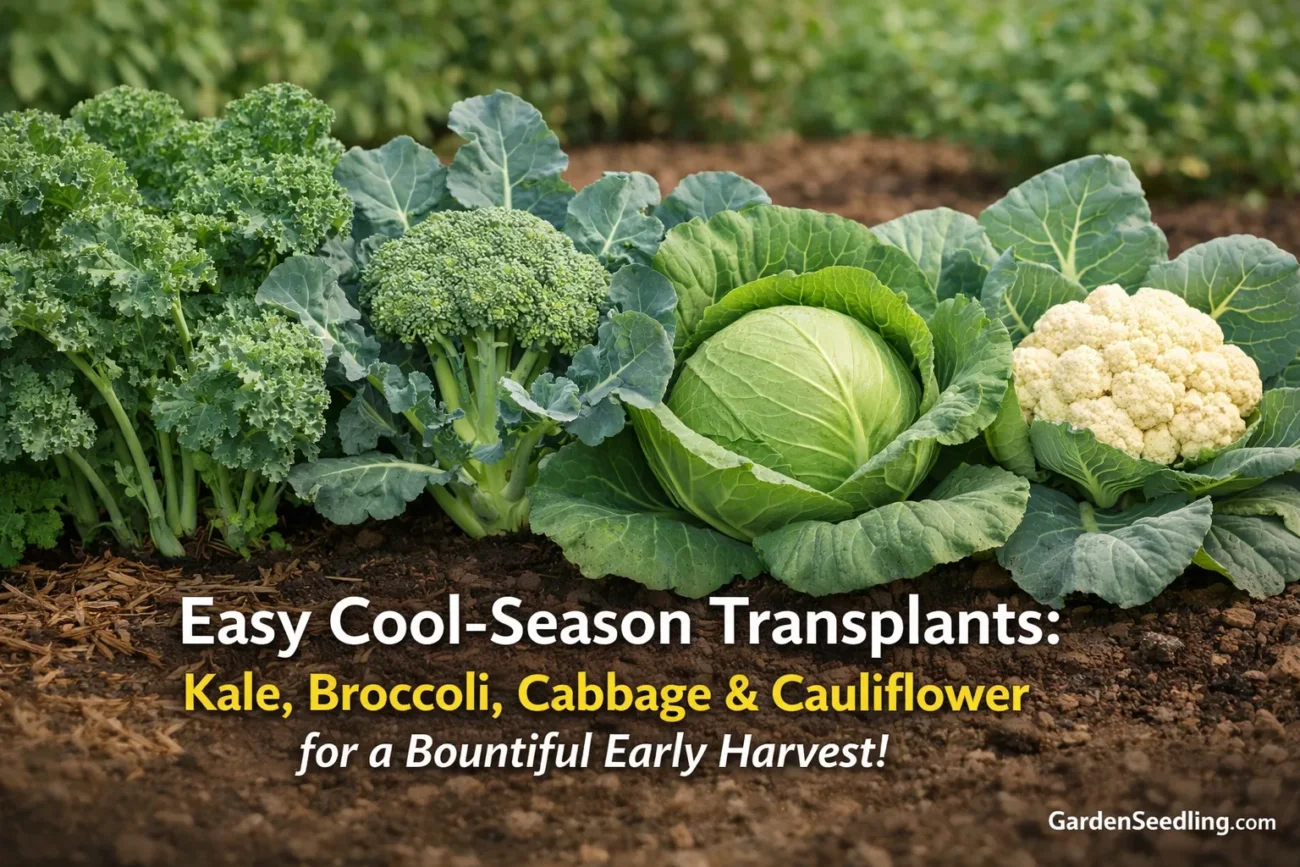
- Kale: Very cold tolerant and productive. Harvest leaves often to keep it growing.
- Broccoli: Likes cool weather and can be very rewarding. Protect from pests with lightweight row cover if needed.
- Cabbage: Slow but steady. Give it enough space and keep watering consistent.
- Cauliflower: A bit fussier than broccoli, but still doable if you keep growth steady and avoid stress.
Roots, Tubers, And Sets That Love Spring
These options skip the most delicate part of early growth. Sets and tubers are often easier than tiny seeds, and they give beginners a strong start.
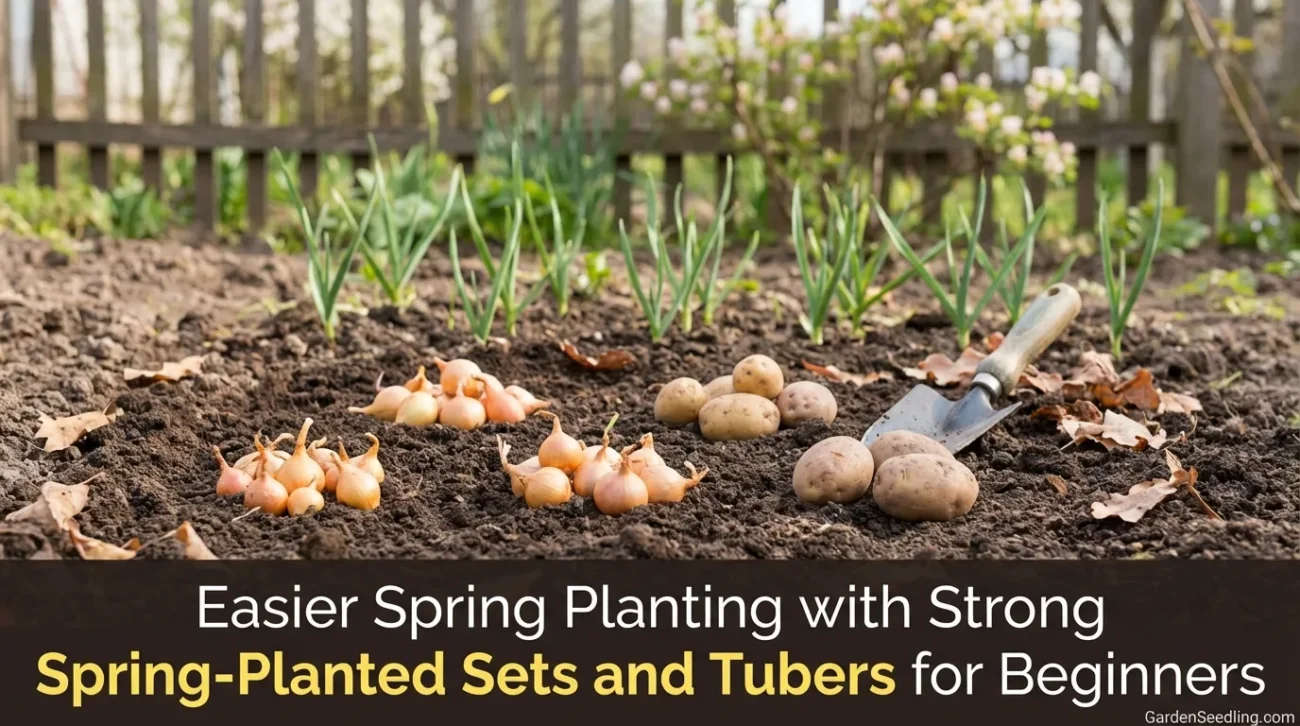
- Onion sets: Plant early for bigger bulbs. They tolerate cold and grow steadily as days lengthen.
- Seed potatoes: Plant once soil is workable and not waterlogged. Hill soil around stems as they grow to protect developing potatoes from sunlight.
Early Spring Vegetable Comparison Table
If you want a simple plan, pick 3–5 crops from this table and plant them over two weekends. A small, well-managed start is more helpful than a big, stressful one.
| Crop | How To Plant | Cold Tolerance | Best Beginner Tip |
|---|---|---|---|
| Peas | Direct sow | High | Trellis early so vines don’t tangle later. |
| Spinach | Direct sow | Very high | Sow small batches for continuous harvest. |
| Lettuce | Direct sow or transplant | Medium-high | Loose-leaf types are the easiest. |
| Radishes | Direct sow | High | Harvest on time to avoid woody roots. |
| Carrots | Direct sow | Medium | Keep the surface evenly moist until sprouts appear. |
| Kale | Transplant | Very high | Pick outer leaves often for steady growth. |
| Onion Sets | Plant sets | High | Plant early for larger bulbs later. |
| Seed Potatoes | Plant tubers | Medium | Hill soil as stems grow to protect tubers. |
Easy Flowers To Plant In Early Spring
Flowers aren’t just decoration. They can attract pollinators, add biodiversity, and make your garden feel finished even before summer crops go in. For beginners, the easiest early spring flowers are the ones that tolerate cool weather and don’t require perfect timing.
Hardy Annual Flowers
- Pansies and violas: Classic early spring color that handles cold nights well.
- Snapdragons: Tough seedlings that can take cool weather and keep blooming as temperatures rise.
- Calendula: Easy from seed, cheerful blooms, and helpful for a pollinator-friendly garden.
- Sweet peas: Not the vegetable—this is a fragrant flower vine. Give it a trellis and keep it watered.
Perennials And Bulbs To Plant Or Enjoy
If you already have perennials, early spring is the time to clean up winter debris and let new growth come through. If you’re planting new perennials, wait until the soil is workable and you can dig without creating heavy clods. Many spring bulbs (like tulips and daffodils) are planted in fall, but you can still enjoy them now and make notes for next season. A little planning is a beginner advantage.
What To Start Indoors In Early Spring
When gardeners talk about early spring, they often mean two things at once: planting hardy crops outdoors and starting warm-season crops indoors. Indoor seed starting helps you grow favorites that need a longer season, especially if your area has a short summer window.
Use your last frost date to count backward. These time ranges are flexible, so don’t worry about being perfect. The goal is healthy, sturdy seedlings—not tall, weak plants.
- 8–10 weeks before last frost: peppers, eggplant (they grow slowly)
- 6–8 weeks before last frost: tomatoes, basil
- 4–6 weeks before last frost: cucumbers and squash (only if you plan to transplant soon after)
- 4–6 weeks before your warm weather: zinnias, marigolds (often easy and fast)
For stronger seedlings, provide bright light, steady moisture, and airflow. Avoid keeping soil constantly soaked. If seedlings stretch, they need more light or a closer light source.
Step-By-Step Early Spring Planting Plan
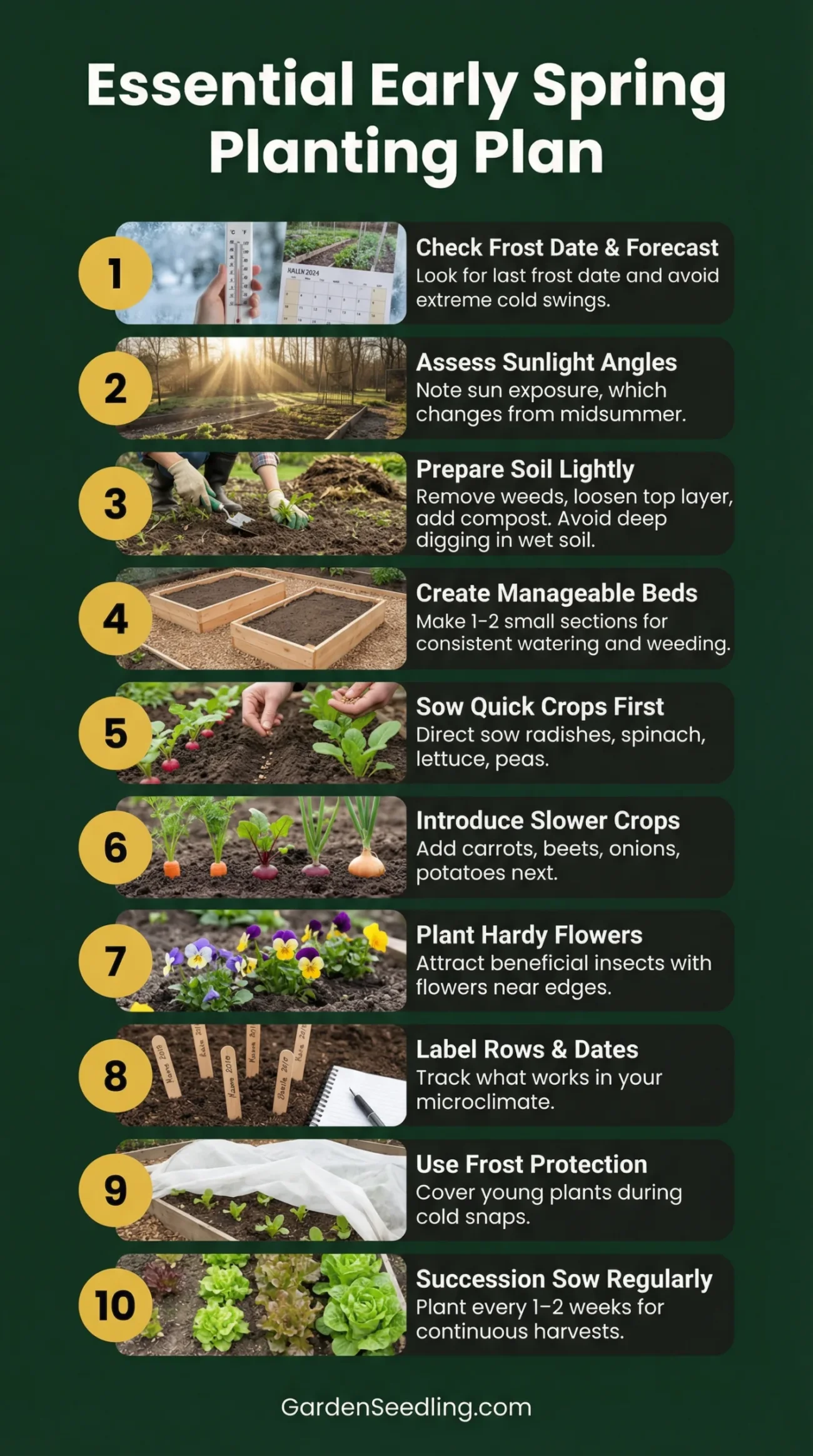
This simple plan helps beginners avoid common timing problems and keeps early spring gardening manageable.
- Check your last frost date and look at a 10–14 day forecast for extreme cold swings.
- Walk your garden and note sun exposure. Early spring sunlight angles can be different than midsummer.
- Prep soil lightly: remove weeds, loosen the top layer, and add compost if available. Avoid deep digging in very wet soil.
- Create 1–2 small beds or sections. Keep it simple so you can water and weed consistently.
- Direct sow quick crops first: radishes, spinach, lettuce, peas.
- Add slower crops next: carrots, beets, onions, potatoes.
- Plant a few hardy flowers near the edges to attract beneficial insects.
- Label rows and write planting dates down. This helps you learn what works in your microclimate.
- Use row cover or a light frost blanket during cold snaps, especially for young seedlings.
- Succession sow every 1–2 weeks for lettuce, radishes, and spinach so harvests don’t arrive all at once.
Common Mistakes Beginner Gardeners Can Avoid
Most early spring problems come from soil conditions, inconsistent moisture, or rushing warm-season crops. Avoid these mistakes and your success rate will jump.
- Planting in muddy soil: This can compact the ground and stunt roots for weeks.
- Skipping labels: It’s surprisingly easy to forget what you planted and where, especially with slow germinators like carrots.
- Overwatering cool-season seedlings: Cold soil stays wet longer, so water only when the top inch dries.
- Planting tomatoes outdoors too early: Cold nights can stall growth and invite disease problems.
- Not thinning seedlings: Crowded plants compete for light and nutrients, leading to smaller harvests.
- Ignoring pests early: Slugs and cutworms can show up fast. Row cover and clean garden edges help prevent damage.
Practical Tips For A Strong Early Spring Garden
These simple habits make early spring planting more reliable, especially for beginners learning how weather and soil work together.
- Warm the soil slightly with clear plastic or a low tunnel a week before planting, then remove it on planting day.
- Use raised beds if possible. They drain faster and warm sooner, which helps early crops establish.
- Keep a light row cover handy. It helps with frost protection and can reduce pest pressure without sprays.
- Water in the morning when possible. This helps leaves dry and can reduce disease issues.
- Feed gently. Compost is often enough early on; heavy fertilizer can cause soft growth that struggles in cool weather.
- Harvest often. Picking greens regularly encourages new leaves and keeps plants productive.
FAQ
What Are The Easiest Vegetables To Plant In Early Spring?
Peas, lettuce, spinach, and radishes are some of the easiest. They handle cool weather well and grow quickly.
Can I Plant Tomatoes In Early Spring?
Usually not outdoors. Start tomatoes indoors in early spring, then transplant after your last frost when nights are consistently mild.
How Do I Know If My Soil Is Ready To Plant?
If the soil is not muddy and crumbles in your hand, it’s typically ready. Avoid working soil that forms sticky clumps.
What Flowers Can Handle Early Spring Cold?
Pansies, violas, snapdragons, and calendula are strong choices for early spring color in many regions.
Should I Cover Plants If Frost Is Forecast?
Yes. Use a light frost cloth or row cover to protect seedlings and tender transplants during cold nights.
{
“@context”: “https://schema.org”,
“@type”: “FAQPage”,
“mainEntity”: [
{
“@type”: “Question”,
“name”: “What Are The Easiest Vegetables To Plant In Early Spring?”,
“acceptedAnswer”: {
“@type”: “Answer”,
“text”: “Peas, lettuce, spinach, and radishes are some of the easiest. They handle cool weather well and grow quickly.”
}
},
{
“@type”: “Question”,
“name”: “Can I Plant Tomatoes In Early Spring?”,
“acceptedAnswer”: {
“@type”: “Answer”,
“text”: “Usually not outdoors. Start tomatoes indoors in early spring, then transplant after your last frost when nights are consistently mild.”
}
},
{
“@type”: “Question”,
“name”: “How Do I Know If My Soil Is Ready To Plant?”,
“acceptedAnswer”: {
“@type”: “Answer”,
“text”: “If the soil is not muddy and crumbles in your hand, it’s typically ready. Avoid working soil that forms sticky clumps.”
}
},
{
“@type”: “Question”,
“name”: “What Flowers Can Handle Early Spring Cold?”,
“acceptedAnswer”: {
“@type”: “Answer”,
“text”: “Pansies, violas, snapdragons, and calendula are strong choices for early spring color in many regions.”
}
},
{
“@type”: “Question”,
“name”: “Should I Cover Plants If Frost Is Forecast?”,
“acceptedAnswer”: {
“@type”: “Answer”,
“text”: “Yes. Use a light frost cloth or row cover to protect seedlings and tender transplants during cold nights.”
}
}
]
}
Start small, stick to cold-tolerant crops, and treat early spring as a learning season. With a few well-timed plantings now, you’ll build confidence and set up a smooth transition into your summer garden.