Herbs do not need much square footage, but they do care about root space, drainage, and light. A basil plant on a small balcony can outgrow a neglected bed fast if the pot drains well, the mix stays loose, and the plant gets trimmed on time. Small containers make herb growing simple. They also make mistakes show up fast.
- Choose Herbs That Match Small Pots
- Pick The Right Container And Potting Mix
- How To Plant Organic Herbs In Small Containers
- Start With The Pot
- Use Seeds Or Transplants
- Water Right After Planting
- Place The Pot Where Light Matches The Herb
- Water, Feed, And Keep Growth Compact
- Pair Herbs By Care Style, Not By Looks
- Prune Early And Harvest Often
- Keep It Organic Without Making It Complicated
- Common Mistakes That Shrink The Harvest
- Small Tips That Make A Real Difference
- FAQ
- What Are The Easiest Organic Herbs To Grow In Small Containers?
- Can I Grow More Than One Herb In The Same Pot?
- How Often Should I Water Herbs In Small Pots?
- Do Organic Herbs Need Fertilizer?
- Can I Use Garden Soil In Herb Containers?
- Will Herbs Grow Indoors In Small Containers?
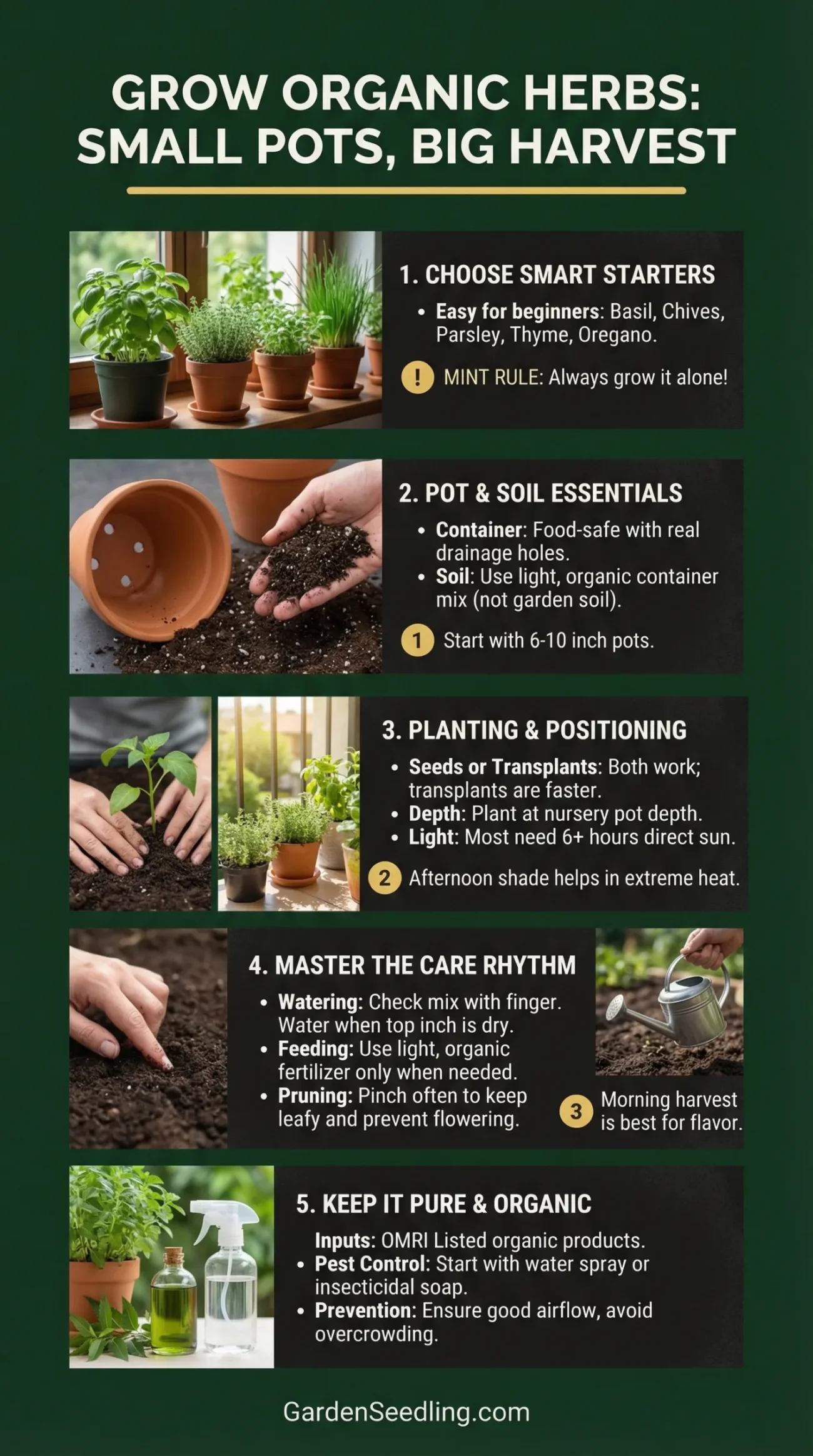
Quick Answer: To grow organic herbs in small containers, use a container with drainage holes, fill it with a light potting mix meant for pots, place it where most herbs get at least 6 hours of direct sun, water when the top inch starts to dry, and feed lightly with an organic fertilizer only when the plant needs it. Start with easy herbs like basil, chives, parsley, thyme, or oregano. Keep mint in its own pot, give woody herbs a drier rhythm, and pinch often so plants stay leafy instead of going to flower.
Choose Herbs That Match Small Pots
Start with herbs you actually cook with. Sounds obvious, yet people still fill a planter with random herbs and then barely cut any of them.
For beginners, the easiest small-container herbs are usually chives, thyme, oregano, parsley, and basil. These stay useful, respond well to trimming, and do not need huge containers to give a steady harvest. Mint also grows very well in pots, but it spreads hard and should get its own container. Rosemary can grow in pots too, though in a truly small container it will hit its limit sooner than thyme or chives.
| Herb | Small-Container Fit | Light | Water Style | Good To Know |
|---|---|---|---|---|
| Basil | Very Good | Full sun | Even moisture | Warm-season herb; pinch flower buds early |
| Chives | Very Good | Full sun to light shade | Steady moisture | Forgiving and easy to cut again and again |
| Parsley | Very Good | Full sun to part sun | Even moisture | Slow from seed, faster from transplants |
| Thyme | Excellent | Full sun | Let the surface dry slightly | Compact, tidy, and well suited to small pots |
| Oregano | Excellent | Full sun | Moderate water | Trim often to keep it dense |
| Mint | Very Good | Part sun to full sun | Likes more moisture | Grow it alone |
| Cilantro | Good In Cool Weather | Sun to afternoon shade | Even moisture | Bolts fast in heat |
| Rosemary | Fair In Small Pots | Full sun | On the drier side | Better once moved into a slightly larger pot |
One more thing: not all herbs want the same moisture. Parsley, cilantro, and mint prefer steadier moisture. Thyme, oregano, sage, and rosemary lean drier. Mix those care styles in one tiny pot and something usually gets cranky.
Pick The Right Container And Potting Mix
The container matters more than people think. Use a pot that is food-safe and has real drainage holes, not just a decorative cachepot that traps water. For one herb, a container around 6 inches wide works as a starting point. For a fuller plant, longer season, or less fussy watering, something closer to 8 to 10 inches is easier to manage.
That extra room helps. Roots heat up less, the mix dries a bit slower, and you get a steadier plant.
Do not fill herb pots with garden soil. It packs down in containers, drains poorly, and can carry weed seeds, disease, or insects. Use a loose potting mix made for containers. A good mix feels light in the hand and usually includes materials such as peat or coir plus perlite or vermiculite for air space.
For organic growing, buy a potting mix and fertilizer labeled for organic gardening. If you want an easy shopping filter, an OMRI Listed product is a practical sign that the input is allowed for organic use. You can also choose a container mix that already contains compost. That works well, especially in small pots where you want some moisture holding without turning the mix dense and muddy.
How To Plant Organic Herbs In Small Containers
Start With The Pot
Wash reused containers first. Old pots can hold salts, algae, and bits of old root tissue. Then fill the pot with pre-moistened potting mix, leaving about an inch at the top so water does not spill over every time you irrigate.
Use Seeds Or Transplants
Both work. Seeds cost less, but transplants get you to harvest much faster.
If you want quick results, buy small organic starts of basil, parsley, thyme, oregano, or chives. Set transplants at the same depth they were growing in their nursery pots. Do not bury stems deeper unless that crop specifically likes it. Herbs generally do not.
If you start from seed, follow the packet depth. Fine herb seeds fail most often because people plant them too deep or let the surface dry into a crust. Parsley can test your patience a little. Basil usually moves faster once it has warmth.
Water Right After Planting
Water slowly until it runs from the drainage holes. That first soak settles the mix around the roots and shows you whether the pot actually drains well. If water pools on top for long, the mix is too tight or the drainage is poor.
Place The Pot Where Light Matches The Herb
Most herbs want at least 6 hours of direct sun. More is often better for basil, thyme, oregano, rosemary, and sage. Chives and parsley can handle a bit less. In very hot summer areas, especially where afternoons get harsh, cilantro and some leafy herbs do better with afternoon shade. That one shift can slow bolting and reduce stress.
Water, Feed, And Keep Growth Compact
Small containers dry quickly. In midsummer, they may dry very quickly. On hot, bright days, some herb pots need water once a day, and in tough heat even twice. Do not water by the calendar. Check the mix with your finger.
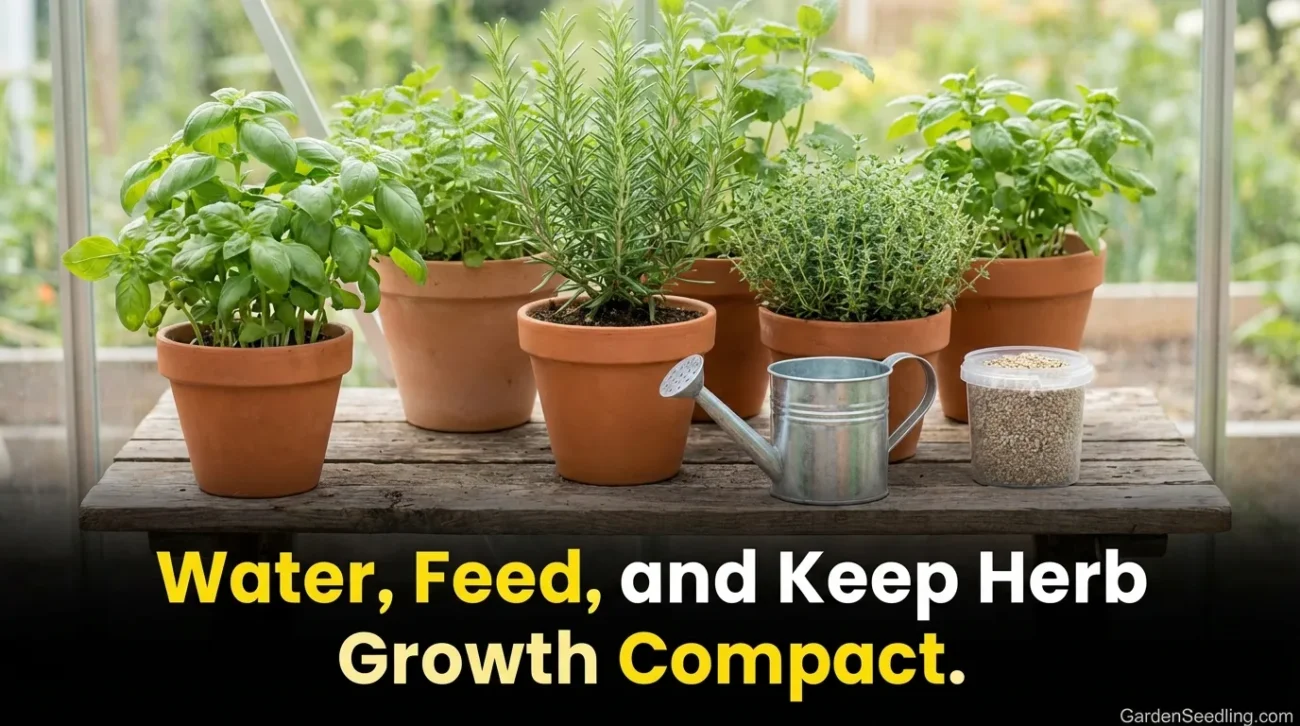
A simple rhythm works well:
- Basil, parsley, chives, cilantro: keep the mix evenly moist, not soggy
- Thyme, oregano, sage, rosemary: let the top layer dry a bit before watering again
- Mint: do not let it stay bone dry for long
When you water, water the soil, not the leaves if you can help it. Wet foliage plus poor air flow invites disease, and a tiny container gives disease no room to forgive you.
Feeding is where many herb growers go too hard. Herbs usually do not need heavy fertilizer, and too much nitrogen can make them soft, lanky, and less flavorful. If your potting mix already contains fertilizer, you may not need to feed much at first. After that, use a light hand:
- Slow-release organic fertilizer: good for steady, low-input feeding
- Liquid organic fertilizer: useful every 2 to 4 weeks at label rate or even a bit lighter for leafy herbs
- Compost: helpful in modest amounts, but do not turn the whole pot into straight compost
If leaves stay deep green, stems stay sturdy, and growth looks normal, do not chase more fertilizer. Leave it alone.
Pair Herbs By Care Style, Not By Looks
Mixed herb pots can work well, but only when the plants want the same treatment. Looks matter, sure, but matching water needs matters more.
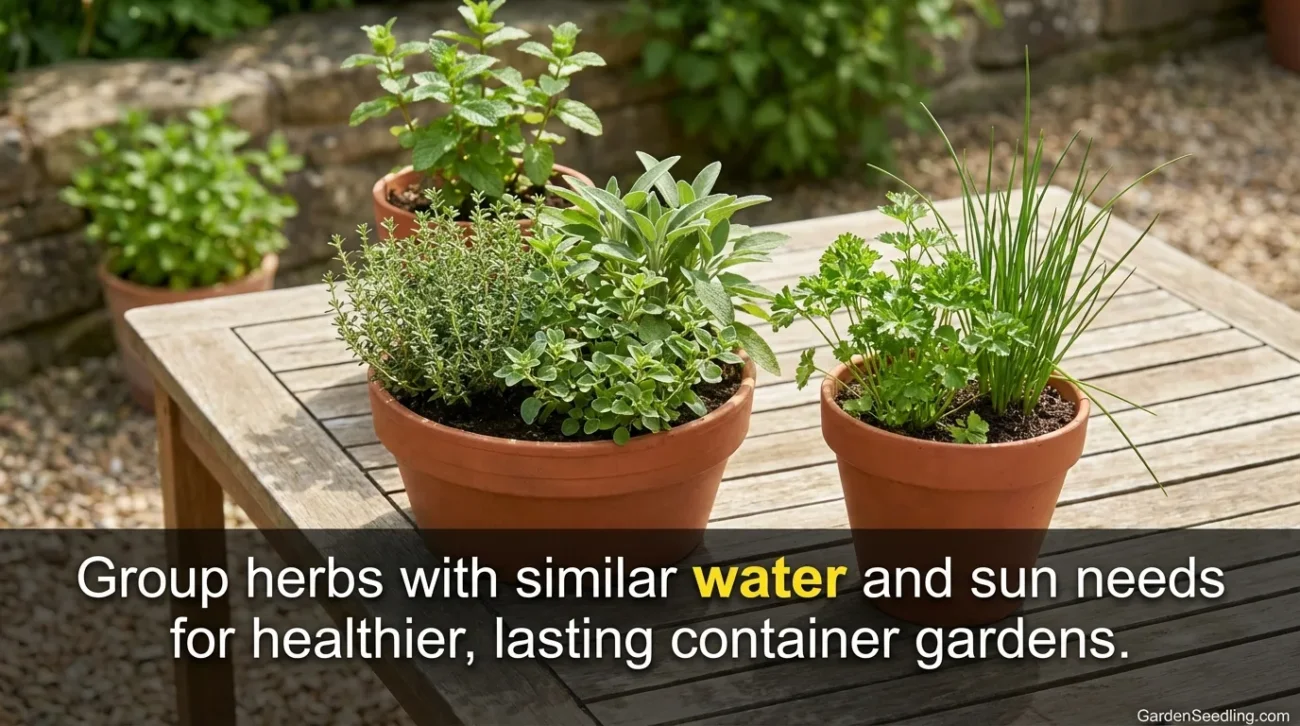
Good small-container pairings:
- Thyme + oregano + sage in a wider pot with very sharp drainage
- Parsley + chives in a container that stays evenly moist
- Cilantro + parsley in cool-season setups, especially where afternoons run hot
Poor pairings:
- Mint + anything else because mint gets pushy and drinks more
- Rosemary + parsley because one likes to dry a bit and the other prefers steadier moisture
- Thyme + basil in a tiny pot, unless you are ready to water with extra care
If the container is truly small, keep it to one herb per pot. It is cleaner, simpler, and much easier to manage.
Prune Early And Harvest Often
Herbs stay useful when you cut them. Oddly enough, the timid grower often gets the weakest plant.
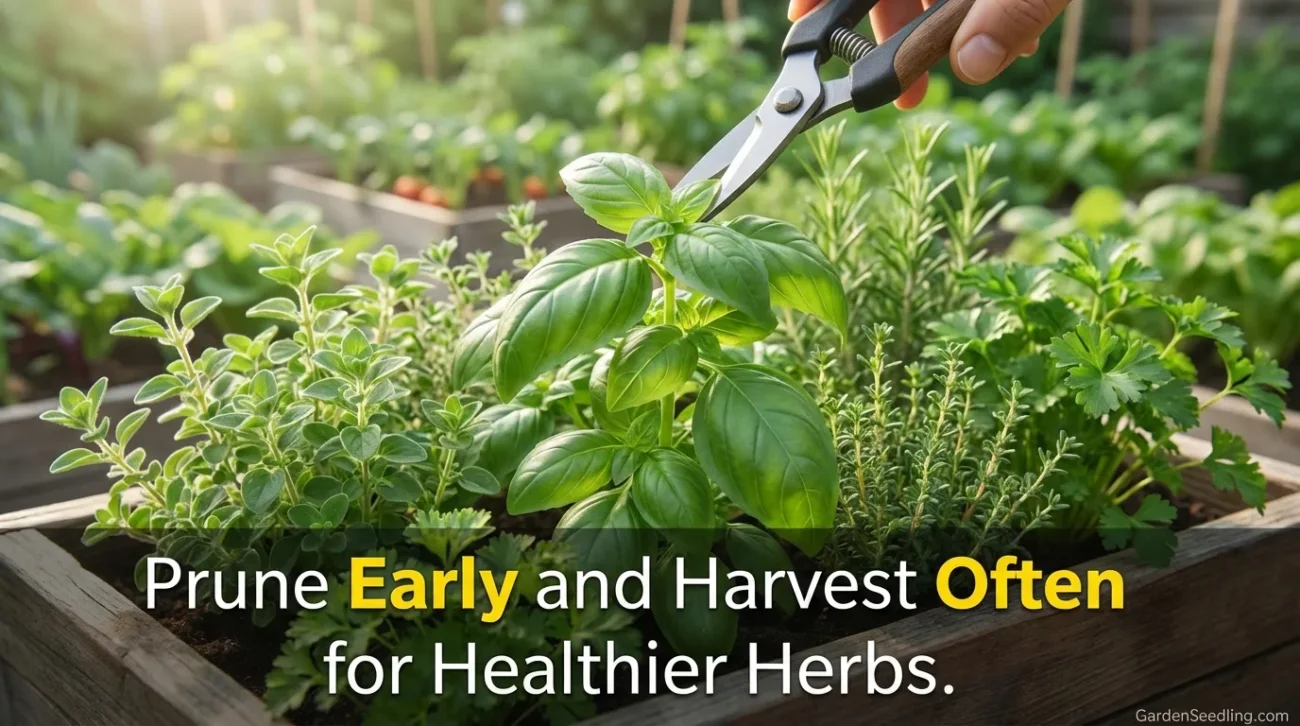
Pinch basil tips once plants have enough growth to spare. That pushes side shoots and gives you a fuller plant instead of one tall stem with attitude. Remove flower buds on basil and oregano if you want leaf production to stay high. Once many herbs start flowering, leaf flavor drops and growth slows.
For parsley and cilantro, cut outer stems near the base instead of shaving off random leaflets. For thyme, oregano, and sage, trim tender stem tips. For perennial herbs, avoid removing more than about one-third of the plant at a time. Annual herbs can take a bit more, but still leave enough stem and leaf area so the plant can rebound.
Morning harvest is usually nicest for flavor. Not mandatory. Just nice.
Keep It Organic Without Making It Complicated
Organic container herb growing is mostly about what you put in the pot and what you do before problems get large. You do not need a shelf full of products.
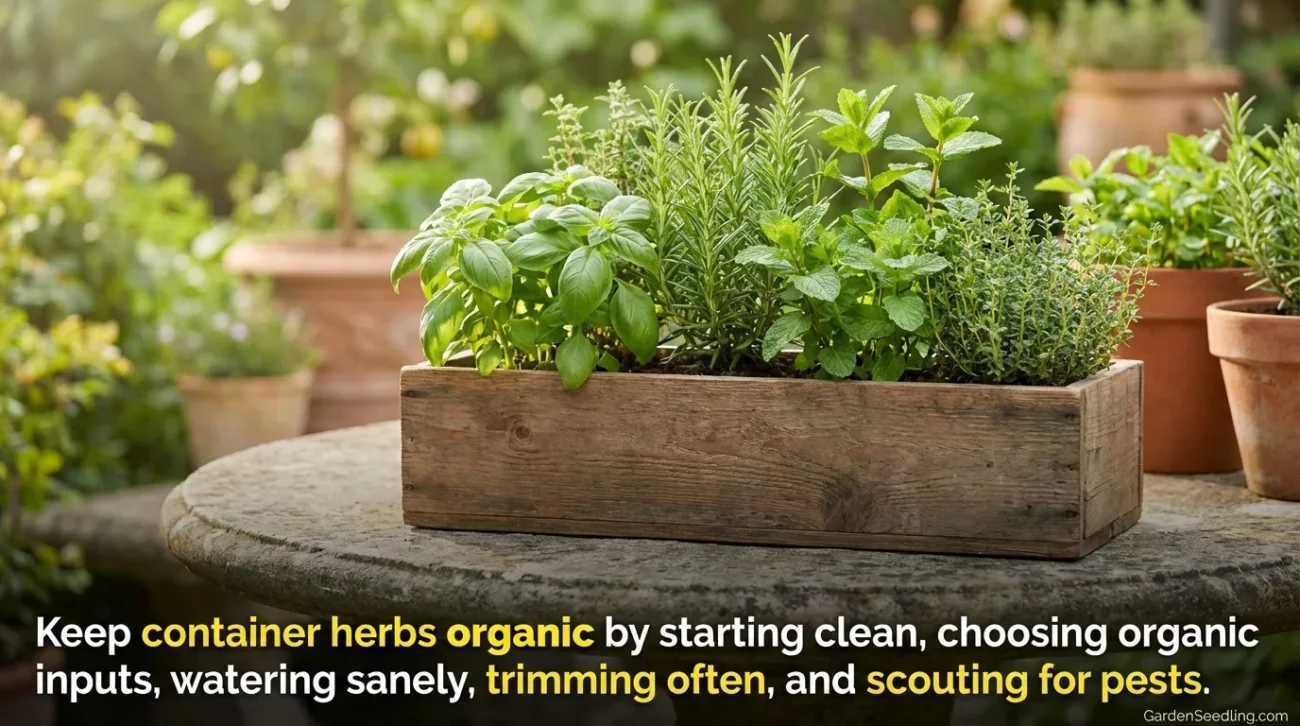
- Start clean: use fresh potting mix and washed containers
- Choose organic inputs: potting mix, compost, and fertilizer labeled for organic use
- Water sanely: soggy roots invite trouble faster than slightly dry roots
- Trim often: dense, overgrown tops trap moisture and shade themselves
- Scout every few days: check leaf undersides for aphids, spider mites, thrips, or whiteflies
If pests show up, start with the mild stuff. A steady spray of water can knock down aphids and mites. If that is not enough, use an insecticidal soap labeled for edible plants and follow the label exactly. Neem-based products can help too, but soap is often the simpler first move for soft-bodied pests. Either way, spray carefully and do not assume “organic” means “use as much as you want.” It does not.
Common Mistakes That Shrink The Harvest
- Using garden soil in pots: it compacts and starves roots of air
- No drainage holes: the fastest route to root rot
- Too little light: herbs stretch, pale out, and lose flavor
- Over-fertilizing: quick growth, weaker taste
- Letting basil or cilantro flower too early: leaf quality drops
- Crowding too many herbs together: harder watering, less airflow, more stress
- Keeping mint in a shared pot: mint wins, the others lose
- Ignoring heat: tiny black nursery pots can overheat roots fast on concrete or metal railings
If your herbs keep failing, the issue usually comes down to three things: not enough sun, a poor potting mix, or water that swings from swamp to dust.
Small Tips That Make A Real Difference
- Turn pots every few days if plants lean toward the light
- Use saucers carefully, then empty standing water after watering
- Mulch lightly with a thin layer of fine bark or compost to slow evaporation outdoors
- Move pots in brutal weather—that is one of the big advantages of container growing
- Bring tender herbs inside early in fall, before cold nights start hitting hard
- Refresh the pot when roots fill it; herbs are productive, but they are not forever plants
That is the nice part of growing herbs in small containers: you can fix problems fast, start over fast, and still be clipping dinner from the windowsill or patio a few weeks later.
FAQ
What Are The Easiest Organic Herbs To Grow In Small Containers?
Basil, chives, parsley, thyme, and oregano are usually the easiest place to start. Mint is easy too, but it should have its own pot.
Can I Grow More Than One Herb In The Same Pot?
Yes, but only if the container is wide enough and the herbs want similar water and light. Parsley with chives works better than rosemary with mint.
How Often Should I Water Herbs In Small Pots?
Water when the top inch of mix feels dry or almost dry, depending on the herb. In hot summer weather, that may mean every day.
Do Organic Herbs Need Fertilizer?
Yes, but lightly. A potting mix with built-in fertility may carry the plant for a while, then a mild organic fertilizer can keep growth steady without making the flavor flat.
Can I Use Garden Soil In Herb Containers?
No. Garden soil gets too dense in pots and drains poorly. Use a container mix instead.
Will Herbs Grow Indoors In Small Containers?
Yes, if they get strong light. A sunny window works for some homes, and a grow light helps when window light is weak.
Once the setup is right, herbs are not fussy at all. Give them sun, air, a pot that drains, and a little restraint with water and fertilizer, and they tend to reward you fast—snip by snip, meal by meal.
{
“@context”: “https://schema.org”,
“@type”: “FAQPage”,
“mainEntity”: [
{
“@type”: “Question”,
“name”: “What Are The Easiest Organic Herbs To Grow In Small Containers?”,
“acceptedAnswer”: {
“@type”: “Answer”,
“text”: “Basil, chives, parsley, thyme, and oregano are usually the easiest place to start. Mint is easy too, but it should have its own pot.”
}
},
{
“@type”: “Question”,
“name”: “Can I Grow More Than One Herb In The Same Pot?”,
“acceptedAnswer”: {
“@type”: “Answer”,
“text”: “Yes, but only if the container is wide enough and the herbs want similar water and light. Parsley with chives works better than rosemary with mint.”
}
},
{
“@type”: “Question”,
“name”: “How Often Should I Water Herbs In Small Pots?”,
“acceptedAnswer”: {
“@type”: “Answer”,
“text”: “Water when the top inch of mix feels dry or almost dry, depending on the herb. In hot summer weather, that may mean every day.”
}
},
{
“@type”: “Question”,
“name”: “Do Organic Herbs Need Fertilizer?”,
“acceptedAnswer”: {
“@type”: “Answer”,
“text”: “Yes, but lightly. A potting mix with built-in fertility may carry the plant for a while, then a mild organic fertilizer can keep growth steady without making the flavor flat.”
}
},
{
“@type”: “Question”,
“name”: “Can I Use Garden Soil In Herb Containers?”,
“acceptedAnswer”: {
“@type”: “Answer”,
“text”: “No. Garden soil gets too dense in pots and drains poorly. Use a container mix instead.”
}
},
{
“@type”: “Question”,
“name”: “Will Herbs Grow Indoors In Small Containers?”,
“acceptedAnswer”: {
“@type”: “Answer”,
“text”: “Yes, if they get strong light. A sunny window works for some homes, and a grow light helps when window light is weak.”
}
}
]
}