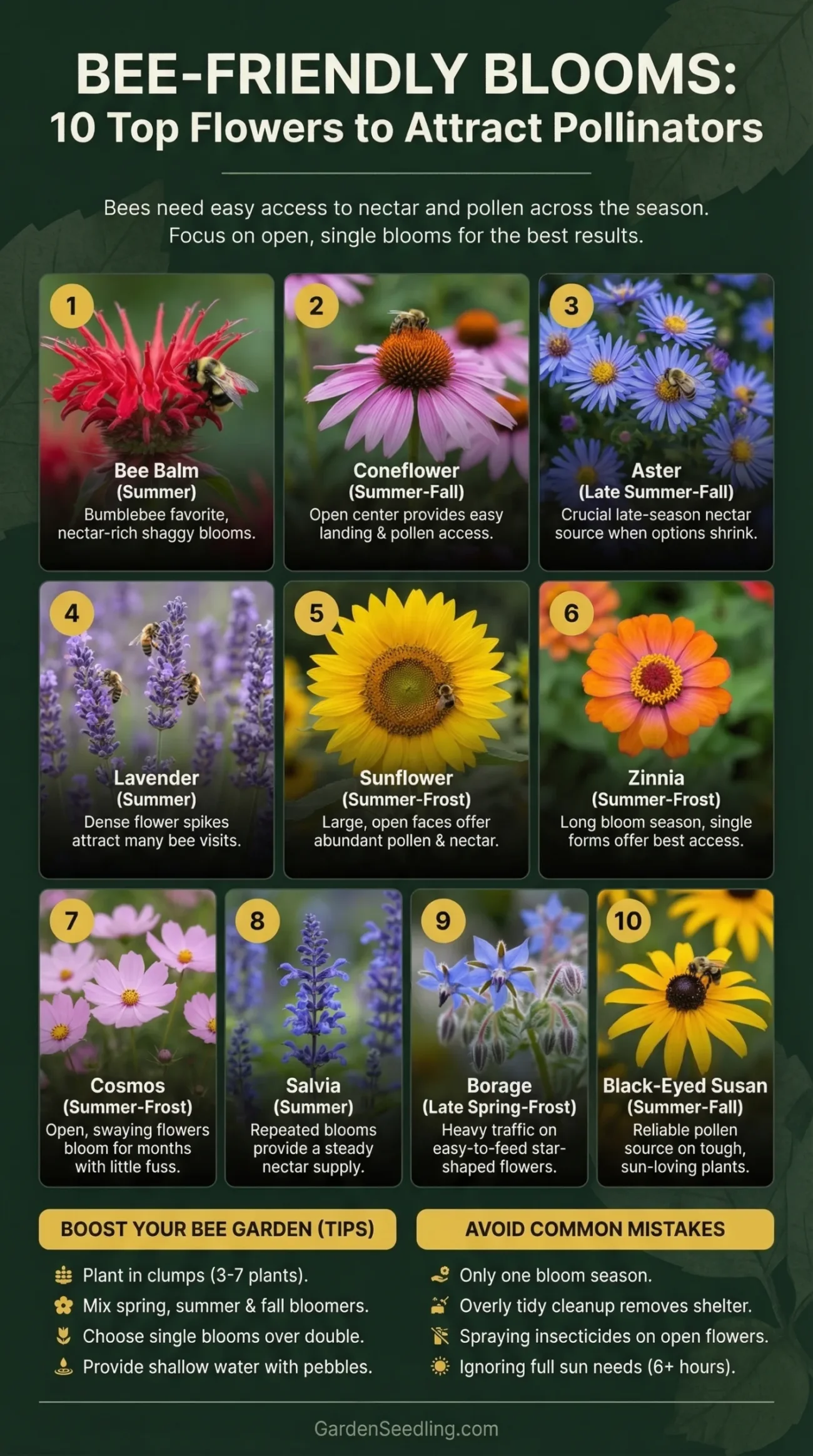
Bees do not need a fancy garden. They need easy access to nectar and pollen, flowers that keep blooming across the season, and a yard that is not treated like an outdoor chemistry project. That is why some flowers stay busy from morning to evening while others, even pretty ones, get ignored.
- Quick Answer
- What Makes A Flower Bee-Friendly?
- 10 Pollinator-Friendly Flowers To Attract Bees
- 1) Bee Balm
- 2) Purple Coneflower
- 3) Aster
- 4) Lavender
- 5) Sunflower
- 6) Zinnia
- 7) Cosmos
- 8) Salvia
- 9) Borage
- 10) Black-Eyed Susan
- How To Get More Bees From These Flowers
- Best Planting Plan For A Small Bee-Friendly Garden
- Common Mistakes That Keep Bees Away
- Are Native Flowers Better For Bees?
- FAQ
- What Flower Attracts Bees The Most?
- Do Bees Prefer Native Flowers?
- Are Double Flowers Bad For Bees?
- Can I Grow Pollinator-Friendly Flowers In Containers?
- How Do I Keep Bees Coming Back All Season?
If your goal is to grow pollinator-friendly flowers to attract bees, start with simple, open blooms and plant more than one kind. A mixed planting works better than a one-flower patch, especially when you combine early, midsummer, and late-season bloomers. And yes, bees notice the difference.
Quick Answer
The best pollinator-friendly flowers to attract bees are bee balm, coneflower, aster, lavender, sunflower, zinnia, cosmos, salvia, borage, and black-eyed Susan. These flowers offer accessible nectar or pollen, bloom over a long window, and fit well in home gardens. For the best results, grow them in clumps, choose single rather than double flowers, and keep something in bloom from spring into fall.
What Makes A Flower Bee-Friendly?
Bees are not choosing flowers at random. They look for blooms that are easy to land on and easy to feed from. Open flowers usually work better than very double, petal-heavy blooms because the nectar and pollen stay reachable. Some ornamental flowers look full and lush but feed bees poorly. Pretty, yes. Useful, not always.
Color matters too. Bees often visit blue, purple, white, and yellow flowers, though they will use many colors when the food payoff is good. Flower shape matters just as much. Daisy-like flowers, spikes with many small blossoms, and open cup-shaped blooms tend to be dependable choices.
Then there is timing. A garden that peaks for two weeks and goes quiet after that will not support many bees for long. Sequence matters—early flowers help emerging bees, summer flowers carry the load, and fall bloomers support late foraging before cold weather slows everything down.
10 Pollinator-Friendly Flowers To Attract Bees
| Flower | Type | Bloom Window | Light | Why Bees Use It |
|---|---|---|---|---|
| Bee Balm | Perennial | Summer | Full Sun to Part Sun | Nectar-rich blooms, very active with bumblebees |
| Coneflower | Perennial | Summer to Early Fall | Full Sun | Open centers provide pollen and landing space |
| Aster | Perennial | Late Summer to Fall | Full Sun | Late-season nectar and pollen when options shrink |
| Lavender | Perennial | Summer | Full Sun | Dense flower spikes pull in many bee visits |
| Sunflower | Annual | Summer to Frost | Full Sun | Large, open faces offer pollen and nectar |
| Zinnia | Annual | Summer to Frost | Full Sun | Long bloom season and easy access on single forms |
| Cosmos | Annual | Summer to Frost | Full Sun | Open flowers bloom for months with little fuss |
| Salvia | Annual or Perennial | Summer | Full Sun | Repeated blooms and steady nectar supply |
| Borage | Annual Herb | Late Spring to Frost | Full Sun | Heavy bee traffic on star-shaped flowers |
| Black-Eyed Susan | Perennial or Biennial | Summer to Fall | Full Sun | Reliable pollen source and easy-care garden plant |
1) Bee Balm
Bee balm earns its name. Bumblebees, in particular, work these shaggy flowers hard in midsummer, and once a healthy clump gets going, the plant feels almost noisy with activity. The flowers are usually red, pink, purple, or lavender-toned, and the foliage has that mint-family scent when brushed.
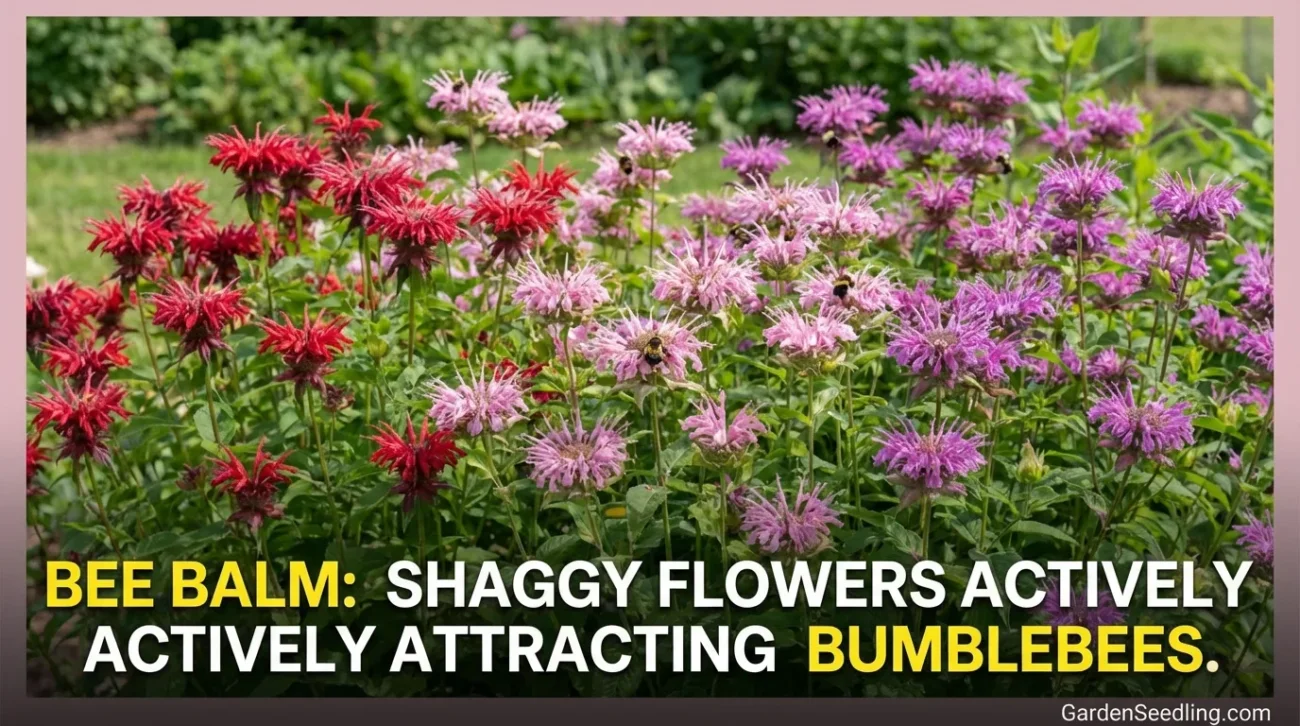
Give bee balm moist, well-drained soil and decent air flow. In humid areas, powdery mildew can show up, so spacing matters more than people think. Newer mildew-resistant types help, but even the older ones are worth growing if you do not crowd them.
2) Purple Coneflower
Coneflower is one of the easiest perennials for a bee garden, and it keeps pulling its weight after the first flush. Bees land on the broad petals, then work the raised center for pollen and nectar. It also handles heat, dry spells, and average soil better than many cottage-garden favorites.
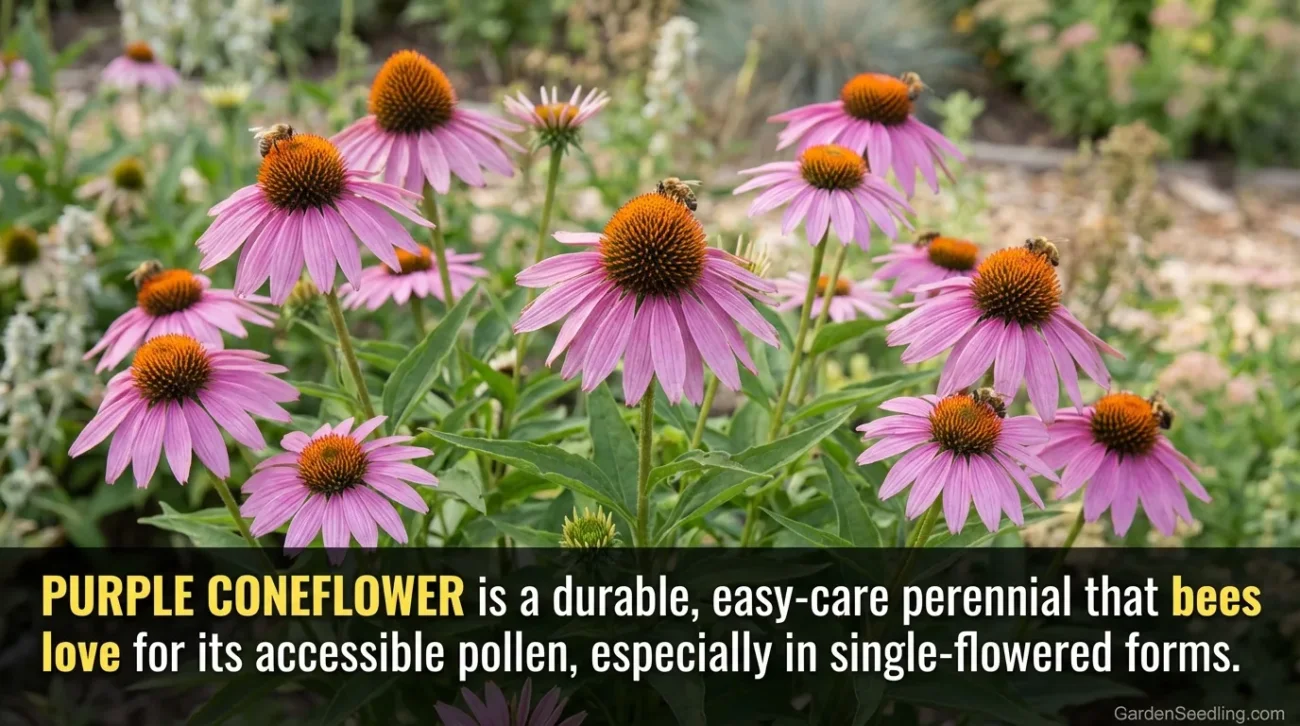
Choose single-flowered types over extra-double varieties if bees are the priority. Those puffy doubles can reduce access to the flower center. Nice for bouquets, maybe. Less useful for pollinators.
3) Aster
Asters matter because they bloom when many other flowers are fading out. That late-season food source helps bees keep foraging into fall, which is a big deal in a home garden that would otherwise go flat after August.
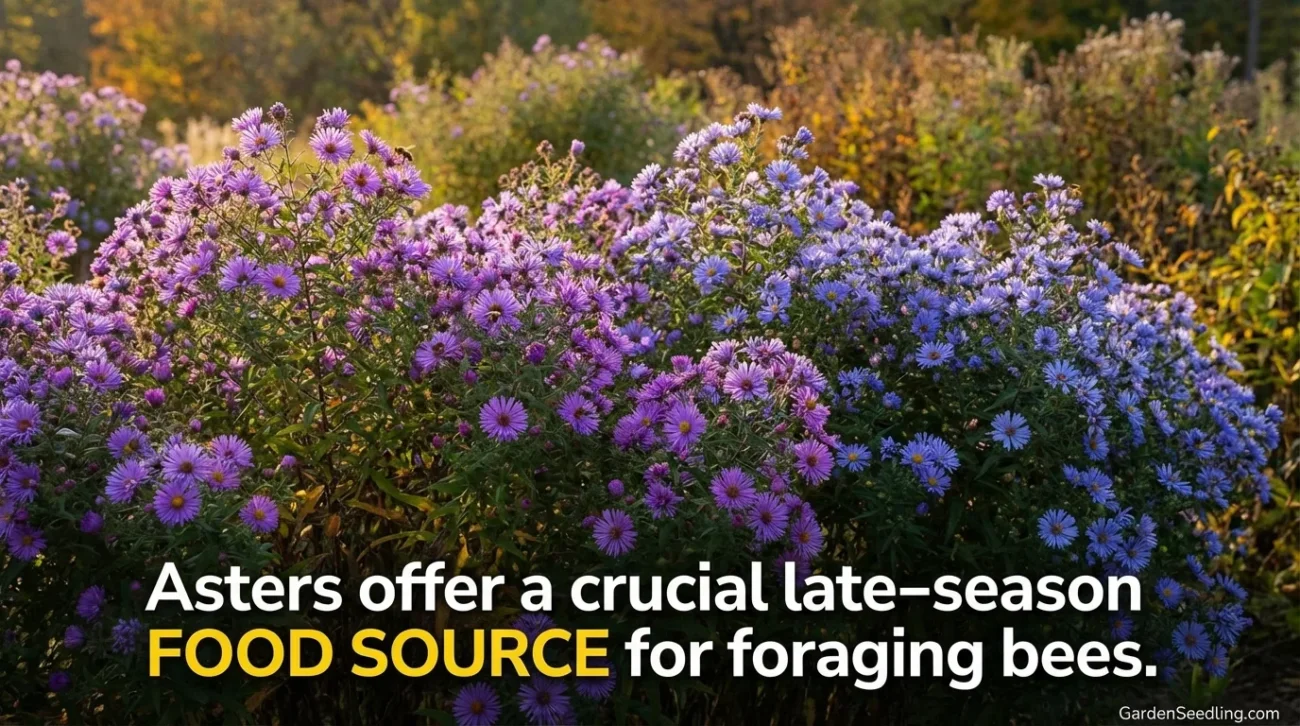
New England aster and aromatic aster are strong choices for sunny beds. They can get wide, a little wild-looking even, so place them where that late burst of bloom will feel welcome rather than messy.
4) Lavender
Lavender brings structure, scent, and a long line of bee visits when planted in a sunny, dry spot. The flower spikes are loaded with small blossoms, so one plant can support a lot of feeding. Plant a few together and you will notice the difference fast.
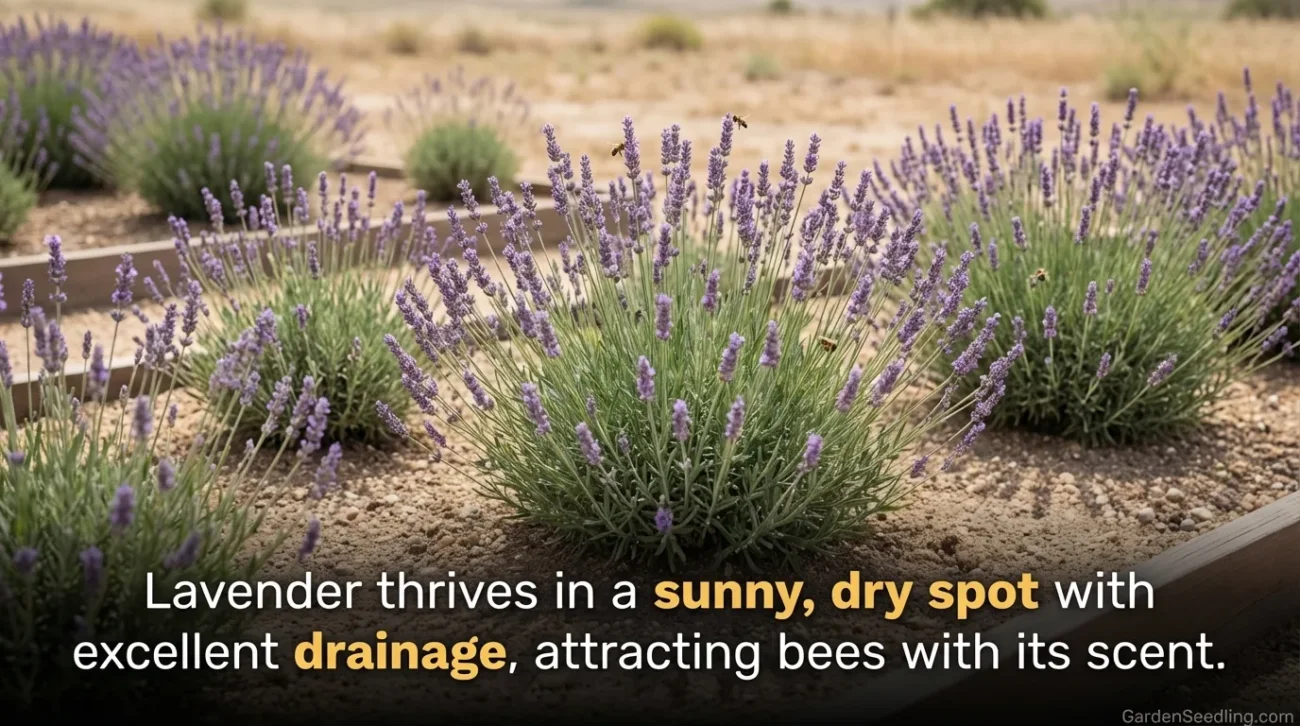
Drainage is the whole game with lavender. Heavy, wet soil usually causes trouble before winter ever does. Raised beds, sandy loam, and gravelly edges suit it well.
5) Sunflower
Not every sunflower is equally useful, but open-pollinated and pollen-producing types can be busy with bees. Single-flowered forms are best. Large blooms offer a broad landing pad, and branching kinds keep the flower show going much longer than one-stem giant types.
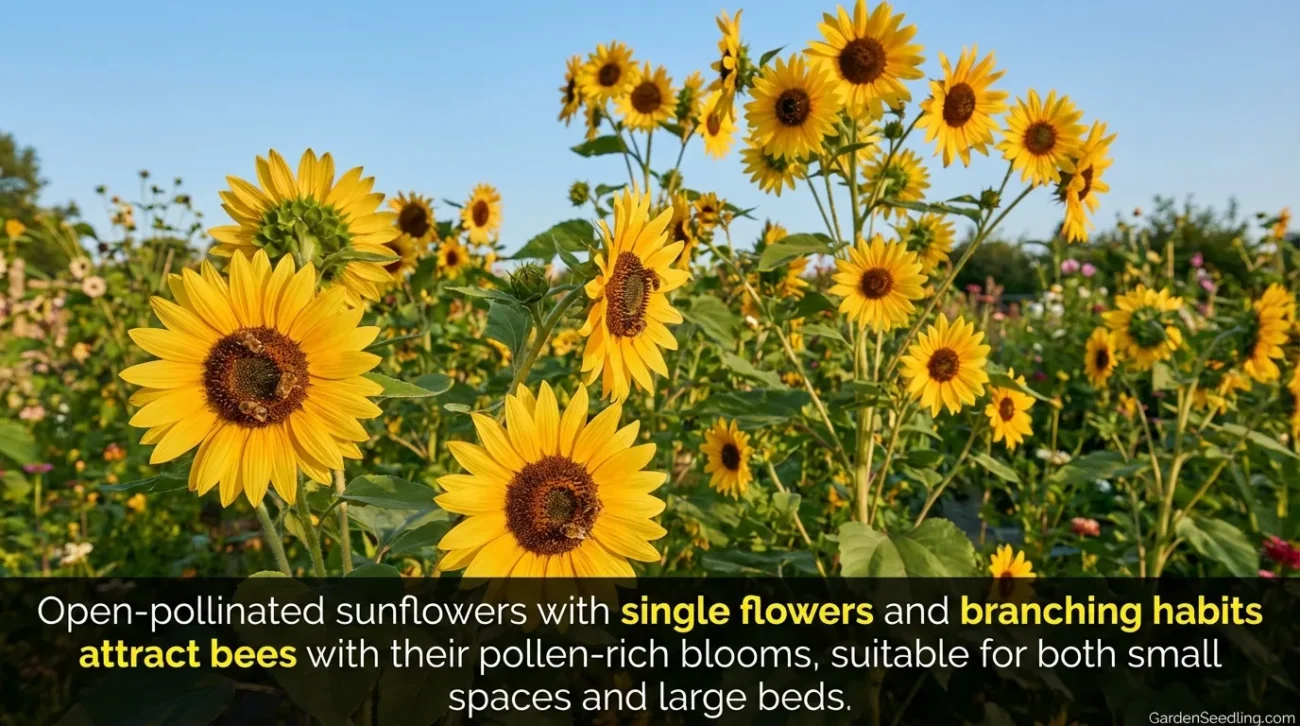
For small spaces, choose compact varieties. For bigger beds, plant a block of branching sunflowers and let them act like a beacon. It works. It really does.
6) Zinnia
Zinnias bloom hard in summer heat and keep going until frost if you cut spent flowers or keep harvesting stems. That long season is one reason they fit so well in pollinator-friendly flower beds near vegetables.
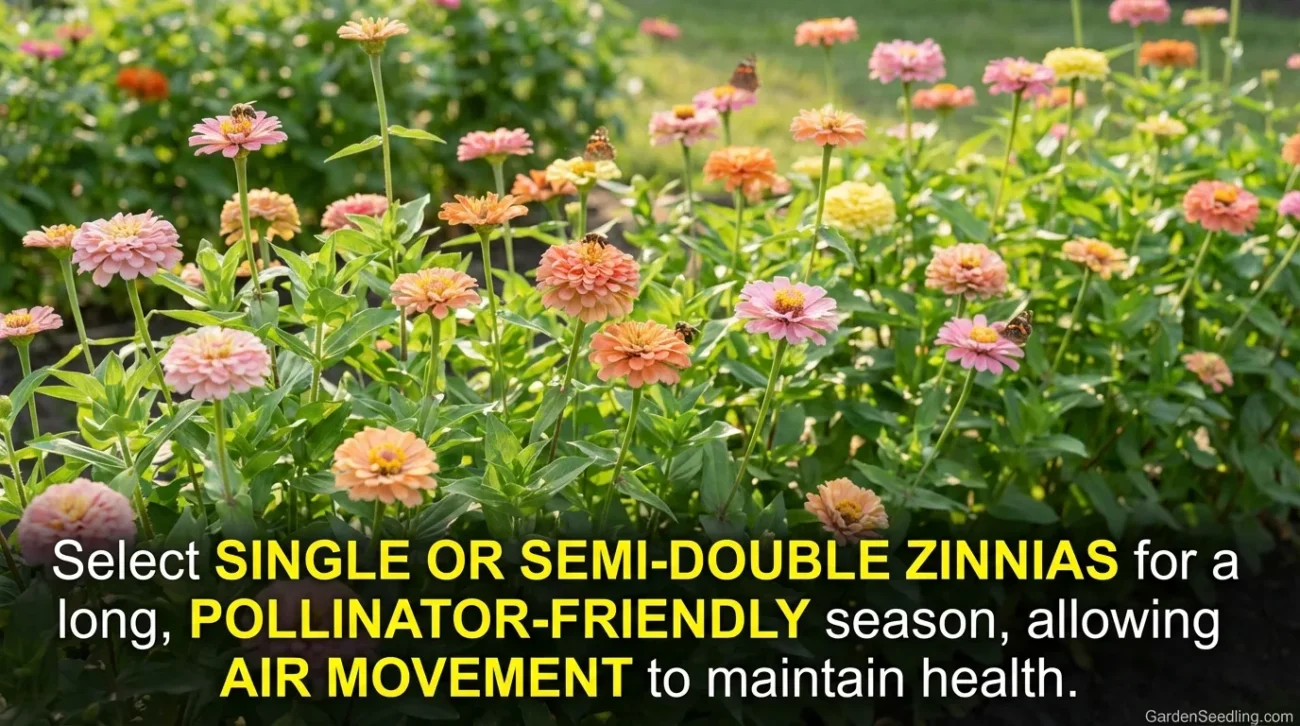
Go for single or semi-double zinnias when possible. Very double blooms may hide the center too much. Zinnias also like air movement, so do not pack them too tightly or mildew can show up late in the season.
7) Cosmos
Cosmos has a lighter, looser look than zinnia, but it fills the same useful role: long bloom, low fuss, and steady pollinator visits. The flowers sway around on thin stems and keep producing when deadheaded lightly or just left to carry on in warm weather.
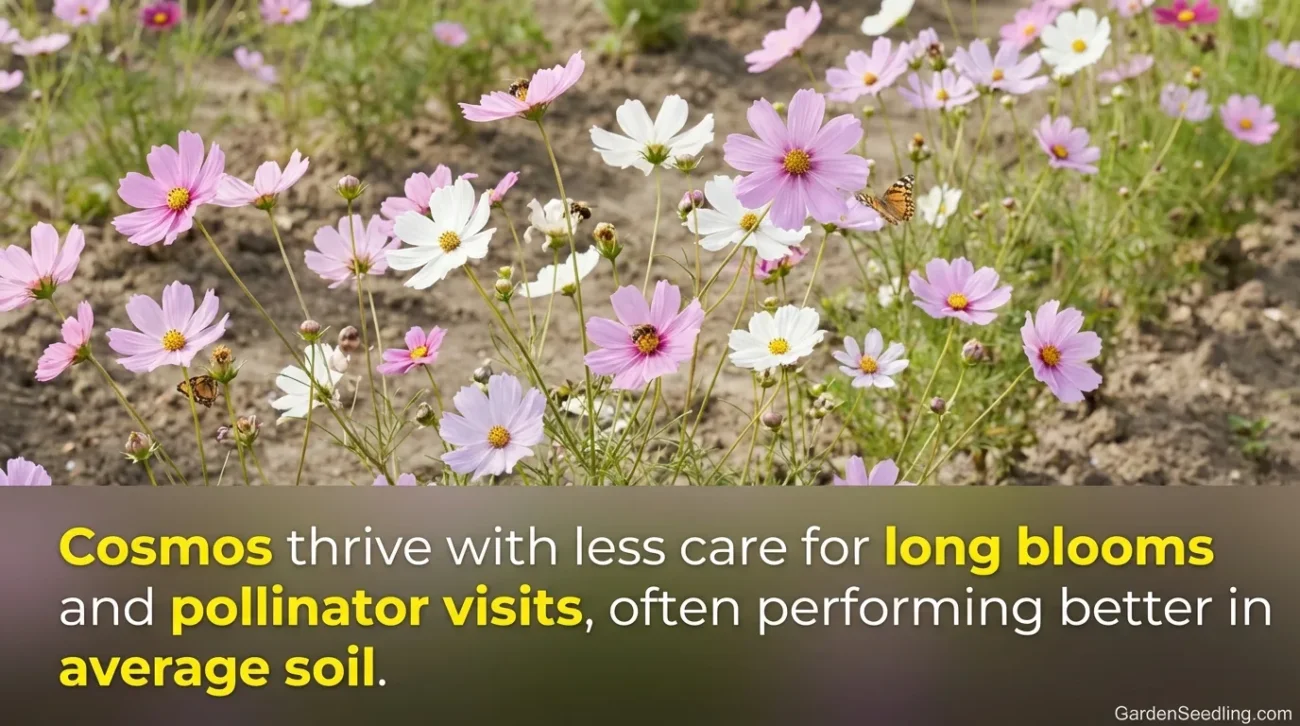
Do not overfeed cosmos. Rich soil can push leafy growth and fewer flowers. Average soil often gives the better show, which is a nice little bonus if your garden beds are not perfect.
8) Salvia
Salvias are good workers in a bee garden, especially the types with repeated bloom cycles through summer. Their flower spikes feed bees over time rather than all at once, and many varieties fit containers, borders, and mixed beds.
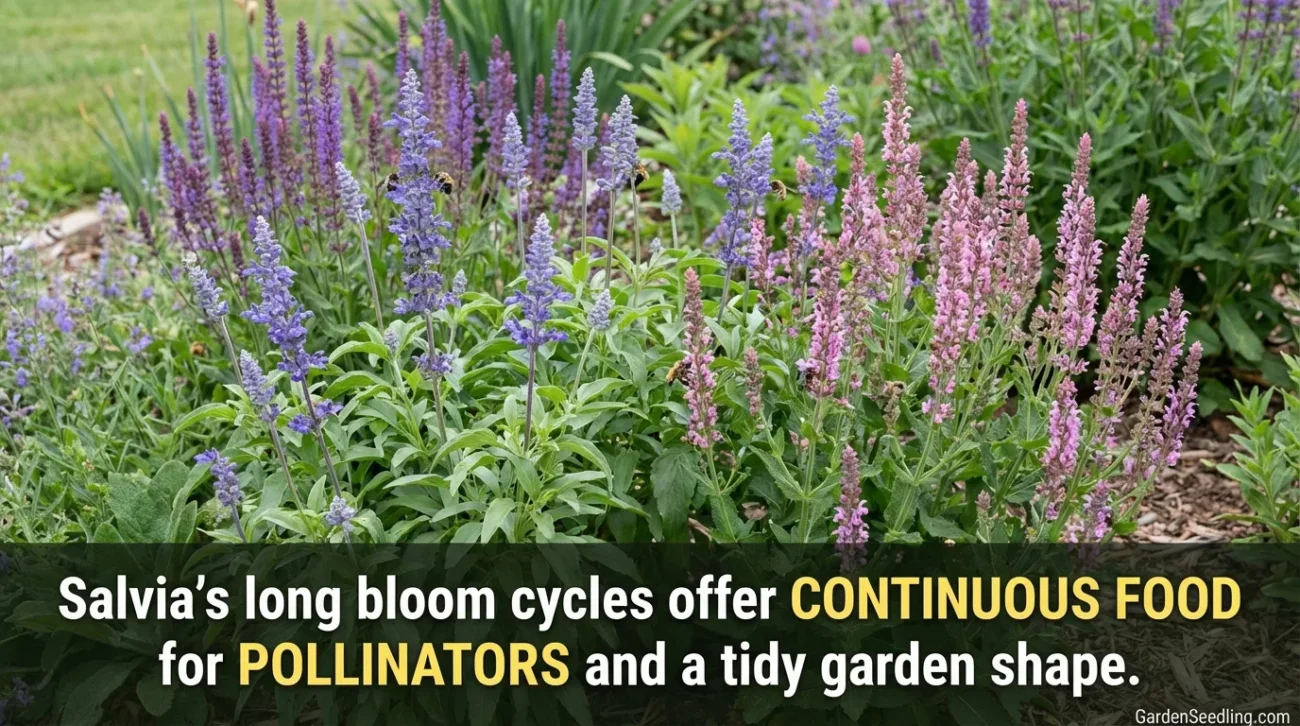
Annual salvias are useful for nonstop color. Perennial salvias add structure and usually come back stronger after a spring trim. Either way, this is a smart plant for gardeners who want a tidy shape with real pollinator value.
9) Borage
Borage feels almost too easy. It grows fast, flowers for a long stretch, reseeds in a casual way, and bees absolutely flock to it. The blue star-shaped flowers hang outward in a way that makes feeding simple, and the plant fits herb beds just as well as flower borders.
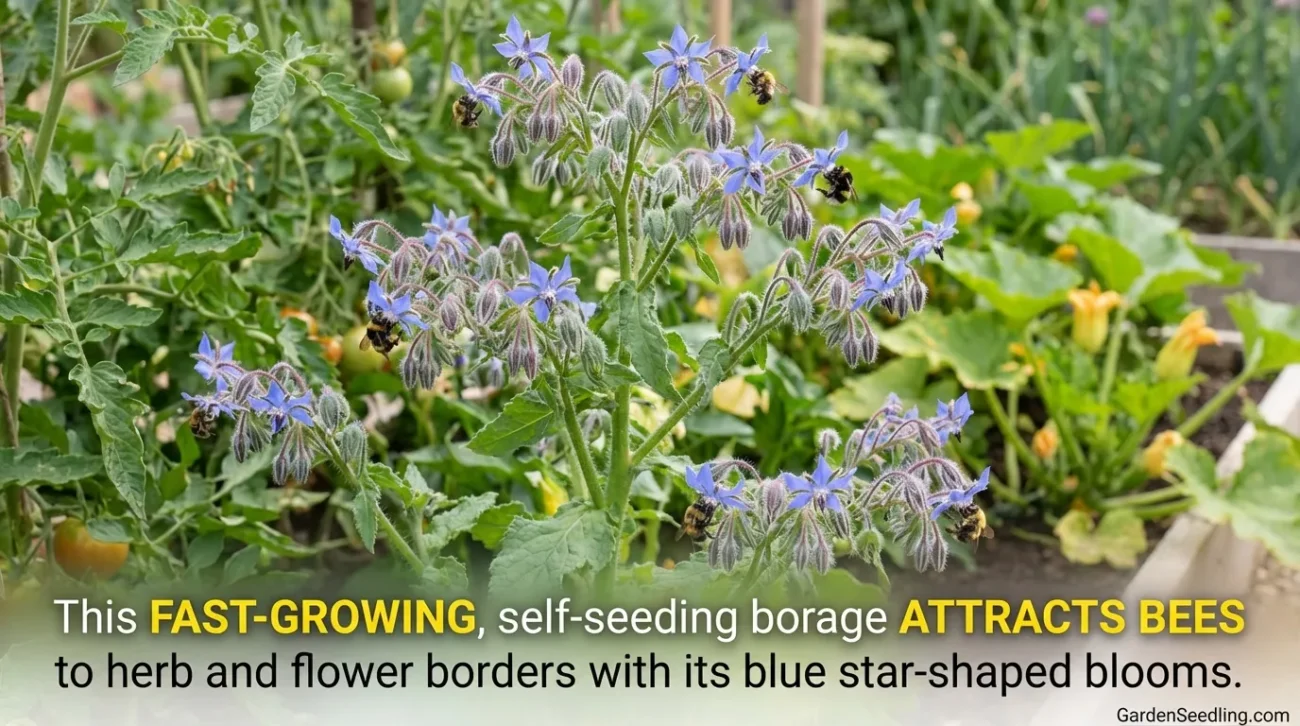
Because it can self-seed, plant it where a few volunteer seedlings will not annoy you next year. Near tomatoes, squash, or cucumbers, it often earns its space twice over.
10) Black-Eyed Susan
Black-eyed Susan is tough, bright, and dependable. Bees use the open flower centers, and the plant handles full sun, heat, and average soil with very little drama. For beginner gardeners, that matters. A lot.
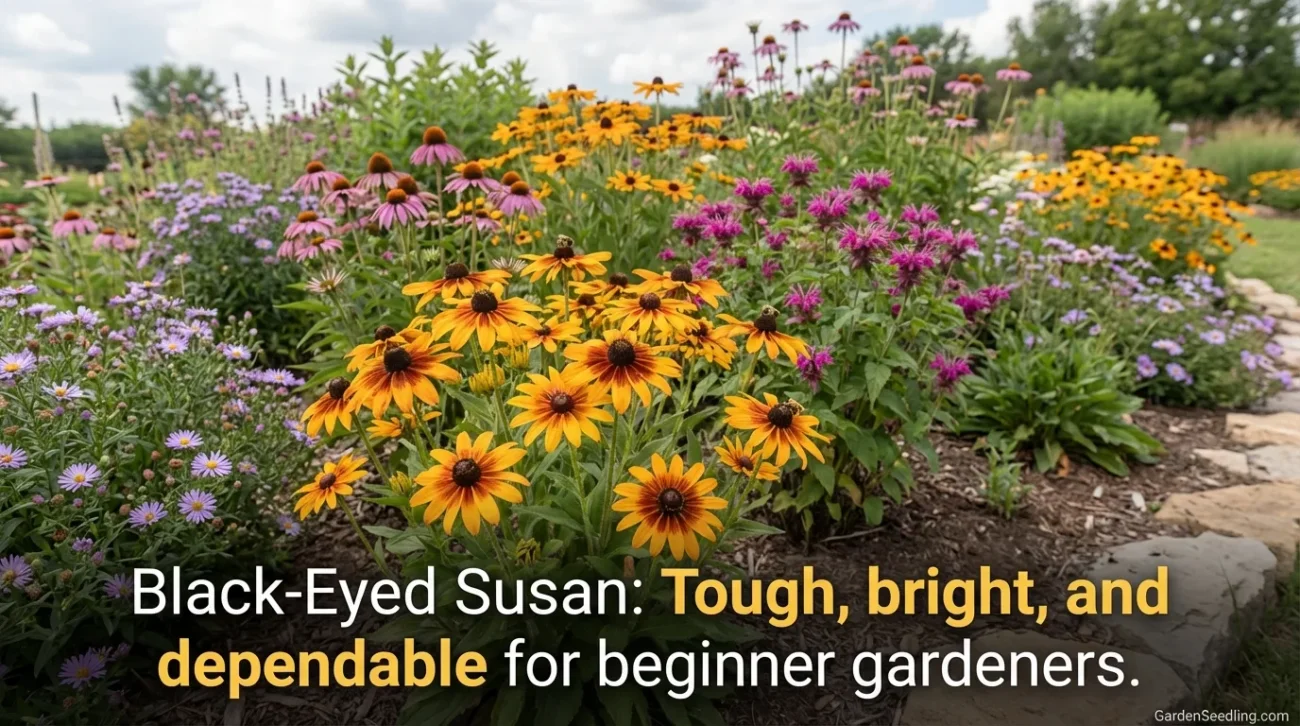
It also pairs well with coneflower, bee balm, and asters, so it is easy to build a layered pollinator bed around it without making the planting feel random.
How To Get More Bees From These Flowers
Picking the right flowers is only half the job. The way you plant them changes how useful they are.
- Plant in clumps: Groups of 3 to 7 plants are easier for bees to find than single scattered flowers.
- Mix bloom times: Use spring, summer, and fall flowers so bees can feed across the season.
- Choose single blooms: Open flowers usually offer better access to nectar and pollen than heavily double types.
- Keep pesticides off open flowers: Even home-garden sprays can harm pollinators.
- Add water: A shallow dish with pebbles gives bees a safer place to drink.
- Leave some stems and bare soil: Many native bees nest in stems or ground, not in hives.
Best Planting Plan For A Small Bee-Friendly Garden
You do not need a meadow. A bed that is 4 by 8 feet can still do useful work if you plant it with some rhythm.
Try this simple mix:
- Back of bed: Sunflower, aster
- Middle: Bee balm, coneflower, black-eyed Susan
- Front edge: Lavender, salvia, zinnia
- Tuck into gaps: Cosmos and borage
This layout gives height in the back, longer bloom in the center, and easy feeding access near the front. It also looks natural rather than stiff, which helps—especially in a home garden where flowers have to look good and function well at the same time.
Common Mistakes That Keep Bees Away
Sometimes the issue is not the flower list. It is the setup around it.
- Too many double flowers: Extra petals can block access to pollen and nectar.
- Only one bloom season: A summer-only garden leaves spring and fall bees short on food.
- Overly tidy cleanup: Cutting everything down too early removes nesting spots and shelter.
- Spraying insecticides during bloom: This can harm bees directly or leave residue where they feed.
- Planting one of each: Bees find larger patches faster than isolated plants.
- Ignoring sun needs: Most bee-friendly flowers bloom best in full sun, usually 6 or more hours a day.
Are Native Flowers Better For Bees?
Often, yes—especially for native bee species that evolved alongside local plants. Native flowers can offer a better seasonal match and better food value for local pollinators. Still, you do not need an all-native garden for bees to benefit. A mixed garden can work very well when the flowers are accessible, bloom for a long season, and are grown without harmful sprays.
A good middle-ground plan is simple: use a few native anchors such as aster, coneflower, bee balm, or black-eyed Susan, then fill in with easy annuals like zinnia, cosmos, sunflower, and borage. That gives you long bloom and fewer bare weeks.
FAQ
What Flower Attracts Bees The Most?
There is no single winner everywhere, but bee balm, sunflower, borage, and coneflower are often among the busiest flowers in home gardens.
Do Bees Prefer Native Flowers?
Many native bees do well with native flowers, but bees also use non-native garden flowers when the blooms are open, nectar-rich, and pesticide-free.
Are Double Flowers Bad For Bees?
Not always, but many double flowers offer less accessible nectar and pollen. Single flowers are usually the safer choice for a bee-friendly planting.
Can I Grow Pollinator-Friendly Flowers In Containers?
Yes. Lavender, salvia, zinnia, cosmos, dwarf sunflower, and borage can all work in containers if they get enough sun and water.
How Do I Keep Bees Coming Back All Season?
Plant flowers with staggered bloom times, grow them in groups, and avoid spraying insecticides on blooming plants.
A bee-friendly flower bed does not need to be huge or complicated. Pick a few of these plants, repeat them in clusters, keep the blooms coming, and let the garden be a little alive, a little busy—bees tend to reward that kind of planting fast.