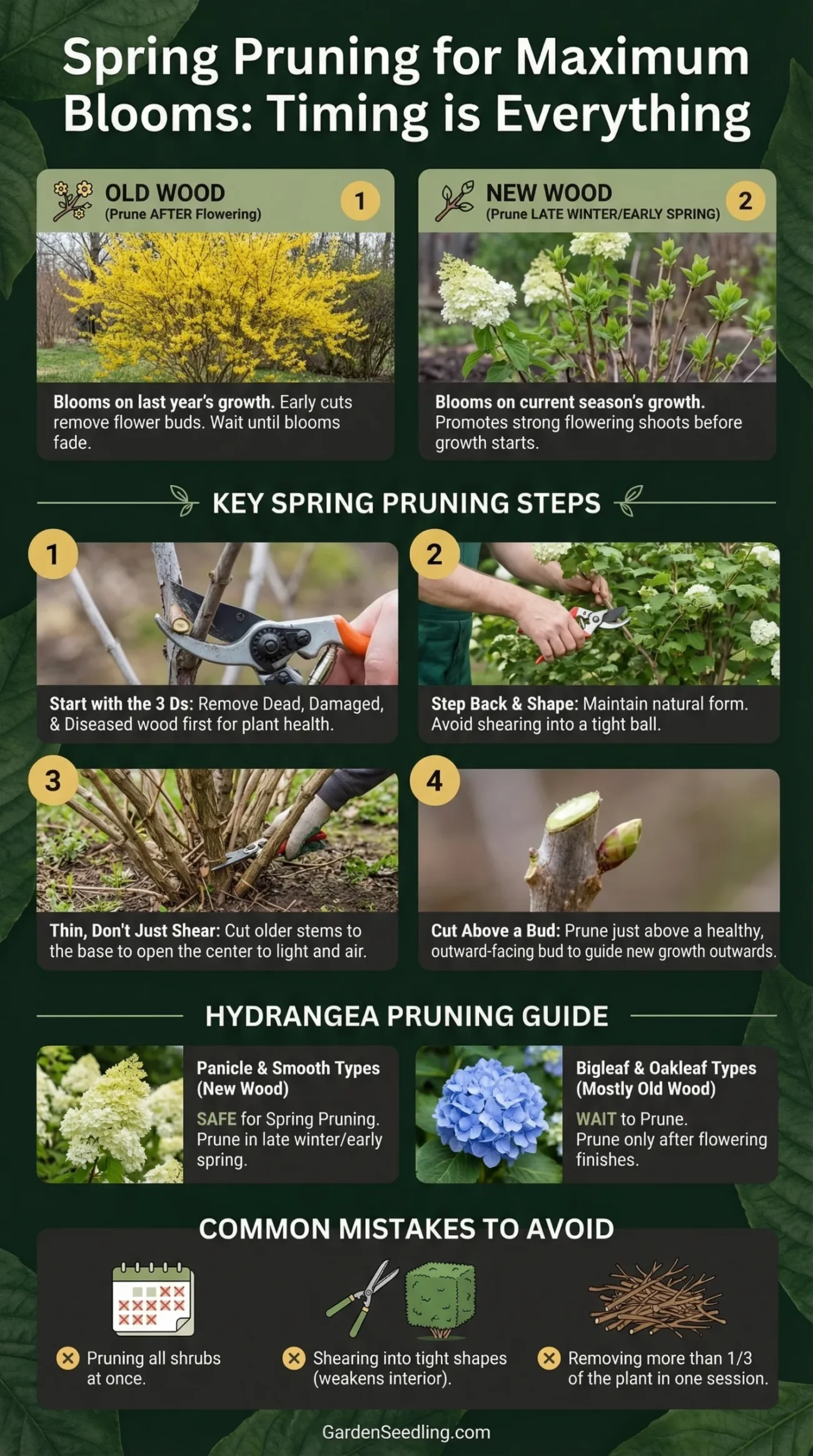
Flowering shrubs get cut at the wrong time all the time, and spring is when that mistake usually happens. A shrub can look shaggy in March or April, you reach for the pruners, and a few weeks later the blooms are gone. Not because the plant is weak. Because the flower buds were already sitting there, waiting.
- Why Spring Pruning Goes Wrong So Easily
- Know Whether Your Shrub Blooms on Old Wood or New Wood
- Old Wood Shrubs
- New Wood Shrubs
- Common Flowering Shrubs and When to Prune Them
- How to Prune Flowering Shrubs in Spring
- 1) Start With Dead, Damaged, and Diseased Wood
- 2) Look at the Shape Before You Cut More
- 3) Thin Older Stems Instead of Shearing the Outside
- 4) Cut Just Above a Healthy Bud When Shortening a Stem
- 5) Stop Before You Overdo It
- What to Do With Overgrown Flowering Shrubs
- Use a Gradual Renewal Method
- When Hard Renewal Makes Sense
- Hydrangeas Need Their Own Spring Rules
- Hydrangeas You Can Prune in Early Spring
- Hydrangeas You Should Not Prune Hard in Early Spring
- Common Spring Pruning Mistakes to Avoid
- Pruning Every Shrub at the Same Time
- Shearing Flowering Shrubs Into Tight Balls
- Cutting in Late Summer or Fall
- Ignoring Disease Sanitation
- Using Pruning Paint
- Practical Tips for Better Bloom Next Season
- FAQ
- Can I prune flowering shrubs in early spring?
- What happens if I prune lilacs or forsythia too early?
- Should I deadhead flowering shrubs in spring?
- How much of a shrub can I remove at one time?
- Do all hydrangeas need spring pruning?
For most home gardens, spring pruning tips for flowering shrubs come down to one thing: prune based on when the shrub sets its flower buds, not just when you have time. Some shrubs bloom on last year’s stems. Others bloom on new growth. That small difference changes the whole job.
Quick Answer: If a shrub blooms in early to mid-spring, prune it right after flowering. If it blooms later in summer, prune it in late winter or early spring before growth starts. In any season, you can remove dead, broken, diseased, or rubbing stems first. Keep cuts clean, avoid heavy shearing on flowering shrubs, and do not take off more than about one-third of the plant in one round unless you are doing a planned renewal job.
Why Spring Pruning Goes Wrong So Easily
“Spring pruning” sounds simple, but it covers two very different windows. One is late winter to very early spring, while the shrub is still mostly dormant. The other is right after the spring bloom cycle ends. Those are not the same thing. Not even close.
Forsythia, lilac, azalea, and many viburnums usually bloom on old wood—stems that grew the year before. Cut them hard in early spring and you often remove the flower show before it starts. On the other hand, plants like panicle hydrangea, smooth hydrangea, summer spirea, butterfly bush, and rose of Sharon bloom on new wood. Those usually respond well to pruning before spring growth begins.
So, yes, pruning in spring can be smart. But timing has to match the shrub. Otherwise, it’s just cutting.
Know Whether Your Shrub Blooms on Old Wood or New Wood
This is the first thing to sort out. Once you know it, the rest becomes easier and a lot less stressful.
Old Wood Shrubs
These shrubs form flower buds during the previous growing season. By the time late winter or early spring arrives, next season’s buds may already be in place. That’s why early cutting removes flowers fast.
- Best timing: Right after flowering
- Typical shrubs: Forsythia, lilac, azalea, rhododendron, mock orange, deutzia, many viburnums, many weigelas, and most bigleaf or oakleaf hydrangeas
- Main goal: Thin, shape lightly, and remove old stems without sacrificing next year’s bloom
New Wood Shrubs
These bloom on the current season’s growth. That makes late winter to early spring the easier pruning window, since new shoots will still develop and carry flowers later.
- Best timing: Late winter or early spring, before strong new growth starts
- Typical shrubs: Panicle hydrangea, smooth hydrangea, butterfly bush, Japanese spirea, potentilla, beautyberry, and rose of Sharon
- Main goal: Control size, refresh structure, and encourage strong flowering shoots
If you do not know what the shrub is, play it safe. Wait until after it flowers, or at least hold off on hard cuts. A mystery shrub is one of the easiest ways to lose a whole season of bloom.
Common Flowering Shrubs and When to Prune Them
| Shrub | Bloom Habit | Best Spring Action |
|---|---|---|
| Forsythia | Old wood | Prune right after flowering; remove a few oldest stems at the base |
| Lilac | Old wood | Prune after bloom; deadhead lightly and thin crowded old stems |
| Azalea | Old wood | Shape only after flowering; avoid late pruning |
| Weigela | Mostly old wood, with some repeat bloom on new growth | Remove dead wood first, then prune lightly after the main bloom |
| Mock Orange | Old wood | Prune after flowering; thin old stems to keep the center open |
| Bigleaf Hydrangea | Usually old wood | Prune after flowering, not in early spring; some reblooming types are more forgiving |
| Panicle Hydrangea | New wood | Prune in late winter or early spring before growth starts |
| Smooth Hydrangea | New wood | Cut back in spring if needed; leave more stem for a taller plant |
| Japanese Spirea | New wood | Prune in late winter or early spring |
| Butterfly Bush | New wood | Prune in spring after winter damage is clear |
| Rose of Sharon | New wood | Prune in late winter or early spring for shape and size |
How to Prune Flowering Shrubs in Spring
A clean spring pruning session is not about making a shrub smaller at any cost. It is about keeping the plant healthy, open enough for light and air, and full of younger, blooming wood. Different job, really.
1) Start With Dead, Damaged, and Diseased Wood
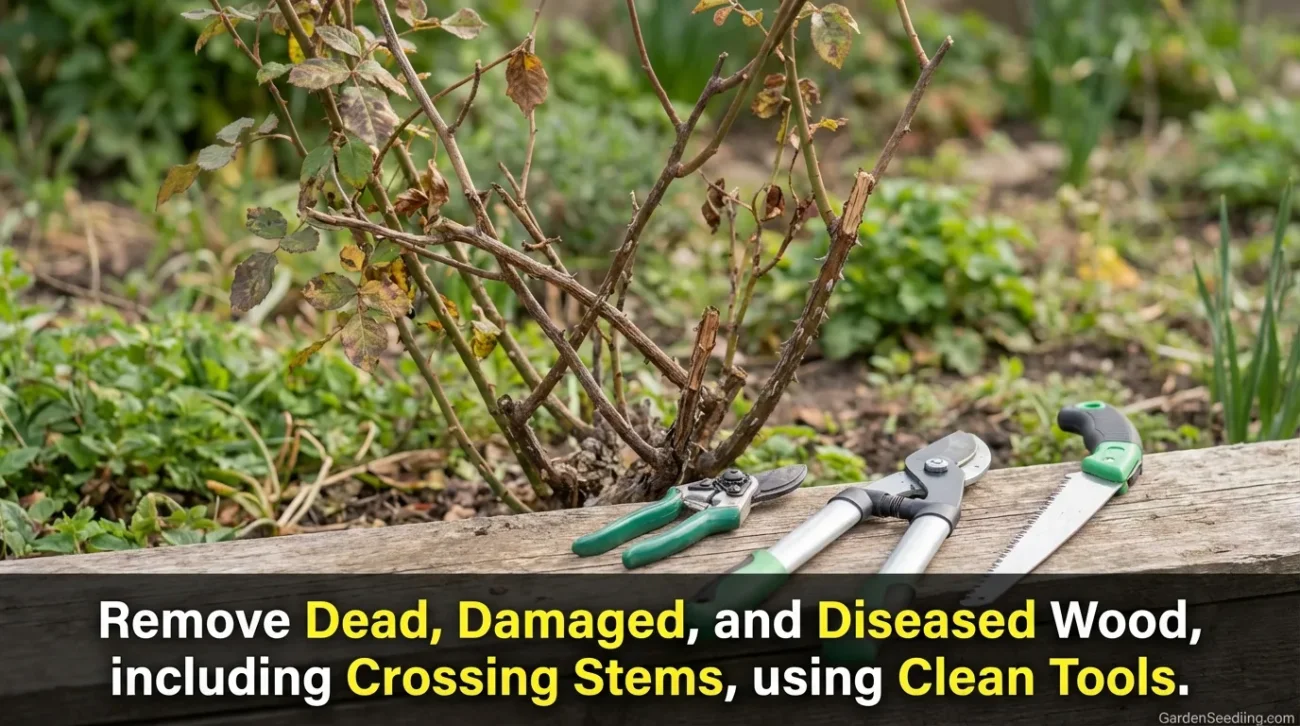
Begin with the obvious stuff. Remove stems that are broken, winter-killed, diseased, or rubbing against each other. Crossing stems create wounds, and crowded centers stay damp longer after rain. That is never helpful.
Use sharp bypass pruners for live stems. For thicker canes, switch to loppers or a pruning saw. Clean tools before you start, and disinfect them when working around diseased wood or before moving from one plant to another.
2) Look at the Shape Before You Cut More
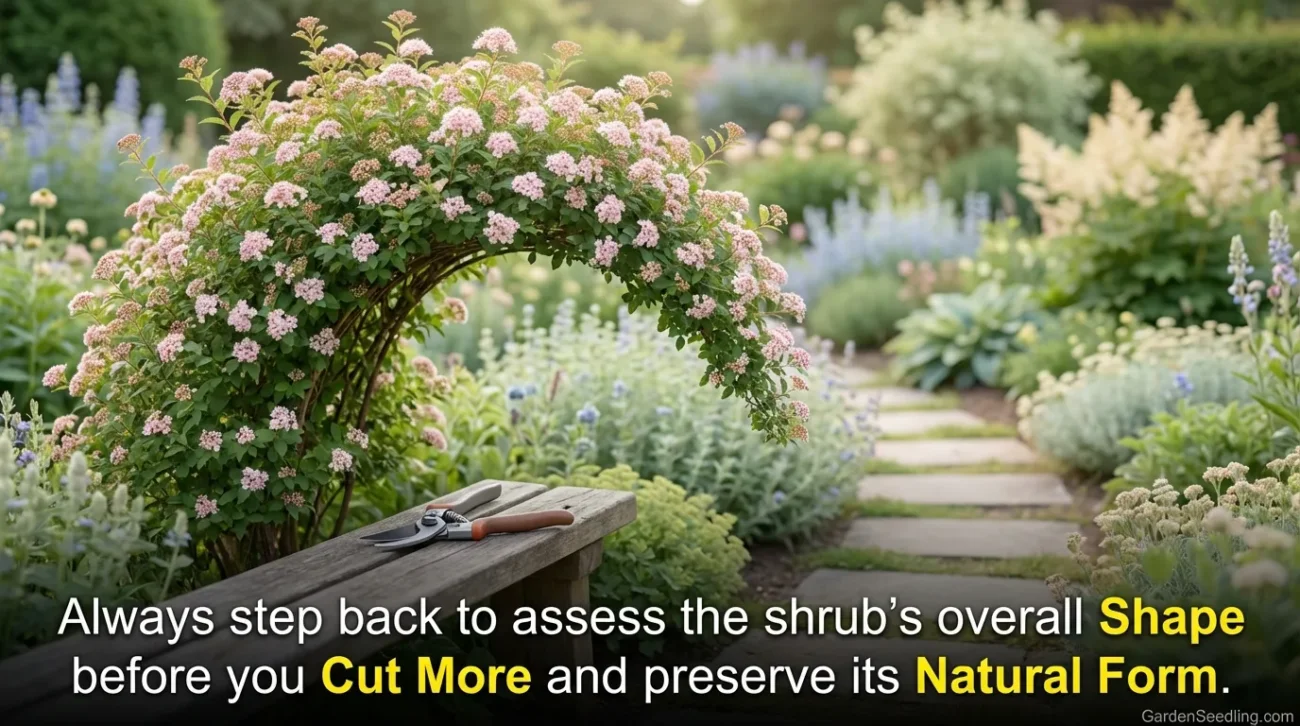
Step back. Seriously, step back a few feet and look at the shrub as a whole. Home gardeners often make a few cuts, then a few more, then suddenly the plant looks lopsided and tight on one side. Easy mistake.
Try to keep the natural form. Arching shrubs should still arch. Upright shrubs should still look upright. If you force everything into a round blob, flowering usually gets worse over time.
3) Thin Older Stems Instead of Shearing the Outside
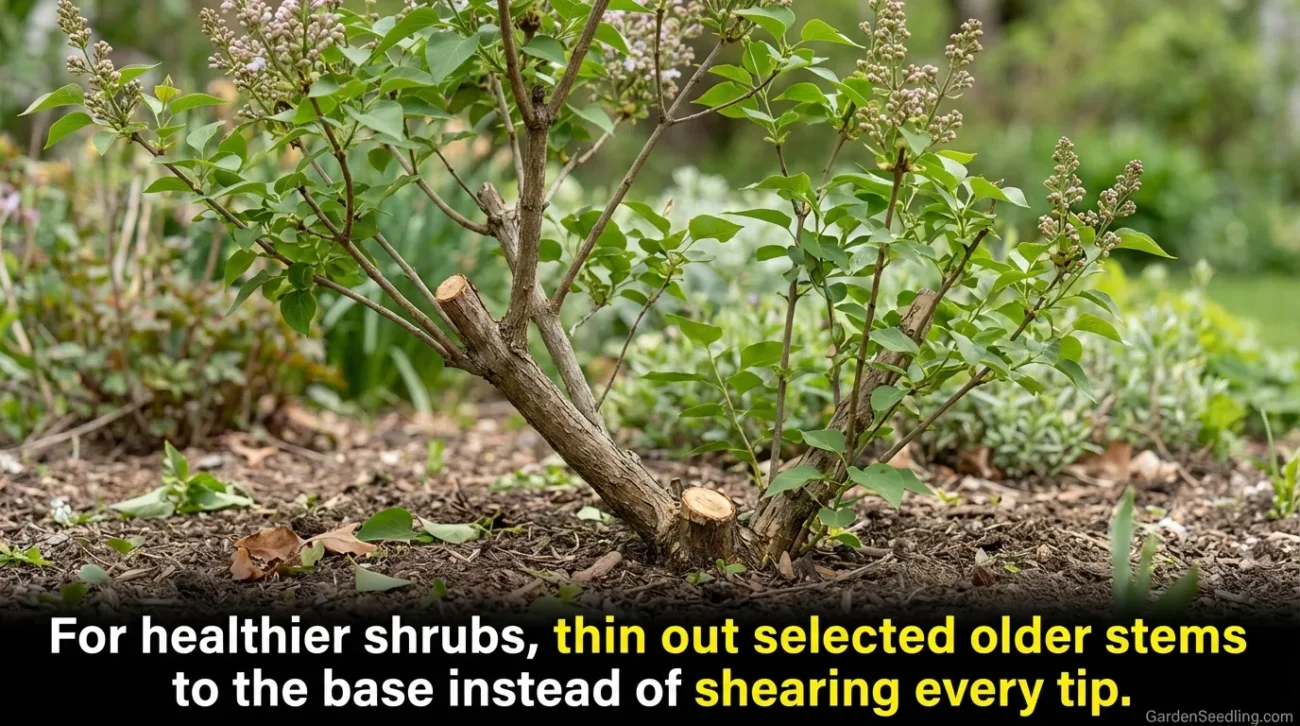
For many flowering shrubs, thinning cuts work better than constant tip trimming. That means removing selected older stems back to the base or to a strong side branch, rather than clipping every stem tip to the same height.
Why does that matter? Because routine shearing pushes dense growth to the outside and shades the interior. The plant turns woody inside, leafy on the shell, and bloom quality drops. It happens slowly, then all at once.
4) Cut Just Above a Healthy Bud When Shortening a Stem
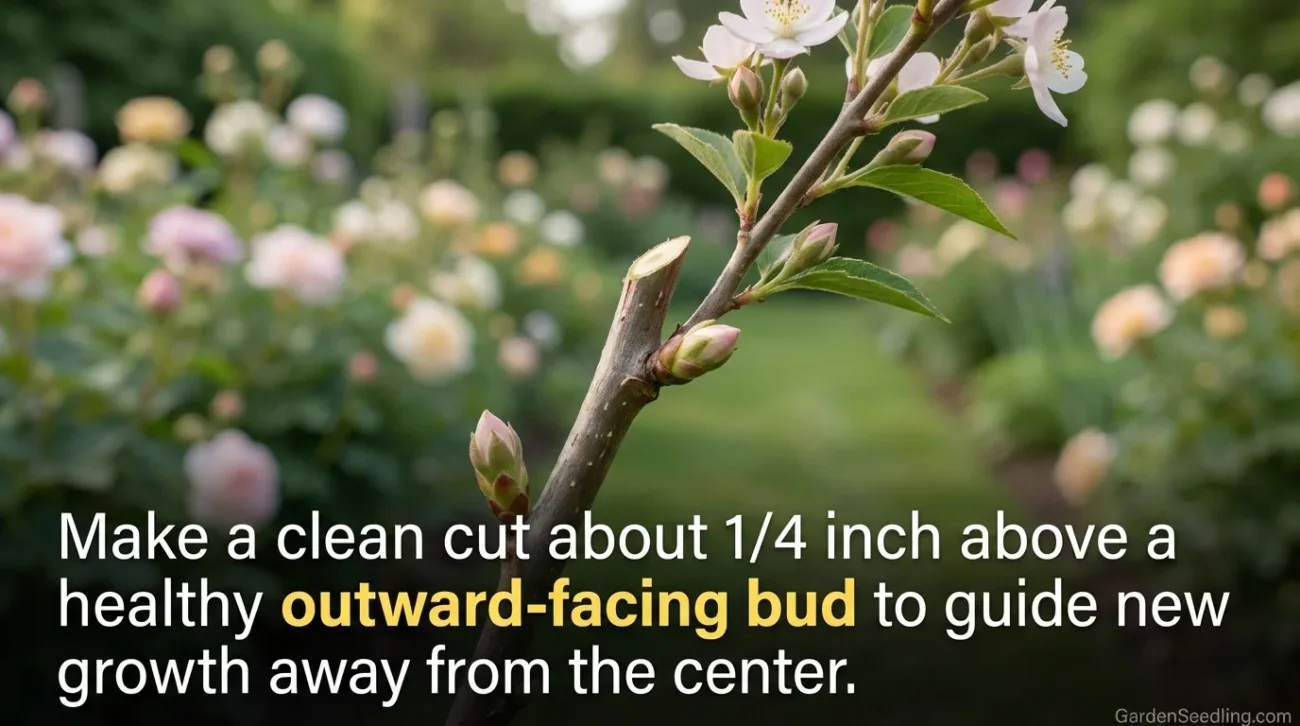
If you need to shorten a branch, cut about 1/4 inch above a healthy outward-facing bud. That usually guides new growth away from the center instead of into it. Small detail. Big payoff.
Do not leave long stubs. Do not cut so close that you injure the bud. Clean, plain cuts are better than fancy ones.
5) Stop Before You Overdo It
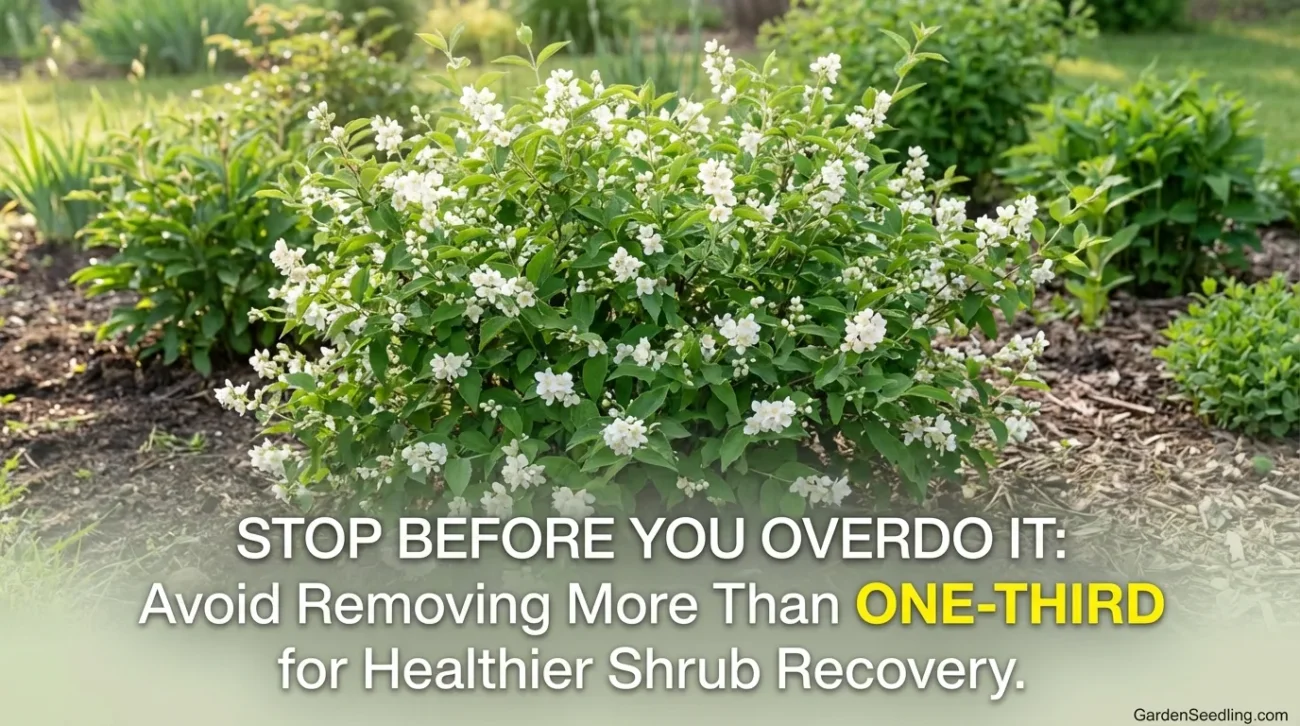
As a general rule, avoid removing more than about one-third of the shrub at one time. That keeps stress lower and preserves enough leaf area for recovery. Some shrubs can handle harder renewal pruning, yes, but that should be a deliberate choice, not an accident made in a burst of spring energy.
What to Do With Overgrown Flowering Shrubs
Sometimes the shrub is not just messy. It is too tall, too dense, shading windows, swallowing the walkway, the whole thing. In that case, normal shaping will not fix it.
Use a Gradual Renewal Method
For many deciduous flowering shrubs, a three-year approach works well:
- Year 1: Remove up to one-third of the oldest, thickest stems at ground level
- Year 2: Remove about half of the remaining old stems, then thin weak new shoots
- Year 3: Remove the last of the oldest stems and shape lightly
This method keeps the shrub blooming better than a total chop-down, and it gives you a younger, healthier framework over time.
When Hard Renewal Makes Sense
Some broadleaf shrubs can be cut back hard before spring growth begins, sometimes to 6 to 12 inches from the ground. That is a real reset. It can work, but not on every plant, and you may lose flowers for a season or longer on spring-blooming shrubs.
So if the shrub is valuable for bloom, go slow first. Usually the better call.
Hydrangeas Need Their Own Spring Rules
Hydrangeas trip people up more than almost any other flowering shrub because the name on the tag often says only “hydrangea,” while the pruning needs depend on the type.
Hydrangeas You Can Prune in Early Spring
- Panicle hydrangea (like ‘Limelight’): blooms on new wood
- Smooth hydrangea (like ‘Annabelle’): blooms on new wood
These are the safer spring-pruning hydrangeas. You can shorten stems before growth begins, and smooth hydrangea can even be cut back hard if that fits the size you want.
Hydrangeas You Should Not Prune Hard in Early Spring
- Bigleaf hydrangea: usually blooms on old wood
- Oakleaf hydrangea: blooms on old wood
- Climbing hydrangea: usually needs very little pruning beyond dead wood removal
With these, wait until after flowering for shaping. Some reblooming bigleaf hydrangeas can flower on both old and new wood, which makes them more forgiving, but that still does not mean random hard spring cuts are a good habit.
Common Spring Pruning Mistakes to Avoid
Pruning Every Shrub at the Same Time
This is the big one. A yard full of shrubs should not be treated like one plant. Early spring cuts are fine for some, awful for others.
Shearing Flowering Shrubs Into Tight Balls
That neat outer shell may look tidy for a minute, but many flowering shrubs respond with weak outer growth and a bare interior. Thin instead. It looks more natural, and the plant stays healthier.
Cutting in Late Summer or Fall
Late cuts can push soft new growth that does not harden off well before cold weather. Better to finish the main pruning work earlier, based on bloom habit.
Ignoring Disease Sanitation
If you cut into obviously diseased stems and move right to the next plant with the same dirty blades, you can spread trouble around the yard. Wipe or dip tools with 70% isopropyl alcohol, or use another suitable disinfectant after cleaning off sap and debris.
Using Pruning Paint
Most shrub cuts do not need wound paint or sealant. Plants seal naturally. Extra coating usually does not help, and sometimes it just makes a simple cut messier than it needs to be.
Practical Tips for Better Bloom Next Season
- Label shrubs when you plant them, especially hydrangeas and viburnums
- Photograph blooms in spring so you remember which plants should be pruned after flowering
- Prune on a dry day when possible
- Mulch and water after heavy pruning if dry weather follows
- Do less, not more if the shrub already has a good shape and blooms well
And one more thing: not every flowering shrub needs yearly pruning. A light cleanup may be enough. Sometimes the smartest cut is the one you skip.
FAQ
Can I prune flowering shrubs in early spring?
Yes, but only if the shrub blooms on new wood or if you are removing dead, damaged, or diseased stems. Spring bloomers on old wood should usually wait until after flowering.
What happens if I prune lilacs or forsythia too early?
You will likely remove many of the flower buds and get fewer blooms that season.
Should I deadhead flowering shrubs in spring?
Sometimes. Deadheading works well on some shrubs after bloom, but it is not always needed. Focus first on timing and structure.
How much of a shrub can I remove at one time?
A good general limit is about one-third of the shrub in one round of pruning, unless you are doing a planned renewal cut on a shrub that tolerates it.
Do all hydrangeas need spring pruning?
No. Panicle and smooth hydrangeas handle spring pruning well. Bigleaf, oakleaf, and climbing hydrangeas usually should not be pruned hard in early spring.
Once you match the cut to the shrub’s bloom habit, spring pruning gets much easier. Fewer random cuts, better shape, and more flowers where they belong.
{
“@context”: “https://schema.org”,
“@type”: “FAQPage”,
“mainEntity”: [
{
“@type”: “Question”,
“name”: “Can I prune flowering shrubs in early spring?”,
“acceptedAnswer”: {
“@type”: “Answer”,
“text”: “Yes, but only if the shrub blooms on new wood or if you are removing dead, damaged, or diseased stems. Spring bloomers on old wood should usually wait until after flowering.”
}
},
{
“@type”: “Question”,
“name”: “What happens if I prune lilacs or forsythia too early?”,
“acceptedAnswer”: {
“@type”: “Answer”,
“text”: “You will likely remove many of the flower buds and get fewer blooms that season.”
}
},
{
“@type”: “Question”,
“name”: “Should I deadhead flowering shrubs in spring?”,
“acceptedAnswer”: {
“@type”: “Answer”,
“text”: “Sometimes. Deadheading works well on some shrubs after bloom, but it is not always needed. Focus first on timing and structure.”
}
},
{
“@type”: “Question”,
“name”: “How much of a shrub can I remove at one time?”,
“acceptedAnswer”: {
“@type”: “Answer”,
“text”: “A good general limit is about one-third of the shrub in one round of pruning, unless you are doing a planned renewal cut on a shrub that tolerates it.”
}
},
{
“@type”: “Question”,
“name”: “Do all hydrangeas need spring pruning?”,
“acceptedAnswer”: {
“@type”: “Answer”,
“text”: “No. Panicle and smooth hydrangeas handle spring pruning well. Bigleaf, oakleaf, and climbing hydrangeas usually should not be pruned hard in early spring.”
}
}
]
}