
A beginner garden usually fails for a simple reason: too much stuff, too soon. The best first garden tools for beginners on a budget are the few that help you plant, water, weed, and trim without wasting money on extras you may barely touch. A small container setup needs less than an in-ground plot. A raised bed needs less than a full backyard row garden. That matters.
- Why Beginners Spend Too Much on Tools
- The Best First Garden Tools to Buy First
- 1) Hand Trowel
- 2) Bypass Pruners
- 3) Garden Gloves
- 4) Watering Can, Hose Nozzle, or Watering Wand
- 5) Hoe for Easy Weeding
- 6) Shovel or Spade
- Best Tool Setup by Garden Type
- What To Look For When You Are Buying on a Budget
- Spend a Little More On These
- Save Money On These
- Tools You Probably Do Not Need Right Away
- A Low-Cost Starter Shopping Plan
- Starter Set for the Lowest Spend
- Starter Set for a Small Backyard Bed
- Common Mistakes Beginners Make With Garden Tools
- Simple Tool Care That Saves Money
- When To Add More Tools
- FAQ
- What is the first garden tool a beginner should buy?
- Do beginners need bypass or anvil pruners?
- Is a hoe really necessary for a small garden?
- Should I buy a shovel or a spade first?
- How many tools does a beginner garden need?
So skip the giant tool set with ten shiny pieces and a tote bag you did not ask for. Start with a short list. Use it for a season. Then add only what your garden keeps asking for.
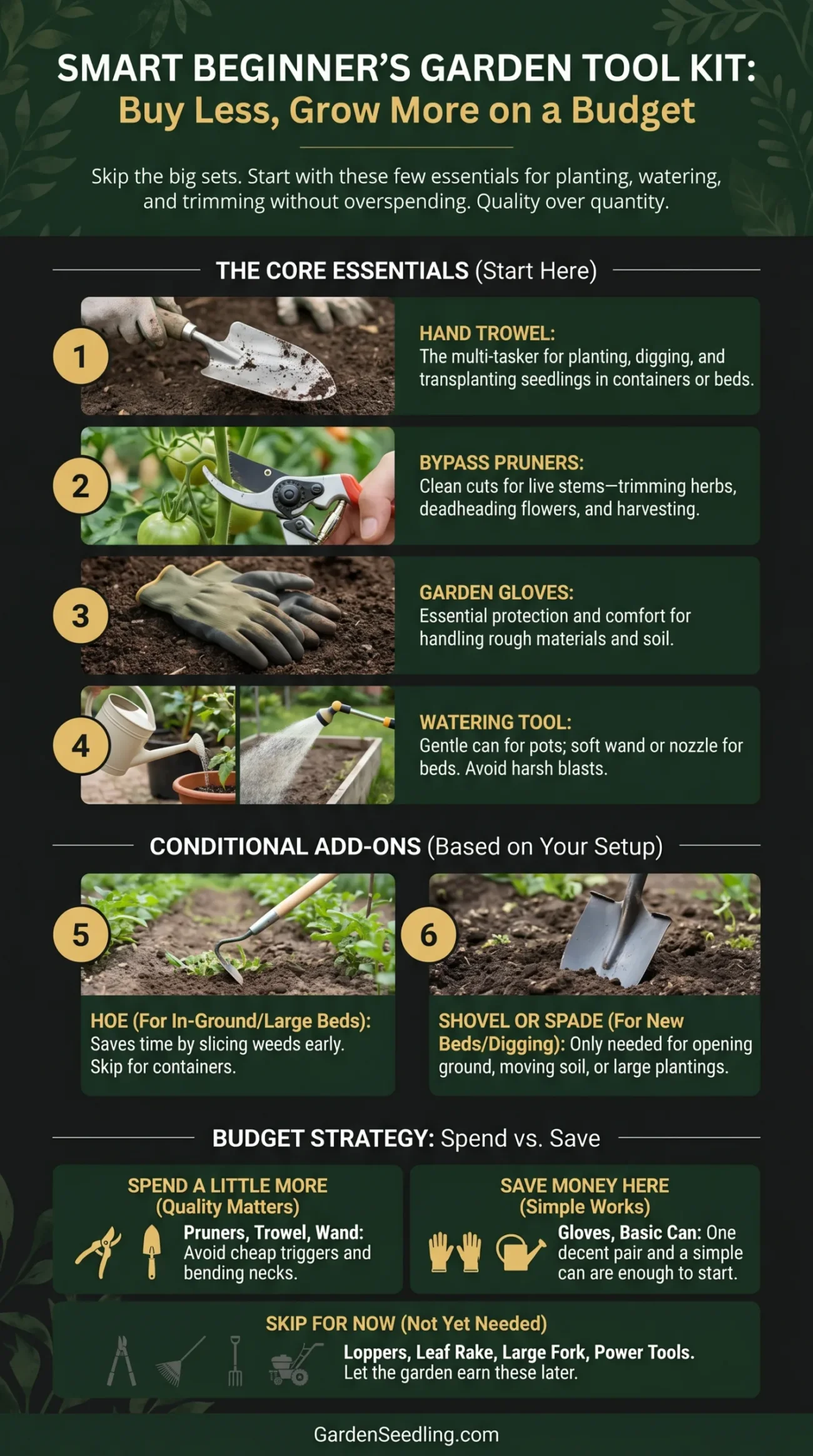
Quick Answer: If you want the smartest low-cost starter setup, buy a hand trowel, bypass pruners, garden gloves, and one good watering tool first. Add a hoe if you are growing in the ground or in larger raised beds. Buy a shovel or spade only if you are opening new beds, moving soil, planting bigger crops, or dealing with hard ground.
Why Beginners Spend Too Much on Tools
It happens fast. You shop for seeds, maybe a tomato cage, maybe a bag of compost, and then there it is—a matching tool bundle that looks like the right move. But most new gardeners do not need a full rack of tools in week one.
What they need is reach, control, and comfort. A tool that fits your hand. A blade that actually cuts. A handle you can use for twenty minutes without hating it. Cheap tools are not always bad, but badly made tools are annoying in a very specific way: they turn a small job into a clumsy one.
Do you really need twelve tools to grow lettuce, basil, marigolds, and a few tomatoes? No.
The Best First Garden Tools to Buy First
1) Hand Trowel
If you buy one tool first, make it a trowel. For most beginners, it handles more jobs than anything else. You can transplant seedlings, loosen potting mix, plant bulbs, scoop compost, and pull shallow weeds with it. In containers, honestly, a trowel does almost everything.

Look for these details:
- One-piece metal construction or a very solid metal neck
- Comfortable grip that does not twist in your hand
- Blade marks if you like spacing and planting depth to be easier
- Mid-size blade rather than an oversized scoop
A trowel that feels slightly plain but sturdy is often better than a fancy one with extra shapes and gimmicks. Small tool. Big return.
2) Bypass Pruners
New gardeners usually think pruners are for roses and shrubs. Not really. You will use them for deadheading flowers, trimming herbs, cutting tomato suckers, removing damaged stems, harvesting peppers, and cleaning up tired growth. They earn their keep fast.

For a first pair, choose bypass pruners, not anvil pruners. Bypass pruners make cleaner cuts on living stems, and that matters when you are working with herbs, vegetables, annuals, and young shrubs. A clean cut is easier on the plant and easier on your hand too.
What to check before buying:
- Bypass blade style
- Easy lock you can open with one hand
- Replaceable spring if possible
- Grip size that matches your hand, not the shelf display
If the pruners feel stiff in the store, they will feel worse outside. Put them back.
3) Garden Gloves
Not glamorous. Still worth it. A decent pair of gloves helps with rough mulch, splintery tomato cages, prickly stems, damp soil, and light digging. They also help you work longer without stopping every few minutes to wipe mud off your hands or pick out tiny thorns.

For beginners, one pair is enough. Choose gloves that bend easily at the fingers and dry fairly quickly. Very thick gloves sound protective, but they often make planting fiddly seedlings a chore. Better to get a pair that lets you feel what you are doing.
4) Watering Can, Hose Nozzle, or Watering Wand
Watering is where many beginner gardens go sideways. Too hard. Too fast. Too uneven. The right watering tool helps more than people expect.
If you are growing in containers, a watering can with a gentle rose head is a smart first pick. If you have raised beds or rows, a hose with a soft nozzle or watering wand usually makes more sense. Seedlings and fresh transplants need a softer flow than mature plants. Blast them every evening and they will let you know.

Buy based on your setup:
- Containers on a patio: watering can
- One or two raised beds near a faucet: hose nozzle or wand
- Seed-starting trays and tiny starts: gentle indoor watering can or fine rose
And yes, the lightweight plastic watering can is fine if it pours evenly and does not leak at the handle joint.
5) Hoe for Easy Weeding
If your garden is in the ground, or if your raised beds are more than just a couple of boxes, a hoe should move up the list fast. Not because it looks serious. Because it saves time.

A hoe lets you slice off tiny weeds before they root deeply and spread. That is much easier than letting them bulk up and then wrestling them out one by one. For beginners, a light scuffle hoe, stirrup hoe, or a simple square hoe tends to be more useful than a heavy, old-school field hoe.
Keep the motion shallow. Just under the soil surface. That is the sweet spot.
6) Shovel or Spade
This is where many first-time gardeners overspend. They buy a full-size digging tool before they know if they need one.
If you are gardening only in containers, skip it for now.

If you are filling raised beds, opening a small bed, moving compost, planting larger transplants, or lifting root crops, then yes—buy one. For most beginners, a digging shovel is the more flexible first choice. A spade is better for cleaner edges, straighter cuts, and bed shaping, but it is not always the first thing a budget setup needs.
Best Tool Setup by Garden Type
| Garden Type | Buy First | Can Wait | Skip for Now |
|---|---|---|---|
| Containers | Trowel, pruners, gloves, watering can | Small hand fork | Shovel, rake, large hoe |
| Small Raised Bed | Trowel, pruners, gloves, hose nozzle or wand, hoe | Small shovel | Loppers, big rake |
| In-Ground Vegetable Patch | Trowel, pruners, gloves, hoe, digging shovel | Rake, hand cultivator | Power tools |
What To Look For When You Are Buying on a Budget
Budget shopping does not mean buying the absolute cheapest item every time. It means knowing where quality matters and where it does not.
Spend a Little More On These
- Pruners: poor ones stick, crush stems, and go dull fast
- Trowel: weak necks bend at the worst moment
- Hose nozzle or wand: cheap triggers fail all the time
Save Money On These
- Gloves: one decent pair is enough to start
- Basic watering can: simple works
- Hand fork or cultivator: useful, but not where most budgets should start
Also, watch handle size and weight. A tool can be durable and still be wrong for you. If it feels awkward in your hand in the first ten seconds, that feeling will not improve after a half hour of weeding in the sun.
Tools You Probably Do Not Need Right Away
Some tools are good. They are just not first-season tools for most people.
- Loppers: useful for thicker woody stems, not everyday beginner work
- Leaf rake: fine if you have a yard full of leaves, otherwise it can wait
- Garden fork: helpful in some beds, but not a must for small starts
- Soil knife: handy, yes, but not essential at the beginning
- Rototiller: rarely a smart first buy for a beginner on a tight budget
Useful later, maybe. Right now, not really.
A Low-Cost Starter Shopping Plan
If the goal is to start gardening without draining your weekend budget, keep the first purchase tight.
Starter Set for the Lowest Spend
- Hand trowel
- Bypass pruners
- Gloves
- Watering tool
This setup handles most container gardens and many small raised beds.
Starter Set for a Small Backyard Bed
- Hand trowel
- Bypass pruners
- Hoe
- Digging shovel
- Watering tool
That is enough to plant, weed, water, trim, and keep moving without feeling under-equipped.
Common Mistakes Beginners Make With Garden Tools
- Buying a set before choosing a garden type. Containers and in-ground plots need different tools.
- Choosing anvil pruners for general use. They are not the best everyday option for live stems.
- Buying heavy tools. Weight wears you down faster than most people expect.
- Ignoring handle comfort. Grip matters. A lot.
- Waiting too long to weed. A hoe works best on tiny weeds, not stubborn ones.
- Leaving tools dirty and wet. Soil, sap, and moisture shorten tool life.
Simple Tool Care That Saves Money
You do not need a workshop routine. Just a few habits.
- Brush off soil after each use
- Dry metal parts before storage
- Wipe pruner blades clean after trimming sticky or diseased plants
- Oil moving parts lightly once in a while
- Sharpen pruners and hoes when they start tearing instead of cutting cleanly
A clean, sharp tool feels different right away. Smoother. Less fight.
If you store tools in a damp garage corner, hang them up or at least keep them off bare concrete. Small fix, real payoff.
When To Add More Tools
Add tools after a pattern shows up in your work. Maybe you keep kneeling to hand-pull weeds and start wishing for a hoe. Maybe you are planting shrubs and finally need a spade. Maybe your beds are getting larger and a rake starts making sense.
Let the garden choose the next tool. That is the cheaper path, and usually the better one.
FAQ
What is the first garden tool a beginner should buy?
A hand trowel is usually the best first buy because it helps with planting, transplanting, light digging, and shallow weeding.
Do beginners need bypass or anvil pruners?
Beginners should usually buy bypass pruners first. They make cleaner cuts on live stems and work well for vegetables, herbs, flowers, and young shrubs.
Is a hoe really necessary for a small garden?
For containers, not always. For raised beds and in-ground gardens, a hoe can save a lot of time by cutting weeds early.
Should I buy a shovel or a spade first?
If you only want one, a digging shovel is often the more flexible first purchase. A spade is better for edging beds and making neat cuts in soil.
How many tools does a beginner garden need?
Most beginners can start well with four to five tools, not a full set.
Start small, buy the tools you will touch every week, and let the garden earn the rest. That approach keeps costs down and makes the first season a lot less messy.