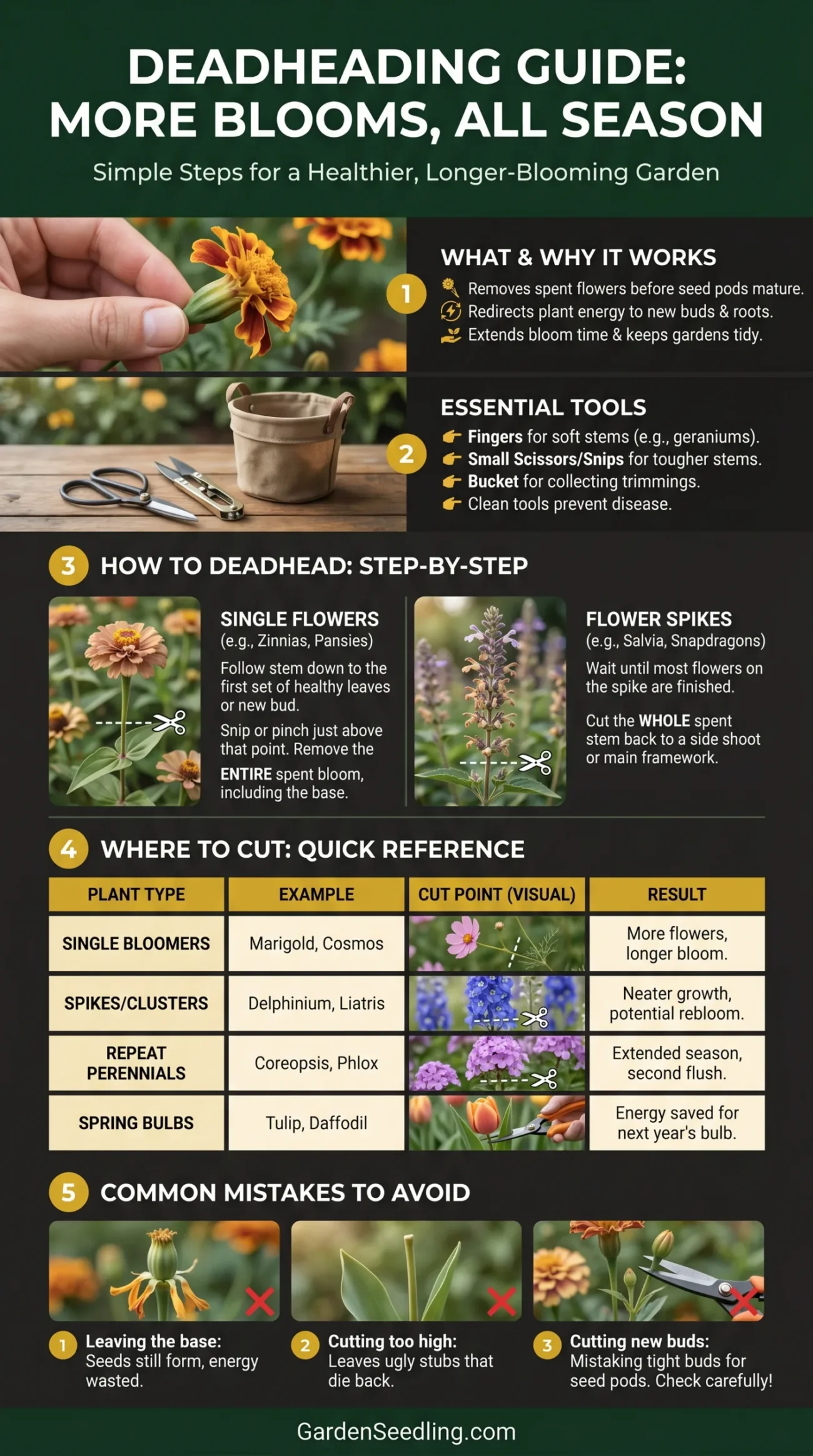
Deadheading flowers for more blooms all season is one of those small garden jobs that pays back fast. A five-minute pass with your fingers or snips can keep containers tidier, stretch bloom time on many annuals and some perennials, and stop plants from spending extra energy on seed when you would rather have more flowers.
- Why Deadheading Helps
- What You Need Before You Start
- How To Deadhead Flowers Step By Step
- For Single Flowers on Short Stems
- For Flower Spikes and Multi-Flower Stems
- For Roses
- For Daylilies
- Where To Cut: A Simple Reference Table
- Flowers That Usually Benefit From Deadheading
- Flowers You May Not Want To Deadhead
- Common Mistakes That Reduce Blooms
- Removing Only The Petals
- Cutting Too High
- Cutting Off New Buds By Accident
- Deadheading Plants That Are Better Left For Wildlife
- Cutting Bulb Foliage Too Soon
- Using Dirty Tools On Sick Plants
- Practical Tips For More Blooms All Season
- FAQ
- Does Deadheading Really Lead To More Flowers?
- Should I Deadhead Petunias?
- Do I Cut Just The Flower Or The Whole Stem?
- Can I Deadhead Tulips And Daffodils?
- What Should I Do With Diseased Blooms?
It is not magic, though. Some plants respond with fresh buds. Some just look cleaner. And a few are better left alone because they are self-cleaning, they make attractive seed heads, or you may want their seeds for birds or next year’s sowing.
Quick Answer: To deadhead flowers, remove the faded bloom before it turns into a mature seed pod. Pinch or snip back to the next healthy leaf, side shoot, or bud. For single blooms, remove the flower and the small swollen base behind it. For spikes or branching flower stems, remove the whole spent stem once most or all flowers on that stem have finished. Check plants every few days during peak bloom.
Why Deadheading Helps
Flowers exist to make seed. Once a plant starts moving hard in that direction, blooming often slows down. By removing spent flowers early, you interrupt that cycle and, on many plants, encourage more buds, a longer bloom window, or a second flush later in the season.
Deadheading also improves appearance. Beds look cleaner. Containers stay brighter. And on plants that drop mushy petals or form ugly pods, the whole plant reads healthier even when summer heat starts to wear things down a bit.
There is another benefit gardeners notice after a while: deadheading makes you look closely. You spot aphids earlier. You catch mildew sooner. You notice whether the soil is drying too fast. That part matters more than people think.
What You Need Before You Start
You do not need a big toolkit.
- For soft stems: fingers work fine.
- For tougher stems: use small scissors, floral snips, or hand pruners.
- For cleanup: keep a small bucket, trug, or garden apron nearby.
Use sharp tools when stems are fibrous or thick. A clean cut heals better than a torn stem. If you are working around plants that look diseased—spots, fuzzy growth, blackened stems, that kind of thing—clean blades before moving to the next plant.
One more thing: look for fresh buds first. It sounds obvious, but in a crowded plant, a tight flower bud and a tiny seed pod can look annoyingly similar at first glance.
How To Deadhead Flowers Step By Step
For Single Flowers on Short Stems
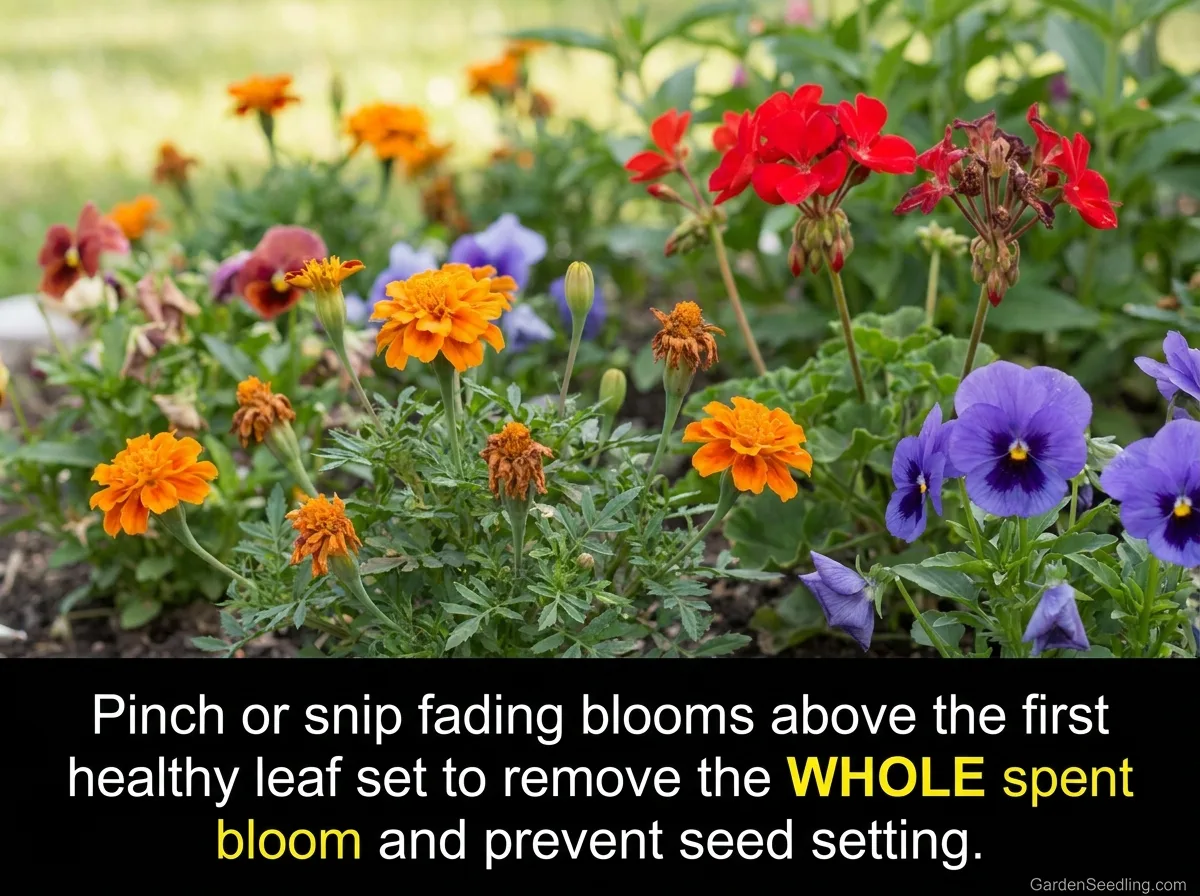
This is the easiest type. Think marigolds, zinnias, geraniums, pansies, or individual daylily blooms.
- Find the flower that is fading, browning, or turning papery.
- Follow that bloom down to the first healthy leaf set or side shoot.
- Pinch or snip just above that point.
- Remove the whole spent bloom, not only the petals.
If you only pull off loose petals and leave the base behind, the plant can still set seed. That is the part many beginners miss.
For Flower Spikes and Multi-Flower Stems
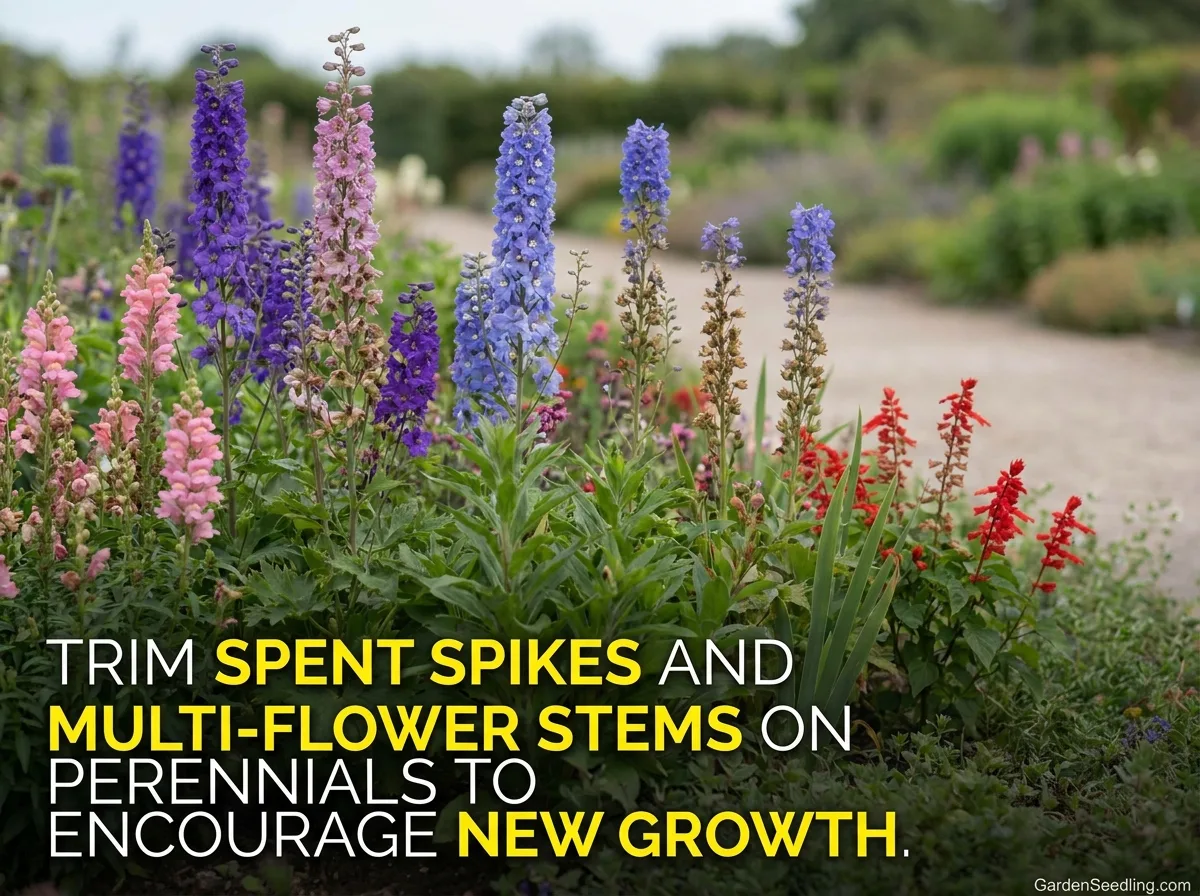
Snapdragons, salvia, delphinium, liatris, lupines, and some daisies bloom on taller stems or spikes. Here, the move is a little different.
- Wait until most or all flowers on that spike finish.
- Follow the flowering stem down to a side shoot, fresh leaves, or the main plant framework.
- Cut the whole spent stem there.
On repeat-blooming perennials, this often makes the plant look better right away and may push new growth for another round later. Not always instantly. Give it some time.
For Roses
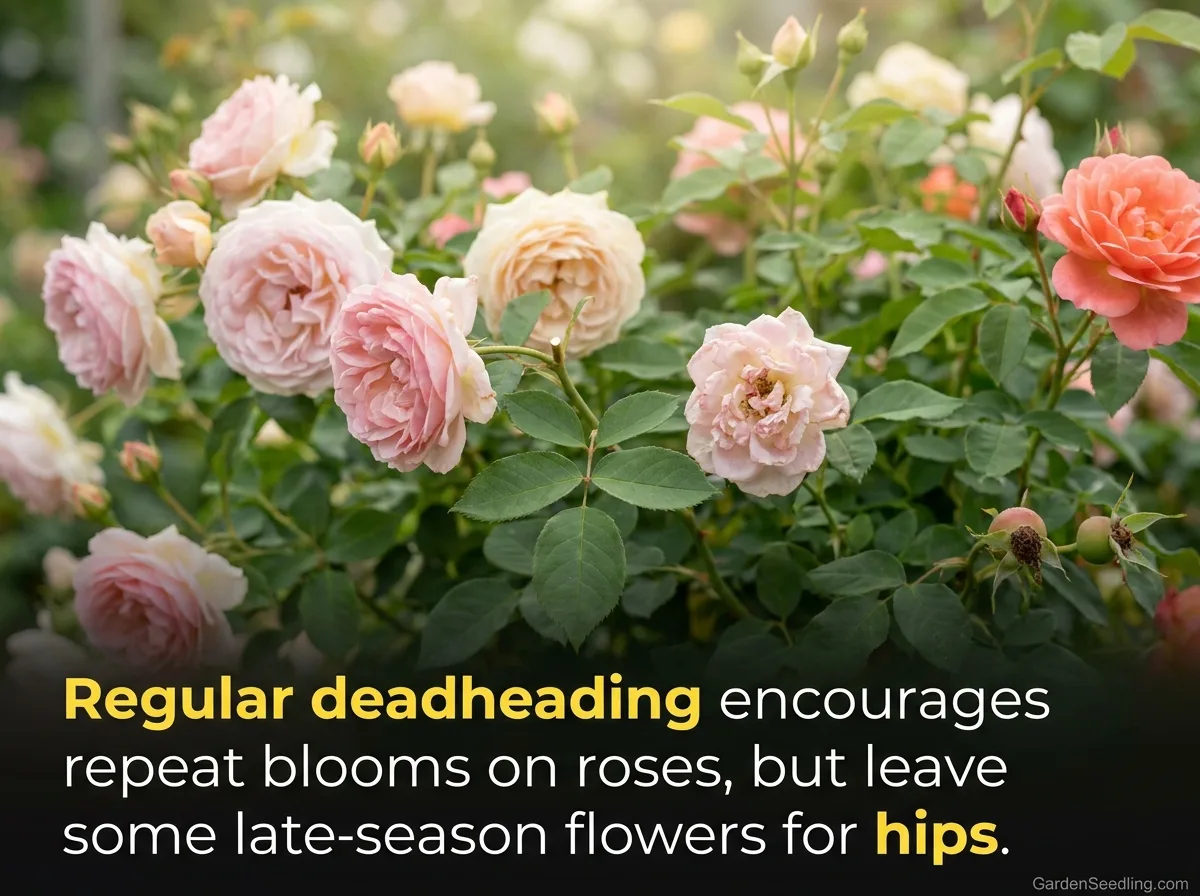
Repeat-blooming roses usually respond well to regular deadheading. Cut faded flowers off about a quarter inch above an outward-facing leaflet or bud. On established roses, gardeners often cut back to a leaf with five leaflets rather than stopping at the first three-leaflet set. On first-year roses, lighter cutting is usually better so the plant keeps more foliage.
If you grow roses for hips, stop deadheading later in the season and let some spent flowers stay. No point removing them if the hips are part of the show—or part of the bird buffet.
For Daylilies
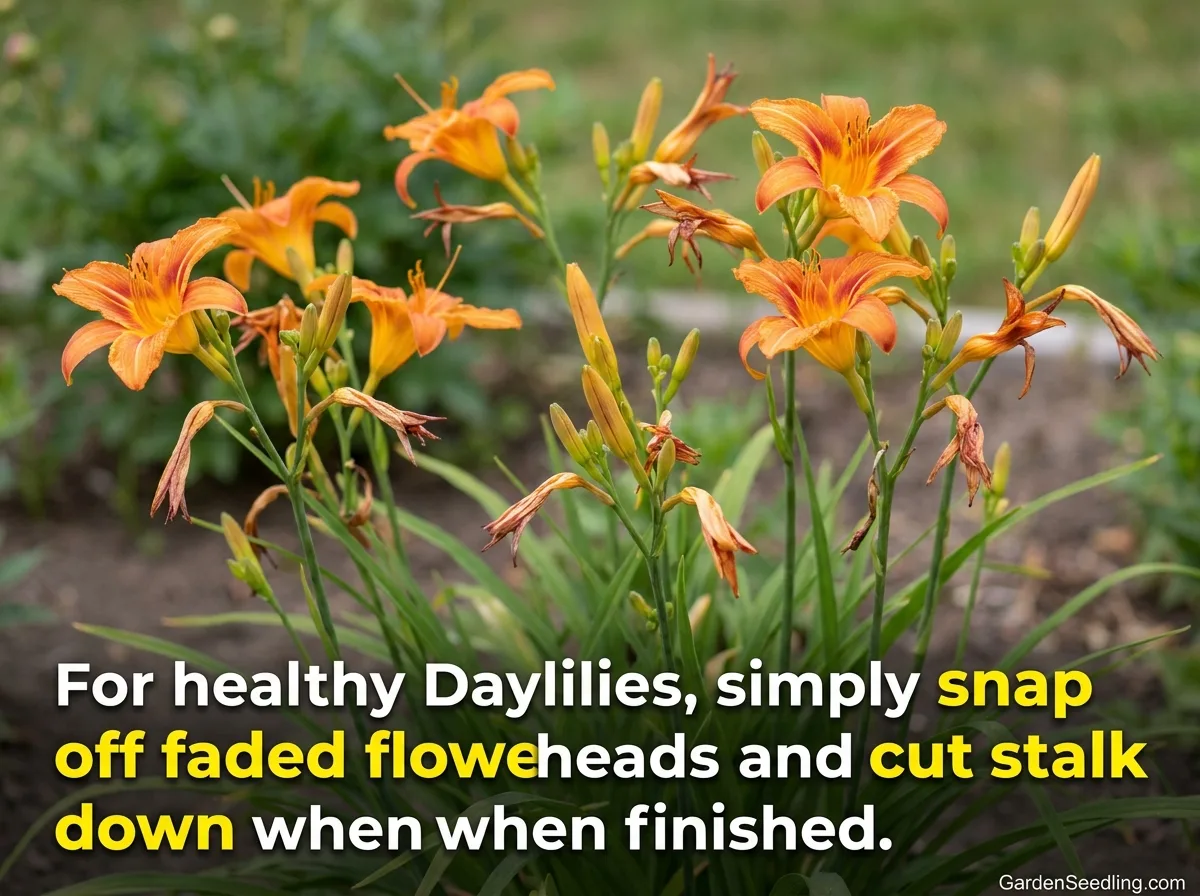
Daylilies are a special case because each bloom lasts only a day, and the spent flowers can turn soft and ugly very fast.
- Snap off each faded flower and any forming seed pod with your fingers.
- Once a flower stalk has no buds left, cut that stalk down near the base.
Do not worry about doing this daily. A few times during the bloom period is usually enough.
Where To Cut: A Simple Reference Table
| Plant Type | Examples | Best Place To Cut | What Usually Happens |
|---|---|---|---|
| Single Bloom Annuals | Marigold, zinnia, cosmos, geranium, pansy | Just above the next healthy leaf set or side shoot | Cleaner plants and more flowers over a longer stretch |
| Spike or Cluster Bloomers | Snapdragon, salvia, delphinium, liatris | Remove the whole spent flowering stem after the flush fades | Neater growth and, on some plants, another flush |
| Repeat-Blooming Perennials | Coreopsis, garden phlox, yarrow, catmint | Spent flowers or, at times, a light shear after the main bloom | Longer bloom period or rebloom later |
| Roses | Hybrid tea and other repeat bloomers | Above an outward-facing bud or leaflet | More flowers instead of hips |
| Spring Bulbs | Tulip, daffodil, hyacinth | Remove only the spent flower head | Helps the bulb save energy for next year |
Flowers That Usually Benefit From Deadheading
Not every flower reacts the same way, but these groups are usually good candidates:
- Annuals that keep pushing bloom: marigolds, zinnias, cosmos, geraniums, snapdragons, salvias.
- Perennials that may bloom longer or again: coreopsis, garden phlox, yarrow, salvia, catmint, delphinium.
- Plants that look much better after cleanup: iris, Asiatic lily, hosta, daylily.
- Bulbs after spring bloom: tulips and daffodils benefit from flower removal, but not leaf removal.
Sometimes deadheading is about more flowers. Sometimes it is about a stronger plant next year. Peonies, bearded iris, and daffodils are good examples of that second group. Removing the spent bloom helps prevent the plant from wasting energy on seed production.
Flowers You May Not Want To Deadhead
This is where people overdo it.
Some annuals are self-cleaning. Many begonias, impatiens, vinca, and petunias drop old flowers on their own, so routine deadheading is often not needed. That said, if petunias get long, floppy, or tired by midsummer, a light trim or pinch can still help them branch and freshen up.
You may also want to leave flowers alone when the seed heads are the point. Coneflowers, sunflowers, and plants with decorative pods or hips can feed birds, add fall texture, or give you seed to save. Deadheading every last bloom all season is not always the best move, especially late in summer.
And with spring bulbs, remember the rule: remove the faded flower head if you want, but leave the foliage until it yellows and dies back on its own. Cutting green bulb leaves early is a classic mistake, and it can reduce next year’s bloom.
Common Mistakes That Reduce Blooms
Removing Only The Petals
If the swollen base of the flower stays on the stem, seed can still form. Take off the whole spent bloom.
Cutting Too High
Leaving a long stub above the next leaf or branch looks messy and can dry back. Cut just above healthy growth, not inches above it.
Cutting Off New Buds By Accident
This happens a lot on salvias, petunias, and branching annuals. Slow down for a second and check what is old and what is still coming.
Deadheading Plants That Are Better Left For Wildlife
Late-season seed heads can feed birds and hold winter interest. If that matters in your garden, ease up as summer turns to fall.
Cutting Bulb Foliage Too Soon
Tulips and daffodils need those leaves after flowering. The leaves recharge the bulb. Green leaves stay.
Using Dirty Tools On Sick Plants
If a plant has disease symptoms, do not move from one plant to the next with the same dirty blade. And if the trimmings are clearly diseased, do not toss them into a cool home compost pile without thinking it through first.
Practical Tips For More Blooms All Season
Deadhead often, lightly, and early. A little every few days works better than waiting until everything looks rough. In peak summer bloom, this is easier to do while you water.
Pair deadheading with feeding and watering. Especially in containers and hanging baskets, deadheading alone does not carry the whole show. Tired annuals need moisture and regular feeding if you want them to keep blooming.
Shear some plants instead of picking off every bloom. With mounding plants such as certain coreopsis or tired annuals, cutting the whole plant back by one-third can be faster and may trigger a cleaner second flush.
Stop at the right time. If frost is not far off, or if you want hips, pods, or seed heads, let some flowers stay on the plant. At that point, chasing every bloom can be busywork.
Compost healthy trimmings. Bag and discard diseased flowers or stems if you suspect a plant problem.
A garden that keeps blooming into late summer usually is not the result of one big chore. It is the result of small, steady cleanup. Deadheading is one of the simplest ways to get there, and once you learn where to cut, it becomes second nature.
FAQ
Does Deadheading Really Lead To More Flowers?
On many annuals and some perennials, yes. Removing spent blooms can slow seed production and encourage the plant to keep flowering longer or rebloom later.
Should I Deadhead Petunias?
Often, modern petunias clean themselves. But if plants look leggy or full of spent blooms, a light trim can help them branch and bloom better again.
Do I Cut Just The Flower Or The Whole Stem?
It depends on the plant. Single blooms are usually removed back to the next leaf or side shoot. Spikes and multi-flower stems are often cut off as a whole after the stem finishes blooming.
Can I Deadhead Tulips And Daffodils?
Yes—remove the faded flower head. Just leave the green leaves in place until they yellow naturally.
What Should I Do With Diseased Blooms?
Remove them promptly, clean your tool if needed, and discard the diseased material rather than adding it to a home compost pile.