
Most beginner plants do not die because gardening is “hard.” They die because a few small choices stack up fast: too little light, too much water, cold soil, crowded roots, or a transplant that went from a cozy windowsill straight into wind and sun. That early stage is unforgiving. Miss it by a bit, and seedlings fold, stall, or simply disappear.
- Quick Answer
- Why Plants Die So Fast In Beginner Gardens
- Mistake 1: Planting In The Wrong Light
- Mistake 2: Watering On Habit, Not On Soil
- Better Watering Habits
- Mistake 3: Starting With Weak Soil
- Mistake 4: Planting Too Early
- Crops That Often Get Planted Too Early
- Mistake 5: Skipping Hardening Off
- A Simple Hardening Off Routine
- Mistake 6: Planting Too Deep Or Too Shallow
- Mistake 7: Crowding Plants
- What Crowding Causes
- Mistake 8: Feeding Too Much, Too Soon
- Mistake 9: Smothering Plants With Mulch Or Ignoring Weeds
- Mistake 10: Treating All Plants The Same
- Step-By-Step Rescue Plan For Struggling Young Plants
- Common Questions
- Why do seedlings suddenly fall over at the soil line?
- How often should beginner gardeners water?
- Can plants recover after transplant shock?
- Is yellowing always a fertilizer problem?
- What is the easiest way to prevent early plant loss?
If you are trying to figure out why your young vegetables, herbs, or flowers keep failing, common beginner gardening mistakes that kill plants early usually come down to basics, not bad luck. Get the light right. Water the soil, not your schedule. Plant at the right depth and at the right time. Feed lightly. Give roots air. Simple moves, yes—but they change everything.
Quick Answer
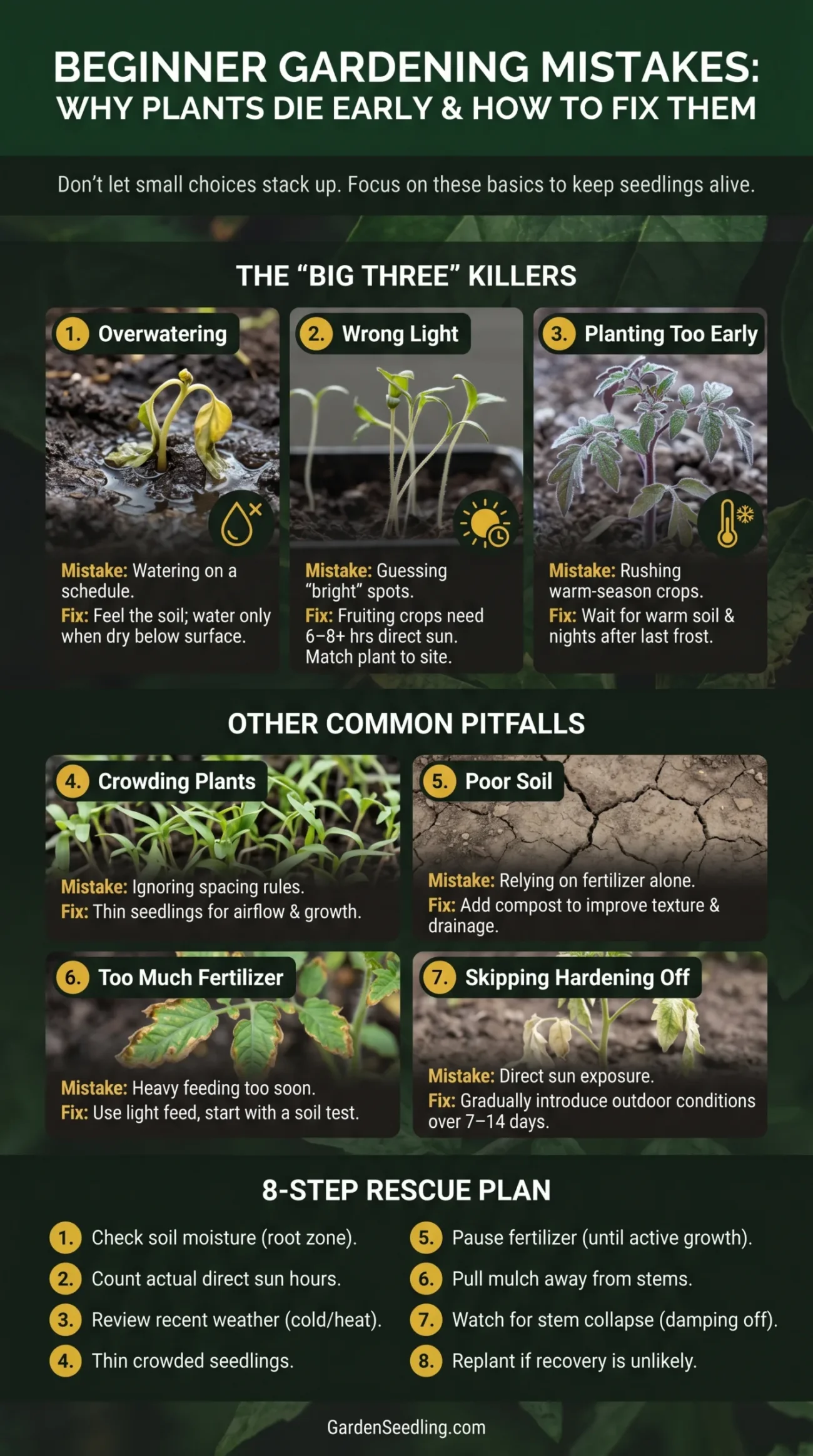
The most common early plant-killing mistakes are overwatering, planting in the wrong light, moving tender plants outdoors too soon, skipping hardening off, crowding seedlings, using poor soil, and adding too much fertilizer. Young plants need steady moisture, warm enough soil, enough direct sun for the crop, and room to grow. When one of those is off, plants weaken fast.
| Mistake | What You Notice | What To Do Instead |
|---|---|---|
| Too much water | Wilting, yellow leaves, soft stems, damping off | Check soil first and water only when needed |
| Too little sun | Leggy seedlings, weak growth, poor flowering | Match crops to the site or move them |
| Planting too early | Cold damage, stalled growth, rot | Wait until frost risk and soil conditions fit the crop |
| No hardening off | Leaf scorch, droop, transplant shock | Expose seedlings to outdoor conditions over 7–14 days |
| Too much fertilizer | Leafy growth, burned roots, weak fruit set | Use light feeding and start with a soil test |
Why Plants Die So Fast In Beginner Gardens
Young plants have tiny root systems and very little margin for error. A mature tomato can recover from a rough afternoon. A four-inch seedling, not so much. It dries out faster, overheats faster, and reacts faster to soggy soil or cold nights.
And here is the part new gardeners often miss: many early plant problems look the same. A plant can wilt from dry soil, but it can also wilt from waterlogged roots that cannot breathe. Yellowing can mean hunger, but it can also mean cold soil or too much water. That is why guessing leads people in circles.
Look at the root zone first. Then the light. Then the weather. Usually, that tells the story.
Mistake 1: Planting In The Wrong Light
This one starts before planting day. Many beginners choose the only open patch in the yard, then try to grow sun-loving crops there. Tomatoes, peppers, eggplant, cucumbers, squash, and most flowers grown for heavy bloom need a lot of direct sun. Leafy greens can tolerate less. Fruiting crops usually cannot.

Full sun for most garden crops means about 6 to 8 hours of direct sunlight, and fruiting vegetables often do better with even more. Morning sun helps, but weak filtered light under trees is not the same thing. Not even close.
Common signs of poor light:
- Long, floppy stems that lean hard in one direction
- Slow growth even when watering seems fine
- Few flowers or fruit on crops that should be producing
- Wet leaves that stay wet, which can raise disease pressure
Before you plant, watch the spot for a day or two. Actual sun, not just “bright.” That small check saves a lot of disappointment.
Mistake 2: Watering On Habit, Not On Soil
New gardeners often water by clock: every morning, every evening, every time they walk past the bed. It feels responsible. It kills plants anyway.

Roots need both water and oxygen. In soil that stays soaked, roots struggle to breathe, growth slows, and diseases like damping off or root rot get a much easier start. Seedlings are especially touchy here. Cool, wet conditions and overwatering are a bad mix.
Why does a healthy seedling collapse in two days? Sometimes because the top of the soil looked dry while the root zone stayed soggy underneath.
Better Watering Habits
Push a finger into the soil before watering. For beds, check below the surface. For containers, lift the pot if you can; dry pots feel much lighter. Water deeply, then let the soil drain and breathe.
- Seedlings: Keep the mix evenly moist, not soaked
- New transplants: Watch them closely the first week
- Established plants: Water less often, but more thoroughly
- Containers: Check more often because they dry faster
Morning watering is usually the safer move. Leaves dry sooner, and disease pressure tends to stay lower.
Mistake 3: Starting With Weak Soil
Plants do not need fancy soil. They do need soil that drains well, holds some moisture, and has enough organic matter to support steady root growth. Thin, compacted, lifeless soil makes everything harder—watering, feeding, even germination.

Some beginners try to “fix” weak soil with fertilizer alone. That rarely works for long. Fertilizer is not soil structure. It cannot open compacted ground. It cannot improve drainage. It cannot magically make clay fluff up or sandy soil hold moisture.
A better starting point:
- Use compost to improve texture and water balance
- Test your soil before adding random products
- Aim for drainage, especially in spots where water sits after rain
- Avoid walking on beds when the soil is wet
For indoor seed starting, another common mistake shows up: using garden soil in trays or pots. It is usually too dense for tiny roots and can carry disease problems. Use a clean seed-starting or potting mix instead. Indoors, lighter is better.
Mistake 4: Planting Too Early
It happens every spring. A warm weekend arrives, garden centers look full and tempting, and tomatoes go into the ground weeks too soon. Then a cold night hits. Growth stalls. Leaves purple. Roots sit in chilly soil and do almost nothing.
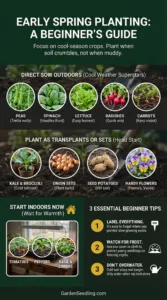

Warm-season crops such as tomatoes, peppers, beans, squash, and basil need more than air warmth. They need soil that has warmed up and nights that are no longer cold enough to stress them. Planting after your area’s last frost date is a good starting point, but local conditions still matter. A cold, wet spring can delay safe planting even after that date.
Do not rush tender plants outdoors just because stores are selling them. Stores are early. Weather is boss.
Crops That Often Get Planted Too Early
- Tomatoes
- Peppers
- Cucumbers
- Squash and zucchini
- Basil
If nights are still cool and the soil feels cold to the touch in the morning, waiting a bit often pays off more than planting early ever does.
Mistake 5: Skipping Hardening Off
This mistake is quiet, and then suddenly dramatic. Seedlings raised indoors or in a sheltered space are not ready for direct sun, wind, and temperature swings on day one. Put them outside all at once and the leaves may bleach, scorch, droop, or tear. The plant survives sometimes. Sometimes it never really recovers.

Hardening off means introducing seedlings to outdoor conditions little by little over about one to two weeks. Start with shade and protection. Then increase sun and exposure gradually.
A Simple Hardening Off Routine
- Day 1–2: 1 to 2 hours outside in bright shade
- Day 3–4: A few more hours, still sheltered from strong wind
- Day 5–7: Add gentle morning sun
- Final days: Extend time outdoors and leave out longer if nights are mild
Do not harden off tender seedlings on cold, windy days. That is not “toughening them up.” That is just stress.
Mistake 6: Planting Too Deep Or Too Shallow
Seed depth matters more than beginners expect. Tiny seeds planted too deep can use up their stored energy before they ever reach light. Seeds planted too shallow may dry out fast or wash away with watering.

A handy rule for many seeds: plant them about twice as deep as they are wide. It is a rule of thumb, not a law, but it keeps you out of trouble most of the time. Seed packets help here—read them. Really, read them.
Transplants bring a second version of the same problem. Burying crowns, stems, or root flares too deeply can lead to rot on some plants. Planting too high can leave roots exposed and dry. And yes, tomatoes are a partial exception because they can root along buried stems. Many other plants cannot.
Good planting depth feels almost boring. That is the point.
Mistake 7: Crowding Plants
Small seedlings make spacing recommendations look silly. Six inches? Twelve? Eighteen? That feels excessive when the plant is tiny. So beginners tuck things closer together. Later, those same plants compete for light, water, airflow, and nutrients all at once.
Crowded plants stay damp longer after rain or overhead watering. Fungal and bacterial issues love that. Growth gets weak. Harvest drops. A bed can look full and still perform badly.
Spacing is not wasted space. It is future space.
What Crowding Causes
- Poor air movement
- More disease pressure
- Shallow competition for water
- Small harvests from plants that never size up well
If thinning feels painful, remember this: one healthy plant often outgrows three crowded weak ones.
Mistake 8: Feeding Too Much, Too Soon
New gardeners often assume more fertilizer means faster growth and better plants. Sometimes it means scorched roots, stretched seedlings, leafy tomato plants with very little fruit, or soft growth that pests seem to find first.
Young seedlings do not need heavy feeding. And gardens do better when fertilizer matches actual need, not wishful thinking. Soil tests help with that. So does restraint.
Watch out for these beginner habits:
- Adding fertilizer every week just because the label mentions growth
- Using strong liquid feed on tiny seedlings
- Piling manure or hot compost right against new roots
- Chasing yellow leaves with more fertilizer before checking water, light, and temperature
Sometimes the plant is hungry. Sometimes it is wet, cold, rootbound, or stressed. Those are different problems.
Mistake 9: Smothering Plants With Mulch Or Ignoring Weeds
Mulch helps a lot when you use it well. It can hold moisture, reduce weeds, and buffer soil temperature. But mulch pushed right against stems or crowns can trap moisture where it should not sit. Rot follows. Fast, at times.
Leave a little breathing room around stems. Think cover, not burial.
Weeds, on the other hand, are not just messy. In a new garden they steal water, nutrients, and light from seedlings that barely have roots yet. Early weed control matters because small plants lose that battle easily.
Mistake 10: Treating All Plants The Same
Lettuce is not pepper. Basil is not kale. Zinnias are not parsley. Yet beginners often water everything the same way, plant everything on the same date, and expect the same response from every crop.
That shortcut causes trouble. Cool-season plants like lettuce, peas, spinach, and many brassicas handle spring conditions much better than heat-loving crops do. Herbs vary. Flowers vary. Even within vegetables, needs shift a lot.
When a plant keeps failing, do not only ask, “What did I do wrong?” Ask, “Was this the right plant for this spot and this week?” That question fixes a surprising number of gardens.
Step-By-Step Rescue Plan For Struggling Young Plants
If your plants already look rough, slow down and work through the basics in order.
- Check the soil moisture. Not the surface—the root zone.
- Look at the light. Count actual hours of direct sun.
- Review the weather. Think cold nights, wind, or a recent heat jump.
- Inspect spacing. Thin crowded seedlings if needed.
- Pause fertilizer until you know the plant is actively growing.
- Remove mulch from stems if it is touching the plant.
- Watch for stem collapse at soil level, which can point to damping off.
- Replant only if needed. Sometimes a fresh start is faster than nursing a failing seedling for weeks.
A lot of early problems are fixable. Some are not. That is normal. Even good gardeners lose plants—just fewer of them, and for shorter periods.
Common Questions
Why do seedlings suddenly fall over at the soil line?
That often points to damping off, which is more likely in wet, cool conditions with weak airflow or overwatering.
How often should beginner gardeners water?
There is no useful fixed schedule. Check the soil first, then water based on moisture, weather, container size, and plant type.
Can plants recover after transplant shock?
Yes, many can. Give them steady moisture, a few days of reduced stress, and time. Some bounce back quickly; some stay stunted.
Is yellowing always a fertilizer problem?
No. Yellow leaves can also come from soggy soil, cold soil, root damage, low light, or simple transplant stress.
What is the easiest way to prevent early plant loss?
Start with the right plant in the right spot, wait for suitable weather, and avoid overwatering. Those three choices prevent a lot of trouble.
Beginner gardens improve fast once you stop treating every problem with more water or more feed. Most early plant loss comes from a handful of repeat mistakes, and once you spot them, the whole garden starts to feel a lot less mysterious.