
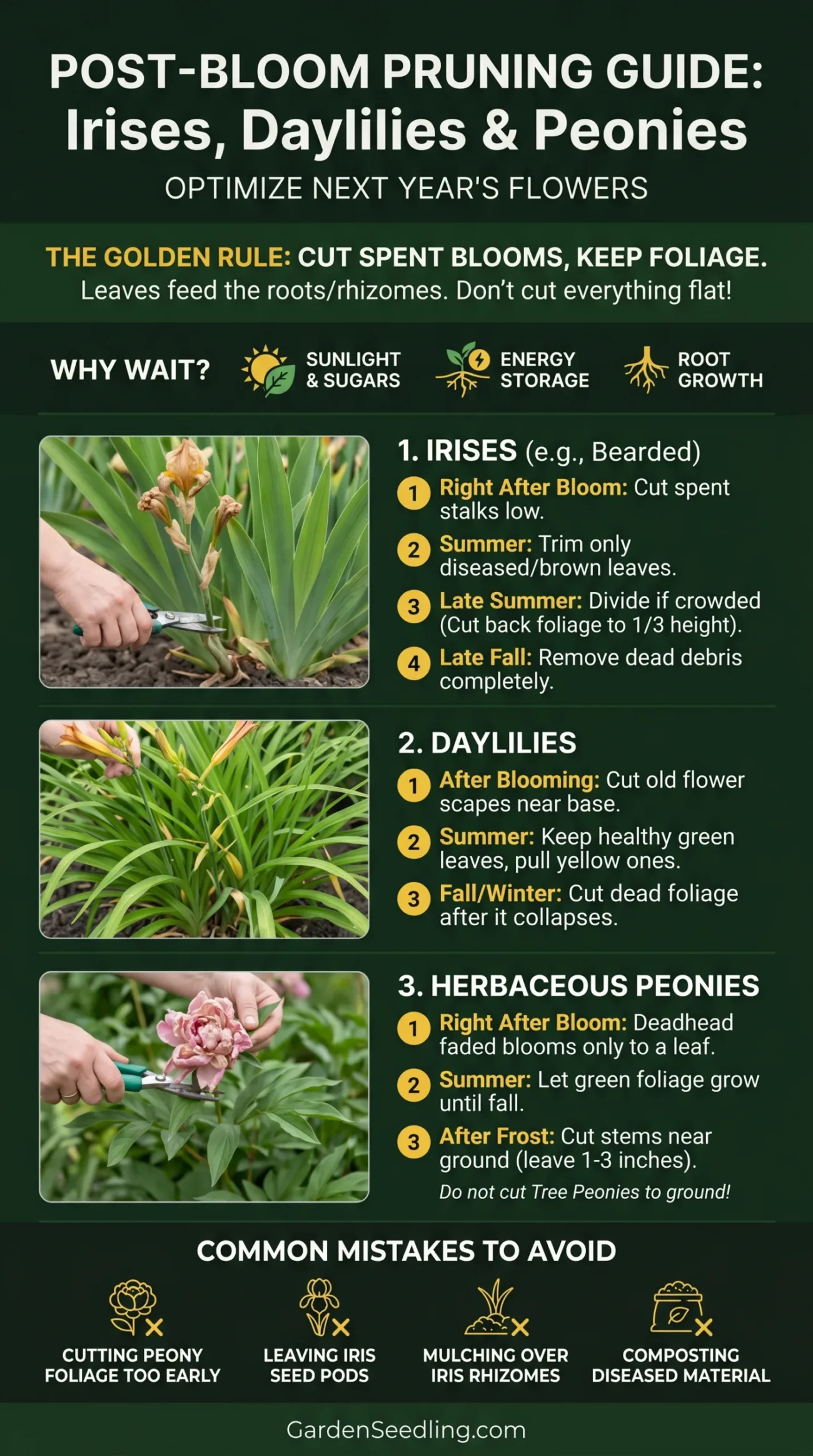
Most of the cutting after bloom is not about making the plant look neat. It is about knowing which stems are finished and which leaves are still feeding the roots, rhizomes, crowns, or tubers underground. That is where gardeners often go wrong with irises, daylilies, and peonies. The flowers fade fast, the foliage looks a little tired, and the first instinct is to cut everything down. Too early, though, and next year’s bloom can take the hit.
- Quick Answer: When to Cut Back Irises, Daylilies, and Peonies
- Why You Should Not Cut Everything Back Right After Blooming
- When to Cut Back Irises After Blooming
- Best Timing for Iris Cutback
- How to Cut Back Irises Cleanly
- When to Cut Back Daylilies After Blooming
- Best Timing for Daylily Cutback
- Should You Cut Daylilies Back in Summer?
- When to Cut Back Peonies After Blooming
- Best Timing for Peony Cutback
- What About Powdery Mildew on Peonies?
- How to Cut Back These Plants Without Hurting Next Year’s Flowers
- Common Mistakes to Avoid
- Cutting Green Peony Foliage Too Early
- Leaving Iris Flower Stalks Until They Form Seed Pods
- Cutting Daylilies Flat After the First Bloom Flush
- Composting Diseased Foliage
- Mulching Over Bearded Iris Rhizomes
- Cutback Heights That Usually Work
- What to Do With Leaves After Cutting
- Season-by-Season Cutting Plan
- Late Spring to Early Summer
- Mid to Late Summer
- Fall
- Early Spring
- FAQ
- Can I Cut Back Irises Right After They Bloom?
- Should Daylilies Be Cut to the Ground After Flowering?
- When Should Peonies Be Cut Back?
- Can I Cut Diseased Leaves Earlier?
- Do Irises, Daylilies, and Peonies Need the Same Cutback?
- Will Cutting Back Too Early Stop Flowers Next Year?
For most gardens, the safe rule is simple: cut off finished flower stems after blooming, but leave healthy green foliage in place. Irises, daylilies, and herbaceous peonies all need their leaves for weeks after the flowers are gone. Those leaves keep making food for the plant. They are not pretty forever, no. But they are still working.
Quick Answer: When to Cut Back Irises, Daylilies, and Peonies
After blooming, remove spent flowers and flower stalks, not all foliage. The full cutback usually waits until the leaves yellow, brown, collapse, or get hit by frost. There are a few exceptions for diseased leaves, damaged growth, and plants you plan to divide.

| Plant | Right After Bloom | Summer Care | Fall Cutback |
|---|---|---|---|
| Irises | Cut spent flower stalks near the base | Leave green fans unless leaves are diseased or brown | Remove dead foliage in late fall or after frost |
| Daylilies | Cut off old flower scapes once blooming ends | Pull or trim yellowing leaves as needed | Cut dead foliage to a few inches after it dies back |
| Peonies | Deadhead faded blooms only | Keep green foliage through summer | Cut herbaceous peonies near ground level after frost or full dieback |
That table gives the basic timing. The details matter, though, because these plants store energy in different ways. Irises use rhizomes. Daylilies grow from crowns with fleshy roots. Herbaceous peonies send up new stems from underground buds each spring. Same garden bed, different habits.
Why You Should Not Cut Everything Back Right After Blooming

After flowers fade, the plant switches jobs. It stops showing off and starts refilling its storage system. Leaves catch sunlight, make sugars, and send that energy below the soil. That stored energy supports root growth, winter survival, and the first strong push of growth next spring.
Cutting all foliage right after bloom can weaken the plant, especially if it already dealt with heat, dry soil, crowding, poor drainage, or disease. It may still come back. Perennials are forgiving. But the clump can bloom less, grow thinner, or take longer to recover.
There is a small difference between tidying and cutting back. Tidying means removing spent flowers, snapped stems, yellow leaves, or clearly diseased pieces. Cutting back means removing most or all top growth. With these three plants, those are not the same job.
When to Cut Back Irises After Blooming

Irises look done after the last flower shrivels, but the fans still feed the rhizomes. For bearded irises especially, the green leaves should stay as long as they remain healthy. Cut the flower stalk after all buds on that stalk have bloomed. Take it down close to the base, but avoid slicing into the rhizome or the fan of leaves.
Leave the foliage. That part matters.
If a few leaf tips turn brown, trim only the brown tips or damaged leaves. If leaves show spotting, streaking, soft rot signs, or pest damage, remove those leaves sooner and throw them away. Do not tuck diseased iris leaves into a home compost pile unless the pile gets hot enough to break down disease material safely. Many backyard piles do not.
Best Timing for Iris Cutback

- Right after bloom: Remove spent flower stalks at the base.
- During summer: Keep healthy green leaves. Trim dead, broken, or diseased leaves only.
- Late summer dividing: If dividing bearded irises, cut foliage back to about one-third of its height or roughly 6 to 8 inches, depending on the plant size.
- Late fall: Remove dead foliage and plant debris, especially where iris borers or leaf spot have been a problem.
In colder zones, many gardeners clean up bearded irises after a hard frost. In milder areas, you can remove dead leaves once they have fully yellowed or browned. The goal is not a calendar date; it is plant condition. Green leaves stay. Dead leaves go.
How to Cut Back Irises Cleanly

Use clean hand pruners or garden scissors. Cut flower stalks low, then remove any brown leaves by tugging gently or clipping them near the base. For fall cleanup, trim dead fans down without burying the rhizome under mulch or plant scraps. Bearded iris rhizomes like air and sun on their upper surface, so do not smother them.
One more small thing: if you see soft, mushy rhizomes, do not just cut leaves and walk away. Dig out the rotten section, improve drainage if the soil stays wet, and avoid heavy mulch right against the rhizome. Irises hate wet feet more than they hate a messy leaf.
When to Cut Back Daylilies After Blooming
Daylilies are tougher-looking than they are tidy. After bloom, old flower scapes stand above the foliage like dry sticks, and the leaves may get ragged by heat. Cut the finished flower scapes near the base once all buds on that stalk are done. This keeps the plant from putting energy into seed pods and makes the clump look cleaner.
Do not cut the whole daylily clump to the ground just because blooming ended. Healthy green foliage still helps the plant store energy. Instead, use a light hand. Pull away fully yellow leaves. Trim brown tips. Remove collapsed outer leaves. Then leave the rest alone.
Best Timing for Daylily Cutback

- After each scape finishes: Cut the spent flower stalk close to the crown.
- Mid to late summer: Remove ugly yellow or brown leaves by hand or with snips.
- When dividing: Trim foliage to about 5 or 6 inches to reduce stress and make replanting easier.
- Fall or early winter: Cut back dead foliage after it yellows, browns, or collapses.
Some daylilies keep decent foliage late into the season. Others look worn out by August, especially in hot climates or dry soil. If a clump looks rough but still has green leaves, clean it lightly rather than shaving it flat. It may push a little fresh foliage after a trim, but repeated hard cutting can stress the plant.
Should You Cut Daylilies Back in Summer?
You can cut back daylilies lightly in summer if the foliage turns messy, but avoid a full ground-level cut unless the plant is diseased, badly damaged, or being divided. A light haircut can help a tired clump look better. A hard cut, done too often, removes too much leaf surface.
For a practical summer tidy-up, grab the dead outer leaves at the base and pull gently. Many will slide out without tools. Clip anything that resists. It is oddly satisfying, in a very garden-bed kind of way.
When to Cut Back Peonies After Blooming
Peonies need the most patience. After the flowers drop, the foliage should stay until fall. Those big green leaves are feeding the crown and developing the buds that will send up next spring’s stems. Cutting herbaceous peonies to the ground in June or July is one of the easiest ways to reduce future flowers.
Right after bloom, deadhead the spent flowers. Cut each faded bloom back to a strong leaf, not all the way to the ground. This removes the old flower head and any forming seed pod while keeping the leafy stem in place.
Then wait.
Best Timing for Peony Cutback
- Right after bloom: Remove faded flowers and seed pods.
- Summer: Leave green foliage standing unless it is badly diseased.
- After frost or full dieback: Cut herbaceous peony stems near ground level, usually leaving about 1 to 3 inches.
- If disease appears: Remove infected leaves or stems sooner and throw them away.
Herbaceous peonies die back to the ground every year. Tree peonies do not. That difference is easy to miss, and it matters. Do not cut tree peonies to the ground in fall. Remove dead, broken, or crossing wood only, and keep the woody structure intact.
What About Powdery Mildew on Peonies?
Powdery mildew often appears late in the season as a pale, dusty coating on peony leaves. It looks worse than it usually is, but it still tells you the foliage is no longer in clean shape. If the plant still has plenty of green tissue and the mildew is mild, you can wait until fall cleanup. If leaves are blackened, collapsing, or heavily infected, remove the worst stems earlier.
Once you cut diseased peony foliage, throw it away. Do not leave it around the crown. Good fall cleanup lowers the chance of old plant debris sheltering disease into the next growing season.
How to Cut Back These Plants Without Hurting Next Year’s Flowers
Use the same basic method for all three plants, with small changes for each one. Clean cuts heal better, and clean tools reduce the spread of disease from one clump to another.
- Start with spent flowers. Remove old blooms or flower stalks once they no longer add value.
- Check the leaves before cutting. Green, firm leaves usually stay. Yellow, brown, spotted, or mushy leaves can go.
- Use sharp pruners. Dull blades crush stems and make ragged cuts.
- Clean tools between diseased plants. A quick wipe with disinfectant helps when you see leaf spot, rot, or mildew.
- Keep debris out of crowns and rhizomes. Old wet leaves packed around the base can invite rot and pests.
- Water after dividing, not after every trim. A normal deadheading session does not need special watering, but divided plants do.
For irises, stay aware of the rhizome. For daylilies, avoid cutting into the crown. For peonies, do not damage the pink or red “eyes” near the soil surface when you clean around the plant in fall. Small details, but they save problems.
Common Mistakes to Avoid
Cutting Green Peony Foliage Too Early
This is the big one. Peony foliage may look plain after the bloom show ends, but it is not useless. Keep it through summer unless disease forces earlier removal. If the plant looks bare in the garden after flowering, plant lower companions nearby rather than cutting the peony down.
Leaving Iris Flower Stalks Until They Form Seed Pods
Spent iris stalks can form seed pods if left in place. That is not always harmful, but it uses energy the plant could send back into rhizomes. Cut the stalk when flowering ends unless you are saving seed on purpose.
Cutting Daylilies Flat After the First Bloom Flush
Some daylilies rebloom. Some do not. Either way, cutting all foliage flat right after the main bloom can slow the plant. Remove scapes and ugly leaves, then let the healthy foliage keep working.
Composting Diseased Foliage
Clean plant debris can be composted in many gardens. Diseased foliage is different. Iris leaf spot, iris borer debris, peony mildew, botrytis-like blight, and other problem material should leave the garden. Bag it or dispose of it according to your local yard waste rules.
Mulching Over Bearded Iris Rhizomes
Daylilies and peonies can handle mulch around them, as long as it does not bury crowns too deeply. Bearded irises are fussier. Keep mulch away from the exposed rhizome tops. Wet, covered rhizomes can rot, especially in heavy soil.
Cutback Heights That Usually Work
Gardeners often want an exact number. Plants do not always care about exact numbers, but these ranges work well in a normal home garden.
| Plant | Task | Suggested Cut Height |
|---|---|---|
| Bearded Iris | After bloom stalk removal | Cut stalk near the base, leave foliage |
| Bearded Iris | Dividing | Trim leaves to about 6 to 8 inches or one-third height |
| Daylily | After bloom scape removal | Cut scape near the crown, leave foliage |
| Daylily | Dividing or transplanting | Trim foliage to about 5 or 6 inches |
| Herbaceous Peony | Fall cleanup | Cut stems to about 1 to 3 inches above soil |
Do not worry if a cut is not perfect. A slightly uneven daylily clump will recover. An iris fan trimmed a bit higher will still grow. The bigger issue is timing, not making every stem match like a haircut.
What to Do With Leaves After Cutting
Healthy leaves can go into compost if your compost system handles garden debris well. Chop thick stems first so they break down faster. Peony stems and daylily leaves can mat together when wet, so mix them with dry leaves, small twigs, or other airy material.
Diseased leaves should not stay in the bed. Remove them fully, including fallen bits tucked under the plant. Around peonies, clean the soil surface well in fall because new shoots emerge from the crown next spring. Around irises, remove old leaves and nearby debris if borers have been a problem in your area.
Season-by-Season Cutting Plan
Late Spring to Early Summer
This is bloom cleanup time. Deadhead peonies, remove spent iris stalks, and cut finished daylily scapes. Keep the leaves. If the garden looks untidy, trim only damaged pieces.
Mid to Late Summer
Watch for yellowing, spotting, and crowded clumps. Divide bearded irises in late summer if flowering has dropped or the rhizomes are packed tightly. Daylilies can also be divided when needed, though timing depends on local heat and rainfall. Water divided plants well until they settle.
Fall
Once foliage dies back, clean the bed. Cut herbaceous peonies low after frost or full dieback. Remove dead iris foliage, especially in borer-prone gardens. Cut daylily foliage after it collapses or turns brown. In warm climates, some daylily foliage may stay semi-green longer, so use plant condition instead of forcing a date.
Early Spring
If you left some cleanup for spring, remove old dead foliage before new growth gets tangled in it. Be gentle around peony shoots and daylily crowns. With irises, clear debris away from rhizomes so the bed dries and warms.
FAQ
Can I Cut Back Irises Right After They Bloom?
You can cut off the spent flower stalks right after blooming, but leave healthy green leaves in place. Remove the full foliage later after it yellows, dies back, or gets hit by frost.
Should Daylilies Be Cut to the Ground After Flowering?
No, not while the foliage is still green. Cut off spent flower scapes and remove yellow leaves, but let healthy foliage feed the plant until it naturally dies back.
When Should Peonies Be Cut Back?
Cut herbaceous peonies back in fall after the foliage has yellowed, browned, or been damaged by frost. Right after bloom, only remove faded flowers.
Can I Cut Diseased Leaves Earlier?
Yes. Diseased, rotting, or badly damaged leaves can be removed whenever you see them. Throw that material away rather than leaving it in the garden bed.
Do Irises, Daylilies, and Peonies Need the Same Cutback?
No. They all benefit from keeping green foliage after bloom, but their final cleanup differs. Irises need rhizome-friendly cleanup, daylilies need crown-safe trimming, and herbaceous peonies can be cut close to the ground in fall.
Will Cutting Back Too Early Stop Flowers Next Year?
It may reduce blooming, especially with peonies. One early cut may not ruin the plant, but repeated early cutting weakens storage and can lead to fewer flowers.
The cleanest garden is not always the healthiest garden. Remove the finished flower stems, keep the good leaves working, and save the harder cutback for the season when the plant is truly done using its foliage.