
Deer usually do not walk into a front yard looking for a perfect garden design. They look for tender leaves, soft buds, and easy snacks. That is why deer resistant flowering plants for front yard beds should be chosen for more than bloom color alone. The best choices have a reason deer often skip them: strong scent, fuzzy leaves, leathery texture, bitter taste, or sap that makes the plant less pleasant to browse.
- Quick Answer
- Why Deer Avoid Some Flowering Plants
- Best Deer Resistant Flowering Plants for Sunny Front Yard Beds
- Lavender
- Catmint
- Salvia
- Yarrow
- Allium
- Bee Balm
- Russian Sage
- Coreopsis
- Good Deer Resistant Flowers for Part Shade
- Hellebores
- Foxglove
- Bleeding Heart
- Astilbe
- Deer Resistant Flowering Bulbs for Front Beds
- Easy Annuals Deer Usually Skip
- A Simple Front Yard Planting Plan That Works
- For Full Sun
- For Part Shade
- How to Protect New Plants While They Settle In
- Common Mistakes to Avoid
- Practical Design Tips for a Better-Looking Front Bed
- FAQ
- What Flowering Plant Do Deer Hate the Most?
- Are Hydrangeas Deer Resistant?
- Will Deer Eat Lavender?
- Are Marigolds Good for Deer Resistant Flower Beds?
- What Can I Plant With Daffodils to Keep Deer Away?
- Do Deer Resistant Plants Need Repellent?
No flowering plant is deer-proof. A hungry deer can sample almost anything, especially in late winter, during drought, or when young plants push out soft new growth. Still, the right mix can lower damage a lot and keep a front bed looking full without turning the garden into a fence project.
Quick Answer
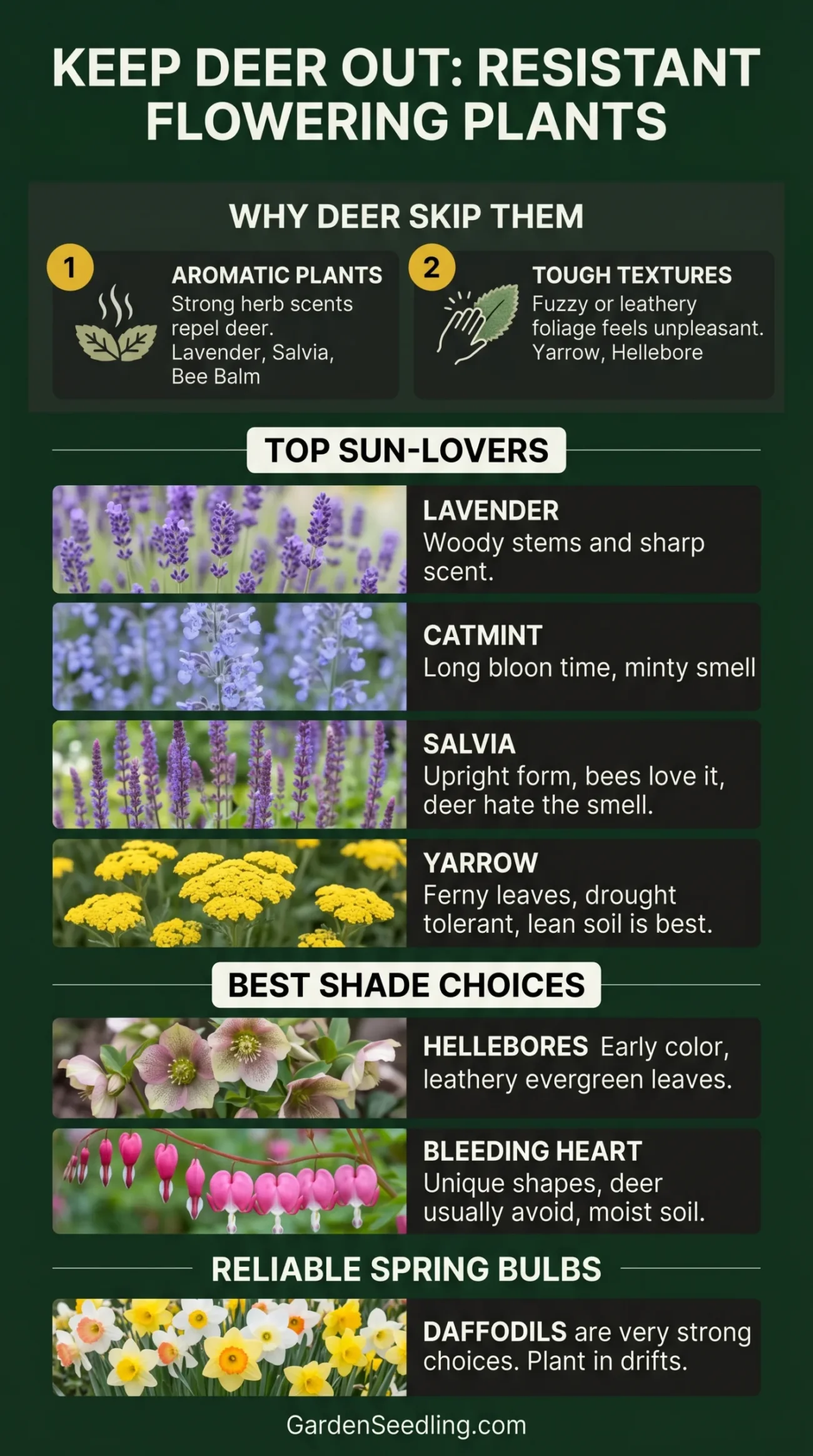
For sunny front yard beds, some of the best deer resistant flowering plants include lavender, catmint, salvia, yarrow, allium, bee balm, Russian sage, coreopsis, and daffodils. For part shade, try hellebores, foxglove, bleeding heart, astilbe, and Japanese anemone in areas where they grow well. Use several plant textures together, repeat the same plants in small groups, and protect new growth until the plants settle in.
Why Deer Avoid Some Flowering Plants
Deer prefer easy food. Soft hostas, daylilies, pansies, tulips, roses, and young hydrangea shoots often sit high on the snack list in many neighborhoods. Plants with oily foliage, gray leaves, sharp scent, or coarse stems usually do better.
It is not magic. It is taste and texture.
Aromatic plants such as lavender, sage, bee balm, and catmint release scent when brushed. Many deer dislike that strong smell, so they move along. Fuzzy plants like lamb’s ear and some yarrows feel odd in the mouth. Plants such as daffodils, hellebores, and foxglove contain compounds that make them poor food choices for deer, though those same plants also need care around pets and children.
Local pressure matters, too. In a wooded suburb with a large deer population, even “resistant” plants may get nipped. In a typical front yard with mixed plantings and regular foot traffic, the same plants may stay mostly untouched. That unevenness can be annoying, yes, but it is also normal.
Best Deer Resistant Flowering Plants for Sunny Front Yard Beds
Most front yard beds receive at least half a day of sun. That opens the door to many tidy, colorful, pollinator-friendly plants that deer usually ignore.
Lavender

Lavender works well near walkways, mailbox beds, and sunny foundation borders. It has silver-green foliage, purple flower spikes, and a sharp herbal scent that deer tend to avoid. It also gives the bed a clean, settled look even when not in bloom.
Plant lavender in full sun and very well-drained soil. Heavy, wet soil causes more trouble than deer ever will. In humid areas, choose compact English lavender varieties and give each plant enough air space. Do not crowd it. Lavender hates that.
Catmint

Catmint is one of the most useful deer resistant perennials for front yard flower beds because it blooms for a long stretch and handles heat better than many softer plants. Its gray-green leaves smell minty when crushed, and the lavender-blue flowers blend easily with roses, ornamental grasses, salvia, and yarrow.
For a neat front bed, choose a compact variety rather than a sprawling one. After the first bloom fades, trim the plant back by about one-third. It often responds with fresh growth and another round of flowers.
Salvia

Perennial salvia brings upright flower spikes in blue, purple, pink, or white. Deer often avoid it because the leaves have a strong herbal smell. Bees like it. The plant stays fairly tidy, which is helpful in a front yard where messy growth shows fast.
Use salvia in groups of three or five for better color. Cut spent flower stems after bloom, and many varieties will flower again. Simple, useful, reliable.
Yarrow

Yarrow has ferny foliage and flat-topped flower clusters in yellow, white, pink, red, or soft peach. Deer usually pass over it, and it performs well in sunny, dry beds once established.
The trick with yarrow is restraint. Very tall varieties can flop in rich soil. For front yard beds, choose shorter cultivars and avoid overfeeding. Lean soil often keeps yarrow stronger and more upright.
Allium

Ornamental alliums add round flower heads that look crisp without much effort. Deer usually dislike onion-family plants, so alliums are a strong choice for spring and early summer color. The purple globe types look especially good rising through low catmint, lamb’s ear, or creeping thyme.
Plant allium bulbs in fall. Their leaves may fade after bloom, so place them behind low perennials that can hide the tired foliage. A little planning here makes the bed look less patchy later.
Bee Balm

Bee balm has bright, shaggy flowers that draw hummingbirds and bees. Its minty leaves help deter deer, though young shoots can still be sampled in high-pressure yards.
For front yards, look for mildew-resistant varieties and give them steady air movement. Bee balm spreads by underground stems, so it is best where you want a fuller patch, not where every inch must stay perfectly controlled.
Russian Sage

Russian sage gives a soft cloud of blue-purple flowers above silvery foliage. Deer usually avoid its strong scent and woody stems. It loves sun, heat, and lean soil.
In small front beds, choose a compact variety. Standard forms can get wide and loose. When used well, though, Russian sage can make a hot driveway bed look calm and alive at the same time.
Coreopsis

Coreopsis brings cheerful yellow, gold, red, or bicolor blooms through summer. Deer resistance can vary by area, but many gardeners find it less tempting than soft annuals and tender perennials. It also tolerates heat and does not need rich soil.
Deadhead old flowers to keep the plant cleaner. Some varieties are short-lived, so treat them as easy, repeatable plants rather than forever plants.
Good Deer Resistant Flowers for Part Shade
Front yard shade is different from deep woodland shade. It may come from a porch, a small tree, or the north side of the house. In these spots, you need plants that can flower with less light and still hold up against deer browsing.
Hellebores
Hellebores bloom early, often when the rest of the bed still looks sleepy. Their leathery evergreen or semi-evergreen leaves are not a favorite deer food, and the nodding flowers bring color in late winter or early spring.
Use hellebores near entry beds, under small trees, or along a shaded walk. They look best in groups. Give them rich, well-drained soil and avoid planting them where the ground stays soggy.
Foxglove
Foxglove sends tall flower spires above a rosette of leaves. Deer usually avoid it, but it is also toxic if eaten, so place it carefully if children or pets spend time in the bed.
Many foxgloves act as biennials, meaning they grow leaves the first year and bloom the next. Let a few seed heads mature if you want them to return naturally. Not everywhere, just a few.
Bleeding Heart
Bleeding heart offers arching stems with heart-shaped flowers in spring. Deer tend to leave it alone in many gardens, and it works well in cool, shaded spots with moist but drained soil.
After flowering, the plant may fade back as summer heat arrives. Pair it with later-growing shade plants so the bed does not look empty.
Astilbe
Astilbe has plume-like flowers and ferny foliage. It is often a good choice for part shade where soil stays evenly moist. Deer resistance varies, but it usually performs better than many tender shade flowers.
Do not let astilbe dry out for long. Brown leaf edges and weak blooms often come from dry soil, not poor plant quality.
Deer Resistant Flowering Bulbs for Front Beds
Bulbs can be risky in deer country. Tulips are famous deer candy in many neighborhoods. Crocus may also get eaten. Choose bulbs with a better track record.
| Bulb | Bloom Time | Best Use | Notes |
|---|---|---|---|
| Daffodil | Early to Mid-Spring | Massed near paths, trees, and foundation beds | Very strong deer resistance; also disliked by many rodents |
| Ornamental Allium | Late Spring to Early Summer | Mixed into perennial borders | Onion scent helps reduce browsing |
| Snowdrop | Late Winter to Early Spring | Small clusters under shrubs or trees | Good for quiet early color |
| Fritillaria | Spring | Accent plants in mixed beds | Strong smell can help deter deer and rodents |
Daffodils deserve special attention. They come in yellow, white, orange, peach, and soft cream, so they do not have to look old-fashioned unless you want that look. Plant them in uneven groups, not one lonely line. A small drift feels more natural from the street.
Easy Annuals Deer Usually Skip
Annuals are tricky because deer love tender growth. Still, a few annual flowering plants can work well when mixed with stronger perennials.
- Marigolds: Strong scent, long bloom season, and useful along sunny edges.
- Snapdragons: Good for spring and fall color in many areas; deer often avoid them.
- Lantana: Great for hot sunny beds; often ignored by deer, but toxic if eaten.
- Angelonia: Heat-tolerant spikes that look neat in summer containers and beds.
- Dusty Miller: Grown mostly for silver foliage, but it helps separate brighter flowers and deer tend to dislike the texture.
Use annuals as fill, not as the whole plan. A front bed made only of tender annuals invites trouble in a deer-heavy area. Add scented perennials around them so the planting sends a stronger “not worth it” message.
A Simple Front Yard Planting Plan That Works
A deer resistant front bed looks better when it has layers. Start with a few steady plants, then add seasonal bloom. This keeps the bed from looking bare after one plant finishes flowering.
For Full Sun
- Back row: Compact Russian sage or tall salvia
- Middle row: Lavender, yarrow, bee balm, or coreopsis
- Front edge: Catmint, creeping thyme, compact marigolds, or lamb’s ear
- Spring layer: Daffodils and alliums planted between perennials
This mix gives scent, texture, color, and repeat bloom. It also avoids the buffet effect of planting one soft flower type in a big block.
For Part Shade
- Back row: Foxglove or Japanese anemone
- Middle row: Hellebores, astilbe, or bleeding heart
- Front edge: Lungwort, dead nettle, or small sedges
- Spring layer: Daffodils and snowdrops
Shade beds should not be overwatered just because they are shaded. Check the soil with a finger first. Damp is good; swampy is not.
How to Protect New Plants While They Settle In
Even deer resistant plants can get damaged when they are young. New growth is soft, watered, and often fertilized. Deer notice.
For the first few weeks, use simple protection if deer visit often. A temporary wire cage, light netting, or a natural deer repellent can help plants push past that tender stage. Once stems harden and leaves release more scent, browsing often drops.
Water deeply after planting, then let the soil guide you. Most drought-tolerant deer resistant flowers still need steady moisture during their first season. Later, they can handle more neglect. Early care matters.
Common Mistakes to Avoid
Some front yard beds fail because the plant list looks good on paper but not in the actual yard. A hot curb strip, a shaded porch bed, and a windy driveway corner are not the same place.
- Planting only one species: If deer decide they like it, the whole bed suffers.
- Choosing soft, lush plants near the street: Tender foliage is easier for deer to browse during a night visit.
- Overfertilizing: Fast, leafy growth can become more tempting.
- Ignoring mature size: Russian sage, bee balm, and yarrow can spread wider than expected.
- Skipping spring bulbs: Daffodils and alliums add color before many perennials wake up.
- Expecting perfection: A few nibbled leaves do not mean the plant failed.
Practical Design Tips for a Better-Looking Front Bed
Deer resistance should not make the bed look stiff. Repeat a few plants instead of buying one of everything. Three lavender plants near the walk, five catmints along the edge, and a drift of daffodils through the middle will usually look cleaner than a scattered collection.
Keep taller plants away from windows and tight paths. Place airy plants like Russian sage where they can lean a little without blocking the walkway. Put lower plants near the edge so the bed still looks cared for after rain or wind.
Color also matters. Purple salvia, yellow yarrow, and white daffodils can look bright but still calm. For a softer bed, use lavender, pale pink bee balm, cream daffodils, and silver foliage. Not fancy. Just balanced.
If your neighborhood deer are bold, plant the strongest deer-resistant choices closest to the street or sidewalk. Use more vulnerable flowers closer to the house, where people, lights, and movement may reduce browsing.
FAQ
What Flowering Plant Do Deer Hate the Most?
Daffodils, lavender, alliums, and many salvias are among the better choices. Deer usually dislike their scent, taste, or plant compounds, but no plant is safe in every yard.
Are Hydrangeas Deer Resistant?
Not really. Deer often browse hydrangea leaves and flower buds, especially on young plants. If you grow hydrangeas in deer country, protect them or plant stronger deer-resistant flowers nearby.
Will Deer Eat Lavender?
Deer usually avoid lavender because of its strong scent and woody growth. In extreme hunger, they may sample it, but it is still one of the better front yard choices.
Are Marigolds Good for Deer Resistant Flower Beds?
Yes, marigolds can help in sunny beds. Their scent makes them less appealing to deer, though they work best when mixed with perennials like catmint, salvia, lavender, or yarrow.
What Can I Plant With Daffodils to Keep Deer Away?
Pair daffodils with alliums, catmint, hellebores, salvia, or lavender. This gives the bed more scent and texture after the daffodil blooms fade.
Do Deer Resistant Plants Need Repellent?
New plants may need repellent or temporary protection for a few weeks. Established plants often need less help, especially if the bed includes several scented or textured choices.
A front yard bed in deer country does not need to look bare or defensive. Start with plants deer usually avoid, mix scent with texture, and give new plants a little protection while they settle in. The result is a bed that looks welcoming from the curb but much less inviting to hungry deer.