
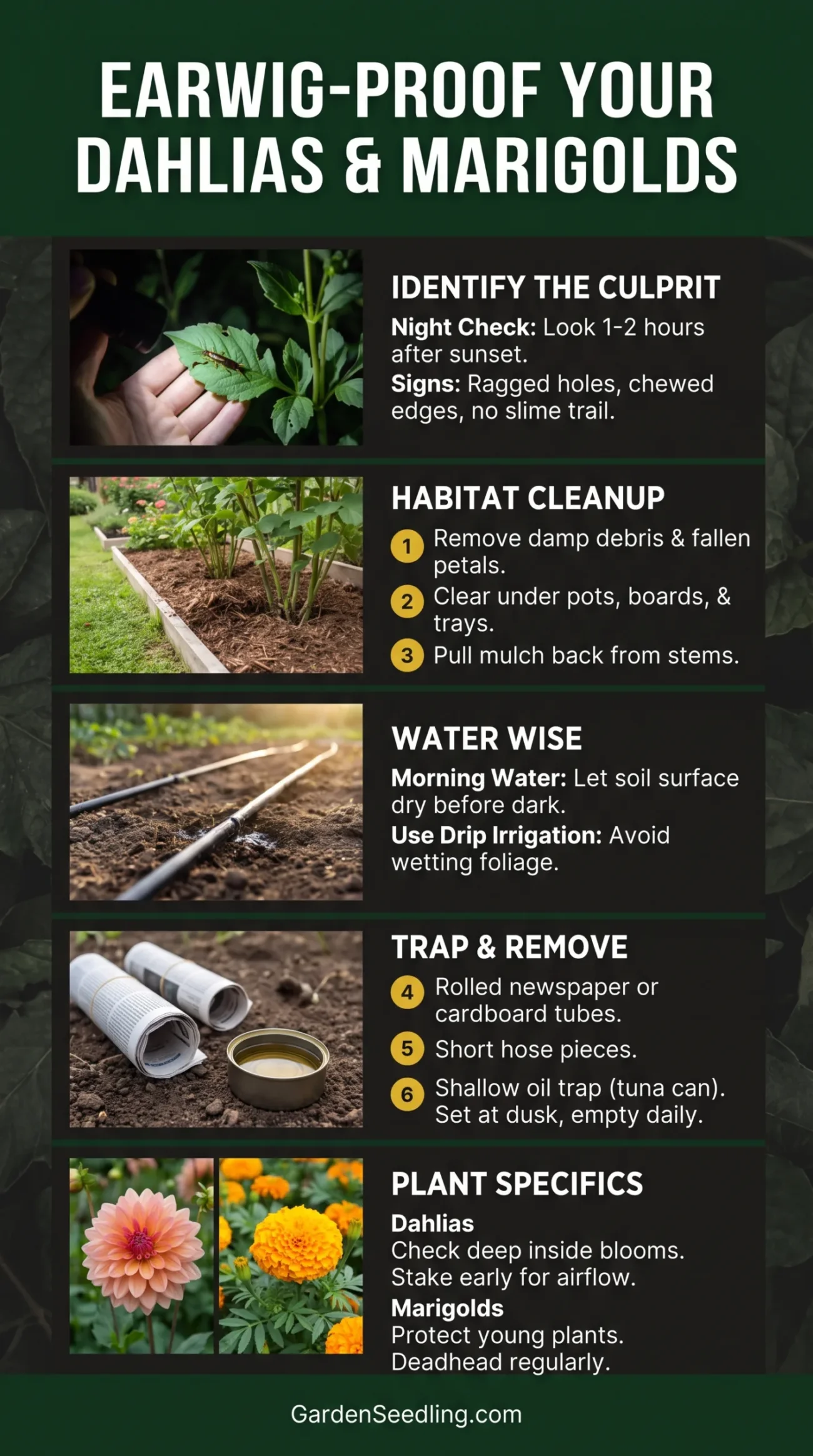
Earwigs usually work after dark, which is why dahlia petals can look fine at sunset and torn by morning. Marigolds can show the same kind of damage: ragged holes, chewed edges, and flower centers that look nibbled rather than cleanly cut. To keep earwigs away from dahlias and marigolds, focus on three things: remove damp hiding spots, trap them at night, and make the area around each plant less comfortable for them.
- How To Keep Earwigs Away From Dahlias And Marigolds
- Why Earwigs Like Dahlias And Marigolds
- How To Confirm Earwigs Are The Real Problem
- Do A Night Check
- Look For These Signs
- Start With The Habitat, Not The Spray Bottle
- Clean The Area Around Each Plant
- Adjust Mulch Around Dahlias And Marigolds
- Water In The Morning
- Use Traps Near The Plants With The Most Damage
- Rolled Newspaper Or Cardboard Trap
- Short Hose Or Bamboo Trap
- Oil Trap For Heavy Pressure
- Best Trap Choices For Dahlias Vs Marigolds
- Protect Young Plants First
- For Newly Planted Marigolds
- For Emerging Dahlias
- Make The Bed Less Comfortable Overnight
- Improve Airflow
- Use Drip Irrigation When Possible
- Organic Barriers And Repellents: What Helps And What Does Not
- Diatomaceous Earth
- Sticky Barriers
- Essential Oil Sprays
- When Earwigs Are Helpful
- A Simple 7-Day Earwig Control Plan
- Day 1: Clean And Scout
- Day 2: Set Traps
- Day 3: Adjust Watering
- Day 4: Repeat Trapping
- Day 5: Check Flowers At Night
- Day 6: Thin And Deadhead
- Day 7: Decide What Comes Next
- Common Mistakes That Keep Earwigs Around
- Should You Use Insecticide On Earwigs Around Flowers?
- Extra Tips For Dahlias
- Extra Tips For Marigolds
- FAQ
- Do Earwigs Eat Dahlia Flowers?
- Do Earwigs Damage Marigolds?
- What Is The Best Organic Way To Control Earwigs?
- Will Coffee Grounds Keep Earwigs Away?
- Are Earwigs Bad For The Whole Garden?
- Why Do Earwigs Keep Coming Back?
This does not mean stripping the garden bare or spraying everything in sight. Earwigs also eat aphids, soft-bodied pests, and decaying plant matter, so the goal is not total elimination. The better target is lower pressure around your flowers, especially when buds are forming and blooms are open.

How To Keep Earwigs Away From Dahlias And Marigolds
To keep earwigs away from dahlias and marigolds, clear plant debris, pull mulch back from the stems, water in the morning, use drip irrigation when possible, and set simple traps near damaged plants at dusk. Check traps every morning and repeat for several nights. For dahlias, pay close attention to tight petals and lower leaves. For marigolds, protect young plants first, because small marigolds can lose a lot of leaf area fast.
- Best first step: remove damp hiding places near the plants.
- Best organic trap: rolled damp newspaper, cardboard tubes, short hose pieces, or a shallow oil trap.
- Best timing: set traps in the evening and empty them in the morning.
- Best prevention habit: keep the soil surface a bit drier overnight.
- Best thing to avoid: heavy mulch packed against stems and crowns.
Why Earwigs Like Dahlias And Marigolds
Dahlias and marigolds both give earwigs what they like: soft plant tissue, shaded pockets, and sometimes damp soil around the base. Dahlias add another hiding place too. Their layered blooms can hold insects deep inside the petals, especially in dense varieties where the flower head acts almost like a little folded shelter.
Marigolds are a bit different. They are often planted in groups, tucked around vegetables, or grown as edging plants. That close spacing can trap moisture and fallen petals near the soil. Earwigs notice. Small spaces, a little dampness, and tender growth — that is enough.
Not every damaged dahlia or marigold has an earwig problem, though. Slugs, snails, caterpillars, grasshoppers, rabbits, and even weather can rough up flowers. Earwig damage tends to look like irregular chewing on petals and leaves, often with no slime trail. Slugs usually leave slime. Earwigs do not.
How To Confirm Earwigs Are The Real Problem
Before changing the whole bed, check at night. A small flashlight tells the truth faster than guessing.
Do A Night Check

Go out about one to two hours after sunset. Look under the lower dahlia leaves, inside open flowers, around marigold crowns, under mulch, and beneath nearby pots or boards. Earwigs move quickly when exposed, and their rear pincers make them easy to identify.
No need to touch them. Just look.
Look For These Signs
- Ragged petal holes: especially on dahlia blooms and marigold flower heads.
- Chewed leaf edges: not smooth circles, more torn and uneven.
- Damage that appears overnight: flowers look worse in the morning.
- No slime trail: this helps separate earwigs from slugs and snails.
- Earwigs hiding nearby: under pots, flat stones, thick mulch, plant labels, trays, or fallen leaves.
Start With The Habitat, Not The Spray Bottle
Earwigs like dark, cool, damp places during the day. So, if the garden bed gives them lots of shelter, they stay close to the flowers and feed at night. The fix starts low to the ground, in the messy little spots people often ignore.
Clean The Area Around Each Plant

Remove fallen petals, old leaves, snapped stems, dead marigold heads, and soggy plant bits from around dahlias and marigolds. A few dry leaves are not a disaster. But wet piles tucked under dense plants become daytime shelters.
Also check the small things: empty seed trays, loose labels, plastic pots, flat stones, wood scraps, edging gaps, and saucers under containers. Earwigs love those tight, hidden spaces. It is annoyingly simple, yes, but cleaning those spots often reduces the population faster than a product does.
Adjust Mulch Around Dahlias And Marigolds

Mulch helps soil, but thick, wet mulch right against flower stems can invite earwigs. Around dahlias, keep mulch a few inches away from the main stem and crown. Around marigolds, use a lighter layer if earwig damage shows up.
Do not remove every bit of mulch in hot weather. Instead, make a dry breathing ring around each plant. The soil still gets protection, but the stem area stops acting like a tiny motel for earwigs.
Water In The Morning
Morning watering gives foliage and the top layer of soil time to dry before night. That matters because earwigs come out after dark and prefer damp surfaces. If you water at sunset every day, you may be setting the table for them.
Deep, less frequent watering usually works better than light daily sprinkling. Dahlias like steady moisture, but they do not need a wet surface every night. Marigolds, once settled in, often handle slightly drier conditions better than many gardeners expect.
Use Traps Near The Plants With The Most Damage
Trapping works well because earwigs naturally look for dark shelters after feeding. You are not trying to chase them. You are giving them a place to hide, then removing that place in the morning.
Rolled Newspaper Or Cardboard Trap
Lightly dampen newspaper or corrugated cardboard, roll it into a loose tube, and place it near damaged dahlias or marigolds in the evening. In the morning, lift the roll and shake the earwigs into a bucket of soapy water.
Simple, cheap, and oddly effective.
Short Hose Or Bamboo Trap
Cut short pieces of old garden hose or hollow bamboo and lay them on the soil near the plants. Earwigs crawl inside during the day. Check the pieces each morning and empty them into soapy water.
This works especially well near dahlias because the plants can be large, leafy, and full of shady pockets. Place traps near the base, but not so close that they sit against tender stems.
Oil Trap For Heavy Pressure
For a stronger trap, use a shallow container such as a tuna can or small yogurt cup. Add a little vegetable oil. Some gardeners add a drop of fish oil or bacon grease to make the scent stronger, but plain oil can still catch earwigs. Sink the container so the rim sits near soil level, then place it near the problem plants in the evening.
Keep oil traps away from pets, small children, and areas where rain or irrigation will flood them. Empty and refresh them often, because old traps get nasty fast. No polite way around that.
Best Trap Choices For Dahlias Vs Marigolds
| Plant | Earwig Risk Area | Best Trap Placement | Extra Tip |
|---|---|---|---|
| Dahlias | Dense blooms, lower leaves, mulch near stems | Near the base and just outside the leaf canopy | Check open flowers at night, especially large layered blooms. |
| Marigolds | Young plants, crowded edging, fallen petals | Between damaged plants or along the row edge | Deadhead often so spent flowers do not collect at soil level. |
| Mixed Flower Beds | Damp mulch, pots, stones, thick groundcover | Near shelters, not only near the chewed flowers | Move traps around every few days to find the busiest hiding spots. |
Protect Young Plants First
Older dahlias and mature marigolds can usually tolerate some chewing. Young plants cannot. A small marigold seedling with only a few leaves can look ruined after one busy night of feeding. Newly planted dahlias also need protection while tender shoots are emerging.
If earwigs are active in your garden, do not mulch heavily around fresh transplants right away. Give the plants time to harden up. Keep the bed tidy, use traps for the first week or two, and check at night if new damage appears.
For Newly Planted Marigolds
- Space plants so air can move between them.
- Remove lower yellowing leaves as they appear.
- Keep mulch thin until stems become stronger.
- Set one small trap for every few plants if damage starts.
For Emerging Dahlias
- Keep the crown area clean and open.
- Avoid wet leaves and soggy mulch around new shoots.
- Use a cardboard or hose trap nearby before damage gets bad.
- Inspect at night once shoots reach several inches tall.
Make The Bed Less Comfortable Overnight
Earwig control gets easier when the garden bed dries slightly before dark. This does not mean drought-stressing your flowers. It means watering smarter, spacing plants well, and avoiding damp clutter.
Improve Airflow
Dahlias can grow into big, leafy plants, so stake them early and remove broken or crowded lower growth when needed. Good airflow helps the soil surface dry and also makes nighttime scouting easier. Marigolds benefit from spacing too, especially compact varieties planted as a border.
Crowded flowers look full for a while. Then pests hide in them. It is a tradeoff worth watching.
Use Drip Irrigation When Possible
Drip irrigation or a soaker hose puts water near the roots without wetting the whole bed surface. Sprinklers wet petals, leaves, mulch, plant debris, and nearby hiding places. That dampness can linger into the night, especially in humid climates.
If overhead watering is your only option, water early in the day. Earlier than feels necessary, even.
Organic Barriers And Repellents: What Helps And What Does Not
Many gardeners look for a simple repellent. Earwigs are not that cooperative. Strong-smelling sprays, coffee grounds, random kitchen scraps, and harsh homemade mixes often give poor results and may damage plants. Dahlias, with their soft petals and leaves, can react badly to strong sprays.
Diatomaceous Earth
Food-grade diatomaceous earth may reduce crawling insects when it stays dry, but it stops working well when wet. It can also affect other small insects that contact it, so use it with care. Apply a light ring on dry soil around the plant base, not on open flowers where pollinators visit.
After rain or watering, reapply only if the problem continues. More is not better.
Sticky Barriers
Sticky barriers can help on woody trunks and smooth supports, but they are less useful around soft annual flowers. Do not smear sticky products directly on dahlia stems or marigold stems. If dahlias are tied to stakes and earwigs seem to climb the stakes, a careful sticky band on the stake may help, but keep it away from the plant tissue.
Essential Oil Sprays
Skip strong essential oil sprays on dahlias and marigolds. They can burn leaves, mark petals, or bother pollinators. If a product is labeled for garden use, follow the label exactly. Homemade strong sprays are where many flower beds get into trouble.
When Earwigs Are Helpful
Here is the awkward part: earwigs are not always villains. They feed on aphids, mites, insect eggs, and decaying material. In a balanced garden, a few earwigs can fit into the normal cleanup crew.
The problem starts when their numbers rise near tender plants or showy blooms. Then the damage becomes too visible to ignore. The practical goal is control near dahlias and marigolds, not wiping out every earwig in the yard.
A Simple 7-Day Earwig Control Plan
Use this plan when you see fresh chewing on dahlia blooms or marigold flowers. It works best when followed daily for one week.
Day 1: Clean And Scout
Remove fallen petals, old leaves, damp debris, empty pots, boards, and loose items near the damaged plants. That evening, inspect the bed with a flashlight.
Day 2: Set Traps
Place rolled newspaper, cardboard tubes, hose pieces, or oil traps near the worst damage. Set them just before dark. Empty them the next morning.
Day 3: Adjust Watering
Water in the morning. Pull mulch back from dahlia stems and marigold crowns. If the bed stays wet, reduce surface watering and check drainage.
Day 4: Repeat Trapping
Move traps slightly if they catch nothing. Put them near likely shelters: under dense foliage, along bed edges, near pots, or beside damp mulch.
Day 5: Check Flowers At Night
Look inside dahlia blooms and around marigold centers. If you see earwigs feeding, keep trapping. If you see slime trails instead, add slug control to the plan.
Day 6: Thin And Deadhead
Remove spent marigold blooms and any damaged dahlia petals that are holding moisture. Trim crowded lower leaves if airflow is poor.
Day 7: Decide What Comes Next
If damage has slowed, continue with tidy beds and occasional traps. If damage stays heavy, set more traps for several nights and widen the cleanup area beyond the flower bed. Earwigs may be hiding under nearby wood, edging, dense groundcover, or containers.
Common Mistakes That Keep Earwigs Around
- Watering late in the day: damp soil at night helps earwigs stay active near flowers.
- Using too much mulch: thick mulch against stems creates cool shelter.
- Only treating the plant: earwigs often hide beside the plant, not on it during the day.
- Stopping traps after one night: trapping usually needs several mornings of follow-through.
- Confusing slugs with earwigs: slug damage may look similar, but slime trails point to slugs or snails.
- Spraying open flowers: this can harm pollinators and may mark delicate petals.
Should You Use Insecticide On Earwigs Around Flowers?
In most home flower beds, insecticide should be the last choice. Dahlias and marigolds attract pollinators, and broad sprays can harm insects you actually want. Sprays also do not fix the damp shelters that brought earwigs close to the flowers in the first place.
If you decide to use any garden insecticide, choose one labeled for ornamental flowers and earwigs, read the label, and avoid spraying blooms when bees or other pollinators are active. Never use indoor pest products on garden flowers unless the label clearly allows that use.
Usually, traps plus cleanup do enough. Not overnight every time, but often within several days.
Extra Tips For Dahlias
Dahlias need steady water and good soil, so do not dry them out just to discourage earwigs. Instead, keep moisture aimed at the roots and reduce hiding spots near the stems. Stake plants early so stems do not flop onto damp soil. Remove damaged lower leaves and spent blooms before they collapse into the plant.
For large decorative or dinnerplate dahlias, check inside the blooms during peak earwig season. Earwigs can tuck deep between petals where sprays and daytime inspection miss them. A gentle shake over a bucket in the morning can reveal what is hiding there.
Extra Tips For Marigolds
Marigolds often get planted as pest-helping companions, but they are not pest-proof. Earwigs can chew their leaves and flowers, especially when plants are small or crowded. Deadhead regularly, keep the bottom of the plant open, and avoid letting spent flowers collect on wet soil.
If marigolds form a tight border, place traps along the outside edge of the row. That edge often catches the movement route better than the center of the planting.
FAQ
Do Earwigs Eat Dahlia Flowers?
Yes, earwigs can chew dahlia petals and sometimes hide inside dense blooms. The damage often appears as ragged holes or torn petal edges that show up overnight.
Do Earwigs Damage Marigolds?
Yes. Earwigs can chew marigold leaves and blossoms, especially on young plants or crowded plantings where the soil stays damp.
What Is The Best Organic Way To Control Earwigs?
The best organic method is repeated trapping combined with cleanup. Use rolled newspaper, cardboard, hose pieces, or shallow oil traps near damaged plants, then empty them each morning.
Will Coffee Grounds Keep Earwigs Away?
Coffee grounds are not a reliable earwig control method. They may change the look and texture of the soil surface, but traps and habitat cleanup work better.
Are Earwigs Bad For The Whole Garden?
Not always. Earwigs can eat aphids and decaying material, so a few are normal. They become a problem when they chew seedlings, flower petals, and tender leaves.
Why Do Earwigs Keep Coming Back?
They usually return because the area still has damp shelter. Check mulch, pots, boards, dense weeds, fallen leaves, and wet plant debris near the flower bed.
Earwig control around dahlias and marigolds works best when it feels almost too practical: tidy the bed, dry the surface a little before night, trap for several mornings, and keep checking the places where earwigs hide. Small habits, repeated for a week, often protect the flowers better than one hard treatment.