
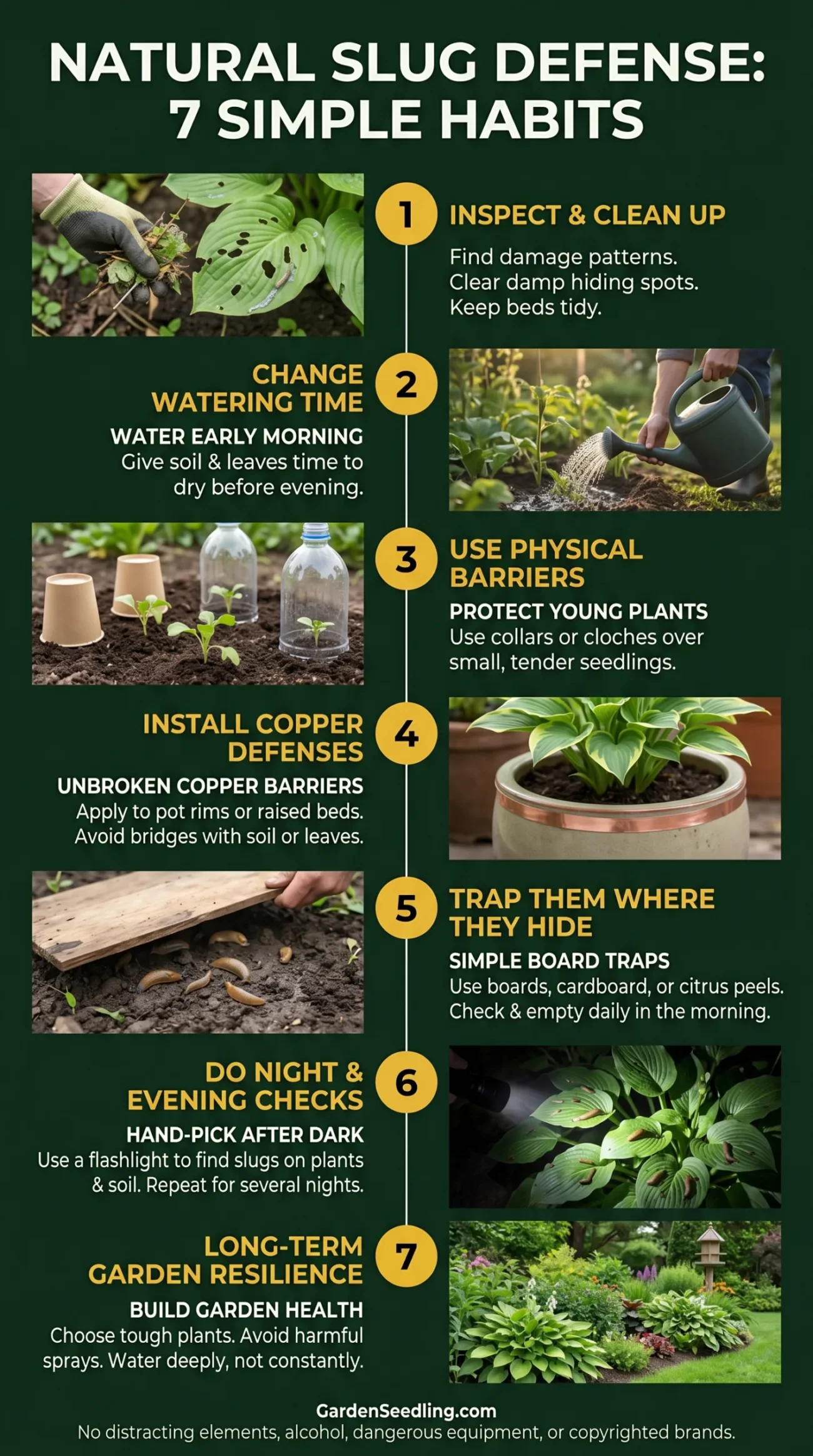
Slugs usually do their worst work while the garden looks quiet. By morning, a hosta leaf may have ragged holes, a seedling may be clipped to a stump, and the only clue is a shiny trail across the soil. The good news: you can stop slugs from eating hostas and seedlings naturally without turning the garden into a chemical battlefield.

- Quick Answer
- Why Slugs Go After Hostas and Seedlings
- How to Tell If Slugs Are the Real Problem
- Start With Moisture Control
- Water in the Morning
- Use Drip Irrigation or Targeted Watering
- Clean Up Slug Hiding Places Without Making the Garden Bare
- Protect Seedlings Before Slugs Find Them
- Grow Seedlings a Bit Larger Before Transplanting
- Use Collars Around Young Plants
- Try Cloches for Tender Plants
- Use Copper Barriers Where They Make Sense
- Trap Slugs With Boards, Pots, and Fruit Peels
- Board Trap Method
- Citrus Peel or Melon Rind Trap
- Hand-Pick at the Right Time
- Make Hostas Less Easy to Eat
- Choose Thicker-Leaved Hosta Varieties
- Give Hostas Better Airflow
- Water Hostas Deeply, Not Constantly
- Use Natural Predators as Part of the Plan
- What About Beer Traps?
- Natural Barriers: What Helps and What Disappoints
- When to Use Iron Phosphate Bait
- A Simple 7-Day Slug Control Plan
- Day 1: Inspect and Clean
- Day 2: Change Watering
- Day 3: Set Traps
- Day 4: Add Physical Protection
- Day 5: Night Check
- Day 6: Recheck Damage
- Day 7: Decide If You Need Bait
- Common Mistakes That Keep Slug Problems Going
- Best Natural Setup for Hosta Beds
- Best Natural Setup for Seedling Beds
- FAQ
- What Is the Best Natural Way to Stop Slugs Eating Hostas?
- How Do I Protect Seedlings From Slugs Overnight?
- Do Coffee Grounds Keep Slugs Away?
- Are Beer Traps Good for Slug Control?
- Will Slug-Damaged Hostas Grow Back?
- Is Iron Phosphate Slug Bait Natural?
The best approach is not one trick. It is a simple routine: reduce damp hiding places, water earlier in the day, protect young plants with barriers, trap slugs where they hide, and use wildlife-friendly controls only where damage keeps happening. Hostas and seedlings need slightly different protection, but the same idea works for both. Make the plant harder to reach. Make the area less comfortable. Check at the right time.
Quick Answer
To stop slugs from eating hostas and seedlings naturally, water in the morning, clear damp hiding spots, hand-pick slugs at night or early morning, use boards or citrus peel traps, protect seedlings with collars or cloches, and place copper barriers around pots or raised beds. For heavy pressure, use an iron phosphate slug bait only as a targeted backup and follow the label closely.
Why Slugs Go After Hostas and Seedlings
Hostas are a slug favorite because the leaves are soft, broad, and often tucked into cool shade. That shady, moist spot looks beautiful to gardeners, but to slugs it feels like a safe little dining room. Thin-leaved hosta varieties usually show damage faster than thick, puckered, or waxy types.
Seedlings are even easier. A new lettuce, basil, marigold, zinnia, bean, or pepper seedling has tender stems and soft leaves. One wet night can be enough. Not always, but often enough to make gardeners think the seed never came up at all.
Slugs feed mostly at night and during damp, cloudy weather. During the day, they hide under boards, pots, thick mulch, weeds, flat stones, leaf litter, and the lower leaves of crowded plants. That habit gives you the best control point: manage the hiding spots, then protect the plants that slugs prefer.
How to Tell If Slugs Are the Real Problem
Before changing anything, look for the pattern. Slug damage has a certain messy look.
- Ragged holes in hosta leaves, especially between the veins
- Chewed seedling leaves that look scraped or shredded
- Missing seedlings with only a short stem left behind
- Silvery slime trails on leaves, pots, mulch, or soil
- Fresh damage after rain or after several cool, damp nights
Cutworms, rabbits, earwigs, and deer can also damage young plants. A cleanly cut seedling stem may point to cutworms. Large bite marks at the edge of hosta leaves may point to deer or rabbits. Slugs leave that wet, scraped, uneven feeding pattern. Once you see it, it’s pretty obvious.
Start With Moisture Control
Slugs need moisture to move around. That does not mean you should keep plants dry and stressed. It means you should water in a way that helps the plant, not the slug.
Water in the Morning

Morning watering gives leaves, mulch, and soil surfaces time to dry before evening. That one change can lower slug activity around hostas and seed beds, especially in shady gardens.
For seedlings, use a gentle stream at soil level. For hostas, water the root zone instead of spraying the whole plant late in the day. Wet hosta leaves at sunset? Slugs enjoy that.
Use Drip Irrigation or Targeted Watering

Drip lines, soaker hoses, and careful hand watering keep moisture where roots need it. The soil still gets water, but the surface stays less inviting. In raised beds, this helps a lot because seedlings often sit close together and create a damp little canopy.
Clean Up Slug Hiding Places Without Making the Garden Bare
Natural slug control starts with habitat. Not a spotless yard. Just fewer slug hotels right beside vulnerable plants.
Pull weeds around seedling rows, lift old nursery pots, move flat stones away from hosta crowns, and thin out piles of wet leaves. Around hostas, remove dead leaves from the crown area in spring and again when leaves start to collapse later in the season.
Mulch needs a careful hand. A light mulch can protect soil, but a deep, wet blanket of mulch right against hosta stems or seedling rows can shelter slugs all day. Keep mulch a few inches back from seedling stems and hosta crowns. Use a thinner layer near plants that get chewed often.
Protect Seedlings Before Slugs Find Them
Seedlings need protection early. Once they grow thicker stems and tougher leaves, they can handle light nibbling better. That early window is the danger zone.
Grow Seedlings a Bit Larger Before Transplanting

When possible, transplant sturdy seedlings instead of tiny ones. A tomato or pepper plant with several true leaves has a better chance than a soft, newly sprouted plant. Lettuce, basil, flowers, and brassicas still need watching, but size helps.
For direct-sown crops, sow a little extra if the crop allows it, then thin later. It feels wasteful at first. It is not, really. In slug-heavy gardens, it is insurance.
Use Collars Around Young Plants

Simple collars can slow slugs and protect stems. Cut the bottom off a paper cup, yogurt container, or small nursery pot, then place it around the seedling. Press the bottom edge slightly into the soil so slugs cannot slide underneath.
This works best for individual seedlings like squash, peppers, tomatoes, dahlias, sunflowers, and young flowering transplants. For rows of lettuce or carrots, use a barrier around the bed instead.
Try Cloches for Tender Plants

A cloche creates a small shield over the seedling. You can use a store-bought garden cloche or a clear plastic bottle with the bottom removed. During warm weather, vent it so plants do not overheat. Small detail, big difference.
Cloches help most during the first week or two after transplanting. After that, remove them before plants get cramped.
Use Copper Barriers Where They Make Sense
Copper can deter slugs when it creates a clean, unbroken barrier. It works best around pots, raised bed edges, greenhouse benches, or special plants in containers. It is less useful when the tape is too narrow, dirty, bridged by leaves, or placed around an area that already has slugs inside.
| Copper Use | Best For | Watch Out For |
|---|---|---|
| Copper tape on pots | Hostas in containers, herbs, patio seedlings | Leaves touching the ground can create a bridge |
| Copper strip around a raised bed | Seedling beds and small vegetable plots | Check for gaps, soil buildup, and slugs already inside |
| Copper ring around one plant | Young hostas or special transplants | Must be wide enough and kept clear |
Before adding copper around a plant, check inside the protected area at dusk. If a slug is already there, the barrier may trap it with the plant. Annoying, but common.
Trap Slugs With Boards, Pots, and Fruit Peels
Traps do not need to be fancy. Slugs like dark, damp shelters. Give them one, then check it.
Board Trap Method
Place a small board, flat piece of cardboard, or upside-down saucer near damaged hostas or seedling rows in the evening. Lift it in the morning. Slugs often gather underneath. Remove them and repeat for several days.
This method works well because it fits slug behavior instead of fighting it blindly. It also tells you where the pressure is highest.
Citrus Peel or Melon Rind Trap
Put a grapefruit rind, orange peel half, or melon rind near the affected plants in the evening. In the morning, check underneath and remove slugs. It is simple, cheap, and useful near vegetable beds.
Do not leave old fruit traps sitting for days. They can attract other pests and get messy fast.
Hand-Pick at the Right Time
Hand-picking sounds low-tech because it is. It also works.
Go out after dark with a flashlight, especially after rain or irrigation. Check the undersides of hosta leaves, the base of pots, the edges of raised beds, and the soil around seedlings. Drop slugs into soapy water, or move them far from the plants if you prefer a non-killing method.
For best results, do this several nights in a row when damage first appears. One round helps. A short routine helps more.
Make Hostas Less Easy to Eat
Hostas will always attract some slug attention in damp shade, but you can make them harder to damage.
Choose Thicker-Leaved Hosta Varieties
When planting new hostas, look for varieties with thick, corrugated, waxy, or heavily textured leaves. Slugs may still nibble them, but they often suffer less damage than thin, soft-leaved varieties.
Blue hostas often have a waxy coating, and many thick-leaved types hold up better in slug-prone beds. The exact result depends on the site, the season, and slug pressure, so treat variety choice as one layer of defense.
Give Hostas Better Airflow
Hostas like shade, but crowded shade stays wet. Space plants so air can move between them. Trim nearby plants if they flop over the hosta crowns. Remove old leaves that lie flat on the soil.
A hosta bed can still look full and calm without becoming a damp mat. That is the balance.
Water Hostas Deeply, Not Constantly
Frequent light watering keeps the surface damp. Deep watering, done less often, supports roots while giving the top layer a chance to dry. In hot weather, hostas may need steady moisture, but evening sprinkling is usually the habit to break first.
Use Natural Predators as Part of the Plan
Birds, ground beetles, frogs, toads, and some other garden wildlife feed on slugs or slug eggs. You do not need to “release” them. Usually, you just need to stop making the garden unfriendly to them.
- Avoid broad pest sprays that can harm helpful insects.
- Add shallow water for wildlife, but keep it clean and safe.
- Use mixed planting instead of bare, single-purpose beds everywhere.
- Leave some shelter away from seedlings and hostas, not right beside them.
This is slower than a trap, yes. But over a season, a livelier garden often has fewer runaway pest problems.
What About Beer Traps?
Beer traps can catch slugs, but they are not always the clean solution people expect. They may attract slugs from nearby areas, they need frequent emptying, and drowned slugs smell bad quickly. In a small container garden, a carefully placed beer trap may help. In a whole bed, it can become a chore.
If you use one, sink a container so the rim sits near soil level, place it near the damaged plants, and check it often. Keep it away from pets and children. Do not rely on it as the only method.
Natural Barriers: What Helps and What Disappoints
Many gardeners try eggshells, coffee grounds, sand, ash, wool pellets, pine needles, and diatomaceous earth. Some may slow slugs when dry. Most lose power after rain or irrigation. That is the catch.
| Barrier | Usefulness | Best Use |
|---|---|---|
| Copper | Reliable when wide, clean, and unbroken | Pots, raised beds, special plants |
| Crushed eggshells | Mixed results | Light pressure, dry weather, short-term rings |
| Coffee grounds | Unreliable as a main control | Thin use only; avoid piling around stems |
| Wood ash | Works only while dry | Use carefully; too much can affect soil pH |
| Diatomaceous earth | Weak once wet | Dry protected spots, not wet garden beds |
Use these barriers as small helpers, not the whole plan. A ring of eggshells around a tiny basil seedling may buy time. It will not save a wet hosta bed by itself.
When to Use Iron Phosphate Bait
If slugs keep destroying seedlings or shredding hostas after you improve watering, remove hiding spots, and trap them, iron phosphate bait can be a useful backup in an organic-style garden. It is often sold as a slug and snail bait and is generally considered a lower-risk choice than older metaldehyde baits.
Use it carefully. Sprinkle it thinly near the plants you need to protect, usually in the evening, and follow the product label. More is not better. Do not pile bait in clumps, and do not scatter it across the whole yard when only one bed has damage.
For a natural gardening approach, think of bait as a targeted rescue tool, not a weekly habit.
A Simple 7-Day Slug Control Plan
If hostas or seedlings are already getting eaten, start here.
Day 1: Inspect and Clean

Look for slime trails, hiding spots, and fresh damage. Pull weeds around seedlings. Move boards, pots, and debris away from the plants unless you plan to use them as traps.
Day 2: Change Watering

Water in the morning and keep water near the soil. Avoid soaking leaves late in the day. Check whether mulch sits too thick around stems or hosta crowns.
Day 3: Set Traps

Place boards, saucers, or citrus peels near the damaged area in the evening. Check them the next morning. Remove any slugs you find.
Day 4: Add Physical Protection

Put collars around young seedlings. Add copper tape to pots or raised bed edges where it fits. Lift low leaves that touch the soil and bridge over barriers.
Day 5: Night Check

Go out after dark with a flashlight. Look under hosta leaves and around seedling stems. Remove slugs. It feels oddly satisfying, in a garden-chore kind of way.
Day 6: Recheck Damage

Look at new leaves, not old holes. Old hosta leaves will not heal, and damaged seedling leaves may stay ugly. What matters is whether fresh feeding has slowed.
Day 7: Decide If You Need Bait

If damage continues, use iron phosphate bait only around the plants under attack. Keep the rest of the garden focused on moisture control, traps, barriers, and healthy plant growth.
Common Mistakes That Keep Slug Problems Going
- Watering late in the evening: This keeps the garden damp right when slugs become active.
- Using thick mulch against stems: Mulch helps soil, but too much near tender plants gives slugs a daytime shelter.
- Expecting eggshells to solve everything: They may slow a few slugs, but rain and irrigation reduce their value.
- Leaving barriers bridged: A hosta leaf, weed, or fallen stem can let slugs cross over copper or rough material.
- Using salt in garden beds: Salt can harm soil and plants. Skip it.
- Checking only during the day: Slugs hide then. Evening and early morning checks show the real activity.
Best Natural Setup for Hosta Beds
For hostas, focus on airflow, clean crowns, and targeted barriers. Keep the bed leafy, not soggy. Remove old leaves in spring, thin crowded companion plants, and avoid wet mulch piled against the crown.
If a certain hosta gets eaten every year, consider moving it to a pot with copper tape around the rim. Or replace it with a thicker-leaved variety. Sometimes the easiest fix is not more effort; it is a better plant in a better spot.
Best Natural Setup for Seedling Beds
For seedlings, speed matters. Protect them before damage starts. Use collars, cloches, row covers with open airflow, and clean spacing. Start seeds in trays when slug pressure is heavy, then transplant once plants are sturdy.
In vegetable beds, place trap boards along the edges rather than in the middle of tight rows. Check them daily during damp spells. If you direct sow lettuce, spinach, beans, or flowers, watch the bed closely for the first 10 to 14 days after germination.
FAQ
What Is the Best Natural Way to Stop Slugs Eating Hostas?
The best natural method is a mix of morning watering, cleaning damp hiding spots, hand-picking at night, and using copper barriers around pots or special plants. Thick-leaved hosta varieties also tend to handle slug pressure better.
How Do I Protect Seedlings From Slugs Overnight?
Use collars or cloches around young seedlings, water in the morning, and set a board trap nearby in the evening. Check the trap early the next day and remove any slugs hiding underneath.
Do Coffee Grounds Keep Slugs Away?
Coffee grounds may slow slugs in dry conditions, but they are not dependable after rain or watering. Use them lightly if you try them, and do not pile them against seedling stems.
Are Beer Traps Good for Slug Control?
Beer traps can catch slugs, but they need frequent cleaning and may attract more slugs into the area. They work better as a small helper than as the main control method.
Will Slug-Damaged Hostas Grow Back?
Hostas can keep growing after slug damage if the crown stays healthy. Damaged leaves will not repair themselves, but new leaves may look better once slug feeding slows.
Is Iron Phosphate Slug Bait Natural?
Iron phosphate bait is commonly used in organic-style gardening, but it is still a pest control product. Use it only where needed, apply it lightly, and follow the label.
Slugs are part of the garden, so the goal is not to erase every one of them. Protect the soft plants, dry out the easy hiding places, and check when slugs are active. A few steady habits usually beat one dramatic trick.