
A few tiny holes in cabbage leaves can look harmless in the morning. By the end of the week, those holes may look like someone trimmed the plant with a dull hole punch. That is usually how cabbage worms announce themselves in backyard vegetable gardens: quietly, green on green, and already eating.
- Quick Answer
- What Are Cabbage Worms?
- Plants They Commonly Attack
- How to Spot Cabbage Worm Damage Early
- Signs to Check For
- Why Cabbage Worms Become a Problem So Fast
- The Best Control Starts Before You See Worms
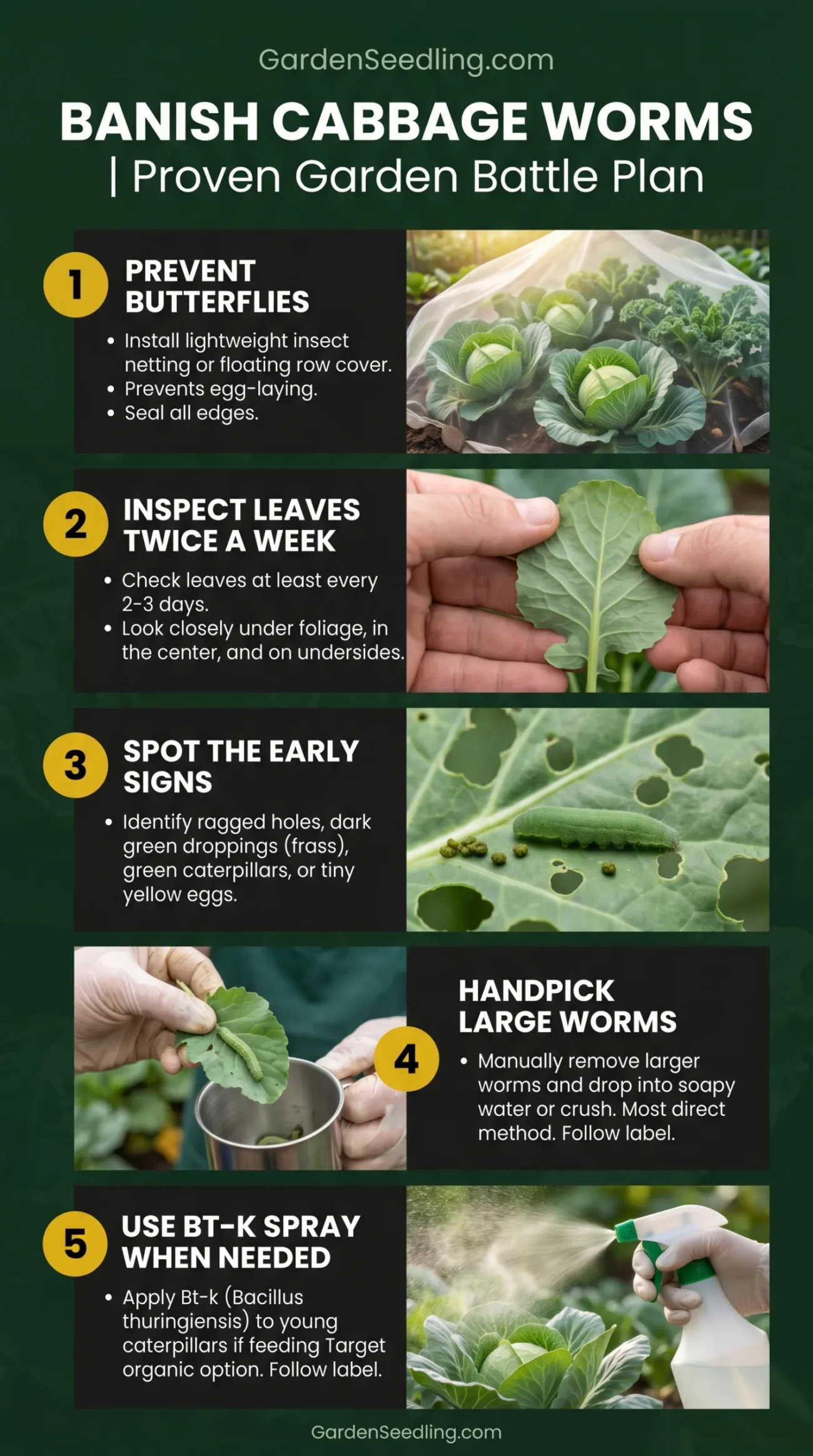
- Use Insect Netting or Floating Row Cover
- Give Plants Enough Space
- Remove Brassica Debris After Harvest
- How to Inspect Cabbage Plants Without Missing the Worms
- A Simple Twice-a-Week Check
- Handpicking: The Most Direct Backyard Method
- When Handpicking Is Enough
- Bt Spray for Cabbage Worm Control
- How to Use Bt Well
- What About Neem Oil, Spinosad, and Other Sprays?
- Control Options Compared
- Companion Planting Helps, But Do Not Overtrust It
- Natural Predators and What They Can Do
- Step-By-Step Cabbage Worm Control Plan
- Step 1: Cover Young Brassicas
- Step 2: Check Leaves Twice a Week
- Step 3: Watch the Damage Pattern
- Step 4: Use Bt on Small Worms
- Step 5: Keep Harvest Areas Clean
- Common Mistakes That Make Cabbage Worms Worse
- Waiting Too Long to Cover Plants
- Only Checking the Top of Leaves
- Spraying Without Identifying the Pest
- Using Too Much Nitrogen
- Ignoring Fall Crops
- How to Protect Cabbage Heads and Broccoli Crowns Near Harvest
- Can You Still Eat Cabbage With Worm Damage?
- Best Organic Routine for Beginners
- FAQ
- What Is the Fastest Way to Get Rid of Cabbage Worms?
- Does Row Cover Stop Cabbage Worms?
- Is Bt Safe to Use on Cabbage and Kale?
- Will Neem Oil Kill Cabbage Worms?
- How Often Should I Check My Cabbage Plants?
- Can Cabbage Worms Hide Inside Broccoli?
Cabbage worm control works best when you treat it as a routine, not a panic job. The main goal is simple: block adult butterflies from laying eggs, check leaves often, remove small caterpillars early, and use targeted organic sprays only when the plants need help. For cabbage, kale, broccoli, cauliflower, collards, Brussels sprouts, and bok choy, this small routine can prevent most of the ragged leaves and damaged heads that frustrate new gardeners.
Quick Answer
For most backyard gardens, the best cabbage worm control plan is: cover brassica crops with insect netting or floating row cover, inspect the undersides of leaves twice a week, handpick worms and eggs, and use Bt on young caterpillars when damage keeps spreading. Keep the spray focused on leafy brassicas, follow the product label, and reapply after rain if the label allows it.
Simple, but not lazy-simple. The timing matters.
What Are Cabbage Worms?
“Cabbage worm” usually refers to the green larvae of the imported cabbage white butterfly. In home gardens, people may also use the name for other leaf-eating caterpillars on brassicas, such as cabbage loopers or diamondback moth larvae. They are not the same insect, but the control steps overlap enough that a backyard gardener can manage them with the same general plan.
The classic cabbage worm is velvety green and easy to miss because it blends into leaves almost too well. It may rest along a leaf vein, curled a little, looking like a bit of plant tissue. The adult is a small white butterfly with dark markings on the wings. Pretty? Yes. Helpful on cabbage plants? Not so much.
Plants They Commonly Attack
- Cabbage: Holes in wrapper leaves and damage near the forming head.
- Kale: Ragged leaves, frass, and hidden caterpillars along the ribs.
- Broccoli: Leaf feeding plus worms hiding in crowns if plants are ignored.
- Cauliflower: Leaf damage and possible feeding near the curd.
- Collards: Large chewing holes on tender leaves.
- Bok choy and napa cabbage: Fast damage because the leaves are soft and open.
- Brussels sprouts: Feeding on leaves and sometimes around developing sprouts.
How to Spot Cabbage Worm Damage Early
Early damage often starts as small, uneven holes in outer leaves. Soon after, you may see dark green droppings, called frass, sitting on leaves or tucked near the base of the plant. That little pile of crumbs is often easier to spot than the worm itself.
Look closely, especially after a warm day. Cabbage worms feed more actively when the weather suits them, and they can turn a neat seedling into a tired-looking plant before a beginner gardener realizes what happened.
Signs to Check For
- Small round or ragged holes in leaves.
- Green caterpillars on leaf undersides or along the main vein.
- Tiny yellow eggs placed singly on leaves, often underneath.
- Dark green pellets on leaves or inside cabbage heads.
- White butterflies fluttering around brassica beds during the day.
If white butterflies keep circling your cabbage bed, assume eggs are being laid. Not every visit turns into damage, but enough do.
Why Cabbage Worms Become a Problem So Fast
Cabbage worms are not strong, scary pests. They are steady pests. That is worse in some ways. A few eggs hatch, the caterpillars start small, and because they match the leaf color, they get several days of free feeding before anyone notices.
Young brassica plants suffer most because they do not have much leaf surface to spare. A large kale plant can lose a few leaves and keep going. A young cabbage transplant with four leaves? Different story. If the growing point gets chewed, the plant may stall or form a poor head later.
Warm weather also speeds things along. In many gardens, cabbage worm pressure rises from spring into summer and may show up again on fall crops. In mild areas, the season can feel longer. In colder areas, the first hard freezes usually stop the cycle.
The Best Control Starts Before You See Worms
Prevention is the cleanest method. Once worms crawl into the tight folds of cabbage or the crown of broccoli, control gets fussier. So, start before the butterflies find the plants.
Use Insect Netting or Floating Row Cover

For organic cabbage worm control, physical barriers beat almost everything else. A lightweight insect netting or floating row cover keeps adult butterflies away from the leaves, which means fewer eggs and fewer caterpillars.
Install the cover right after transplanting or direct seeding. Seal the edges with soil, garden staples, boards, stones, or sandbags. Do not leave loose gaps at the corners. Butterflies are not clever in a cartoon way, but they are good at finding openings.
One note that saves trouble: put the cover over clean plants and clean soil. If eggs or pupae are already inside the covered bed, you may accidentally protect the pest instead of the crop. Annoying, but it happens.
Give Plants Enough Space

Crowded cabbage plants stay damp longer and become harder to inspect. Leave enough room for air to move and for your hand to reach the undersides of leaves. That sounds small. It is not.
When plants are packed tight, gardeners usually stop checking them well. Then the worms win by being inconvenient.
Remove Brassica Debris After Harvest

Old cabbage leaves, broccoli stems, and damaged kale plants can shelter pests. Pull finished plants and clean up fallen brassica leaves. Add healthy debris to compost if your compost system runs well, but toss heavily infested material if it is full of larvae.
How to Inspect Cabbage Plants Without Missing the Worms
Inspecting cabbage plants takes only a few minutes, but the way you inspect matters. Do not just look at the top of the leaves. Cabbage worms often feed underneath, along ribs, or inside new growth where the leaf folds hide them.
A Simple Twice-a-Week Check
- Start with the newest leaves near the center of the plant.
- Lift the outer leaves and check the undersides.
- Look for yellow eggs, green worms, and dark frass.
- Check nearby weeds in the mustard family if they grow around the bed.
- Remove anything suspicious before it becomes a bigger job.
During heavy butterfly activity, check every two or three days. It feels a little fussy for a week, then it saves the crop. Fair trade.
Handpicking: The Most Direct Backyard Method
Handpicking works well in small gardens because the pest is large enough to see once you slow down. Drop worms into a cup of soapy water, crush them, or remove the leaf section if that feels easier. Use gloves if the texture bothers you.
Eggs can be rubbed off with a fingertip. They are tiny, oval, and often pale yellow. Some gardeners miss them because they look like a small grain stuck to the leaf. Check the underside. Always the underside.
When Handpicking Is Enough
Handpicking may be enough when damage is light and you only have a few plants. It also works well on kale and collards because the leaves are open and easy to inspect.
It becomes less practical when cabbage heads tighten, broccoli crowns form, or a larger bed gets hit at once. At that point, pair handpicking with a targeted spray.
Bt Spray for Cabbage Worm Control
Bt, short for Bacillus thuringiensis, is one of the most useful organic options for cabbage worms. For cabbage caterpillars, gardeners usually use Bt kurstaki, often written as Bt-k. It works when young caterpillars eat treated leaves.
Bt is not a contact spray in the “hit the bug and it drops” sense. The worm must feed on the leaf after application. That is why coverage matters. Spray the tops and undersides of leaves, especially where new feeding appears.
How to Use Bt Well
- Use it early: Bt works best on small caterpillars.
- Spray leaf surfaces evenly: Do not soak the plant until it drips heavily.
- Apply in calm weather: Wind wastes spray and gives poor coverage.
- Reapply as directed: Rain and sunlight can reduce residue.
- Follow the label: The label tells you crop use, timing, and harvest guidance.
Even organic sprays deserve care. Use Bt where the worms are feeding, not as a casual mist over every plant in the yard.
What About Neem Oil, Spinosad, and Other Sprays?
Gardeners ask about neem oil a lot. Neem may help reduce feeding or disrupt some soft-bodied pests, but it is not usually the most reliable tool for active cabbage worm outbreaks. If caterpillars are chewing heavily, Bt is usually the cleaner choice for brassicas.
Spinosad can control caterpillars, but it can also harm bees and other insects if used carelessly. If you use it, spray late in the day when bees are not active, avoid flowers, and follow the product label exactly. In a small vegetable garden, save it for cases where gentler steps have not worked.
Broad-spectrum insecticides may kill caterpillars, sure, but they can also knock back beneficial insects. That tradeoff is often not worth it in a backyard food garden unless the label fits the crop and the situation truly calls for it.
Control Options Compared
| Method | Best For | Main Limit | Organic-Friendly? |
|---|---|---|---|
| Insect Netting or Row Cover | Preventing eggs before damage starts | Edges must stay sealed | Yes |
| Handpicking | Small gardens and light infestations | Easy to miss tiny worms | Yes |
| Bt-k Spray | Young caterpillars on leafy brassicas | Needs good coverage and repeat timing | Often accepted in organic gardening |
| Spinosad | Heavier caterpillar pressure when other steps fail | Can affect bees if misused | Some products are organic-listed |
| Companion Planting | Adding plant diversity around the bed | Does not stop worms by itself | Yes |
Companion Planting Helps, But Do Not Overtrust It
Herbs and flowers can make a vegetable bed more active with beneficial insects. Dill, cilantro, alyssum, calendula, and yarrow may attract small wasps, flies, and other natural helpers. A mixed garden also tends to be less of a plain green buffet than a single block of cabbage.
Still, companion planting will not reliably stop cabbage worms on its own. Treat it as support. Nice support, but support.
If you want a simple setup, plant brassicas under insect netting and grow flowers outside the covered bed. That way the vegetables stay protected, while the rest of the garden still feeds pollinators and beneficial insects.
Natural Predators and What They Can Do
Birds, paper wasps, predatory insects, and parasitic wasps may feed on cabbage worms or use them as hosts. You may see a cabbage worm with small white cocoons attached nearby or on its body. Leave those alone when you can; they often mean a beneficial wasp has already done part of the work.
A tidy-but-not-sterile garden helps. Avoid spraying broad insecticides “just because,” and keep some small flowers blooming nearby. Beneficial insects need food sources too, not only pests.
Step-By-Step Cabbage Worm Control Plan
Here is a practical routine for a backyard vegetable garden. It does not require fancy equipment. Mostly, it asks you to be early.
Step 1: Cover Young Brassicas

After planting cabbage family crops, cover them with insect netting or floating row cover. Keep the fabric lifted with hoops if possible, so leaves do not press hard against the cover. If the cover sits directly on the leaves, butterflies may still lay eggs through some mesh types if the leaf touches the fabric.
Step 2: Check Leaves Twice a Week

Lift the cover and inspect the plants. Check the leaf undersides, new growth, and inner leaves. If you see eggs, rub them off. If you see worms, remove them.
Step 3: Watch the Damage Pattern

A few old holes do not always mean an active problem. Fresh holes, new frass, and live caterpillars mean the feeding is still happening. That is when you act.
Step 4: Use Bt on Small Worms

If handpicking cannot keep up, apply Bt-k to the leaves according to the label. Focus on plants with damage. Spray in calm weather, and cover the leaf surfaces where caterpillars feed.
Step 5: Keep Harvest Areas Clean

For broccoli and cabbage, check heads and crowns as harvest nears. Rinse harvested vegetables well. Soaking heads in cool salted water for a short time can help loosen hidden worms, though it should not replace garden control before harvest.
Common Mistakes That Make Cabbage Worms Worse
Most cabbage worm problems get out of hand because of timing. The gardener waits until the leaves look bad, then tries to fix a full infestation in one afternoon. Possible, but harder.
Waiting Too Long to Cover Plants
Row cover works best before eggs are laid. If you install it after butterflies have already visited for days, inspect first. Covering pests inside the bed is a very ordinary mistake.
Only Checking the Top of Leaves
The top of the leaf tells part of the story. The underside tells the rest. Eggs, tiny worms, and frass often hide there, especially on kale, collards, and cabbage seedlings.
Spraying Without Identifying the Pest
Not every hole comes from cabbage worms. Slugs, flea beetles, grasshoppers, and other pests chew leaves too. Bt works on caterpillars when they eat it, but it will not solve every chewing problem in the garden.
Using Too Much Nitrogen
Heavy nitrogen can push lots of tender leafy growth. Tender growth is attractive to many pests, and floppy crowded plants are harder to inspect. Feed brassicas well, yes, but avoid turning the bed into a soft leaf factory.
Ignoring Fall Crops
Fall cabbage, kale, and broccoli often get hit because gardeners think pest season is over. In many areas, cabbage white butterflies stay active well into the cool-season planting window. Cover fall crops too.
How to Protect Cabbage Heads and Broccoli Crowns Near Harvest
As cabbage heads tighten and broccoli crowns form, cabbage worms become more irritating because they can hide in small spaces. This is when earlier control pays off. If the plant stayed mostly clean while young, harvest is much easier.
For cabbage, peel back damaged outer leaves and check the head before cutting. For broccoli, inspect the crown and side shoots. If worms are present, harvest promptly and rinse well. Waiting longer rarely improves the situation.
Do not spray anything right before harvest unless the product label allows that timing for that crop. Labels are not decoration; they are the rule sheet.
Can You Still Eat Cabbage With Worm Damage?
Usually, yes, if the edible part is still sound. Remove damaged leaves, wash the crop well, and inspect folds, crowns, and inner leaves. The holes look ugly, but light chewing on outer leaves does not automatically ruin a cabbage, kale bunch, or broccoli head.
Skip plant parts that are slimy, rotting, badly contaminated with frass, or unpleasantly damaged. Backyard gardening allows some imperfect leaves. It does not require eating anything that feels questionable.
Best Organic Routine for Beginners
For a beginner-friendly plan, keep it almost boring:
- Cover brassicas right after planting.
- Inspect leaves twice a week.
- Remove eggs and worms by hand.
- Use Bt-k when young caterpillars keep appearing.
- Clean up old brassica leaves after harvest.
That routine handles most backyard cabbage worm pressure without turning gardening into pest-control theater. And honestly, that is the point. Grow the vegetables, not the problem.
FAQ
What Is the Fastest Way to Get Rid of Cabbage Worms?
Handpick visible worms first, then use Bt-k on young caterpillars if feeding continues. Check leaf undersides so you remove eggs before they hatch.
Does Row Cover Stop Cabbage Worms?
Yes, row cover or insect netting can stop adult butterflies from laying eggs on brassicas, but the edges must stay sealed. Install it before pests arrive.
Is Bt Safe to Use on Cabbage and Kale?
Bt-k is commonly used for caterpillar control on cabbage family crops. Always use a product labeled for your crop and follow the label for timing, mixing, and harvest instructions.
Will Neem Oil Kill Cabbage Worms?
Neem oil may reduce some feeding, but it is not the most dependable choice for active cabbage worm problems. Bt-k usually works better on young caterpillars.
How Often Should I Check My Cabbage Plants?
Check plants at least twice a week during butterfly activity. In warm weather or during a known outbreak, inspect every two or three days.
Can Cabbage Worms Hide Inside Broccoli?
Yes. They can hide in broccoli crowns and side shoots, especially near harvest. Inspect plants before cutting and rinse harvested broccoli well.
Cabbage worm control does not need to be complicated. Cover early, look under the leaves, remove what you find, and use Bt only when the chewing keeps moving. Small habits, done on time, protect a lot of cabbage.