
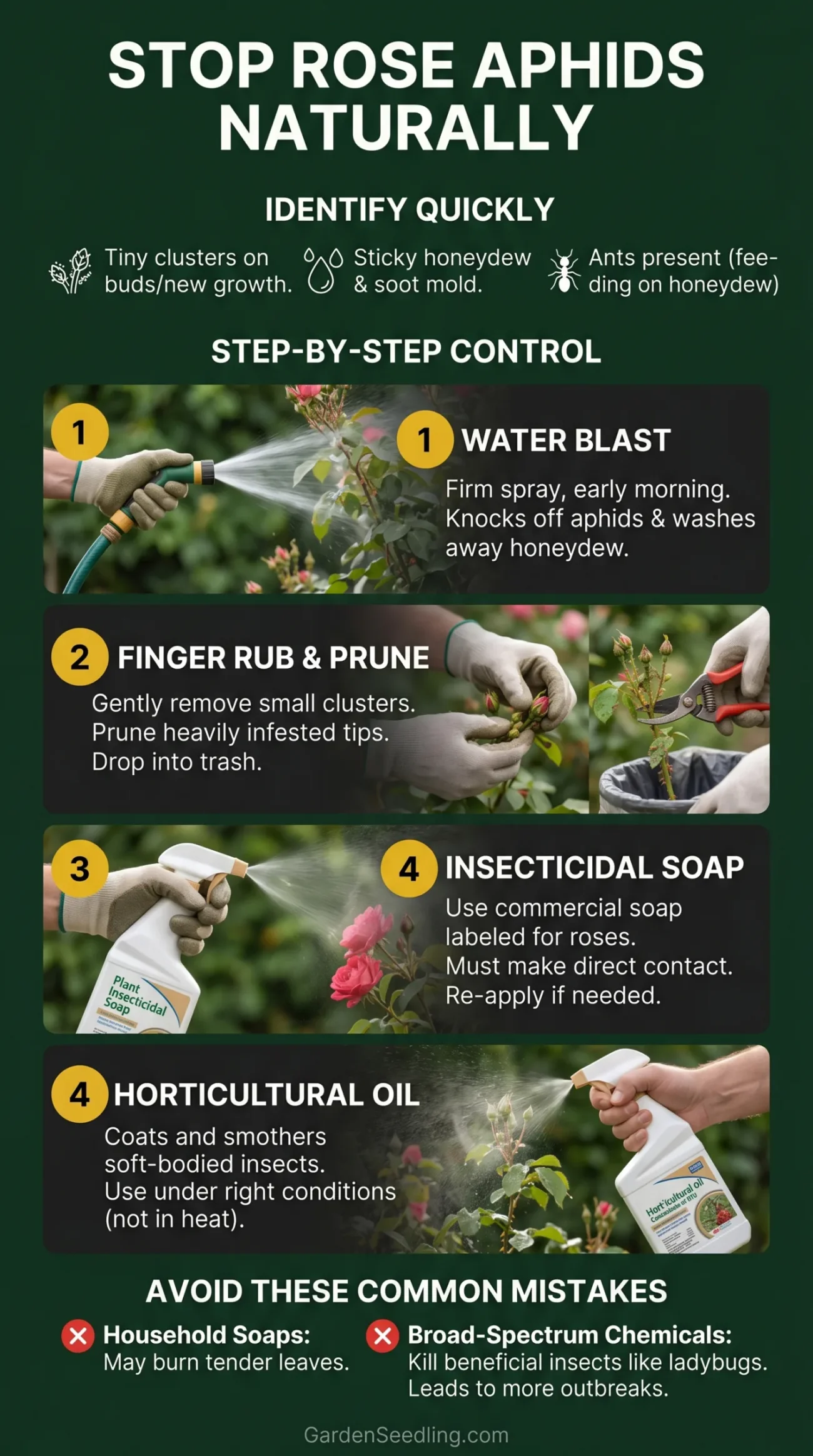
Aphids usually show up on roses right when the plant is making its softest growth: tender stems, fresh leaves, and flower buds that have not opened yet. That is why a rose can look fine one week and sticky, curled, and crowded with tiny insects the next. The good news is simple: you can get rid of aphids on roses without harsh chemicals by using water, hand removal, pruning, insecticidal soap, horticultural oil, and better garden habits that help lady beetles, lacewings, hoverflies, and tiny parasitic wasps do their work.
- Quick Answer: The Best Way to Remove Aphids from Roses Naturally
- How to Identify Aphids on Roses
- Why Aphids Keep Attacking Rose Bushes
- Step-by-Step: How to Get Rid of Aphids on Roses Without Harsh Chemicals
- Step 1: Inspect the New Growth First
- Step 2: Spray Aphids Off with Water
- Step 3: Remove Small Colonies by Hand
- Step 4: Use Insecticidal Soap When Water Is Not Enough
- Step 5: Try Horticultural Oil for Stubborn Aphids
- Step 6: Control Ants Around the Rose
- What Not to Use on Aphids on Roses
- How to Prevent Aphids from Coming Back
- Feed Roses Without Pushing Soft Growth Too Hard
- Water Deeply and Keep the Rose from Stressing
- Invite Beneficial Insects
- Watch the Buds Twice a Week in Spring
- Common Mistakes When Treating Aphids on Roses
- Spraying Only the Top of the Plant
- Using Too Much Homemade Soap
- Spraying in Hot Sun
- Killing the Helpful Insects
- Expecting One Treatment to Fix Everything
- A Simple Weekly Aphid Routine for Rose Care
- FAQ About Getting Rid of Aphids on Roses
- Will Aphids Kill My Rose Bush?
- Can I Spray Aphids Off Roses with Just Water?
- Is Insecticidal Soap Safe for Roses?
- Should I Use Neem Oil on Aphids on Roses?
- Why Are Ants on My Rose Bush with Aphids?
- How Often Should I Treat Aphids on Roses?
The trick is not to panic. A few aphids on a strong rose bush rarely mean disaster. A heavy cluster on new buds, though, should be handled early. Aphids multiply fast, especially in mild spring weather, and they like roses that are pushing lush new growth. So, yes, act. But act gently.
Quick Answer: The Best Way to Remove Aphids from Roses Naturally
For most home gardens, the safest first step is to spray aphids off rose stems and buds with a firm stream of water in the morning. Then check the plant again after a day or two. If aphids return in thick clusters, use a ready-to-use insecticidal soap labeled for roses and aphids, spraying the insects directly, especially under leaves and around buds.
Do not start with strong, long-lasting insecticides. They can kill the insects that help control aphids later. Worse, they may leave the rose with fewer natural defenders.
- Light aphid problem: spray with water and monitor.
- Medium aphid problem: spray with water, pinch off crowded tips, and encourage beneficial insects.
- Heavy aphid problem: use commercial insecticidal soap or horticultural oil, following the label.
- Recurring spring problem: adjust fertilizing, reduce tender overgrowth, and inspect buds twice a week.
How to Identify Aphids on Roses
Aphids are small, soft-bodied insects that gather in groups. On roses, they often sit on unopened buds, tender shoot tips, flower stems, and the underside of young leaves. They may be green, pink, yellowish, brown, gray, or almost black, depending on the species and stage.
They are not hard to spot once you know where to look.
- Clusters on buds: small insects packed around new flower buds or tender stems.
- Sticky leaves: a sugary waste called honeydew may coat leaves, stems, or nearby surfaces.
- Ant activity: ants may visit aphid colonies because they feed on honeydew.
- Curled or distorted growth: new leaves may curl, wrinkle, or look cramped.
- Sooty mold: black surface mold may grow on honeydew when the problem sits too long.
One small detail helps: aphids are slow. If the insect jumps away quickly, it may be something else. Aphids usually sit there feeding, almost like tiny green sesame seeds stuck to the rose.
Why Aphids Keep Attacking Rose Bushes
Roses produce exactly the kind of growth aphids like: soft, juicy, new tissue. Spring flushes, recently pruned stems, and nitrogen-heavy fertilizing can all lead to tender growth that attracts aphids. A rose that pushes lots of new tips is basically putting out a buffet.
That does not mean you should stop feeding roses. It means you should avoid pushing them too hard. Too much fast-release nitrogen can create lush, weak growth that aphids find easy to pierce. Steady growth is better.

Weather matters too. Aphids often build up during mild weather, especially when rain is light. A good rain can knock many aphids off plants. In a dry spring, that natural rinse may not happen, so gardeners notice the problem more.
Step-by-Step: How to Get Rid of Aphids on Roses Without Harsh Chemicals
Step 1: Inspect the New Growth First

Start with the softest parts of the rose. Look at flower buds, the top 4 to 8 inches of new stems, and the underside of young leaves. Do this slowly. Aphids tuck into tight spaces around buds, and they can hide where a leaf stem meets the cane.
If you see only a few, leave them for a day or remove them by hand. A garden does not need to be insect-free to be healthy. Actually, a few aphids help attract the predators that keep later outbreaks under control.
Step 2: Spray Aphids Off with Water

A strong spray of plain water is the easiest non-chemical aphid control for roses. Use a hose nozzle set to a firm spray, not a pressure-washer blast. Aim at the clusters and knock them off the plant.
Morning is best. The rose dries faster, and dry leaves are less friendly to fungal problems. Try to avoid soaking the plant late in the evening, especially if your garden already struggles with black spot or powdery mildew.
Focus on:
- Unopened buds
- New shoot tips
- Leaf undersides
- Stems with sticky honeydew
- Areas where ants are active
Most aphids that get knocked off roses do not climb back easily. This method also washes away honeydew, which helps reduce ants and sooty mold. Simple. Very useful.
Step 3: Remove Small Colonies by Hand

For a small outbreak, physical removal works well. Wear garden gloves and gently rub aphids off buds and stems with your fingers. You can also dip a soft cloth in plain water and wipe the affected stems.
It feels a bit old-school, but it works. On a prized rose with only a few infested buds, hand removal is often faster than mixing, spraying, cleaning, and worrying about plant damage.
If a shoot tip is badly curled, sticky, and packed with aphids, prune just that tip off. Drop it into the trash, not the compost pile. Do not over-prune the rose just because aphids are present. Remove only the worst bits.
Step 4: Use Insecticidal Soap When Water Is Not Enough

If aphids keep returning in thick groups, use a commercial insecticidal soap labeled for aphids and roses. This is different from dish soap. Insecticidal soap products are made for plants and have label directions for safe use.
Spray the aphids directly. The soap must touch the insects to work, so a light mist over the top of the rose will not do much. Lift leaves, turn the nozzle toward the underside, and cover the stems where aphids are feeding.
- Spray timing: early morning or evening, not during hot midday sun.
- Coverage: direct contact matters more than heavy dripping.
- Repeat use: one spray may not catch new aphids that appear later.
- Plant safety: test a small area first if the rose is stressed or the product is new to you.
Avoid spraying open blooms if bees are visiting. Even lower-risk sprays can harm beneficial insects when sprayed directly on them. Aim for the aphids, not the whole garden.
Step 5: Try Horticultural Oil for Stubborn Aphids

Horticultural oil can help with tougher aphid problems because it coats and smothers soft-bodied insects. It works best when coverage is thorough. As with insecticidal soap, it does not act like a long-lasting shield; it mainly affects the insects that are present when you spray.
Use a product labeled for ornamental plants, roses, and aphids. Follow the mixing rate exactly if it is a concentrate. More is not better here. Too much oil, or oil applied during heat, can burn leaves.
Do not spray horticultural oil when the rose is drought-stressed, newly transplanted, or sitting in hot sun. A stressed rose reacts badly to sprays that a healthy rose might handle just fine. Wait, water properly, and spray under cooler conditions.
Step 6: Control Ants Around the Rose

Ants do not cause aphids, but they can make the problem linger. They feed on honeydew and may protect aphids from predators. If ants are constantly running up and down rose canes, aphid control gets harder.
Start by washing off honeydew with water. Then reduce ant access where practical. For potted roses, move the pot away from walls, fences, or other “ant highways.” For roses planted in the ground, check for nearby ant trails and avoid leaving sugary spills, fruit scraps, or sticky plant debris near the bed.
Do not spray the whole rose bed with harsh ant killer. That can create a bigger garden balance problem than the aphids themselves.
What Not to Use on Aphids on Roses
Some popular aphid remedies sound harmless but can damage roses or create uneven results. Roses have tender new leaves, and homemade sprays can burn them, especially in sun or heat.
| Method | Use It? | Why It Matters |
|---|---|---|
| Plain Water Spray | Yes | Knocks aphids off roses and washes away sticky honeydew. |
| Hand Removal | Yes | Works well for small clusters on buds and tender stems. |
| Commercial Insecticidal Soap | Yes, When Needed | Useful for direct contact control when water is not enough. |
| Commercial Horticultural Oil | Yes, With Care | Can smother aphids but must be used under the right conditions. |
| Dish Soap Mixes | Use Caution | Household soaps are not made for plants and may burn rose leaves. |
| Garlic, Pepper, or Vinegar Sprays | Avoid | These can irritate leaves and do not give reliable aphid control. |
| Broad-Spectrum Insecticides | Avoid for Routine Use | They may kill beneficial insects and lead to repeat pest flare-ups. |
One more thing: never use tobacco-water sprays. They are unsafe to handle and do not belong in a home rose garden.
How to Prevent Aphids from Coming Back
Prevention does not mean aphids will never appear again. They probably will. Prevention means the rose recovers faster, predators show up sooner, and outbreaks stay small enough to manage with water and pruning.
Feed Roses Without Pushing Soft Growth Too Hard
Use a balanced rose fertilizer or organic feeding plan based on your soil and plant needs. Avoid dumping high-nitrogen fertilizer on roses just to force rapid growth. That soft, bright new growth may look nice for a week, then aphids find it.
Slow and steady growth makes a stronger plant. Not flashy, just better.
Water Deeply and Keep the Rose from Stressing
A stressed rose handles pests poorly. Water at the soil level, not over the leaves, and water deeply enough to reach the root zone. Mulch helps keep soil moisture more even, especially during warm spells.
Keep mulch a few inches away from the crown and canes. Piled-up mulch can hold moisture where you do not want it.
Invite Beneficial Insects
Lady beetles, lacewing larvae, hoverfly larvae, and tiny parasitic wasps feed on aphids. To support them, plant small-flowered herbs and flowers near the rose bed. Good options include dill, fennel, alyssum, yarrow, cilantro, parsley, cosmos, and calendula.
Do not make the bed too tidy. A few nearby flowering plants, a little diversity, and fewer harsh sprays help the garden’s own pest control show up. It takes patience, yes. But it pays off.
Watch the Buds Twice a Week in Spring
Aphid control is easier when you catch the first clusters. Check roses twice a week during spring and early summer, especially after warm, mild weather. Look closely at buds before they open.
If you catch aphids early, a 30-second water spray may solve the problem. Wait two weeks, and you may need soap, pruning, and several follow-up checks.
Common Mistakes When Treating Aphids on Roses
Spraying Only the Top of the Plant
Aphids hide under leaves and around tight buds. If you spray only the visible top growth, many survive. Turn stems gently and spray where the insects actually sit.
Using Too Much Homemade Soap
A strong soap mix can damage rose leaves. Dish soap, degreasers, and scented household products are especially risky. If you want a soap treatment, choose a plant-labeled insecticidal soap and follow the label.
Spraying in Hot Sun
Heat raises the risk of leaf burn, especially with soaps and oils. Spray early or late, and avoid treating drought-stressed roses. If the day is hot, skip it.
Killing the Helpful Insects
It is easy to mistake beneficial larvae for pests. Lady beetle larvae look a bit like tiny dark alligators. Lacewing larvae are small, active hunters. Hoverfly larvae look like little soft-bodied grubs. Odd-looking, but useful.
Before spraying, look for predators. If they are already working and the aphid problem is light, give them a chance.
Expecting One Treatment to Fix Everything
Aphids can reproduce quickly. One rinse or one soap spray may not catch every insect. Check again in 24 to 48 hours, then repeat only if needed. That follow-up check is where the real control happens.
A Simple Weekly Aphid Routine for Rose Care
Here is a practical routine that works for most backyard roses during aphid season:
- Monday or Tuesday: inspect buds, shoot tips, and leaf undersides.
- If aphids are light: spray with water and leave predators alone.
- If aphids are heavy: remove crowded tips and use insecticidal soap in cool conditions.
- After 2 days: check the same stems again.
- Once a week: rinse dusty leaves and watch for ants or sticky honeydew.
This routine is small, but it keeps the problem from getting ahead of you. Roses respond well to steady attention. Not constant fussing—steady attention.
FAQ About Getting Rid of Aphids on Roses
Will Aphids Kill My Rose Bush?
Aphids usually do not kill a healthy, established rose bush. Heavy infestations can distort new growth, weaken buds, and leave sticky honeydew, so it is still worth managing them early.
Can I Spray Aphids Off Roses with Just Water?
Yes. A firm stream of water is often enough for light to medium aphid problems. Spray in the morning and focus on buds, new stems, and leaf undersides.
Is Insecticidal Soap Safe for Roses?
Commercial insecticidal soap can be safe for roses when used according to the label. Avoid spraying during heat, drought stress, or direct sun, and test a small area first if you are unsure.
Should I Use Neem Oil on Aphids on Roses?
Neem-based products may help, but they work more slowly than direct water removal or insecticidal soap. Use only labeled products, avoid open blooms when pollinators are active, and follow the directions closely.
Why Are Ants on My Rose Bush with Aphids?
Ants feed on the sticky honeydew that aphids produce. They may also protect aphids from natural predators, so washing off honeydew and reducing ant trails can help aphid control.
How Often Should I Treat Aphids on Roses?
Check roses every few days during an outbreak. Repeat water sprays or insecticidal soap only when aphids are still present, and always follow the product label for timing.
Aphids on roses are annoying, but they are manageable. Start with water, use hand removal where it makes sense, save insecticidal soap or horticultural oil for heavier clusters, and keep the rose growing steadily rather than too soft and lush. A calm routine usually beats a harsh spray.