
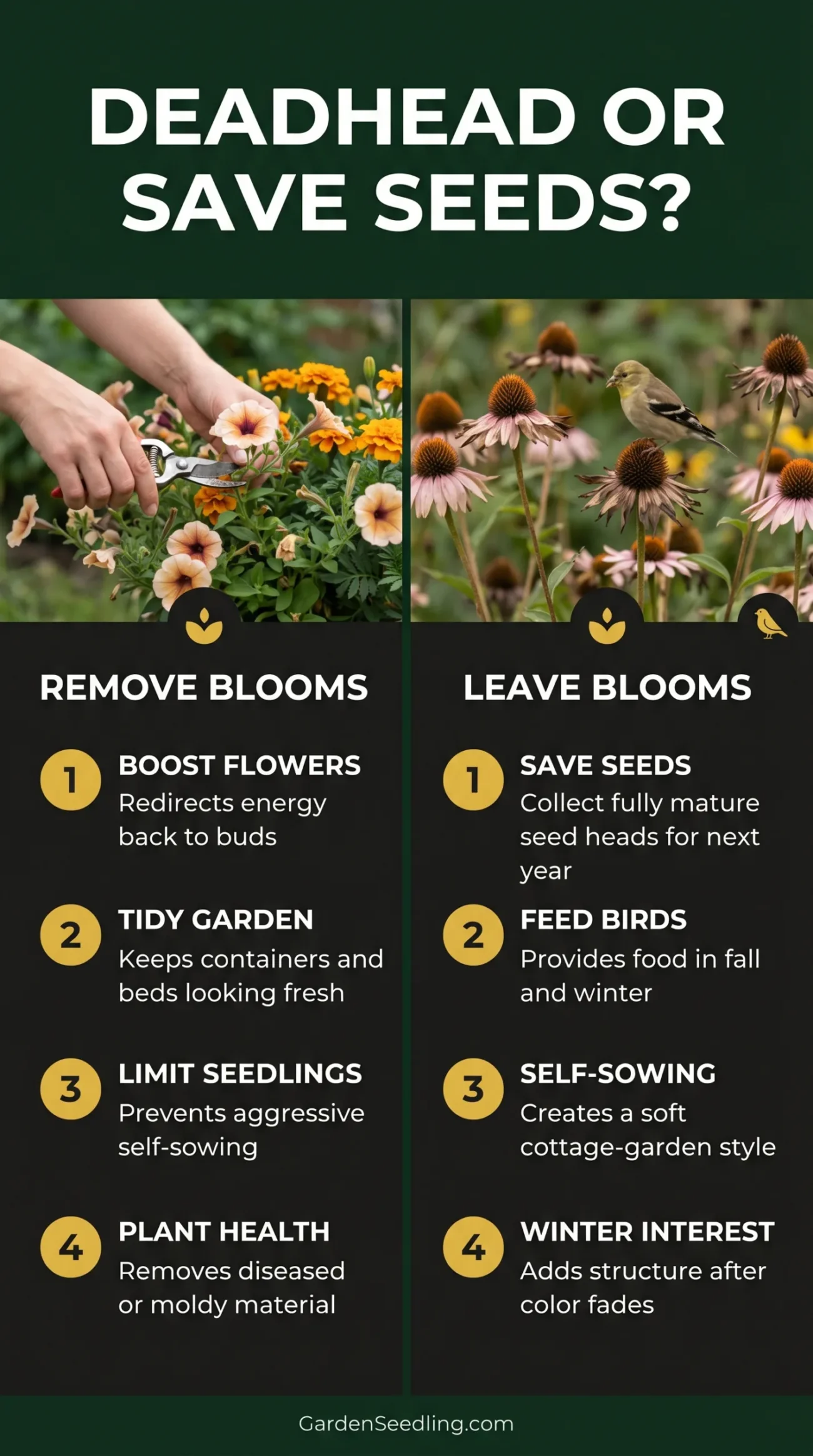
Some faded flowers are not “finished” at all. They are right on the edge of becoming seeds, bird food, or next year’s surprise seedlings. That is why the answer to should you remove spent blooms or leave them for seeds depends on what you want from the plant: more flowers now, cleaner beds, saved seed, wildlife value, or a looser cottage-garden look.
- Quick Answer
- What Happens When a Flower Fades?
- When You Should Remove Spent Blooms
- Deadhead for More Flowers
- Deadhead to Keep Containers Clean
- Deadhead to Reduce Unwanted Seedlings
- Deadhead for Plant Health and Sanitation
- When You Should Leave Spent Blooms for Seeds
- Leave Blooms If You Want to Save Seeds
- Leave Seed Heads for Birds and Wildlife
- Leave Blooms for Self-Sowing
- Deadheading vs Leaving Seeds: A Simple Garden Decision Table
- A Balanced Method That Works in Most Gardens
- Step 1: Deadhead Early and Midseason
- Step 2: Watch Which Plants Are Worth Keeping for Seed
- Step 3: Stop Deadheading Selected Plants in Late Season
- Step 4: Collect Seeds on a Dry Day
- Flowers You Usually Should Deadhead
- Flowers You Can Often Leave for Seed Heads
- Common Mistakes to Avoid
- Removing Only the Petals
- Saving Seeds from the Wrong Plants
- Leaving Diseased Blooms for Wildlife
- Cutting Too Low Too Often
- Practical Tips for Beginners
- So, Should You Remove Spent Blooms or Leave Them?
- FAQ
- Does Deadheading Always Make Flowers Bloom Again?
- When Should I Stop Deadheading Flowers?
- Can I Leave All Spent Blooms for Seeds?
- Are Seeds from Store-Bought Flowers Worth Saving?
- Should I Deadhead Native Flowers?
- What Is the Best Tool for Removing Spent Blooms?
For most bedding flowers and many repeat-blooming plants, removing spent blooms helps the plant keep flowering instead of using energy on seed. For seed saving, natural reseeding, winter texture, or bird-friendly gardening, leaving some spent flowers in place makes more sense. The best approach is often mixed: deadhead through the main bloom season, then leave selected healthy seed heads near the end of summer or fall.
Quick Answer
Remove spent blooms when you want more flowers, a tidier plant, fewer unwanted seedlings, or better garden sanitation. Leave spent blooms when you want seeds, self-sown flowers, food for birds, or decorative seed heads in fall and winter.
There is no single rule for every flower. A petunia in a hanging basket, a coneflower in a native border, and a zinnia grown for seed all need slightly different handling. Same garden, different goal.
What Happens When a Flower Fades?
Once a flower is pollinated and begins to fade, the plant may start forming seed. That seed work takes energy. On some plants, this slows new flower production. On others, it barely matters, especially if the plant has a short bloom window or produces showy seed heads worth keeping.
Deadheading means removing the old flower before it fully turns into seed. Usually, that means pinching or cutting the bloom and its short stem back to a healthy leaf, bud, or branch point. Done well, it makes the plant look cleaner and can nudge many annuals and repeat-blooming perennials to keep going.
Leaving blooms in place does the opposite. The plant finishes the seed cycle. That can give you collectable seeds, natural reseeding, and food for birds later in the season. It can also create a messy look or a small army of seedlings where you did not ask for them. Gardening has a sense of humor that way.
When You Should Remove Spent Blooms
Deadheading is useful when the plant’s job is to keep blooming. This is especially true for many annual flowers grown in containers, borders, window boxes, and cutting gardens. If the plant is still healthy and the season has weeks left, removing old blooms often helps it push fresh buds.
Deadhead for More Flowers

Many annuals slow down once seed production takes over. Cutting faded blooms tells the plant, in a practical sense, “not done yet.” It will not turn a weak, stressed plant into a flower machine, but it does help many plants spend more energy on new growth and buds.
Plants that often benefit from regular deadheading include:
- Marigolds: Remove dry flower heads to keep plants neat and blooming.
- Zinnias: Cut faded blooms back to a leaf pair or side shoot.
- Cosmos: Deadheading helps extend bloom and keeps stems from looking tired.
- Petunias: Remove the flower and the small seed-forming base behind it, not just the limp petals.
- Geraniums: Snap or cut off the whole faded flower cluster stem.
- Calendula: Remove old heads often if you do not want heavy self-seeding.
With repeat-blooming perennials, the result can vary. Some rebloom strongly after deadheading. Others give only a smaller second flush. Still worth doing, if the plant looks ragged.
Deadhead to Keep Containers Clean
Hanging baskets and patio pots show every messy flower. Spent blooms also collect moisture in tight spaces, especially after rain or overhead watering. That soggy, brown material can make a container look worn out even when the plant underneath is still healthy.
For containers, deadhead little and often. It is easier to pinch off five fading blooms today than to rescue a sticky, tangled plant three weeks later.
Deadhead to Reduce Unwanted Seedlings
Some flowers self-sow politely. Others behave like they own the whole bed.
Deadhead plants before seeds mature if you do not want them spreading. This matters most with flowers that drop lots of seed, such as calendula, bachelor’s buttons, some poppies, larkspur, cleome, columbine, nigella, and certain ornamental grasses. In the right place, self-sowing is charming. In a small raised bed, not always.
Deadhead for Plant Health and Sanitation
Remove spent blooms that look slimy, moldy, diseased, or pest-damaged. Do not save seed from unhealthy flower heads. That is a bad bargain.
If you see gray mold, blackened petals, mildew on nearby leaves, or flowers rotting against dense foliage, cut the old blooms off and throw them away. Do not compost diseased material unless your compost pile gets hot enough to break it down safely. Most home piles are uneven, so the safer move is disposal.
When You Should Leave Spent Blooms for Seeds
Leaving spent blooms makes sense when the seed head has a purpose. That purpose may be seed saving, wildlife, winter beauty, or a looser garden style where plants shift around a little each year.
Leave Blooms If You Want to Save Seeds
To save flower seeds, let the bloom stay on the plant until the seed head matures. The exact look depends on the plant, but most seed heads turn dry, brown, papery, or brittle when ready. If you collect too early, the seed may not be mature enough to sprout well.
Choose healthy plants first. Then choose strong blooms. Seed saving works best when you collect from plants that showed the traits you want: good flower color, sturdy stems, strong growth, disease resistance, or better heat tolerance in your yard.
One catch: seeds from hybrid or F1 flowers may not grow into plants that look like the parent. They may vary in color, size, vigor, or flower form. Open-pollinated and heirloom varieties are better choices when you want predictable seed saving.
Leave Seed Heads for Birds and Wildlife
Seed heads can feed birds during late fall and winter, especially when natural food gets harder to find. Coneflowers, black-eyed Susans, sunflowers, cosmos, coreopsis, sedum, alliums, globe thistle, and ornamental grasses can all bring life to a quiet garden.
It is a small thing. It helps.
Leaving stems standing also gives the garden structure after flowers fade. A brown coneflower head dusted with frost is not the same as a fresh bloom, of course, but it has its own plain, useful beauty. For wildlife-friendly gardens, that late-season messiness is not neglect. It is habitat.
Leave Blooms for Self-Sowing
If you like a soft, natural look, let some annuals and biennials drop seed where they grow. This works well with plants that reseed without becoming too hard to manage in your area.
Good candidates may include:
- Calendula: Easy to grow and often generous with seedlings.
- Nigella: Produces decorative pods and light, airy seedlings.
- Cleome: Can self-sow in warm areas, sometimes more than expected.
- California poppy: Useful in dry, sunny spots with lean soil.
- Columbine: Often reseeds, though seedlings may vary in color.
- Bachelor’s buttons: Simple, easy flowers that can return from dropped seed.
Self-sowing is not always predictable. Mulch depth, winter cold, soil disturbance, birds, and spring moisture all affect how many seedlings appear. Leave seed heads where you can tolerate a few surprises.
Deadheading vs Leaving Seeds: A Simple Garden Decision Table
| Garden Goal | Best Choice | Why It Helps |
|---|---|---|
| More blooms this season | Remove spent blooms | Many plants shift energy away from seed production and back toward buds. |
| Seed saving | Leave selected blooms | Seeds need time to mature fully on the plant. |
| Cleaner containers | Remove spent blooms | Old flowers can make pots look tired and may hold moisture. |
| Bird-friendly garden | Leave seed heads | Many dried flower heads provide seed for birds in colder months. |
| Fewer unwanted seedlings | Remove spent blooms early | Deadheading before seed drop limits self-sowing. |
| Winter interest | Leave sturdy seed heads | Dried stems and seed heads add shape when the garden is quiet. |
A Balanced Method That Works in Most Gardens
The easiest method is not all-or-nothing. Deadhead during the main bloom season, then stop deadheading some plants later so seeds can form. This gives you flowers when you want color, then seeds when the garden naturally slows down.
Step 1: Deadhead Early and Midseason

In spring and early summer, remove faded flowers from repeat bloomers. This keeps annuals and many perennials looking fresh. Cut back to a leaf node, side shoot, or healthy set of leaves. Avoid leaving little bare sticks everywhere; they dry out and look odd.
Step 2: Watch Which Plants Are Worth Keeping for Seed

By midsummer, pay attention to the strongest plants. Which zinnia stayed upright? Which cosmos handled heat? Which coneflower drew bees and then held a firm seed head? Those are the plants to consider leaving for seed.
Do not save from weak or diseased plants just because the seeds are there. Easy mistake.
Step 3: Stop Deadheading Selected Plants in Late Season

As frost gets closer, stop deadheading some flowers. Let seed heads dry naturally. You can still remove ugly, diseased, or collapsed stems, but leave the sturdy ones standing.
For a tidy compromise, leave seed heads at the back of the bed and deadhead the front edge. The garden still looks cared for, just not scrubbed clean.
Step 4: Collect Seeds on a Dry Day

When seed heads are dry, collect them in paper bags or envelopes. Label them right away with the plant name, color, and year. Do this before walking away. Memory is not a seed-storage system.
Let seeds dry a bit more indoors if needed, then store them in a cool, dry place. Avoid plastic bags if seeds still hold moisture, because trapped moisture can lead to mold.
Flowers You Usually Should Deadhead
These flowers often look and perform better when faded blooms are removed often:
- Petunias: Deadhead or trim back leggy stems to refresh growth.
- Marigolds: Remove spent heads to keep plants compact and colorful.
- Zinnias: Cut old blooms to encourage more stems and flowers.
- Geraniums: Remove the full flower stalk after the cluster fades.
- Salvia: Shear or cut spent spikes for a cleaner second flush.
- Dahlias: Deadhead to keep new buds coming until frost.
With these, leaving every spent flower for seed can shorten the show or make the plant look tired too soon. Leave a few late-season blooms if you want seed, but keep deadheading while the plant is still actively producing.
Flowers You Can Often Leave for Seed Heads
Some flowers earn their keep after bloom. Their seed heads feed birds, look good in fall, or self-sow in a pleasant way.
- Coneflower: Leave some cones for finches and winter texture.
- Black-eyed Susan: Seed heads can stand well into colder weather.
- Sunflower: Let heads mature if you want seeds for birds or saving.
- Allium: Round seed heads add shape after flowers fade.
- Nigella: Seed pods are decorative and useful for seed saving.
- Ornamental grasses: Plumes and seed heads give movement and cover.
There is a caution here: some plants self-sow heavily in certain climates. A flower that behaves nicely in one garden may spread too freely in another. Local conditions matter more than a label on a seed packet.
Common Mistakes to Avoid
Removing Only the Petals
On many flowers, the seed starts forming behind the petals. If you pull off only the faded petals, the plant may still produce seed. Cut or pinch off the whole spent flower head, including the swollen base, unless the plant needs a different method.
Saving Seeds from the Wrong Plants
Hybrid flowers can produce unpredictable seedlings. That does not make them bad plants. It just means they are not ideal for seed saving if you want the same flower next year.
For more reliable results, save seeds from open-pollinated varieties and keep notes. Simple notes. Plant name, color, where it grew, and whether it did well.
Leaving Diseased Blooms for Wildlife
Do not leave diseased flower heads standing just because seed heads can help birds. Healthy seed heads are useful. Moldy, pest-heavy, or rotting material can create problems around the plant.
Cutting Too Low Too Often
Deadheading should not remove half the plant unless you are intentionally shearing it back. For normal deadheading, cut just above a healthy leaf, bud, or branching point. Small cuts, done often, usually work better than harsh cuts done late.
Practical Tips for Beginners
If you are new to deadheading, start with one bed or a few containers. Notice which plants bloom again after cutting and which ones do not seem to care. The garden will teach you faster than a long plant list.
- Use clean scissors or pruners for thicker stems, especially on dahlias, coneflowers, and salvia.
- Pinch soft stems on small annuals when the stem breaks cleanly.
- Deadhead after rain once plants dry, not while petals are wet and sticky.
- Leave the best seed heads, not every seed head.
- Mark seed-saving plants with a small tag so they do not get cut by accident.
- Check local behavior before letting aggressive self-sowers drop seed everywhere.
A neat trick: use two passes. First, remove ugly or diseased blooms. Then decide which healthy seed heads to keep. That slows the “cut everything” impulse, which, yes, happens fast once the pruners are in hand.
So, Should You Remove Spent Blooms or Leave Them?
Remove spent blooms when the plant is still in its main flowering season and you want more color. Leave spent blooms when seed has more value than another round of flowers. For many home gardens, the best answer is split by timing: deadhead early, leave some seed heads late.
Think about each plant’s job. A front-porch petunia basket should probably stay clean and blooming. A row of coneflowers near a fence can feed birds and stand through winter. A zinnia grown from an open-pollinated variety may be worth saving seed from, but only if the plant was healthy and strong.
That is the real choice: not deadheading versus nature, but bloom now versus seed later. Once you see it that way, the decision gets much easier.
FAQ
Does Deadheading Always Make Flowers Bloom Again?
No. Deadheading helps many annuals and some repeat-blooming perennials, but it will not make every plant rebloom. Some flowers bloom once, then move naturally into seed production or dormancy.
When Should I Stop Deadheading Flowers?
Stop deadheading selected plants in late summer or fall if you want seeds, self-sowing, or winter food for birds. Keep removing diseased or messy blooms as needed.
Can I Leave All Spent Blooms for Seeds?
You can, but it may reduce flowering on some plants and may lead to unwanted seedlings. A better method is to leave healthy seed heads on selected plants and deadhead the rest.
Are Seeds from Store-Bought Flowers Worth Saving?
Sometimes. Seeds from open-pollinated varieties are more likely to grow true. Seeds from hybrid or F1 flowers may produce plants that look different from the parent.
Should I Deadhead Native Flowers?
Deadhead native flowers only when you need tidier growth or want to limit reseeding. Leaving some native seed heads can support birds and add winter structure.
What Is the Best Tool for Removing Spent Blooms?
Use your fingers for soft stems and clean scissors or pruners for thicker stems. Cut back to a healthy leaf, bud, or branch point rather than leaving a long bare stem.
A flower does not need the same treatment all season. Early on, deadheading keeps color coming. Later, a few dry seed heads can feed birds, fill next year’s beds, and give the garden a quieter kind of life after the bright blooms fade.