
If you want natural ways to keep bugs off vegetable plants, the goal is not to “sterilize” the garden. It’s to prevent big outbreaks, protect young growth, and keep damage below the level that affects harvest. The most reliable approach uses a few simple layers: healthy plants, smart timing, physical barriers, and targeted natural treatments. Why fight bugs with stronger products if a better routine can prevent most problems in the first place?
- Quick Answer
- Know What You’re Dealing With First
- Common Garden Pests And Their Clues
- Build Healthy Soil And Steady Growth
- Water Smart And Improve Airflow
- Clean Garden Habits
- Rotate Crops When Possible
- Physical Barriers: The Most Reliable Natural Option
- Floating Row Covers And Insect Netting
- Collars For Cutworms
- Copper And Grit For Slugs
- Make Your Garden Less Inviting To Bugs
- Interplant And Stagger Your Plantings
- Use Trap Crops (Simple Version)
- Reflective Mulch For Aphids And Whiteflies
- Invite Beneficial Insects (And Keep Them Around)
- Plant Small Flowers Near Vegetables
- Avoid Broad, Frequent Spraying
- Be Careful With Releasing Purchased Insects
- Natural Sprays And Dusts That Actually Work (When Used Correctly)
- Insecticidal Soap (Best For Aphids, Whiteflies, Mites)
- Neem Oil (Use Carefully And With Good Timing)
- Bacillus Thuringiensis (Bt) For Caterpillars
- Spinosad (Effective, But Treat As A Last Resort)
- Diatomaceous Earth (DE) For Crawling Insects
- How To Spray Without Causing New Problems
- Hands-On Controls That Work Surprisingly Well
- Blast Aphids Off With Water
- Hand-Pick Caterpillars And Large Bugs
- Use Simple Traps
- A Simple Weekly Routine For Natural Pest Control
- 10-Minute Weekly Checklist
- Common Mistakes To Avoid
- Waiting Too Long To Protect Seedlings
- Spraying In Hot Sun Or During Bloom
- Using “Extra Strong” Soap Mixes
- Over-Fertilizing With Nitrogen
- Quick Comparison Of Natural Methods
- FAQ
- What is the most effective natural way to keep bugs off vegetable plants?
- Can companion planting really keep pests away?
- Is neem oil safe for vegetable plants?
- How do you get rid of aphids naturally without harming bees?
- Should you spray vinegar or baking soda to repel insects?
Quick Answer
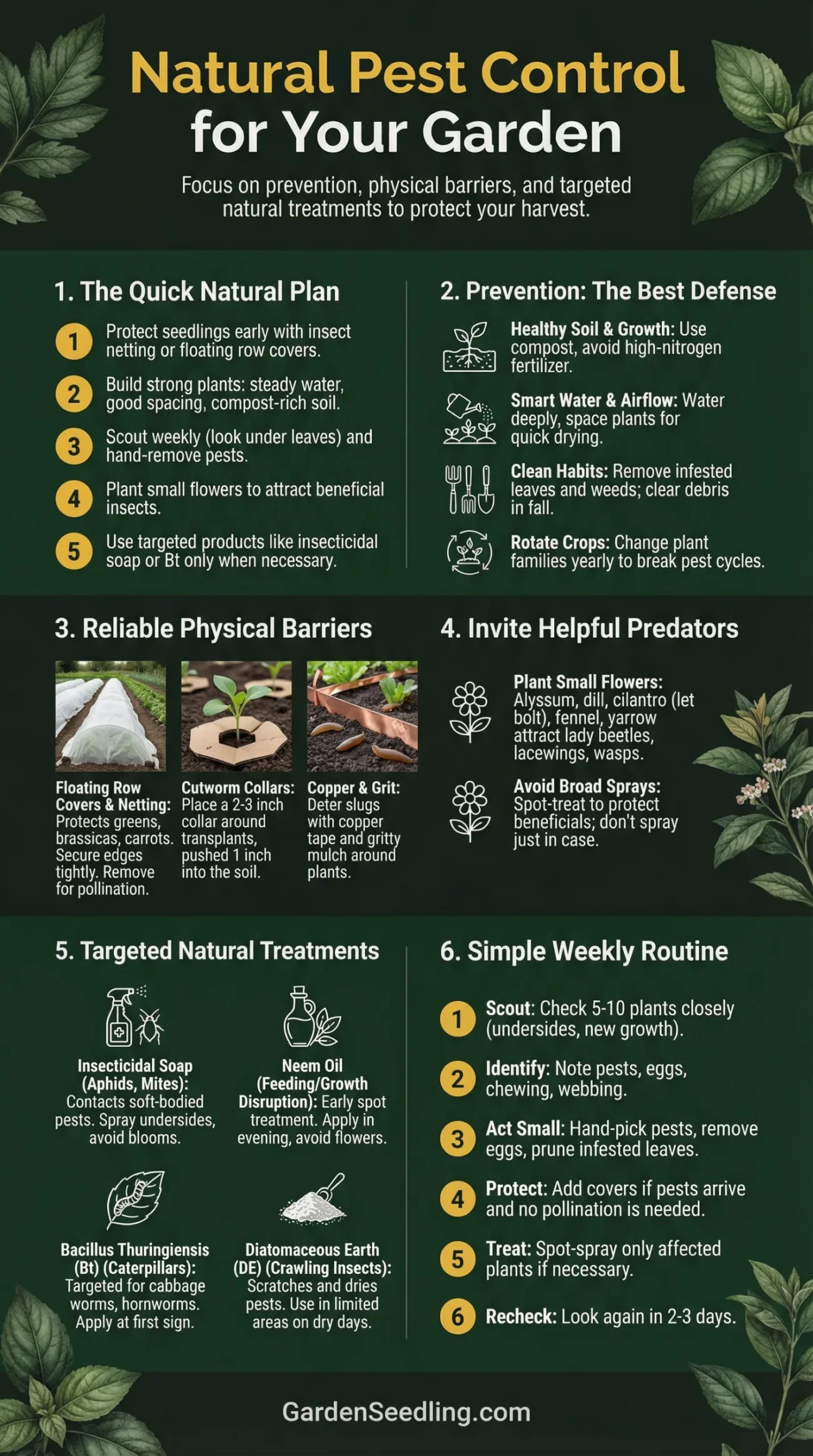
For most home gardens, the fastest natural pest-control plan looks like this:
- Protect seedlings with insect netting or floating row covers before pests arrive.
- Keep plants strong using steady watering, good spacing, and compost-rich soil.
- Scout weekly (look under leaves) and remove pests early by hand or with a strong water spray.
- Invite beneficial insects by planting small flowers and avoiding broad “kill-all” sprays.
- Use targeted natural products only when needed (like insecticidal soap for soft-bodied pests, Bt for caterpillars).
Know What You’re Dealing With First
Natural control works best when you match the method to the pest. A “one-spray-fits-all” approach often wastes time and can harm helpful insects. Start by noticing the type of damage and where it shows up.

Common Garden Pests And Their Clues
- Aphids: clusters on new growth; sticky honeydew; curling leaves.
- Whiteflies: tiny white insects that fly up when you disturb the plant; leaf yellowing.
- Spider mites: fine webbing; stippled, dusty-looking leaves (often in hot, dry weather).
- Cabbage worms/loopers: holes in brassica leaves; green droppings on leaves.
- Flea beetles: tiny “shot holes” in arugula, radish, eggplant, and young greens.
- Squash bugs: wilting leaves; bronze eggs on leaf undersides; adults hiding at the crown.
- Slugs/snails: ragged holes and shiny trails, especially after wet nights.
- Tomato hornworms: big defoliation; dark droppings on leaves below.
When you can name the pest (or at least narrow it down), you can choose a solution that actually works instead of spraying randomly.

Many insects target stressed plants first. Strong, steadily growing vegetables can handle minor chewing without slowing down. Think of prevention as plant fitness plus a few habits that reduce pest pressure.
Build Healthy Soil And Steady Growth
Use compost, leaf mold, or well-aged manure to improve soil structure and support beneficial microbes. Avoid overusing high-nitrogen fertilizers, which can push soft, tender growth that aphids and other sap-suckers love.
- Mix 1–2 inches of compost into beds before planting, or top-dress around established plants.
- Feed lightly and consistently instead of dumping a lot of fertilizer at once.
- Mulch to protect soil moisture and reduce plant stress.
Water Smart And Improve Airflow
Inconsistent watering can weaken plants and make them more attractive to pests. Water deeply and less often so roots grow strong. Also, space plants so leaves dry quickly and pests have fewer humid hiding spots. Good spacing can reduce outbreaks and improve plant health at the same time.
Clean Garden Habits
Small sanitation steps help prevent pests from building up:
- Remove heavily infested leaves and discard them (don’t compost if they’re loaded with pests).
- Pull weeds around beds since they can host aphids, mites, and leafhoppers.
- At season’s end, clear old vines and stems so pests don’t overwinter in debris.
Rotate Crops When Possible
Rotating plant families makes it harder for pests to return to the same “favorite food” each year. Even a simple rotation (tomatoes in one bed this year, beans next year) can help break cycles for some common insects and soil-related issues.
Physical Barriers: The Most Reliable Natural Option
Barriers stop insects before they bite, which is why they’re so effective on young plants. If you’re tired of fighting flea beetles, cabbage worms, or squash bugs, start here. The key is to install protection early, before pests find the crop.

Floating Row Covers And Insect Netting
Lightweight row cover fabric (or fine insect netting) protects many vegetables, especially greens, brassicas, carrots, and young squash. Secure the edges with boards, soil, or landscape pins so insects can’t crawl underneath. This single step can prevent a lot of damage.
- Use row covers at planting time for arugula, radishes, kale, cabbage, and broccoli.
- For squash and cucumbers, cover early but remove when plants bloom (or hand-pollinate) so bees can reach flowers.
- Vent on hot days if temperatures spike under the cover.
Collars For Cutworms
Cutworms can slice seedlings at the soil line overnight. Place a simple collar around each transplant:
- Use a toilet paper roll, paper cup with the bottom removed, or a strip of cardboard formed into a ring.
- Push it 1 inch into the soil and keep it 2–3 inches above the soil line.
This is a small effort that can save entire rows of seedlings.
Copper And Grit For Slugs
For slugs/snails, focus on keeping the soil surface less inviting and using barriers that slow them down. Copper tape can deter slugs around raised beds and containers. Also, avoid thick, damp hiding places right next to seedlings. A thin layer of gritty mulch can reduce slug movement in some gardens, especially when combined with nightly scouting.
Make Your Garden Less Inviting To Bugs
Many pests spread faster in large patches of the same crop. You can lower pressure by mixing plantings and adding “support plants” that attract helpful predators. This isn’t magic, but it’s a practical way to improve balance in a small garden.

Interplant And Stagger Your Plantings
Instead of planting one big block of a single vegetable, mix rows or alternate plants. Staggering plantings (a small sowing every 2–3 weeks for greens) can also prevent one pest wave from wiping out your entire harvest window. This approach can help especially with leafy greens and brassicas.
Use Trap Crops (Simple Version)
A trap crop is a plant pests prefer, grown to lure insects away from your main crop. For example, some gardeners use radishes or mustard greens to draw flea beetles away from other brassicas. The important part is to monitor the trap crop and remove it if it becomes a pest factory.
Reflective Mulch For Aphids And Whiteflies
Reflective (silver) mulch can confuse flying insects like aphids and whiteflies, reducing the number that land on plants. It’s most useful early in the season when plants are small and vulnerable. It won’t solve every issue, but it can reduce pressure in hot climates and high-pest areas.
Invite Beneficial Insects (And Keep Them Around)
Many “garden bugs” are actually your helpers. Lady beetles, lacewings, hoverfly larvae, parasitic wasps, and predatory beetles eat aphids, caterpillars, and other pests. The goal is to create a garden that feeds the helpers too.

Plant Small Flowers Near Vegetables
Beneficial insects often need pollen and nectar as adults. Small-flowered plants are especially useful because tiny beneficials can access them easily. Good options include alyssum, dill, cilantro (let some bolt), fennel (if you have space), yarrow, calendula, and native wildflowers. A small strip of blooms can improve predator activity in your beds.
Avoid Broad, Frequent Spraying
Even natural sprays can hurt beneficial insects if used too often or at the wrong time. Instead of spraying “just in case,” scout first and treat only the affected plants or sections. Spot-treating helps you protect pollinators while still controlling pests.
Be Careful With Releasing Purchased Insects
Buying ladybugs sounds helpful, but many fly away quickly, and releases don’t always solve the root problem. In most home gardens, planting habitat and reducing harsh sprays is a more reliable way to keep beneficials present. If you do release any insects, do it at dusk and provide water so they’re more likely to stay.
Natural Sprays And Dusts That Actually Work (When Used Correctly)
Sprays are best as a targeted tool, not your main strategy. Use them when pests are actively causing damage and other methods aren’t enough. Always follow product labels and avoid spraying open blooms whenever possible to protect bees.

Insecticidal Soap (Best For Aphids, Whiteflies, Mites)
Insecticidal soap works by breaking down the outer coating of soft-bodied insects. It must contact the pest to work, so coverage matters. It can help quickly when aphids cluster on tender growth.
- Spray in early morning or evening.
- Coat the undersides of leaves where pests hide.
- Test on a small section first to avoid leaf burn, especially in hot weather.
Neem Oil (Use Carefully And With Good Timing)
Neem can reduce feeding and disrupt insect growth for some pests. It’s most effective when used early and consistently, not as a last-minute rescue. Neem can also affect beneficial insects if sprayed directly, so use it as a spot treatment and avoid spraying flowers. Apply in cooler parts of the day and never on drought-stressed plants.
Bacillus Thuringiensis (Bt) For Caterpillars
Bt (often labeled Bt-k) is a targeted biological option for caterpillars like cabbage worms and hornworms. It works when caterpillars eat treated leaves. Bt is a good choice when you want specific control without broad impact on other insects.
- Apply at the first sign of chewing and droppings.
- Reapply after heavy rain, since it can wash off.
- Use only on plants being eaten by caterpillars (don’t spray everything).
Spinosad (Effective, But Treat As A Last Resort)
Spinosad can be very effective on thrips, certain beetles, and caterpillars, but it can also harm beneficial insects if misused. If you choose it, treat it as a targeted intervention: spray in the evening, avoid blooms, and apply only where the problem is active. Don’t use it repeatedly if a simpler method (like netting or hand removal) will work.
Diatomaceous Earth (DE) For Crawling Insects
Food-grade DE can help with some crawling pests by scratching and drying them out. It works best when kept dry, and it can also affect beneficial insects that crawl across it. Use DE only in limited areas, such as around plant bases or on soil, and reapply after rain. This tool can improve control in slug-prone or beetle-heavy zones when used carefully.
How To Spray Without Causing New Problems
Spraying is where many gardens go wrong. A few habits make natural sprays more effective and safer:
- Confirm the pest before choosing a product.
- Spray in early morning or evening to reduce leaf burn and protect pollinators.
- Focus on leaf undersides and growing tips where pests feed.
- Use the lowest effective rate and avoid “extra strong” mixes.
- Recheck in 24–48 hours and repeat only if needed.
Hands-On Controls That Work Surprisingly Well
Natural pest control doesn’t always require spraying. Many common pests can be managed with simple, fast actions, especially if you catch them early. These methods are low-cost and high impact in small gardens.

Blast Aphids Off With Water
A strong stream of water can knock aphids off stems and leaf undersides. Many won’t return, and predators often clean up the rest. Do this in the morning so foliage dries quickly. This can help reduce aphids without any product.
Hand-Pick Caterpillars And Large Bugs
For cabbage worms, hornworms, and squash bugs, hand removal is fast and effective:
- Check plants twice a week during peak season.
- Drop pests into a bucket of soapy water.
- Look for eggs under leaves and wipe them off.
Use Simple Traps
Yellow sticky traps can catch adult whiteflies and fungus gnats, helping you monitor pest pressure. For slugs, shallow beer traps or damp boards can draw them in overnight. Traps won’t solve everything, but they can reduce numbers and show what’s active in your garden.
A Simple Weekly Routine For Natural Pest Control
Consistency beats intensity. A quick weekly routine can prevent most pest problems from getting out of hand, and it helps you treat only what needs attention. This approach is basically integrated pest management for a home garden, without the complicated paperwork.
10-Minute Weekly Checklist
- Scout: check 5–10 plants closely (undersides of leaves, new growth, and near the soil line).
- Identify: note what you see (aphids, eggs, chewing, webbing, droppings).
- Act small: remove eggs, hand-pick pests, prune heavily infested leaves.
- Protect: add row covers/netting if pests are arriving and the crop doesn’t need pollination yet.
- Treat: if needed, spot-spray the affected plants only.
- Recheck: look again in 2–3 days if damage was active.
Common Mistakes To Avoid
Natural methods fail most often because of timing, coverage, or repeating the wrong tool. Avoid these mistakes to get more reliable results and keep your garden ecosystem stable.
Waiting Too Long To Protect Seedlings
Row covers and netting work best before pests find the crop. If flea beetles or cabbage moths are already present, covers can trap pests inside. Install barriers early, or remove insects first, then cover. This small timing detail can prevent weeks of frustration.
Spraying In Hot Sun Or During Bloom
Midday spraying increases leaf burn risk and can harm pollinators. Spray in the evening or early morning, and avoid spraying open flowers whenever possible. If a crop needs bee pollination, focus on barriers and hand removal first. This helps you protect harvest and pollinators at the same time.
Using “Extra Strong” Soap Mixes
Homemade soap sprays can damage leaves if they’re too concentrated or if the soap contains degreasers, fragrances, or additives. If using a soap-based product, choose a labeled insecticidal soap or test any mix on a few leaves first. Better coverage at the right strength is more effective than a harsh mix that burns plants.
Over-Fertilizing With Nitrogen
Too much nitrogen can create tender growth that pests prefer. Keep feeding balanced, and use compost or gentle fertilizers rather than pushing rapid growth. This supports steadier plants that can handle minor damage.
Quick Comparison Of Natural Methods
| Method | Best For | How To Use | Cautions |
|---|---|---|---|
| Row Cover / Insect Netting | Flea beetles, cabbage worms, squash bugs (early) | Install at planting; seal edges tightly | Remove for flowering crops or hand-pollinate |
| Hand Removal | Caterpillars, hornworms, squash bugs, eggs | Inspect 2x weekly; drop into soapy water | Needs consistency, but works fast |
| Water Spray | Aphids, some mites | Blast undersides of leaves in morning | Repeat as needed; avoid spreading disease on wet foliage |
| Insecticidal Soap | Aphids, whiteflies, spider mites | Spot-spray with full coverage | Can burn leaves in heat; avoid blooms |
| Bt (Bt-k) | Cabbage worms, hornworms, other caterpillars | Apply to leaves at first chewing signs | Needs to be eaten; reapply after rain |
| Habitat Flowers | Long-term balance, fewer outbreaks | Plant small blooms near beds | Works over time, not overnight |
FAQ
What is the most effective natural way to keep bugs off vegetable plants?
For many gardens, insect netting or floating row covers installed early is the most effective option because it prevents damage before it starts.
Can companion planting really keep pests away?
It can help, mainly by supporting beneficial insects and reducing big single-crop blocks, but it works best as part of a layered plan with barriers and scouting.
Is neem oil safe for vegetable plants?
Neem can be safe when used correctly, but it’s best as a spot treatment. Spray in the evening, avoid flowers, and follow label directions to reduce plant stress and pollinator risk.
How do you get rid of aphids naturally without harming bees?
Start with a strong water spray or hand wiping. If needed, use insecticidal soap as a targeted spray on affected leaves only, and avoid spraying blooms.
Should you spray vinegar or baking soda to repel insects?
No. These can damage leaves and don’t provide reliable pest control. Use proven options like row covers, hand removal, or labeled natural products instead.
Natural pest control gets much easier when you rely on prevention first and use sprays only as a backup. Start with barriers and weekly scouting, then add targeted tools as needed, and your vegetable plants will stay healthier with far fewer pest surprises.