A zucchini flower can look perfectly healthy in the morning, close by noon, and fall from the plant a day later. That does not always mean something went wrong. Zucchini plants produce separate male and female flowers, and only the female flowers can become fruit.
- First, Check Which Zucchini Flower Fell
- Male Zucchini Flowers
- Female Zucchini Flowers
- What the Fallen Flower Is Telling You
- Why the First Zucchini Flowers Often Fall
- Why Female Zucchini Flowers Fall Without Making Fruit
- Male and Female Flowers May Open on Different Days
- Too Few Pollinator Visits
- Use Hand Pollination as a Simple Test
- Direct Flower Method
- Small Brush Method
- Heat Can Interrupt Flowers and Fruit Set
- Clues That Heat Is Involved
- How to Reduce Heat Stress
- Cool, Rainy Weather Can Also Stop Fruit Set
- Water Stress Can Cause Zucchini Flowers to Fall
- When the Plant Is Too Dry
- When Watering Is Too Irregular
- When the Soil Stays Too Wet
- Too Much Nitrogen Can Delay Female Flowers
- What to Do
- Container-Grown Zucchini Needs a Separate Check
- Do Not Confuse Poor Pollination With Blossom-End Rot
- How the Symptoms Differ
- When Fuzzy Growth Points to Flower Rot
- A Three-Morning Diagnosis
- Morning One: Identify the Flowers
- Morning Two: Watch and Pollinate
- Morning Three: Check Plant Stress
- Common Fixes That Often Make the Problem Worse
- Adding Fertilizer Immediately
- Removing All Male Flowers
- Pouring Calcium Around a Yellow Baby Zucchini
- Spraying Flowers With Sugar Water
- Blaming Nearby Squash Varieties
- Pruning Healthy Leaves Heavily
- Can Zucchini Grow Without Pollination?
- What to Do Tomorrow Morning
- Frequently Asked Questions
- Do Male Zucchini Flowers Always Fall Off?
- Can One Zucchini Plant Pollinate Itself?
- Why Does a Tiny Zucchini Turn Yellow After the Flower Closes?
- How Soon Will a Hand-Pollinated Zucchini Start Growing?
- Should Fallen Zucchini Flowers Be Removed?
- Will Planting More Zucchini Improve Pollination?
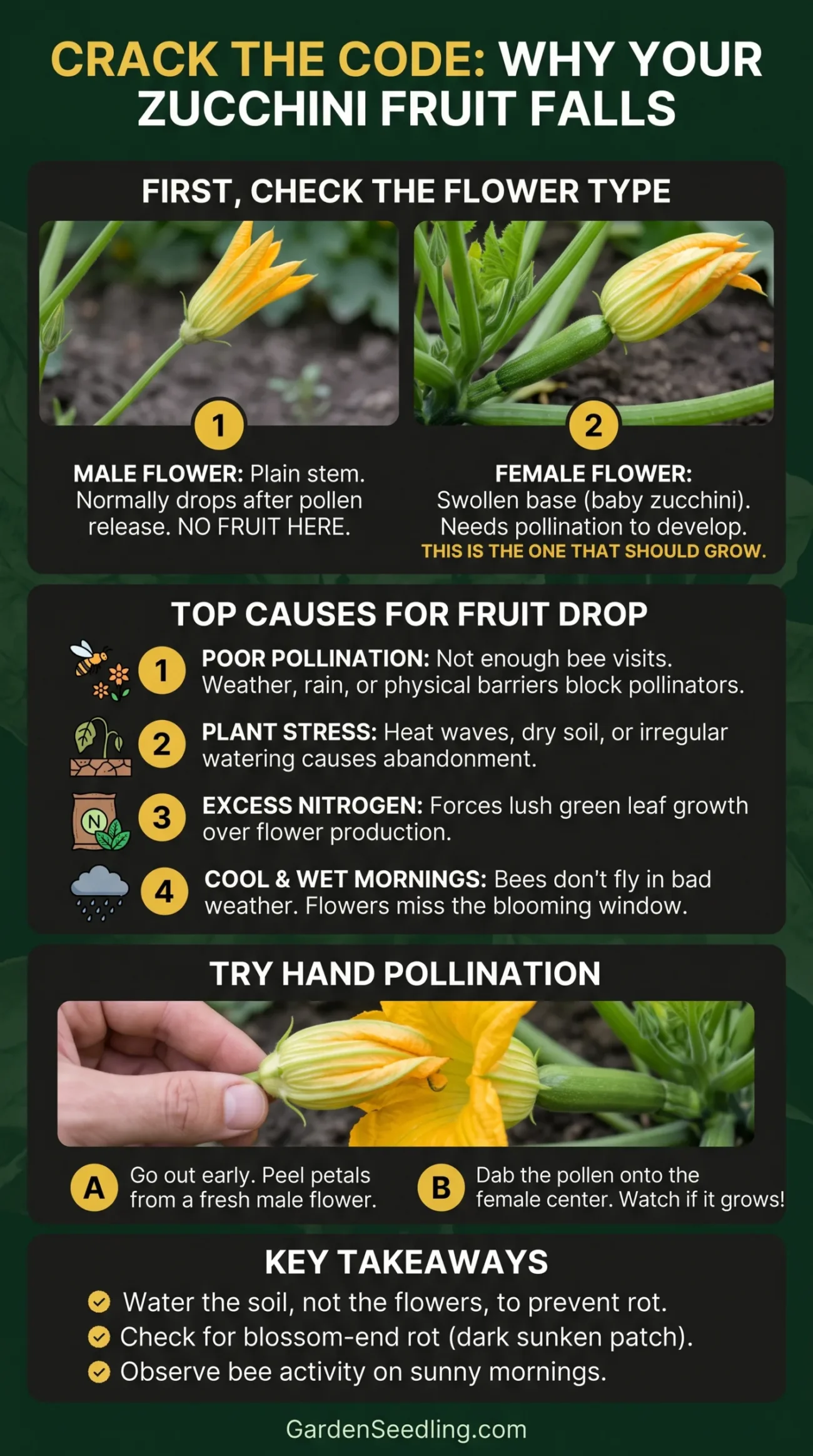
The detail that matters is found directly behind the petals. A flower attached to a plain, narrow stem is male. A flower with a tiny zucchini-shaped swelling at its base is female. Male flowers naturally fall after releasing pollen. When a female flower falls with a yellowing or shrinking baby zucchini attached, poor pollination or plant stress becomes more likely.
Most fallen zucchini flowers are either normal male blossoms or female blossoms that did not receive enough pollen. Before adding fertilizer, changing the watering schedule, or treating for disease, check whether the fallen flower had a miniature zucchini behind it.
First, Check Which Zucchini Flower Fell
Zucchini plants are monoecious, which means one plant grows both male and female flowers. They may look similar at first, especially when the petals are closed, but their bases tell two very different stories.
Male Zucchini Flowers
A male flower grows on a long, thin stem. There is no swollen fruit behind the petals. Inside the flower, the central structure carries yellow pollen that can be transferred to a female flower by bees or by hand.
After the flower opens and releases pollen, it closes and eventually drops. Normal. A fallen male flower is not a lost zucchini because it never had an ovary capable of becoming fruit.
- Stem: Long, thin, and fairly straight
- Base of the flower: No miniature zucchini
- Purpose: Produces pollen
- What happens afterward: The flower closes, wilts, and falls
Female Zucchini Flowers
A female flower has a small zucchini-shaped ovary directly behind the petals. It may already look like a tiny fruit, but it still needs effective pollination before it can continue growing.
Inside the flower sits a lobed, slightly sticky stigma. Pollen from a male flower must reach this surface while the female flower is open and receptive. When that transfer works, the ovary begins expanding. When it fails, the tiny zucchini usually stops growing, turns yellow, softens, and falls.
- Stem: Shorter and thicker than a male flower stem
- Base of the flower: Noticeably swollen like a miniature zucchini
- Purpose: Develops into fruit after pollination
- Warning sign: The swelling yellows or shrivels instead of growing
A simple field check:
Plain stem beneath the flower? It was male. A baby zucchini beneath the flower? It was female, and its failure deserves a closer look.
What the Fallen Flower Is Telling You
Different symptoms point toward different causes. The table below can help narrow the problem before you change anything around the plant.
| What You See | Likely Explanation | What to Do First |
|---|---|---|
| A flower falls from a long, plain stem | Normal male flower drop | Do nothing |
| The plant has many flowers but no miniature fruit | The first flush may contain mostly male flowers | Watch for female flowers over the next several days |
| A tiny zucchini turns yellow and falls | Poor or incomplete pollination | Hand-pollinate one fresh female flower as a test |
| Female buds dry before fully opening | Heat, moisture, root, or weather stress | Check soil moisture and recent weather |
| Fruit grows unevenly or remains narrow at one end | Incomplete pollen transfer | Observe bee activity and try hand pollination |
| The plant is huge and dark green but produces few female flowers | Too much nitrogen may be pushing leafy growth | Pause nitrogen-rich fertilizer |
| A dark, sunken patch forms at the blossom end | Blossom-end rot | Correct uneven watering and protect the roots |
| The flower or fruit develops fuzzy black-purple growth | A flower or fruit rot may be present | Remove affected tissue and keep flowers dry |
Why the First Zucchini Flowers Often Fall
Young zucchini plants commonly open male flowers before female flowers. The gap may last several days or longer, depending on the variety, temperature, sunlight, and growth rate.
During this early phase, a gardener may find several yellow blossoms on the soil but not one baby zucchini. It looks like failed fruiting. Usually, it is simply the plant’s flowering sequence.
Wait when the plant is still young, growing steadily, and producing flowers on plain stems. Female flowers often appear as the plant matures and gathers more leaf area. Their swollen bases make them easy to spot once you know where to look.
Do not remove every male flower. They provide the pollen needed when female flowers begin opening. Harvesting a few male blossoms for cooking is fine, but leave enough active flowers for pollination.
Why Female Zucchini Flowers Fall Without Making Fruit
A female flower can open with a neat little zucchini behind it and still fail. That miniature fruit is an unfertilized ovary, not a fully established zucchini. It needs enough viable pollen at the right time.
Zucchini flowers usually open early in the day and remain useful for pollination for a fairly short window. Bees must visit a male flower, pick up pollen, and then enter a female flower while its stigma remains receptive. Miss that window, and the ovary may stop developing.
The failed fruit often changes slowly at first. Growth pauses. The green skin becomes pale, then yellow. Soon the tissue feels soft or wrinkled, and the entire structure drops away.
Male and Female Flowers May Open on Different Days
A zucchini plant can have both flower types without having them open together. One morning may bring three male flowers and no female flowers. The next may bring a female flower after the earlier males have already closed.
This mismatch happens more often on young plants with only a few blossoms. Growing more than one zucchini plant can improve the chance of having fresh male and female flowers open on the same morning, though a second plant is not required for zucchini to produce fruit.
Too Few Pollinator Visits
Zucchini depends heavily on insect activity unless the flowers are pollinated by hand. Squash bees, bumble bees, honey bees, and other visiting insects can move pollen between flowers. A bee merely landing on a female flower is not enough; it must carry usable pollen from a male flower.
Poor pollination becomes more likely when:
- Rainy or cool mornings reduce bee activity.
- Persistent cloud cover delays flowers and pollinator movement.
- Row covers remain closed after flowering begins.
- Balcony screens block insects from reaching container plants.
- Greenhouse doors stay closed during the morning bloom period.
- Insecticides are applied to open flowers or nearby blooming plants.
- Only one or two flowers open at a time, leaving fewer chances for pollen transfer.
Use Hand Pollination as a Simple Test
Hand pollination can produce fruit, but it can also diagnose the problem. When a carefully pollinated flower grows while untouched flowers keep failing, limited pollinator activity becomes the likely cause.
Direct Flower Method
- Go outside early in the morning while the zucchini flowers are fully open.
- Find a male flower on a narrow stem and a female flower with a small zucchini behind it.
- Remove the male flower and gently peel back its petals.
- Touch the pollen-covered center of the male flower to every lobe in the center of the female flower.
- Use a loose tag or soft string to mark the pollinated flower.
- Watch the ovary over the next few days.
A successful fruit should begin to expand rather than yellow and shrink. The change may start subtly, then speed up. Zucchini grows fast once it commits.
Small Brush Method
A clean, dry artist’s brush also works. Brush the center of a male flower until yellow pollen appears on the bristles, then dab it onto the female flower’s stigma. Cover the whole receptive surface rather than touching only one edge.
Do not wet the brush. Do not force open an immature flower bud, either. Use flowers that opened naturally that morning.
How to read the result:
- If the marked zucchini grows, natural pollen transfer was probably weak.
- If it also yellows and falls, inspect heat, water, roots, and flower health.
- If only one test fails, repeat it. A damaged or aging flower may fail even after pollen is added.
Heat Can Interrupt Flowers and Fruit Set
Hot weather affects zucchini in several ways at once. Flowers may open and close more quickly, pollen may perform poorly, bees may shift their activity to a narrower part of the morning, and dry soil may put extra pressure on the roots.

Hot nights can be especially rough because the plant gets less time to recover. Add a sun-baked container or reflective wall, and a zucchini that looked vigorous a week ago may begin dropping female buds.
Clues That Heat Is Involved
- Flower drop began during a stretch of hot days or warm nights.
- Female buds brown before opening.
- The plant wilts earlier than usual, not just briefly in late afternoon.
- A container feels hot to the touch and dries within hours.
- New flowers begin setting fruit after the weather cools.
- The plant remains leafy, yet several young fruits stop at the same time.
How to Reduce Heat Stress
Water deeply at the root zone in the morning, then check the soil rather than following a rigid calendar. A layer of organic mulch can slow evaporation and soften swings in soil temperature. Keep mulch a small distance from the main stem so the crown does not remain wet.
For container plants, move the pot away from heat-reflecting walls or bare concrete when possible. Light-colored outer containers can also reduce heat buildup around a dark nursery pot. During unusually harsh afternoons, temporary light shade may help—but do not place zucchini in deep shade all day. It still needs strong light to flower and produce.
Cool, Rainy Weather Can Also Stop Fruit Set
Heat is not the only weather problem. Several cool, rainy mornings can keep bees away during the exact hours when zucchini flowers are open.
Pollen transfer may fail even when the plant itself looks healthy. Once clearer weather returns, the next round of flowers may set fruit normally. In that case, no fertilizer correction or major pruning was needed. Just better timing.
Hand-pollinate during a dry morning if a female flower opens after repeated rain. Let the flower dry first; a wet brush and waterlogged petals make awkward tools.
Water Stress Can Cause Zucchini Flowers to Fall
Zucchini grows broad leaves and water-rich fruit, so its demand for moisture rises quickly during warm weather. Yet constantly soaked soil is not the answer. Roots need oxygen too.
When the Plant Is Too Dry
Dry soil can make the plant abandon flowers and very young fruit. Check several inches below the surface. A damp top layer may hide dry soil around the deeper roots.
Common signs include:
- Wilt that begins early in the day
- Dry leaf edges
- Repeated yellowing of young fruit
- Soil pulling away from the sides of a container
- A pot that feels unusually light
When Watering Is Too Irregular
A cycle of bone-dry soil followed by heavy soaking strains roots and disrupts the steady movement of water and minerals into developing fruit. The plant may survive the cycle, but the youngest fruit often pays for it.
Water slowly enough to moisten the root zone. Then allow excess water to drain. In raised beds and containers, check more often during hot or windy weather because they can dry much faster than ground soil.
When the Soil Stays Too Wet
Waterlogged soil can suffocate roots, slow nutrient uptake, and encourage rot around flowers and fruit. Yellow lower leaves, slow growth, and persistently soggy soil point away from drought and toward poor drainage.
Make sure containers have open drainage holes. In the ground, avoid planting zucchini in a low spot where water sits after rain.
Water the soil, not the flowers. Spraying the blossom does not pollinate it, and keeping spent petals wet can encourage decay.
Too Much Nitrogen Can Delay Female Flowers
A zucchini plant can look almost too good—large leaves, thick stems, deep green color—and still make very little fruit. Excess nitrogen encourages leafy growth and may delay the balance of flowering needed for regular production.
This pattern often appears after repeated use of high-nitrogen liquid feeds, fresh manure, lawn fertilizer, or rich compost added in large amounts. More fertilizer will not correct it.
What to Do
- Stop adding nitrogen-rich fertilizer for now.
- Do not add phosphorus blindly in an attempt to force flowers.
- Keep watering evenly while the plant adjusts.
- Allow new flowers to develop before judging the result.
- Use a soil test before treating a suspected mineral shortage.
Avoid stripping off masses of healthy leaves. The plant still needs them to feed developing fruit and protect it from sunscald.
Container-Grown Zucchini Needs a Separate Check
Zucchini in a pot faces faster changes than zucchini growing in garden soil. The root zone heats quickly, dries quickly, and has less room for error.
Check these areas when container flowers keep falling:
- Pot size: A cramped root system cannot support a large, fruiting plant well.
- Drainage: Blocked holes leave roots sitting in stagnant water.
- Daily moisture: Small containers may dry completely before evening.
- Heat exposure: Dark pots beside brick, glass, or concrete can become very hot.
- Pollinator access: Screens and enclosed balconies may prevent bee visits.
- Fertilizer buildup: Feeding with every watering can raise salt levels and push excess leaf growth.
When insects cannot reach the plant, hand pollination may need to become part of the morning routine. Not forever, perhaps, but during active flowering.
Do Not Confuse Poor Pollination With Blossom-End Rot
A young zucchini that yellows all over and stops growing usually points toward failed pollination or severe plant stress. Blossom-end rot looks different.
With blossom-end rot, the fruit may continue growing for a while before a dark, water-soaked area develops at the blossom end—the end opposite the stem. That patch becomes brown or black, sunken, and often leathery.
The disorder involves poor calcium movement into the developing fruit, but dumping calcium around the plant does not always help. Garden soil often contains calcium already. Uneven moisture, damaged roots, excess fertilizer, high salt levels, or rapid growth can prevent the plant from moving enough calcium where it is needed.
How the Symptoms Differ
| Condition | Typical Appearance |
|---|---|
| Poor pollination | The entire baby zucchini stops growing, becomes pale or yellow, shrivels, and falls. |
| Blossom-end rot | A distinct dark, sunken patch forms at the blossom end of an otherwise developing fruit. |
| Flower or fruit rot | The blossom becomes wet and soft, sometimes developing white, gray, or dark fuzzy growth. |
When Fuzzy Growth Points to Flower Rot
A closed zucchini flower often remains attached to the end of the fruit for a short time. In humid, wet conditions, that fading tissue can become infected and rot into the fruit.
Watch for soft, water-soaked tissue and fuzzy growth that may darken to purple-black. This is not ordinary male flower drop, and adding pollen will not fix it.
Remove badly affected flowers and fruit from the garden. Water near the soil rather than over the foliage, improve airflow where plants are packed together, and avoid handling wet plants. Do not compost heavily diseased tissue unless the compost pile reaches conditions that reliably destroy plant pathogens.
A Three-Morning Diagnosis
Changing five things at once makes the cause hard to find. Instead, observe the plant across three mornings and test one likely problem.
Morning One: Identify the Flowers
- Count the open male and female flowers.
- Check fallen blossoms for a swollen base.
- Look for yellowing baby zucchini.
- Note whether row covers or screens block insects.
- Inspect flowers for wet, fuzzy, or decaying tissue.
Morning Two: Watch and Pollinate
- Watch the plant for 10 to 15 minutes during early bloom.
- Notice whether bees move between male and female flowers.
- Hand-pollinate one healthy female flower.
- Mark it with a loose tag and the date.
Morning Three: Check Plant Stress
- Feel the soil several inches below the surface.
- Review recent heat, rain, and nighttime temperatures.
- Check whether a container is root-bound or overheating.
- Review the fertilizer label and recent feeding schedule.
- Look beneath leaves for heavy pest damage or sudden wilting.
Keep watching the marked fruit. If it begins expanding while untouched fruit fails, pollination was probably the missing step. If it also stops, focus more closely on root health, water, heat, and flower condition.
Common Fixes That Often Make the Problem Worse
Adding Fertilizer Immediately
Flower drop does not automatically mean the soil lacks nutrients. Extra nitrogen may produce even more leaves while delaying female flowers.
Removing All Male Flowers
Those flowers are the pollen supply. Remove too many, and the next female blossom may open with nothing fresh available.
Pouring Calcium Around a Yellow Baby Zucchini
A uniformly yellow, shrinking ovary usually does not point to blossom-end rot. First determine whether it received pollen.
Spraying Flowers With Sugar Water
Sugar water does not replace pollen. It can attract ants, leave sticky residue, and create another mess around fading flowers.
Blaming Nearby Squash Varieties
Zucchini can cross-pollinate with some other squash, but the cross does not change the current season’s fruit. It affects the genetics inside saved seed and may produce unexpected plants the following year.
Pruning Healthy Leaves Heavily
Large-scale pruning reduces the leaf area that supplies energy to fruit. It can also expose zucchini to harsh sun. Remove damaged or diseased leaves when needed, but leave healthy foliage doing its job.
Can Zucchini Grow Without Pollination?
Most common zucchini varieties need pollen transfer for dependable fruit set. Some varieties, however, are described as parthenocarpic. They can develop fruit without fertilization.
These varieties may suit greenhouses, screened balconies, high tunnels, or gardens with unreliable pollinator visits. Check the seed description carefully; ordinary zucchini should not be assumed to have this trait.
A parthenocarpic variety will not change the plant already growing in your garden. It is a choice for the next sowing.
What to Do Tomorrow Morning
- Look behind each open flower and identify it as male or female.
- Check whether a fresh male flower and female flower are open together.
- Hand-pollinate one healthy female flower and mark it.
- Remove any soft fruit with fuzzy or spreading rot.
- Check soil moisture below the surface.
- Open row covers or barriers that prevent pollinator access.
- Pause unnecessary high-nitrogen feeding.
- Watch the marked fruit for growth rather than changing several treatments at once.
Once you know whether the plant is dropping normal male flowers, unpollinated female flowers, or stressed young fruit, the next step becomes much clearer. Often, one careful morning check tells more than another bag of fertilizer ever could.
Frequently Asked Questions
Do Male Zucchini Flowers Always Fall Off?
Yes, male flowers normally close, wilt, and fall after their pollen-producing period. They do not have an ovary and cannot become zucchini.
Can One Zucchini Plant Pollinate Itself?
One plant can produce both male and female flowers, but pollen still has to move between them. Bees usually do the work, though you can transfer the pollen by hand.
Why Does a Tiny Zucchini Turn Yellow After the Flower Closes?
Poor pollination is the most common reason. Heat, irregular watering, root stress, and flower rot can also stop a young fruit from developing.
How Soon Will a Hand-Pollinated Zucchini Start Growing?
A successfully pollinated ovary should show continued growth over the next few days. A fruit that remains the same size and begins yellowing probably did not establish.
Should Fallen Zucchini Flowers Be Removed?
Dry, fallen flowers cause little concern. Remove flowers that become slimy, moldy, or attached to rotting fruit, especially during wet and humid weather.
Will Planting More Zucchini Improve Pollination?
It can improve the chance of having male and female flowers open at the same time. One plant can still produce fruit, so adding another is helpful rather than mandatory.