A packet of lettuce seed can create an odd backyard problem: nothing ready for several weeks, then more lettuce than the refrigerator can hold. The usual cause is simple. Every seed went into the ground on the same day.
- Why One-Day Planting Creates a One-Week Glut
- Choose the Harvest Style Before Setting the Interval
- Baby Leaf Lettuce
- Cut-And-Come-Again Plants
- Full-Size Leaf Lettuce
- Butterhead, Romaine, And Crisphead
- Set A Starting Interval, Then Watch The Plants
- During Cold, Slow Early-Spring Growth
- During Steady Spring Or Fall Growth
- As Hot Weather Approaches
- As Autumn Growth Slows
- Work Backward From What Your Household Eats
- Use Several Maturity Windows As A Lettuce Relay
- Direct Sow, Transplant, Or Combine Both
- Divide The Bed Into Three Working Zones
- Handle The Hot-Weather Break Instead Of Fighting It
- Water New Sowings Without Drowning Older Lettuce
- Harvest So The Next Batch Can Take Over
- For Baby Leaves
- For Outside-Leaf Harvesting
- For Full Heads
- Fix Overlapping Batches And Harvest Gaps
- When Two Batches Mature Together
- When The Harvest Runs Out
- A Twelve-Week Backyard Example
- Plan The Last Fall Sowing Backward
- Keep A Simple Batch Record
- Frequently Asked Questions
- How Often Should Lettuce Be Succession Planted?
- Does Cut-And-Come-Again Lettuce Remove The Need For New Sowings?
- Why Did Two Lettuce Batches Mature At The Same Time?
- Can Lettuce Be Succession Planted In Containers?
- Should Every Batch Use The Same Lettuce Variety?
- When Should Succession Sowing Stop During Summer?
- Keep One Batch Ahead
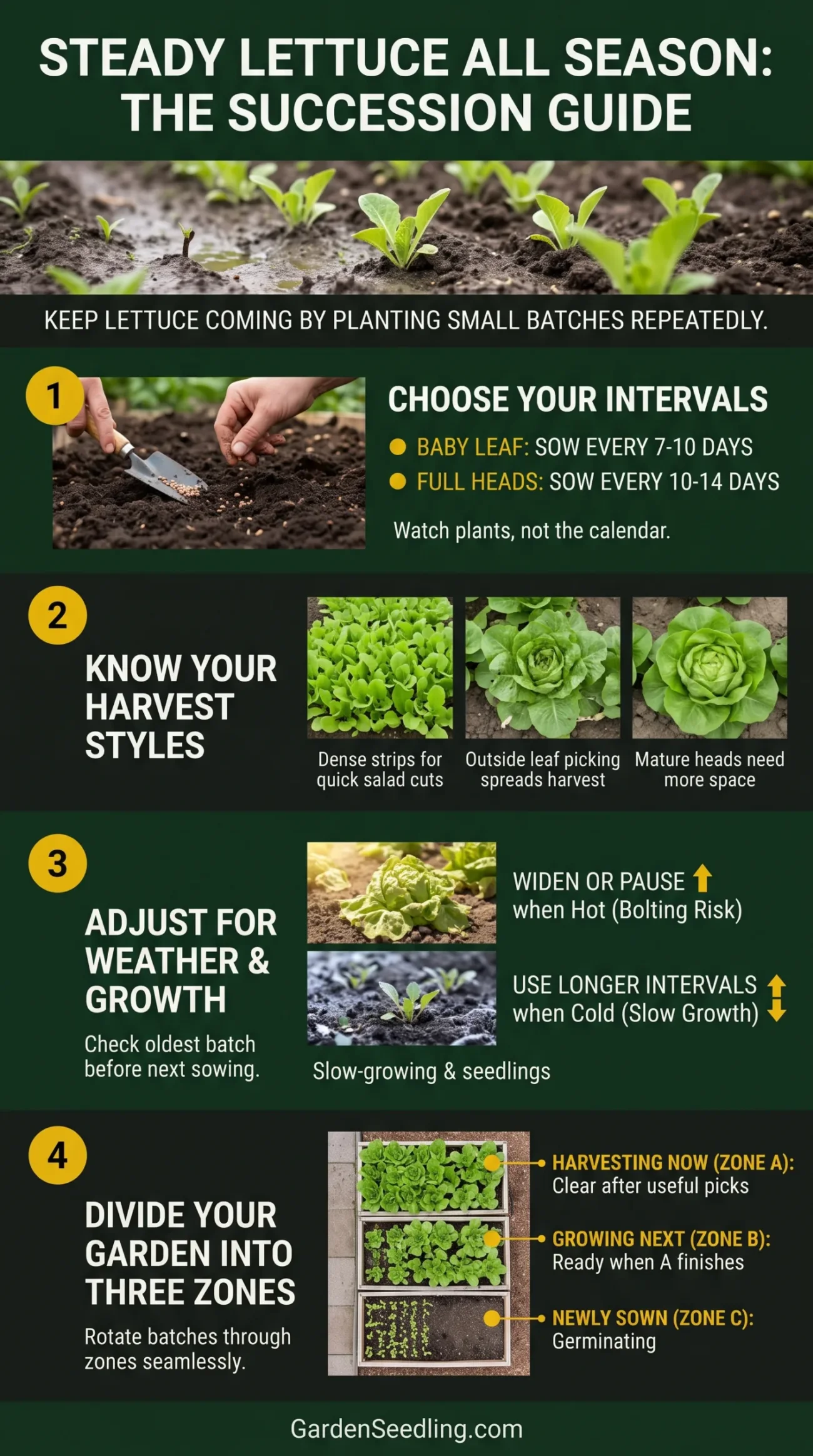
Succession planting lettuce spreads that harvest across the season by using small, repeated sowings. A useful starting point is every 7–10 days for baby leaf lettuce and every 10–14 days for larger plants or full heads. Those intervals are not fixed, though. Cool soil may slow one batch for weeks, while warmer weather can push the next batch forward surprisingly fast.
Start with small batches, not a full bed. Keep one batch ready to harvest, another growing behind it, and a third just germinating. Shorten the interval when lettuce is growing quickly and your harvest runs out. Widen it when several batches begin maturing together.
This rolling system works in raised beds, traditional rows, containers, and even a few window boxes. It also reduces waste. Instead of trying to preserve twelve mature heads at once, you can harvest a manageable amount each week.
Why One-Day Planting Creates a One-Week Glut
Lettuce plants sown together usually pass through their growth stages together. Germination may vary by a few days, but the plants still tend to reach harvest size within the same narrow window. Full-head varieties make the problem more noticeable because their usable harvest period is shorter than that of loose-leaf lettuce.
Weather can compress the schedule even further. An early spring sowing may sit almost still during cold days. A second sowing planted two weeks later can germinate in warmer soil and grow much faster. Suddenly, both batches are ready at once.
Several other habits can produce the same result:
- Sowing the entire packet: Even a short row may contain far more plants than one household can eat.
- Using only one variety: Plants with similar maturity times often reach harvest together.
- Waiting for perfect heads: Mature lettuce can become coarse, bitter, or bolt while you wait to harvest the whole row.
- Depending only on regrowth: Cut-and-come-again lettuce slows with age and heat. It cannot carry the harvest forever.
- Following packet dates too literally: “Days to maturity” describes an estimate under suitable conditions, not a guaranteed harvest date.
Succession planting breaks that single large crop into smaller, overlapping crops. Small is the useful word here.
Choose the Harvest Style Before Setting the Interval
The best sowing schedule depends on how you plan to pick the lettuce. Baby leaves move through the bed quickly. Romaine and butterhead need more time and room. A schedule that works for salad mix can flood the kitchen with full heads.
Baby Leaf Lettuce
Baby leaf lettuce can be sown in short, fairly dense bands and harvested while the leaves are still young. Because the crop reaches usable size quickly, batches may be planted about 7–10 days apart during active spring or fall growth.
Cut the leaves above the growing point if you want another flush. Regrowth is usually smaller and may become less tender, especially as temperatures rise. After one or two useful cuts, clearing the strip and sowing again often gives better leaves.
Cut-And-Come-Again Plants
Loose-leaf varieties work well for repeated harvests. Pick a few outside leaves from each plant, or cut a small section while leaving the center intact. The next batch should still be growing nearby because regrowth rarely stays equally productive for an entire season.
A 10–14 day interval is a sensible starting point. Adjust from there.
Full-Size Leaf Lettuce
Full-size loose-leaf plants offer more flexibility than head lettuce. You can remove outside leaves over several weeks, harvest young plants whole, or leave a few to grow larger. This flexibility makes them forgiving when two sowing dates begin to overlap.
Butterhead, Romaine, And Crisphead
Head-forming lettuce needs more space, so each batch should contain fewer plants. A household that uses two heads each week rarely needs fifteen heads maturing together.
Butterhead and romaine usually fit backyard succession plans more easily than slow-growing crisphead types. Crisphead lettuce often needs a longer stretch of cool weather, and heat may arrive before firm heads develop.
| Harvest Style | Starting Interval | Useful Batch Approach | Common Problem |
|---|---|---|---|
| Baby leaf | 7–10 days | One short, dense strip | Too many leaves ready together |
| Cut-and-come-again | 10–14 days | A few plants or one short row | Regrowth slows in warm weather |
| Full-size loose leaf | 10–14 days | Several spaced plants | Older leaves turn coarse |
| Butterhead or romaine | 10–14 days | Two to six heads per batch | Several heads mature at once |
| Crisphead | 14–21 days | Very small batches | Heat arrives before heading |
Use these intervals as trial settings. The plants, not the calendar, should decide the next adjustment.
Set A Starting Interval, Then Watch The Plants
“Sow every two weeks” sounds convenient, but lettuce does not grow at the same speed throughout the season. A more useful system changes with temperature, day length, moisture, and harvest demand.
During Cold, Slow Early-Spring Growth
Begin with sowings about 14–21 days apart. Early batches may take longer to emerge and can remain small during repeated cold spells. Planting every week under those conditions may create several batches that all surge forward when the weather improves.
During Steady Spring Or Fall Growth
Use a 7–10 day interval for baby leaves and about 10–14 days for larger lettuce. Check the oldest batch before each new sowing. If it is developing more slowly than expected, postpone the next batch for several days.
As Hot Weather Approaches
Reduce the batch size before shortening the interval. Smaller sowings lower the risk of losing a large crop to bolting or poor germination. Choose loose-leaf varieties labeled for heat tolerance, use afternoon shade where available, and consider starting seedlings in a cooler location.
As Autumn Growth Slows
Plants take longer to size up as days shorten. Even if sowings remain ten days apart, their harvest dates may spread much farther apart. Late batches also need extra time beyond the maturity estimate printed on the packet.
Shorten the interval when:
- The current harvest runs out before the next batch is ready.
- Young plants are growing quickly in mild weather.
- You are harvesting baby leaves rather than full heads.
- Your household is using more lettuce than expected.
Widen the interval or pause when:
- Unused lettuce is collecting in the refrigerator.
- Two or more batches are reaching harvest size together.
- Seedlings fail during hot weather.
- Plants become bitter or begin sending up flower stalks.
- The bed no longer has room for another properly spaced batch.
Work Backward From What Your Household Eats
The number of plants in each batch matters as much as the sowing date. Start with actual household use, not the amount of seed available.
Suppose a household eats four heads of lettuce each week and plans to sow every two weeks. The basic batch contains eight plants. Add one or two extras for failed germination, transplant loss, or pest damage, and the batch becomes nine or ten plants—not thirty.
For full-head lettuce, use this simple calculation:
Plants per batch = heads used each week × number of weeks between sowings + a small replacement allowance
Baby leaf lettuce is easier to measure by growing area. Start with one short strip or container, record how many salads it supplies, and change the size of the next strip. A modest trial provides more useful information than a broad recommendation because serving sizes differ wildly.
Do not solve an oversupply problem only by spacing sowing dates farther apart. First, make each batch smaller. This keeps the harvest regular without creating long empty periods.
Use Several Maturity Windows As A Lettuce Relay
Repeating one variety is simple, but several lettuce types can smooth the harvest even more. Think of them as a relay: fast baby leaves begin first, loose-leaf plants follow, then butterhead or romaine takes over.
One workable sequence looks like this:
- Fast salad mix for the first young-leaf harvest.
- Loose-leaf lettuce for repeated outside-leaf picking.
- Butterhead for tender full heads.
- Romaine for a later, more upright crop.
Read the seed packet before assigning a variety to the sequence. Look for:
- Days to baby-leaf and full-size harvest, when both are listed.
- Whether the maturity count begins at seeding or transplanting.
- Heat-tolerant or slow-bolting descriptions.
- Cold tolerance for early spring or late fall.
- Loose-leaf, butterhead, romaine, or crisphead growth habit.
- Recommended final spacing.
Variety choice does not replace repeated sowing. It adds another layer of timing, helping prevent every plant from reaching the kitchen together.
Direct Sow, Transplant, Or Combine Both
Direct sowing works especially well for baby leaves and short rows of loose-leaf lettuce. It saves handling, takes little time, and allows a harvested strip to be replanted immediately.
Transplants are useful when growing full heads or when the garden bed is still occupied. While one batch finishes outside, the next can grow in cell trays. Once the older lettuce leaves the bed, the young plants move in. Very little garden space sits empty.
A mixed system often gives the steadiest harvest:
- In the bed: One batch is approaching harvest.
- Behind it: A younger batch is putting on leaves.
- In a tray: The next group is germinating.
- After transplanting: Sow another small tray to keep the cycle moving.
Transplants also help during warm soil conditions. Lettuce seed often germinates unevenly once the seed zone remains around 80°F or warmer. Starting seed in a cooler indoor space, shaded porch, or temperature-controlled room can produce more even seedlings for a fall crop.
Do not move tender indoor seedlings straight into strong sun. Harden them gradually over several days, then transplant in the late afternoon or on a mild, cloudy day.
Divide The Bed Into Three Working Zones
A long lettuce row can be difficult to manage because every age group shares the same space. Dividing the growing area into three small zones makes the rotation visible.
| Zone | Current Role | Next Step |
|---|---|---|
| A | Harvesting now | Clear and replant after the final useful harvest |
| B | Growing next | Move into the harvest role |
| C | Newly sown or transplanted | Develop while Zone B is harvested |
The zones do not need to be equal. Full-head lettuce may require a wider section, while a baby-leaf strip can remain narrow. Three separate containers work the same way, as do three sections of a window box.
Place new sowings where you can water them gently without soaking mature plants every day. Tiny seedlings have shallow roots. Older lettuce can draw moisture from deeper soil.
Handle The Hot-Weather Break Instead Of Fighting It
Lettuce prefers cool conditions. Hot soil can reduce germination, while warm days and long daylight hours speed bolting. Once a plant begins stretching upward and forming a central flower stalk, leaf quality usually declines quickly.
More seed will not fix heat stress.
During the warmest part of the season, use several smaller adjustments:
- Grow heat-tolerant loose-leaf varieties rather than slow crisphead types.
- Provide morning sun with some afternoon shade.
- Keep the root zone evenly moist, but do not leave the soil waterlogged.
- Use a light organic mulch around established plants while keeping it away from new sowing lines.
- Harvest leaves younger instead of waiting for full heads.
- Start fall seedlings in a cooler place.
- Pause outdoor sowing when repeated batches fail or bolt before producing a worthwhile harvest.
A failed summer sowing is not always a timing mistake. When heat prevents germination or pushes young plants into early bolting, change the growing conditions, change the variety, or wait for cooler weather.
In hot-summer regions, the best succession may contain a planned break: spring lettuce ends, fall seedlings begin in a cooler location, and outdoor production resumes as temperatures ease. That gap is practical, not a failure.
Water New Sowings Without Drowning Older Lettuce
New lettuce seed needs steady surface moisture. If the top layer dries during germination, emergence becomes patchy. A hard stream of water can also wash shallow seed out of place, so use a fine rose, mist setting, or gentle drip line.
Mature plants need consistent moisture too, though they do not benefit from constant shallow sprinkling. Water deeply enough to moisten the active root zone, then check the soil rather than watering by habit.
When several ages share one bed:
- Water the seed strip separately until seedlings establish.
- Keep mulch off the sowing line so young shoots can emerge.
- Thin crowded seedlings early to improve airflow and root space.
- Avoid heavy fertilizer after every sowing because older plants already occupy the bed.
- Remove old roots and damaged leaves before replanting a harvested zone.
Even moisture also helps maintain tender leaves. Repeated wilting followed by heavy watering can leave plants stressed and uneven.
Harvest So The Next Batch Can Take Over
Harvest timing controls the entire succession. Leave an old batch too long, and it occupies space needed by the next one. Clear it too soon, and you may create a gap.
For Baby Leaves
Cut when the leaves reach the size and texture you prefer. Leave the central growing point if another harvest is planned. Once regrowth becomes sparse, tough, or uneven, remove the plants and reseed the strip.
For Outside-Leaf Harvesting
Take a few mature outer leaves while leaving the center intact. Pick across several plants rather than stripping one plant bare. This method spreads the harvest, but the plants still age. Keep the younger batch moving.
For Full Heads
Harvest the largest heads first instead of waiting for every plant to look identical. A batch may be cut over several days. Once the remaining plants begin stretching, turning bitter, or losing quality, clear the area.
The transition should overlap gently: the final heads from one batch leave as the first usable leaves from the next batch arrive.
Fix Overlapping Batches And Harvest Gaps
When Two Batches Mature Together
Temperature changes often cause this. The first sowing develops slowly in cold soil, while the second enjoys better growing weather and catches up.
Use one or more of these adjustments:
- Harvest the older batch early as baby lettuce.
- Use outside-leaf picking on one batch and full-head harvest on the other.
- Delay the next sowing by five to seven days.
- Reduce the number of plants in the next batch.
- Pair varieties with different maturity times.
- Move spare seedlings into containers rather than crowding the bed.
When The Harvest Runs Out
A gap usually means the later batch started too late, grew more slowly than expected, or suffered poor germination. Shorten the next interval by several days. For head lettuce, keep a small tray of young transplants ready so an empty section can be filled without waiting for direct-sown seed to emerge.
Do not respond by planting a huge replacement batch. That merely moves the glut to a later date.
A Twelve-Week Backyard Example
This example uses small loose-leaf batches during mild spring weather. It shows the decision process rather than a fixed national planting calendar.

| Week | Action | What To Check |
|---|---|---|
| 1 | Sow Batch A | Moisture and germination |
| 2 | Observe rather than sow automatically | Has cold weather delayed Batch A? |
| 3 | Sow Batch B | Spacing and seedling vigor |
| 4 | Thin Batch A | Expected number of usable plants |
| 5 | Sow Batch C | Are A and B growing at different speeds? |
| 6 | Begin picking Batch A | Actual household use |
| 7 | Sow Batch D only if needed | Is unused lettuce accumulating? |
| 8 | Begin picking Batch B | Regrowth quality in Batch A |
| 9 | Clear exhausted plants | Available space for the next sowing |
| 10 | Harvest B and C selectively | Signs of overlapping maturity |
| 11 | Change the interval for current weather | Heat, bolting, or slower growth |
| 12 | Review the cycle | Best batch size and interval for the next round |
Notice that the schedule contains observation weeks. Succession planting works better when every date is treated as a checkpoint, not an order that must be followed regardless of conditions.
Plan The Last Fall Sowing Backward
The final fall crop needs enough time to mature before cold, low light, or repeated freezes stop useful growth. Start with the maturity estimate on the seed packet, then add time for slower autumn development.
Estimated final sowing date = desired final harvest date − maturity period − an allowance for slower fall growth
The extra allowance varies. Mild regions may need only a little added time, while northern gardens with rapidly shortening days may need two or more extra weeks. Row covers, low tunnels, or an unheated cold frame can protect lettuce from light frost, but they do not restore summer growth speed.
Stop sowing full-size heads first. Faster loose-leaf and baby-leaf batches can continue later because they reach a usable stage sooner.
Keep A Simple Batch Record
A seed packet cannot describe the exact conditions in your yard. A short record can.
For each batch, note:
- Variety and lettuce type.
- Sowing date.
- Germination date.
- Transplant date, when applicable.
- First harvest date.
- Final useful harvest.
- Whether the batch bolted or became bitter.
- Approximate amount harvested.
- Whether the next interval should be shorter or longer.
After several batches, patterns appear. You may find that early spring sowings need three weeks between them, while mid-spring baby leaves need only eight days. That local record is far more useful than repeating one interval all year.
Frequently Asked Questions
How Often Should Lettuce Be Succession Planted?
Start every 7–10 days for baby leaf lettuce and every 10–14 days for larger plants. Use longer intervals during slow, cold growth. Adjust the next sowing after checking the size of the current batch.
Does Cut-And-Come-Again Lettuce Remove The Need For New Sowings?
No. Regrowth extends the harvest, but it becomes slower and less tender as plants age or temperatures rise. Keep a younger batch developing behind it.
Why Did Two Lettuce Batches Mature At The Same Time?
The first batch may have grown slowly in cold weather while the later batch developed under warmer conditions. Reduce the next batch size or delay the next sowing by several days.
Can Lettuce Be Succession Planted In Containers?
Yes. Use two or three containers at different growth stages. Harvest one, grow the next, and reseed the empty container. Containers may dry faster than garden soil, so check new sowings often.
Should Every Batch Use The Same Lettuce Variety?
It can, but combining varieties with different maturity times often spreads the harvest more evenly. Fast loose-leaf lettuce can produce while slower romaine or butterhead plants develop.
When Should Succession Sowing Stop During Summer?
Pause when repeated sowings germinate poorly, turn bitter, or bolt before giving a usable harvest. Resume when conditions cool, or start fall seedlings in a cooler location.
Keep One Batch Ahead
A steady lettuce harvest comes from overlap. While one batch reaches the kitchen, another should be growing and a smaller one should be germinating. The exact interval changes as the season moves.
Begin with one short row or a few plants. Record how long they take to reach the size you prefer, how much your household actually uses, and whether the next batch arrives too early or too late. Then adjust.
That is the whole rhythm: sow, watch, harvest, and correct. Not rigid. Much more useful.