
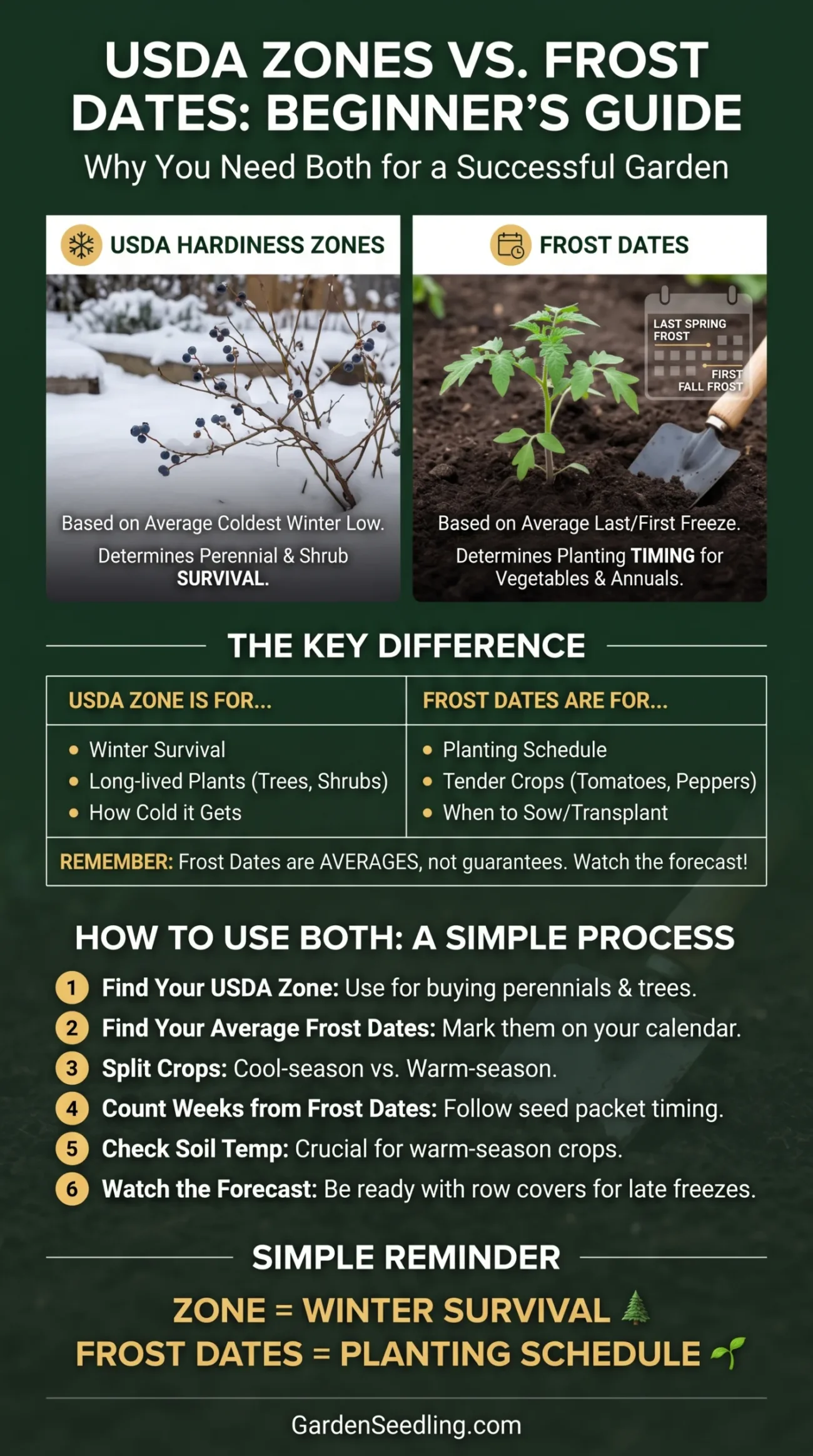
A backyard can be frost-safe by the patio and frosty near the back fence on the same morning. That is part of why beginner gardeners get tripped up by USDA hardiness zones and frost dates. They sound related, and they are, but they answer two different questions.
- What USDA Hardiness Zones Actually Mean
- What Frost Dates Actually Mean
- USDA Hardiness Zones Vs Frost Dates
- Why Beginner Gardeners Need Both
- Use Hardiness Zones For Perennial Survival
- Use Frost Dates For Annual Vegetables And Flowers
- Why Zone Alone Can Mislead You
- How To Use Both Without Getting Confused
- Step 1: Find Your USDA Zone
- Step 2: Find Your Average Last Spring Frost And First Fall Frost
- Step 3: Split Crops Into Cool-Season And Warm-Season
- Step 4: Count Back Or Forward From Frost Dates
- Step 5: Check Soil Temperature For Warm-Season Crops
- Step 6: Watch The Forecast Anyway
- Seed Packets, Plant Tags, And The Beginner Mix-Up
- Common Mistakes To Avoid
- Practical Tips For First-Year Gardeners
- A Simple Way To Remember It
- FAQ
- Can I plant vegetables based only on my USDA hardiness zone?
- Which matters more for tomatoes and peppers?
- Are frost dates exact?
- What does the “a” or “b” mean in a hardiness zone?
- Can two gardeners in the same USDA zone have different planting dates?
If you are trying to decide when to plant tomatoes, basil, beans, lettuce, zinnias, or peppers, frost dates usually matter more. If you are deciding whether a rosemary plant, blueberry bush, fig, or hydrangea can live through winter in your yard, the USDA zone matters more. Useful, yes. Enough on its own, no.
Quick Answer: USDA hardiness zones tell you how cold your area gets in winter on average, which helps with perennial plant survival. Frost dates tell you when your area usually gets its last spring frost and first fall frost, which helps with planting timing for vegetables, herbs, annual flowers, and tender transplants. New gardeners need both.
What USDA Hardiness Zones Actually Mean
The USDA Plant Hardiness Zone Map sorts locations by their average annual extreme minimum winter temperature. In plain English, it shows how cold winter usually gets at the low end. That is why plant tags for shrubs, trees, and many perennials often say something like “hardy in Zones 5–8.”
Each full zone covers a 10°F range, and each zone is split into a and b half-zones, which represent 5°F steps. So, Zone 7a is a bit colder than Zone 7b. Small difference on paper. In the garden, though, that gap can matter for marginal plants.
There is a catch, and it matters: a hardiness zone is a winter survival tool, not a planting calendar. It does not tell you your last spring frost date. It does not tell you how long your growing season is. It does not tell you whether your soil warms slowly, whether your yard holds cold air, or whether summer heat bakes one bed harder than another.
That is why two gardeners in the same zone can still plant warm-season crops on different dates. Same zone, different spring. Happens all the time.
What Frost Dates Actually Mean
Frost dates are your rough calendar for spring planting and fall harvest planning. The last spring frost is the date after which freezing temperatures become less likely. The first fall frost is the date when freezing temperatures usually return in autumn.
Most gardening calendars use 32°F as the basic freeze point, and some also track 28°F hard freezes, which cause more damage. That difference matters. A light frost may nip basil and beans but leave kale mostly fine. A harder freeze, well, that is another story.
Frost dates are also based on past weather patterns, so treat them as averages, not promises. Your “average last frost” is not a magical safe line. Frost can still happen after it. Sometimes a week after. Sometimes, annoyingly, longer.
So which one should you trust when it is time to plant tomatoes? Frost dates first, then soil temperature, then the short-range forecast.
USDA Hardiness Zones Vs Frost Dates
| Tool | What It Tells You | Best Used For | What It Does Not Tell You Well |
|---|---|---|---|
| USDA Hardiness Zone | Average coldest winter low | Perennials, shrubs, trees, roses, berries, overwintering survival | Spring planting dates, growing season length, summer heat, soil warmth |
| Last Spring Frost Date | When freezing nights usually end | Timing tender vegetables, annual flowers, and transplants | Whether the soil is warm enough for heat-loving crops |
| First Fall Frost Date | When freezing nights usually return | Fall planting, succession sowing, harvest planning | How tough a perennial is in winter |
| Microclimate + Forecast | What your yard is doing right now | Covering plants, delaying planting a few days, avoiding frost pockets | Long-term plant hardiness by itself |
Why Beginner Gardeners Need Both
Here is the simple version.
Use USDA zones to choose what can live through winter. Use frost dates to decide when to sow or transplant. Once you separate those jobs, gardening gets a lot less confusing.
Use Hardiness Zones For Perennial Survival
Think fruit trees, asparagus, rhubarb, strawberries in colder climates, many herbs, native perennials, flowering shrubs, and ornamental grasses. These plants need to survive winter, so the zone on the label matters.
- Blueberries: Zone matters because winter cold can kill buds or the whole plant.
- Lavender and rosemary: Zone matters a lot, especially in colder regions.
- Hydrangeas and roses: Zone helps you avoid winter dieback or full loss.
Use Frost Dates For Annual Vegetables And Flowers
Think tomatoes, peppers, basil, cucumbers, beans, squash, marigolds, zinnias, and most warm-season annuals. These plants are not trying to survive winter. They just need to avoid freezing nights in spring and finish before frost returns in fall.
- Tomatoes and peppers: Wait until frost danger has passed and the soil has warmed.
- Beans and cucumbers: Direct sow after frost risk drops and the ground is no longer chilly.
- Spinach, peas, radishes, broccoli: These can handle cooler weather and often go in earlier.
Why Zone Alone Can Mislead You
A lot of beginners see their USDA zone and assume it tells them when spring starts. It does not.
You might live in a milder winter zone because of elevation, nearby water, urban heat, or another local effect, but still have a sneaky late frost. Or the reverse: your winter lows may be harsh enough to lower your zone, yet your spring warm-up could move fast.
Then there are microclimates. A south-facing wall may warm up sooner. A raised bed may drain and warm faster. A low corner near a fence may collect cold air and act like a frost pocket. Same yard, different reality.
This is where gardeners slowly get sharper. Not from the map alone, but from watching. The back bed stays cold longer. The herb bed by the bricks wakes up early. The side yard? Frost sits there like it pays rent.
How To Use Both Without Getting Confused
Step 1: Find Your USDA Zone

Use it when buying perennials, shrubs, fruit plants, and any plant expected to stay in the ground for years. If a plant is not hardy in your zone, you may need protection, a container, or a different choice.
Step 2: Find Your Average Last Spring Frost And First Fall Frost

These dates help you build your planting calendar. For beginners, this is the piece that changes everything. Once you know those two dates, seed packets start making sense.
Step 3: Split Crops Into Cool-Season And Warm-Season

Cool-season crops can handle chilly conditions and light frost better. Warm-season crops dislike cold soil and can be damaged or killed by frost.
- Cool-season: spinach, lettuce, peas, carrots, radishes, broccoli, cabbage
- Warm-season: tomatoes, peppers, basil, beans, cucumbers, squash, melons
Step 4: Count Back Or Forward From Frost Dates

Seed packets often say things like “start indoors 6–8 weeks before last frost” or “sow outdoors 1–2 weeks after last frost.” That language is built around frost timing, not zone.
For fall gardens, count backward from the first fall frost date using the crop’s days to maturity. Add a little wiggle room. Autumn light drops, growth slows, and days shorten faster than many beginners expect.
Step 5: Check Soil Temperature For Warm-Season Crops

This step gets skipped a lot. Then people wonder why peppers sulk and cucumbers sit there doing nothing.
Even if the frost date has passed, cold soil can stall warm-season crops. Tomatoes may survive cool nights, but they do not really like them. Peppers dislike them even more. Basil, especially, acts offended by cold snaps.
Step 6: Watch The Forecast Anyway

Average dates are helpful. Next week’s weather is real. If a late cold night is coming, wait a few days or cover plants with row cover, frost cloth, or even a light blanket supported above the leaves.
Seed Packets, Plant Tags, And The Beginner Mix-Up
Here is where the confusion often starts.
Plant tags on shrubs and perennials usually talk in zones. Seed packets usually talk in weeks before or after the last frost. One is about winter survival. The other is about planting timing.
If you are staring at a tomato seed packet and looking for a USDA zone, you are using the wrong tool. If you are buying a blueberry bush and only checking your frost date, same problem.
Common Mistakes To Avoid
- Planting by zone instead of frost date: This is probably the most common beginner mistake.
- Ignoring microclimates: Low spots, exposed corners, and open lawns can frost later than protected beds.
- Planting warm-season crops right on the average last frost date: Safer to wait a bit if nights are still cold.
- Skipping fall planning: The first fall frost date matters just as much for beans, basil, tomatoes, and fall sowings.
- Forgetting soil warmth: Frost-free does not always mean ready-to-grow.
- Treating averages like guarantees: Weather does what it wants. Gardeners adjust.
Practical Tips For First-Year Gardeners
- Write down your frost dates and keep them near your seed starting supplies.
- Label crops as cool-season or warm-season before you plant.
- Use a soil thermometer if you want better timing for beans, peppers, squash, and cucumbers.
- Start a simple garden journal and note where frost lingers in your yard.
- Keep row cover handy for spring surprises and early fall cold snaps.
- Do not push every crop early. A slightly later planting often catches up fast in warm soil.
A Simple Way To Remember It
Zone = winter survival.
Frost dates = planting schedule.
That is the cleanest way to hold it in your head. Not fancy, but it works.
FAQ
Can I plant vegetables based only on my USDA hardiness zone?
No. Use your last spring frost date for planting timing. USDA zone helps more with perennial survival than with when to sow or transplant vegetables.
Which matters more for tomatoes and peppers?
Frost dates matter more, and soil warmth matters too. These crops should go out after frost risk drops and the soil is no longer cold.
Are frost dates exact?
No. They are based on past weather patterns and give you a useful estimate, not a guarantee. Always check the short-range forecast before planting tender crops.
What does the “a” or “b” mean in a hardiness zone?
It shows the cooler or warmer half of a zone. Each half-zone represents about a 5°F difference in average winter minimum temperatures.
Can two gardeners in the same USDA zone have different planting dates?
Yes. Frost dates, elevation, nearby water, urban heat, wind exposure, and frost pockets can shift local planting timing even within the same zone.
Once you start using USDA hardiness zones and frost dates for their actual jobs, garden planning gets calmer. Fewer guesses, fewer cold-damaged plants, and a lot less second-guessing at the seed rack. That is a good place to start.