
A lettuce bed can look fine at breakfast and limp by late afternoon, while a soggy seed tray can fail before seedlings really get going. That swing is why watering a garden confuses so many new gardeners. The fix is not a strict daily schedule. It is simpler than that, really. Check the soil, water the root zone, and match the amount to the plant, the weather, and the kind of soil you have.
- What Good Watering Looks Like
- Water Deeply, Not Lightly
- Check Soil Before You Water
- Water Early
- How Much Water Does a Garden Need?
- How Watering Changes By Plant Stage
- Seeds And Fresh Seedlings
- New Transplants
- Established Plants
- Choose The Right Watering Method
- Adjust For Soil, Weather, And Garden Type
- Sandy Soil
- Clay Soil
- Raised Beds
- Containers
- Mulch
- Common Watering Mistakes
- How To Tell If Plants Need More Or Less Water
- Practical Watering Routine For Beginners
- FAQ
- How Often Should A New Gardener Water A Garden?
- Is It Better To Water In The Morning Or Evening?
- Do Seedlings Need Water Every Day?
- How Do I Know If I Am Overwatering?
- Are Soaker Hoses Better Than Sprinklers?
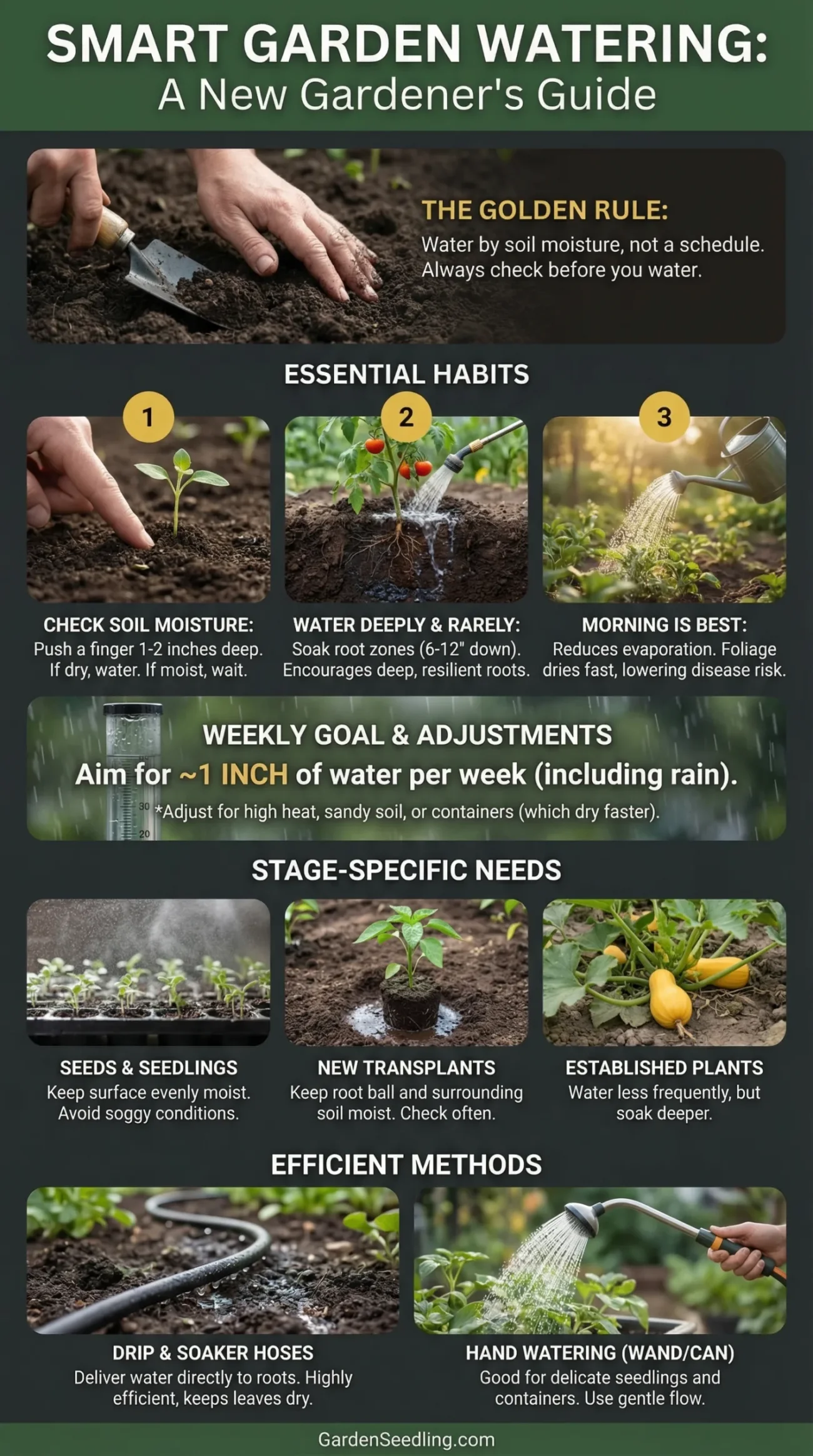
Quick Answer: Most garden beds do best with about 1 inch of water per week, including rainfall, but that number shifts with heat, wind, sandy soil, raised beds, and containers. Water early in the morning when possible, soak the soil deeply instead of sprinkling lightly, and do not water again until the soil actually needs it. Seeds and fresh transplants need more frequent attention. Established plants usually do better with fewer, deeper soakings.
For a new gardener, that one idea solves half the problem: water by soil moisture, not by habit.
What Good Watering Looks Like
Good watering is not about making the soil look wet on top. It is about getting moisture down where roots are growing and keeping that moisture fairly even over time.
Water Deeply, Not Lightly
A quick spray wets the surface and then disappears fast, especially in sun, wind, or loose soil. Deep watering pushes moisture farther down, which helps roots grow lower and steadier. That matters in vegetable beds, flower borders, and even small shrub plantings. Shallow, frequent splashing often leads to shallow roots. And shallow roots struggle first.
For most garden crops, the goal is to wet the soil roughly 6 to 12 inches deep. That is where much of the active root zone sits. If the surface looks damp but the soil is dry a few inches down, the plant has not really been watered well.
Check Soil Before You Water
Beginners often water because the weather feels hot or because the leaves look a little tired in late afternoon. Sometimes that works. Sometimes it makes the problem worse.
The better move is low-tech: push a finger into the soil, use a trowel, or press a long screwdriver into the bed. If the soil is still moist below the surface, wait. If it is dry where roots are growing, water thoroughly. For transplants and many garden beds, checking the top 1 to 2 inches is a good starting point. In containers, the top inch often tells the story pretty fast.
Water Early
Morning is usually the best time to water. The air is cooler, wind is often lighter, and more of the water reaches the soil instead of evaporating away. Leaves also dry faster after sunrise, which helps lower disease pressure compared with keeping foliage wet for long stretches overnight.
Evening watering is still better than letting plants stay dry too long, especially in a heat spell. But when you have a choice, morning wins.
How Much Water Does a Garden Need?
For many home gardens, about 1 inch of water per week is a solid starting point. That includes rain. It is not a fixed rule, though, because soil texture, crop type, bed depth, mulch, temperature, and wind all change water use.

In practical terms, 1 inch of water equals about 62 gallons for a 10-by-10-foot bed and about 20 gallons for a 4-by-8-foot raised bed. That sounds like a lot until summer settles in and tomato plants start pulling hard.
| Garden Setup | Good Starting Point | What To Watch |
|---|---|---|
| In-Ground Vegetable Bed | About 1 inch per week | Rainfall, heat, wind, mulch level |
| Sandy Soil Bed | Water more often, sometimes twice a week | Fast drying, nutrients washing through |
| Raised Bed | Usually needs more frequent checks | Faster drainage, warmer soil |
| Containers | Check daily; may need water every day in summer | Drying speed, drainage, full sun exposure |
| New Transplants | Keep root ball and nearby soil evenly moist at first | First 7 to 14 days after planting |
| Seeds And Seedlings | Keep the surface evenly moist | Do not let the seed zone dry out |
During very hot weather, plants can use water much faster. In some summer conditions, especially when daytime highs move above 90°F and nights stay warm, you may need to water every day or every other day. Not everything, not always. But some beds, yes.
How Watering Changes By Plant Stage
Seeds And Fresh Seedlings
Seeds need steady moisture to germinate. Not soaking wet soil. Not dusty soil either. Just evenly moist seed-starting mix or garden soil in the seed zone.
Once seedlings emerge, overwatering becomes a real problem. Wet, cool conditions can encourage damping-off, which causes young seedlings to collapse right at the soil line. Small seedlings dry out fast, but they also rot fast. A light hand helps here. Use a fine spray, bottom water trays when suitable, and let the surface move slightly toward dry between waterings once seedlings are up and growing.
New Transplants
Tomatoes, peppers, herbs, annual flowers, lettuce starts—all of them need close watering attention right after planting. Their original root ball dries faster than the surrounding garden soil, so check them often during the first week or two.
Water transplants right after planting, then keep the root ball and nearby soil moist while roots spread out. That does not mean puddled. It means evenly damp a few inches down. In hot weather, especially with wind, new transplants may need daily checks. Maybe daily watering for a short stretch. Then taper off as roots move into the bed.
Established Plants
Once plants are rooted in and growing well, the pattern changes. Water less often, but more deeply. Tomatoes, squash, beans, zinnias, marigolds, basil—most established garden plants respond better to this steadier rhythm than to constant little sprinkles.
Consistency matters, too. Irregular soil moisture can lead to rough growth, tough vegetables, cracking in fruit, and blossom end rot problems that show up more often when moisture swings back and forth.
Choose The Right Watering Method
The tool matters less than the result, but some methods make life easier.
| Method | Best Use | Why It Helps | Downside |
|---|---|---|---|
| Watering Can Or Wand | Seedlings, containers, new transplants | Good control, gentle flow | Slow for larger beds |
| Soaker Hose | Rows and standard beds | Delivers water at soil level, keeps leaves drier | Needs decent layout and occasional checking |
| Drip Irrigation | Vegetables, raised beds, mixed plantings | Very efficient, targeted, easy to automate | Setup takes time |
| Overhead Sprinkler | Large areas, fast coverage | Simple and widely available | More evaporation, wets foliage, less precise in wind |
If there is one upgrade that helps new gardeners the most, it is usually drip irrigation or a soaker hose. These methods place water close to the soil surface and close to the roots, which reduces waste and gives more even moisture. Hand watering still works well, especially in small gardens. It just takes a little more attention.
Adjust For Soil, Weather, And Garden Type
Sandy Soil

Sandy ground drains fast and dries fast. Water moves through it quickly, and nutrients can move with it. Gardens in sandy soil often do better with smaller amounts applied more often, rather than one very heavy soaking that slips away below the root zone.
Clay Soil

Clay absorbs water slowly but holds it longer. That sounds helpful, and it can be. Still, clay soils are easy to overwater because the surface may stay wet while air space in the root zone drops. Water more slowly and give it time to soak in. If water stands on the surface, back off.
Raised Beds

Raised beds warm up earlier, drain better, and often grow beautifully. They also dry out faster than in-ground beds, especially when the mix contains a lot of compost and the sides are exposed to sun and wind. Check them more often. Not frantically—just more often.
Containers

Containers are their own thing. In midsummer, a pot on a sunny patio can dry out in a single day, sometimes twice in one day. Water until it runs from the drainage holes, then let the mix move back toward slightly dry before watering again. Do not leave containers standing in water for long, and make sure the pot actually has drainage holes (easy to miss when buying decorative planters).
Mulch

A layer of organic mulch helps more than many beginners expect. Straw, shredded leaves, and untreated grass clippings can all reduce evaporation, moderate soil temperature, and slow the rate at which beds dry out. It also cuts down on weed pressure, which means fewer unwanted plants stealing moisture from your crops.
Two or three inches is usually enough. Pile it on too thick and the soil can stay overly damp near small stems. Thin, even, simple—that works.
Common Watering Mistakes
- Watering on a schedule only: Calendars help, but the soil decides.
- Using short, shallow sprays: This wets the top and leaves roots hungry lower down.
- Ignoring rainfall: A light shower is not always enough, but rain still counts.
- Letting seedlings stay soggy: Young plants need moisture, not swampy mix.
- Wetting leaves more than soil: Not always harmful, but it is less efficient and can raise disease issues.
- Forgetting containers: Pots dry much faster than garden beds. Fast, actually.
- Making big wet-dry swings: Many crops, especially tomatoes and peppers, grow better with more even moisture.
How To Tell If Plants Need More Or Less Water
Plants do not always read like a textbook, which is part of the trouble. Still, some patterns show up often.
- Too Dry: dry soil several inches down, drooping that does not recover by evening, crispy edges, slow growth, flower drop, small fruit
- Too Wet: soil staying wet for days, yellowing lower leaves, wilt even when soil is wet, algae or fungus on the soil surface, seedlings collapsing, sour smell from containers
Wilt can fool people. A plant can wilt from drought, and it can also wilt because roots are sitting in oxygen-poor, soggy soil. That is why checking the soil matters more than judging leaves alone.
Practical Watering Routine For Beginners
Keep the routine plain. Plain works.
- Check the soil in the morning before reaching for the hose.
- Look at the forecast so you do not water heavily right before a real soaking rain.
- Water the root zone, not the whole yard around it.
- Soak thoroughly so moisture reaches several inches down.
- Pause and recheck if the soil is very dry—sometimes a second slow pass helps water soak in instead of running off.
- Mulch the surface once seedlings are established and the soil has warmed.
- Adjust fast during heat waves, wind, or when plants shift into heavy fruiting.
If the routine feels repetitive, good. Repetition is what keeps watering from turning into guesswork.
New gardeners do not need fancy irrigation math to water well. Start with the soil, aim for steady moisture, and let the plants settle into a deeper root pattern. A few checks each week, done well, beat daily overthinking every time.
FAQ
How Often Should A New Gardener Water A Garden?
Start with the soil, not the calendar. Many garden beds need about 1 inch of water per week from rain and irrigation, but heat, wind, sandy soil, raised beds, and containers can push that higher.
Is It Better To Water In The Morning Or Evening?
Morning is usually better because less water is lost to evaporation and foliage dries faster after sunrise. Evening is still better than letting plants stay dry too long.
Do Seedlings Need Water Every Day?
Sometimes, yes—especially in trays, small cells, or hot weather. Keep the seed zone evenly moist, but avoid leaving seedling mix soggy.
How Do I Know If I Am Overwatering?
Common clues include yellow leaves, wilt in wet soil, algae or fungus on the surface, and seedlings collapsing at the soil line. Check below the surface before watering again.

Are Soaker Hoses Better Than Sprinklers?
For many home gardens, yes. Soaker hoses and drip lines place water closer to the roots, waste less in wind, and keep foliage drier than overhead sprinklers.