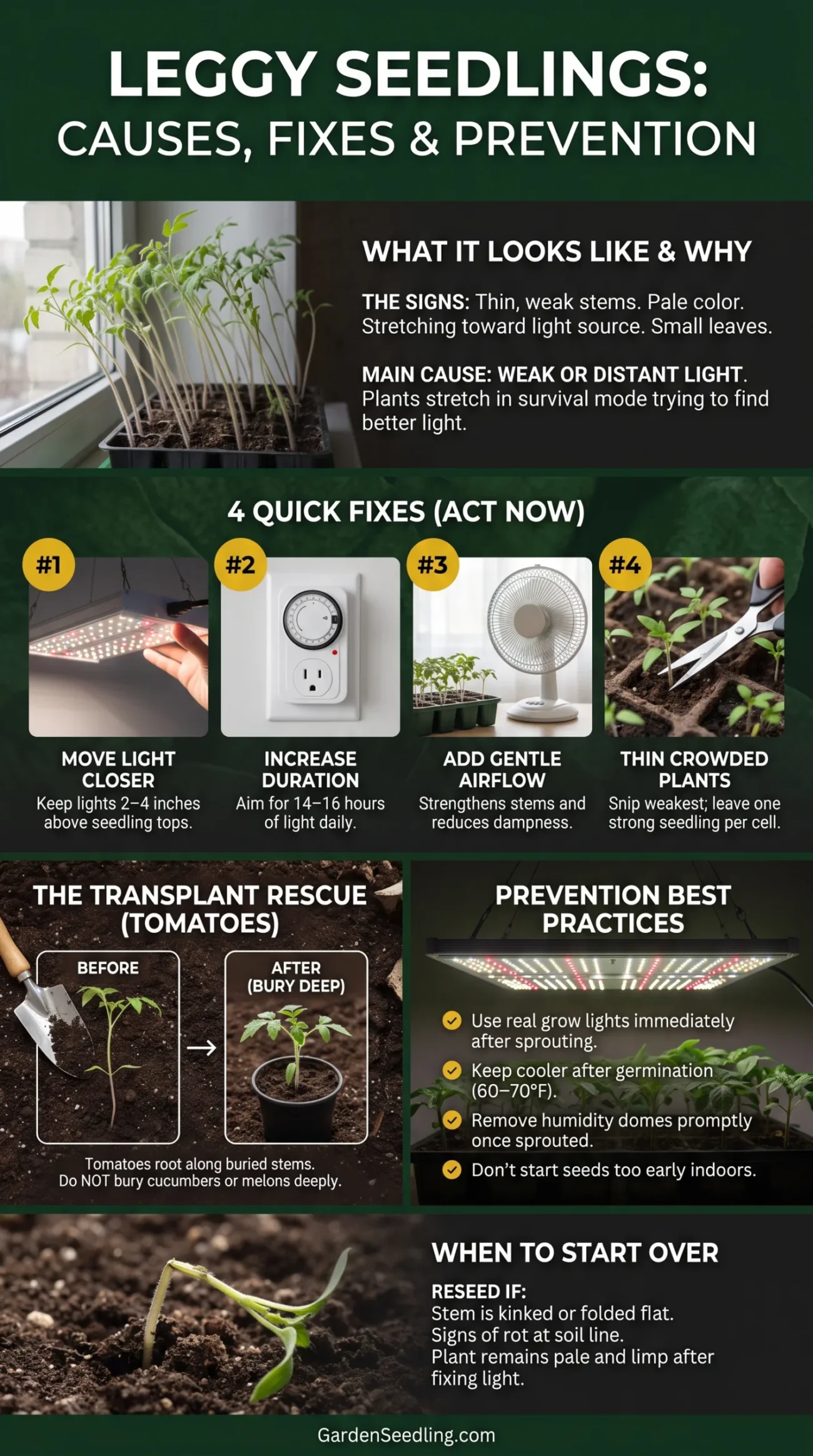
Seedlings usually get leggy indoors because they are reaching for light that is too weak, too far away, or only coming from one direction. The stems stretch fast, the leaves stay small, and the plant starts to look thin and top-heavy. It is a common seed-starting problem, especially on windowsills in late winter or early spring.
- What Leggy Seedlings Look Like
- Why Seedlings Get Leggy Indoors
- Weak Light Is The Main Cause
- The Light Is Too Far Away
- Too Much Warmth After Germination
- Crowded Seedlings Compete For Light
- Starting Seeds Too Early
- How To Fix Leggy Seedlings Right Away
- Move The Light Closer
- Run The Light Long Enough
- Rotate Window-Grown Seedlings
- Thin Crowded Seedlings
- Add Gentle Air Movement
- Can You Save Leggy Seedlings?
- How To Transplant Leggy Seedlings
- Step-By-Step Fix For Leggy Seedlings
- Which Seedlings Can Be Planted Deeper?
- How To Prevent Leggy Seedlings Next Time
- Use A Real Seed-Starting Light Setup
- Start With Clean, Light Seed-Starting Mix
- Sow Seeds At The Right Depth
- Keep Seedlings Close To The Light After Sprouting
- Do Not Overfeed Young Seedlings
- Common Mistakes That Make Seedlings Stretch
- Organic Tips For Stronger Indoor Seedlings
- Water From The Bottom When Possible
- Brush Seedlings Lightly
- Thin Early And Pot Up On Time
- When Starting Over Is The Better Choice
- Best Indoor Setup To Avoid Leggy Seedlings
- How To Harden Off Previously Leggy Seedlings
- FAQ
- Can Leggy Seedlings Become Healthy Plants?
- How Close Should Grow Lights Be To Seedlings?
- Why Are My Seedlings Falling Over?
- Can Tomatoes Be Planted Deeper If They Are Leggy?
- Should I Use A Fan On Indoor Seedlings?
- Is A Windowsill Enough For Seedlings?
The good news: leggy seedlings are not always ruined. Some can be saved by moving the light closer, improving airflow, lowering the room temperature a little, and transplanting them deeper when the crop allows it. Tomatoes handle that well. Lettuce, basil, peppers, flowers, and many other seedlings need a gentler fix.
Seedlings get leggy indoors when they do not receive enough strong, direct light. They stretch toward the best light source, often becoming pale, weak, and floppy. To fix leggy seedlings, place a grow light 2–4 inches above the tops of the plants, keep it on for 14–16 hours a day, rotate trays if using a window, thin crowded seedlings, improve airflow, and transplant sturdy seedlings deeper when appropriate.
Do not wait too long. A little stretch is easy to correct. A thin stem that has already bent flat on the soil is harder to bring back.
What Leggy Seedlings Look Like
Leggy seedlings are easy to spot once you know the signs. They do not simply look “tall.” They look tall in the wrong way.
- Long, thin stems between the soil and the first leaves
- Pale green or yellowish color instead of steady green growth
- Seedlings leaning toward a window or lamp
- Weak stems that bend, flop, or twist
- Small leaves compared with the stem length
- Crowded growth where seedlings compete with each other
Some seedlings naturally start a bit tall, so do not panic over every long stem. But if the plant looks like a tiny umbrella on a thread, that is legginess. Not ideal. Still fixable, often.
Why Seedlings Get Leggy Indoors
Indoors, seedlings rarely get the same light they would receive outside. A bright window may look sunny to human eyes, but plants read light differently. Glass filters some light, winter sun sits lower in the sky, and a tray placed even a foot away from a window may receive far less useful light than expected.
Weak Light Is The Main Cause
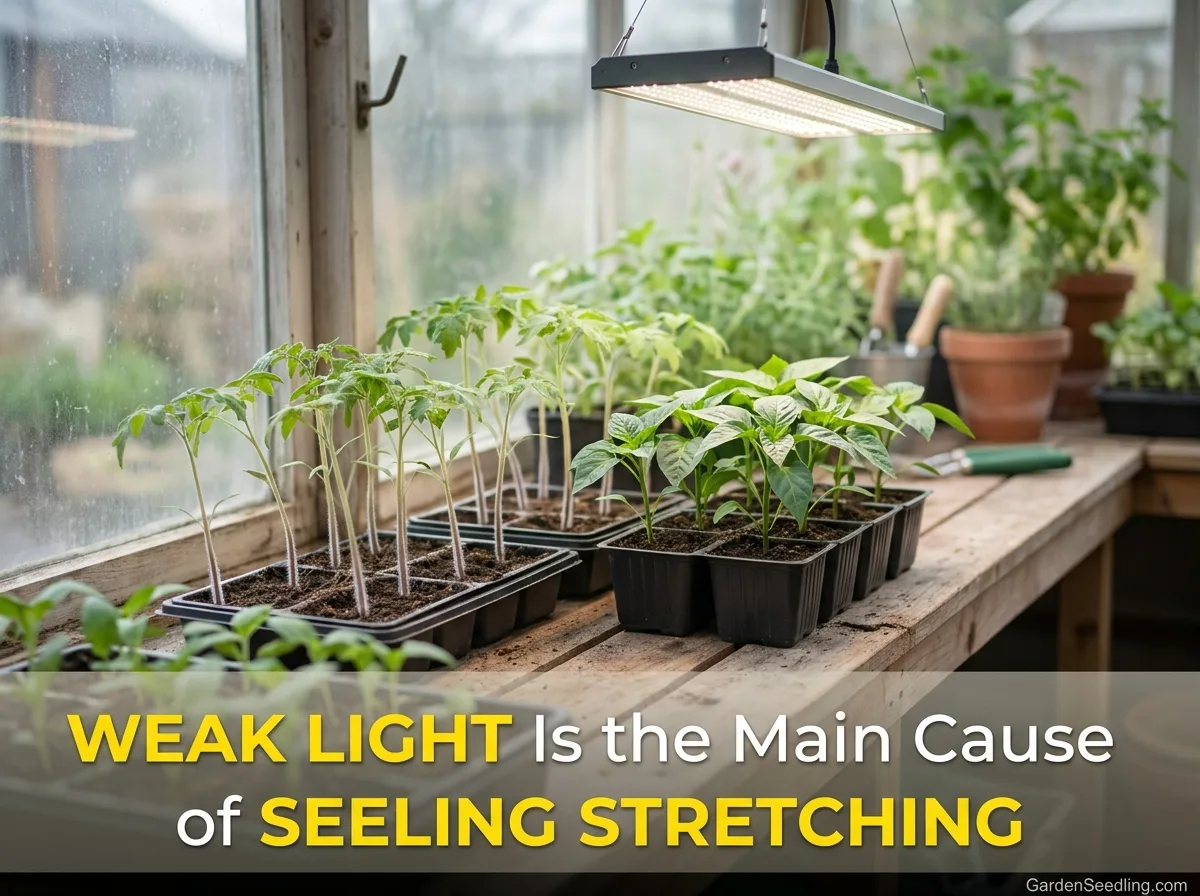
Seedlings stretch because they are trying to reach better light. This stretching is a survival response, not random growth. The plant puts energy into stem length instead of thicker stems and stronger leaves.
A south-facing window can help, but it often still falls short for tomatoes, peppers, eggplants, zinnias, cosmos, basil, and many other seedlings. East or west windows may work for short periods, yet they usually create leaning growth. North-facing windows are usually too dim for strong seed starting.
Grow lights solve most of the problem, but only when they are close enough. A light hanging too high acts like a weak ceiling lamp. The seedling sees it, reaches for it, and stretches. Same problem, different setup.
The Light Is Too Far Away
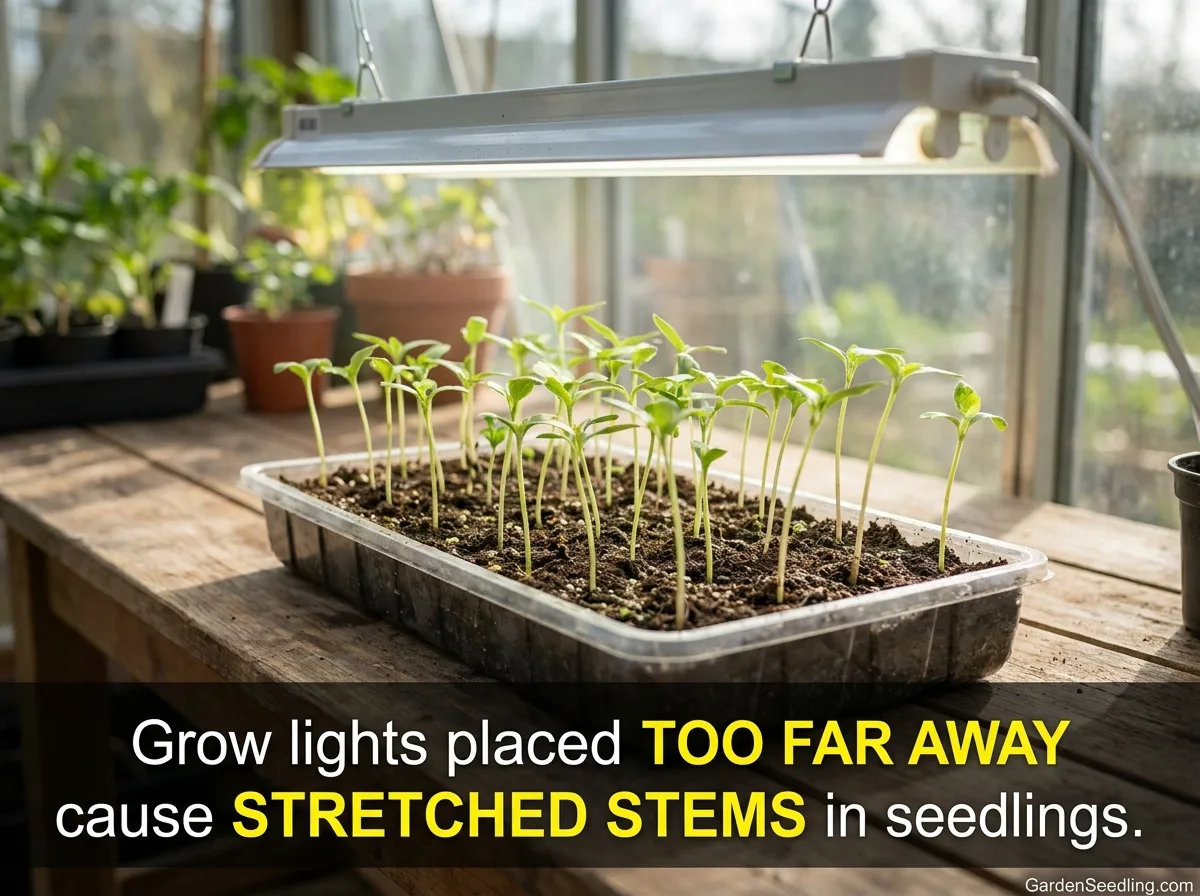
This one catches many beginners. A grow light can be bright and still be badly placed.
For most common seed-starting trays, the light should sit about 2–4 inches above the seedling tops. As the seedlings grow, raise the light little by little. Too far away, and stems stretch. Too close, and tender leaves may dry out or curl, especially under hotter lamps.
LED grow lights usually run cooler than older fluorescent fixtures, but check the leaves anyway. Plants tell on you.
Too Much Warmth After Germination
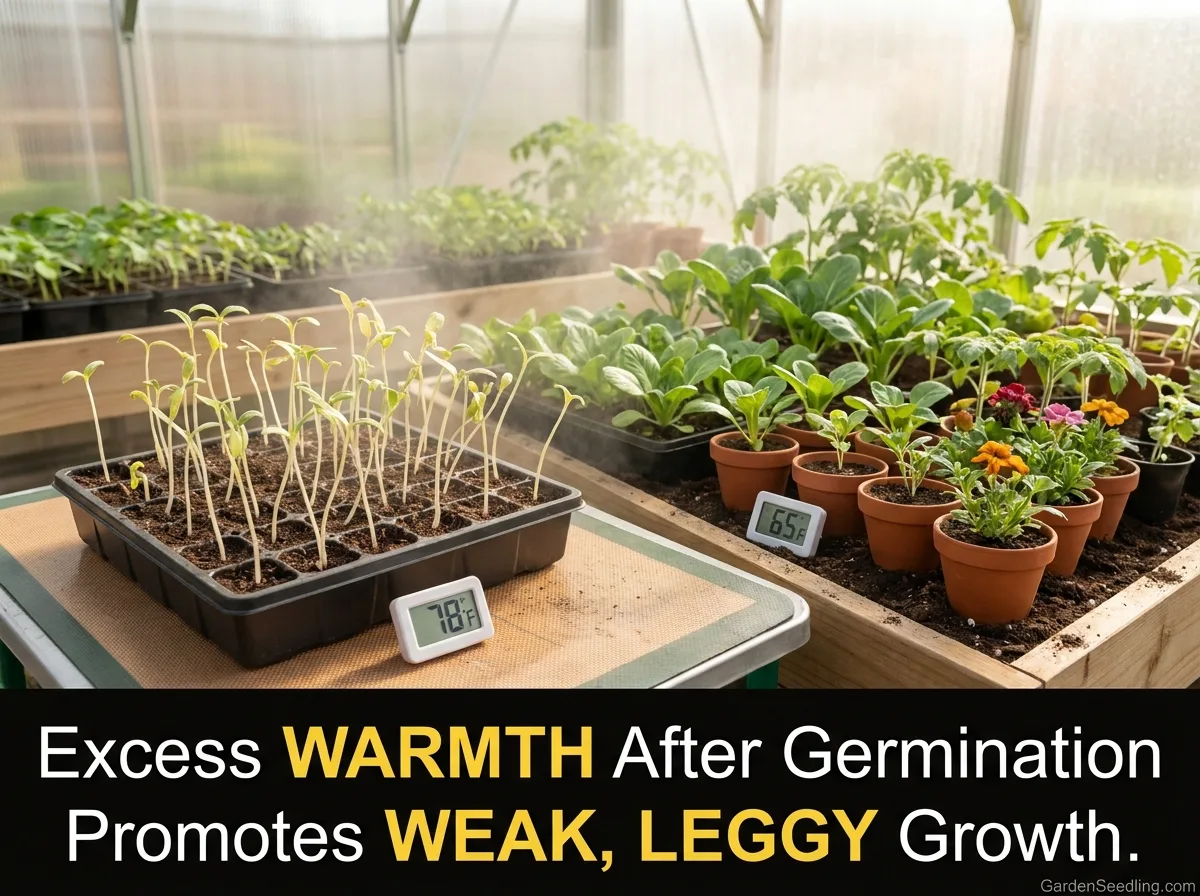
Warm soil helps many seeds sprout. After germination, though, constant warmth can push soft, fast growth. The seedling grows upward before it has enough light energy to build a sturdy stem.
This is why a heat mat can be useful at first and a problem later. Once most seeds have sprouted, remove the tray from the heat mat unless the crop truly needs steady warmth. Tomatoes and peppers like warmth, yes, but they still need strong light and some temperature balance.
Cooler indoor conditions after sprouting often help seedlings grow shorter and stronger. A room around 60–70°F works well for many common vegetables and flowers after germination. Some warm-season crops prefer the higher end of that range.
Crowded Seedlings Compete For Light
Seedlings planted too thickly shade each other. The tallest ones win the light race, and the smaller ones stretch in response. Soon the whole tray looks like a tiny forest that grew too fast in a closet.
It is tempting to keep every sprout. Nobody likes thinning. But crowded seedlings often become weaker, not more productive. Snipping extras at soil level gives the strongest plants room to grow leaves, roots, and thicker stems.
Starting Seeds Too Early
Leggy seedlings often happen because seeds were started too early indoors. The plants outgrow the tray before outdoor conditions are ready, then they sit inside under imperfect light for weeks. They stretch, lean, tangle, and sulk.
For many vegetables, indoor seed starting works best when timed backward from the average last frost date. Tomatoes often need about 6–8 weeks indoors before transplanting. Peppers can take 8–10 weeks. Cucumbers, squash, and melons grow fast and usually need only 3–4 weeks indoors, sometimes less.
Too early sounds productive. It can backfire.
How To Fix Leggy Seedlings Right Away
Start with light. Almost every other fix works better after the light problem is handled.
Move The Light Closer
If you use grow lights, lower them until they sit close above the seedlings. Aim for 2–4 inches above the leaves for many LED or fluorescent seed-starting lights. Keep the light close, but not touching.
Watch the seedlings for 24–48 hours. If new growth looks greener and more compact, the plants are responding. If leaves curl, bleach, or dry at the edges, raise the light a bit.
Run The Light Long Enough
Most indoor seedlings need about 14–16 hours of light per day. They also need darkness, so do not leave grow lights on all night. Plants use that dark period as part of normal growth.
A simple outlet timer helps. Set it once, then let it run. No guessing, no forgetting.
Rotate Window-Grown Seedlings
If you are growing seedlings on a windowsill, rotate the tray every day. This helps prevent hard leaning toward the glass. It will not fully replace strong overhead light, but it can reduce uneven stretching.
Also move the tray as close to the window as practical without chilling the seedlings. Cold glass at night can slow growth, so pull trays back a little after sunset if the window area gets chilly.
Thin Crowded Seedlings
Choose the strongest seedling in each cell and snip the extras with small scissors. Pulling seedlings out can disturb roots, especially in a packed cell.
- Keep the seedling with the thickest stem and best leaf color.
- Remove twisted, pale, floppy, or late-sprouting seedlings.
- Do not delay thinning once true leaves begin to form.
It feels a little harsh. It helps.
Add Gentle Air Movement
A small fan can help seedlings develop stronger stems. Use low speed and keep the fan from blasting the tray. The goal is a light flutter, not a windstorm.
Run the fan for a few hours a day, or keep it on low if the room is humid and still. Air movement also helps reduce damp, stagnant conditions around the soil surface.
Can You Save Leggy Seedlings?
Yes, many leggy seedlings can be saved if the stems are still upright, green, and not badly pinched or rotted. The younger the seedling, the better the odds.
Some crops recover more easily than others. Tomatoes are forgiving. Many flowers are moderate. Lettuce and herbs can recover if they are not too stretched. Root crops and cucurbits are less patient.
| Plant Type | Can It Recover? | Best Fix |
|---|---|---|
| Tomatoes | Usually yes | Transplant deeper, improve light, add airflow |
| Peppers | Often, if not too weak | Improve light, transplant slightly deeper, avoid cold stress |
| Basil | Often yes | Give stronger light, thin, pinch later when established |
| Lettuce | Sometimes | Move to bright light, keep cooler, avoid overcrowding |
| Squash, Cucumbers, Melons | Sometimes, but less reliable | Start over if very floppy; transplant carefully if still sturdy |
| Flowers Like Zinnia, Cosmos, Marigold | Often yes | Stronger light, gentle airflow, transplant before roots bind |
How To Transplant Leggy Seedlings
Transplanting can rescue many stretched seedlings because it gives the roots more space and lets you correct the planting depth. Handle the stems carefully. Thin stems bruise easily, and a damaged stem can fail later.
Step-By-Step Fix For Leggy Seedlings
- Water first. Slightly moist soil holds together better than dry soil.
- Prepare a deeper container. Use clean seed-starting mix or light potting mix.
- Lift by the leaves, not the stem. A leaf can regrow. A crushed stem usually cannot.
- Plant deeper if the crop allows it. Tomatoes can be buried up to the lower leaves. Peppers can sit a little deeper, but not as deeply as tomatoes.
- Firm the soil gently. Do not pack it hard.
- Place under strong light right away. This part matters. A deeper pot alone will not fix weak light.
For crops that dislike root disturbance, such as cucumbers and squash, transplant only if the seedling still looks sturdy. If it is already limp and stringy, starting fresh may give better plants.
Which Seedlings Can Be Planted Deeper?
Tomatoes are the easiest. They can form roots along buried stems, so deeper planting helps them become stronger.
Peppers and eggplants can be planted slightly deeper, but avoid burying a long section of stem. They do not respond like tomatoes.
Lettuce, basil, brassicas, and flowers can often be set a little deeper to support the stem, but keep the growing point above the soil. Do not bury the crown.
Cucumbers, squash, pumpkins, and melons are more sensitive. Planting them much deeper can invite stem rot, especially in wet soil.
How To Prevent Leggy Seedlings Next Time
Prevention is easier than rescue. The setup does not need to be fancy, but it does need to match how seedlings grow indoors.
Use A Real Seed-Starting Light Setup
A basic shop light or LED grow light can work well when placed close and used long enough. Look for a wide fixture that lights the whole tray evenly. A tiny lamp in one corner creates leaning and uneven growth.
Keep the light close to the plants from the moment the first seedlings sprout. That timing matters. Seedlings can stretch within a day or two if they emerge in dim light.
Start With Clean, Light Seed-Starting Mix
Heavy garden soil can stay wet and compact in small cells. Seedlings then struggle to build roots, and weak roots often pair with weak stems. Use a fine seed-starting mix that drains well but still holds moisture.
Pre-moisten the mix before filling trays. Dry pockets are annoying later, and tiny roots do not enjoy them.
Sow Seeds At The Right Depth
Seeds planted too deep may emerge weak after using extra stored energy. Seeds planted too shallow can dry out before germination. Most seed packets give a planting depth, and it is worth following.
A common rule: plant many seeds about two to three times as deep as the seed is wide. Tiny seeds may only need surface sowing or a light dusting of mix.
Keep Seedlings Close To The Light After Sprouting
Once seeds sprout, they need light immediately. Not later that week. Immediately.
Remove humidity domes as soon as most seedlings are up. A dome helps hold moisture during germination, but after sprouting it can trap humidity, reduce airflow, and encourage soft growth.
Do Not Overfeed Young Seedlings
Too much fertilizer can push quick, tender growth, especially when light is weak. Most seedlings do not need feeding until they have true leaves. Even then, use a diluted fertilizer rather than a full-strength dose.
Organic gardeners can use a mild liquid feed, such as diluted fish emulsion or seaweed-based fertilizer, once seedlings are established. Go light. Seedlings are not hungry teenagers yet.
Common Mistakes That Make Seedlings Stretch
Leggy growth usually comes from a few small choices stacked together. One mistake may not ruin a tray. Three or four can.
- Leaving trays on a heat mat too long: Heat helps germination, but steady warmth after sprouting can push weak growth.
- Using a window only: Even a bright window may not provide enough direct light for sturdy seedlings.
- Hanging lights too high: Grow lights need to sit close to seedling tops.
- Sowing too many seeds per cell: Crowding makes seedlings compete and stretch.
- Keeping humidity domes on after sprouting: Seedlings need airflow once they emerge.
- Starting too early: Overgrown indoor seedlings often become weak before planting time.
Organic Tips For Stronger Indoor Seedlings
Strong seedlings come from steady light, careful watering, and small daily checks. No trick needed.
Water From The Bottom When Possible
Bottom watering helps keep stems drier and encourages roots to grow downward. Set the tray in water for a short time, let the mix absorb moisture, then drain the tray well. Do not leave seedlings sitting in water all day.
Top watering is fine when done gently, but a hard stream can knock over thin seedlings and splash soil onto leaves.
Brush Seedlings Lightly
Some gardeners lightly brush their hand over seedling tops once or twice a day to mimic gentle outdoor movement. This can help stems toughen a bit, especially when paired with good light.
Be gentle. This is not a test of strength.
Thin Early And Pot Up On Time
When seedlings form true leaves and roots begin filling the cell, pot them up before they stall or stretch badly. A cramped root zone does not always cause legginess by itself, but it adds stress.
Move seedlings into a slightly larger container, not a giant pot. Too much wet mix around small roots can stay soggy.
When Starting Over Is The Better Choice
Sometimes the honest fix is reseeding. If seedlings are extremely thin, pale, bent at the soil line, moldy, or collapsing, they may never become strong garden plants.
Start over when:
- The seedling stem has folded or kinked.
- The plant falls over again after support.
- The leaves stay pale even after better light.
- The seedling has signs of rot near the soil.
- The crop grows fast enough that reseeding will not set you back much.
Fast crops like cucumbers, squash, basil, marigolds, and some greens often catch up quickly when restarted under better light. Better a sturdy younger plant than a stretched older one.
Best Indoor Setup To Avoid Leggy Seedlings
A simple setup works well for most home gardeners. Keep it practical.
- Light: Full-tray LED or fluorescent grow light, close to seedling tops
- Timing: 14–16 hours of light daily, with a timer
- Distance: Usually 2–4 inches above seedlings, adjusted as they grow
- Temperature: Warm for germination, slightly cooler after sprouting
- Airflow: Gentle fan movement after seedlings emerge
- Spacing: Thin to one strong seedling per cell when needed
- Water: Even moisture, never soggy soil
For a sunny-window setup, add reflective material behind the tray, rotate daily, and move seedlings outdoors for short protected periods when the weather allows. But for early-season seed starting, a grow light is usually the cleaner answer.
How To Harden Off Previously Leggy Seedlings
Leggy seedlings need extra care before they move outdoors. They have thinner stems, softer leaves, and less tolerance for wind and sun.
Start hardening off about 7–10 days before transplanting. Place seedlings outside in shade for a short period, then bring them back in. Add more time and brighter light gradually. Wind can dry them fast, so choose a protected spot at first.
Do not put weak indoor seedlings straight into full sun. They can scorch in a single afternoon. And once they wilt badly, recovery is slow.
FAQ
Can Leggy Seedlings Become Healthy Plants?
Yes, if the seedlings are still green, upright, and not damaged at the stem. Improve the light right away, thin crowded plants, and transplant deeper when the crop allows it.
How Close Should Grow Lights Be To Seedlings?
For many seed-starting lights, keep the fixture about 2–4 inches above the seedling tops. Adjust based on plant response and the heat level of the light.
Why Are My Seedlings Falling Over?
Seedlings may fall over because they are too leggy, too crowded, overwatered, or affected by stem rot near the soil line. Weak light is often part of the problem.
Can Tomatoes Be Planted Deeper If They Are Leggy?
Yes. Tomatoes can be planted deeper because they can form roots along buried stems. Remove lower leaves if needed and bury the stem up to the lower healthy leaves.
Should I Use A Fan On Indoor Seedlings?
Yes, gentle airflow can help seedlings grow sturdier stems and reduce stagnant, damp air. Use low speed and avoid blasting the plants.
Is A Windowsill Enough For Seedlings?
Sometimes, but many seedlings stretch on windowsills because the light is weak or one-sided. A close overhead grow light usually produces stronger, shorter seedlings.
Leggy seedlings are a warning, not always a failure. Fix the light first, then adjust warmth, spacing, airflow, and transplant depth. With those changes, many indoor seedlings can still grow into solid garden plants.